The Tuvan Creation Song Myth Meaning & Symbolism
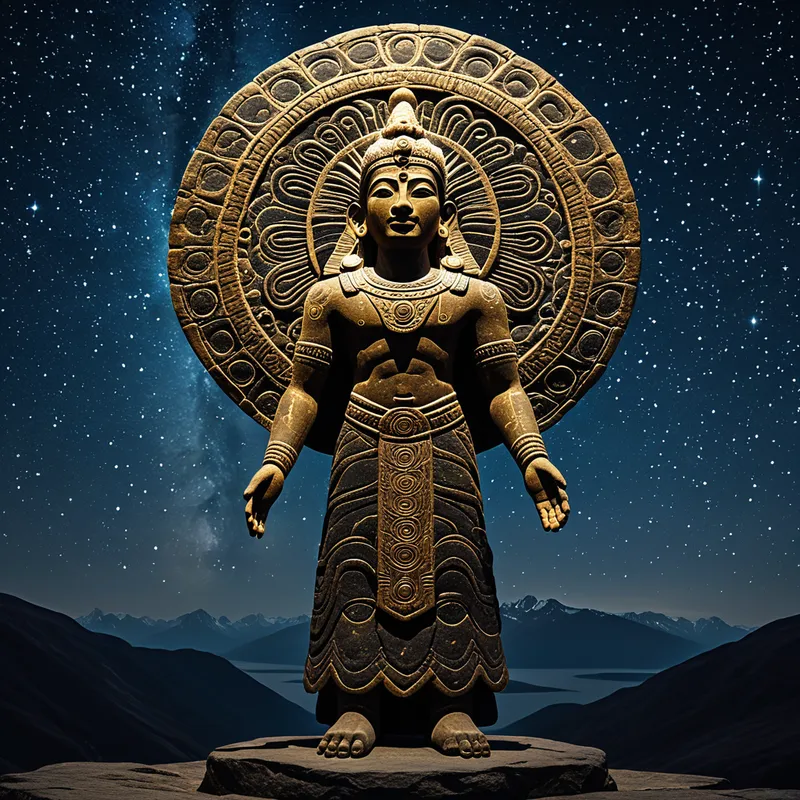
In the beginning, a deity sings the world into existence from the void, weaving reality from the resonant threads of sacred sound.
The Tale of The Tuvan Creation Song
In the time before time, there was only the Great Silence. It was not an empty silence, but a pregnant, waiting silence—a deep, velvet dark that held all possibilities within its boundless womb. There was no up, no down, no earth, no sky. Only the potential of all things, sleeping.
And within that silence, there stirred a presence. Not a form, for there was nothing to give it shape. Not a thought, for there was no mind to think it. It was a pure, focused intent—a being of primordial awareness. We may call it Ülgen, or the First Singer, for its essence was vibration, the precursor to sound.
The First Singer felt the weight of the unmanifested worlds. It sensed the mountains yearning to be mountains, the rivers aching to flow, the stars desperate to burn. The silence was a pressure, a tension begging for release. And so, from the very core of its being, the Singer drew a breath from the void itself.
It opened… and it Sang.
The first note was not a sound heard by ears, but a tremor felt by the soul of existence. It was a low, foundational hum, a drone of pure being. That hum began to spin, pulling the dark substance of the void into a slow, swirling dance. From the resonance of that note, the first thing coalesced: the Earth, solid and vast, a drumskin stretched taut.
The Singer’s voice rose. A second note, clear and sharp as ice, pierced the gloom. It shot upwards, and where it rang, the Sky vaulted into being—an endless, deep blue bowl. Now there was a below and an above, a stage set for the drama of life.
But the world was barren. The Singer leaned close to the newborn earth and sang a third song, a complex, rippling melody that tumbled from its lips like water over stones. And where the melody fell, it became water. The first River sprang forth, cutting a silver path through the stone, singing its own watery echo back to the creator.
Note followed note, each a brushstroke of reality. A swift, staccato rhythm brought the Wolf, its fur the grey of storm clouds, its howl a lesser echo of the primal song. A soaring, graceful aria took flight as the Eagle, its wings catching the first winds that the Singer’s breath had now conjured. For every creature, for every pine needle and granite peak, there was a specific phrase, a unique harmonic in the great composition.
The Singer sang until its throat was the landscape, until its breath was the wind, and its heartbeat was the slow, deep pulse of the mountains. The world was not built by hand, but woven by voice—a living tapestry of resonant threads. Finally, the song turned inward, softer now. The Singer poured the last of its creative power into a final, whispering chord that settled over the world like a blessing. This chord was the law of life, the cycle of seasons, the connection between all things. The Singer then retreated, its essence dissolving into the fabric of its own song, becoming the spirit within the Tree, the voice within the river, the silence between the notes. The work was complete. The world, born from a dream of sound, now echoed with the memory of its own creation.
Cultural Origins & Context
This narrative of creation by song is central to the spiritual traditions of the Tuvan people, who inhabit the republic of Tuva in southern Siberia. For nomadic herders living in a vast, acoustically rich landscape of steppes, mountains, and echoing valleys, sound is not merely background; it is a fundamental, shaping force. The wind through the Mountain passes, the gurgle of a spring, the cry of an eagle, and most importantly, the human voice in song—all are perceived as active participants in the world’s ongoing creation.
The myth was not written but carried in the oral tradition, passed down through generations by shamans and storytellers around evening fires. Its telling was a ritual act, a way of ritually re-singing the world into stability and harmony. The human practice of khöömei (throat singing) is directly linked to this cosmology. By mimicking the sounds of nature—the wind, water, animals—the throat singer becomes a microcosm of the First Singer, participating in the perpetual re-creation and healing of the world. The myth thus served a vital societal function: it encoded an ecological and spiritual philosophy where humans are not separate from nature but are co-creators, responsible for maintaining the world’s “song” through their own harmonious actions, music, and rituals.
Symbolic Architecture
At its [heart](/symbols/heart “Symbol: The heart symbolizes love, emotion, and the core of one’s existence, representing deep connections with others and self.”/), the myth presents a profound metaphysical [idea](/symbols/idea “Symbol: An ‘Idea’ represents a spark of creativity, innovation, or realization, often emerging as a solution to a problem or a new outlook on life.”/): that the fundamental substance of [reality](/symbols/reality “Symbol: Reality signifies the state of existence and perception, often reflecting one’s understanding of truth and life experiences.”/) is [vibration](/symbols/vibration “Symbol: A rhythmic oscillation or resonance, often representing energy, connection, or unseen forces. In dreams, it can signal awakening, disturbance, or spiritual communication.”/), and that [consciousness](/symbols/consciousness “Symbol: Consciousness represents the state of awareness and perception, encompassing thoughts, feelings, and experiences.”/)—expressed as song—is the architect that gives [vibration](/symbols/vibration “Symbol: A rhythmic oscillation or resonance, often representing energy, connection, or unseen forces. In dreams, it can signal awakening, disturbance, or spiritual communication.”/) form.
Creation is not an act of force, but of resonance. The Singer does not command “Let there be light,” but sings light into being, inviting it forth through harmonic alignment.
The Void represents the unconscious, the unus mundus where all psychic contents exist in a state of potential. The First [Singer](/symbols/singer “Symbol: A singer represents expression, creativity, and communication of emotions through art.”/) is the emerging conscious ego, or the Self, which begins the process of [differentiation](/symbols/differentiation “Symbol: The process of distinguishing or separating parts of the self, emotions, or identity from a whole, often marking a developmental or psychological milestone.”/). Its Song is the focused [application](/symbols/application “Symbol: An application symbolizes engagement, integration of knowledge, or the pursuit of goals, often representing self-improvement and personal development.”/) of [attention](/symbols/attention “Symbol: Attention in dreams signifies focus, awareness, and the priorities in one’s life, often indicating where the dreamer’s energy is invested.”/) and [intention](/symbols/intention “Symbol: Intention represents the clarity of purpose and direction in one’s life and can symbolize motivation and commitment within a dream context.”/)—the act of naming, defining, and bringing patterns out of [chaos](/symbols/chaos “Symbol: In Arts & Music, chaos represents raw creative potential, uncontrolled expression, and the breakdown of order to forge new artistic forms.”/). Each element created—[Earth](/symbols/earth “Symbol: The symbol of Earth often represents grounding, stability, and the physical realm, embodying a connection to nature and the innate support it provides.”/), Sky, [River](/symbols/river “Symbol: A river often symbolizes the flow of emotions, the passage of time, and life’s journey, reflecting transitions and movement in one’s life.”/)—symbolizes a core component of the psyche being brought into conscious [relationship](/symbols/relationship “Symbol: A representation of connections we have with others in our lives, often reflecting our emotional state.”/).
The myth beautifully avoids a [hierarchy](/symbols/hierarchy “Symbol: A structured system of ranking or authority, often representing social order, power dynamics, and one’s position within groups or institutions.”/) of creation. The [wolf](/symbols/wolf “Symbol: Wolves in dreams symbolize instinct, intelligence, freedom, and a deep connection to the wilderness and primal instincts.”/) is as sacred as the [mountain](/symbols/mountain “Symbol: Mountains often symbolize challenges, aspirations, and the journey toward self-discovery and enlightenment.”/), for each has its own perfect note in the [chord](/symbols/chord “Symbol: A musical harmony of multiple notes played simultaneously, symbolizing unity, resolution, or emotional resonance.”/). This speaks to a [psychology](/symbols/psychology “Symbol: Psychology in dreams often represents the exploration of the self, the subconscious mind, and emotional conflicts.”/) of wholeness, where every [aspect](/symbols/aspect “Symbol: A distinct feature, quality, or perspective of something, often representing a partial view of a larger whole.”/) of the self, even the instinctual and “wild” parts ([Wolf](/symbols/wolf “Symbol: Wolves in dreams symbolize instinct, intelligence, freedom, and a deep connection to the wilderness and primal instincts.”/)), is a necessary and valued part of the complete symphony of the [personality](/symbols/personality “Symbol: Personality in dreams often symbolizes the traits and characteristics of the dreamer, reflecting how they perceive themselves and how they believe they are perceived by others.”/).
The Dreamer’s Resonance
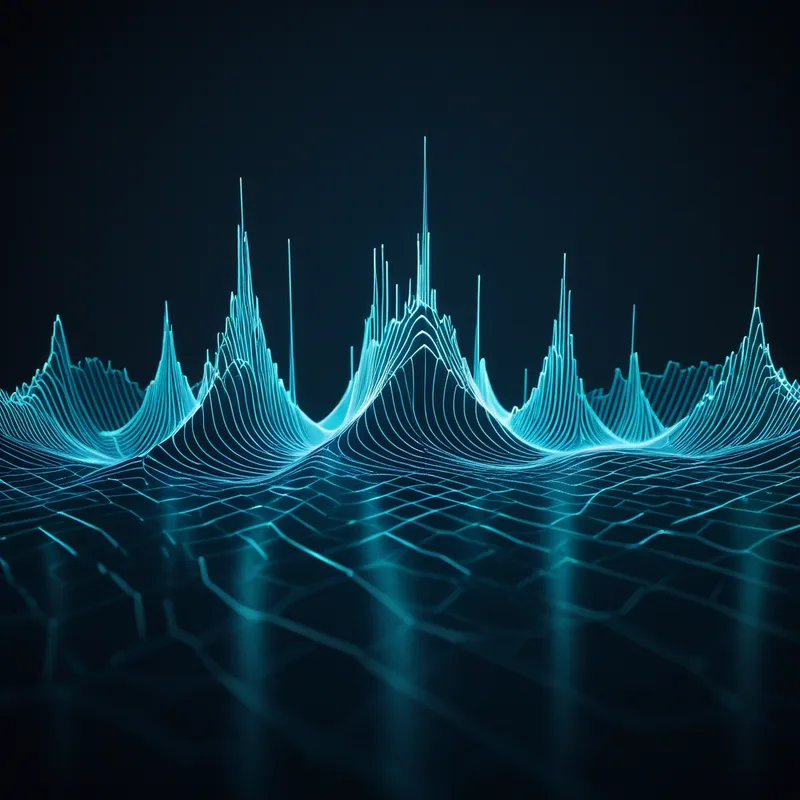
When this mythic pattern stirs in the modern Dream, it often manifests at thresholds of profound personal creation or re-creation. You may dream of finding your voice in a place of silence, of singing and causing colors to bloom in a grey world, or of hearing a foundational hum that reorganizes a chaotic dreamscape.
Somatically, this can correlate with a sensation of vibration in the chest or throat—a literal awakening of one’s “inner voice.” Psychologically, this dream signals the process of giving form to the formless contents of your inner world. Perhaps a long-held potential (a career, an artistic project, a new way of being) is ready to be “sung” into reality. The conflict in such dreams is often the fear that one’s voice is insufficient, or that the silence (depression, stagnation) is too vast. The resolution comes when the dreamer, like the First Singer, accepts their role as the conscious author of their own experience and begins to articulate, to “sing,” their truth into the void of possibility.
Alchemical Translation
The alchemical journey mirrored here is the opus of bringing the inner gold of the Self into manifestation. The prima materia is the silent, chaotic potential of the unlived life. The First Singer is the guiding spirit of the Mercurius, the catalyst that begins the work.
Individuation is the process of learning your own unique song amidst the cacophony of the world, and having the courage to sing it, thereby creating a world in which that song can resonate.
The modern individual’s “creation song” is their process of active imagination, creative work, and authentic self-expression. To “sing” is to consciously engage with the unconscious, to translate its symbolic language (the yearning of the unformed mountains and rivers) into the structured reality of life choices, relationships, and creations. The final stage, where the Singer dissolves into the creation, is the culmination of individuation: no longer identifying solely with the ego (the Singer as separate entity), but realizing the Self is both the creator and the creation. You are the singer, the song, and the world it shapes. The goal is not to finish the song, but to join the eternal chorus, where your individual note contributes to the harmony of the whole.
Associated Symbols
Explore related symbols from the CaleaDream lexicon:
- Song — The fundamental creative act, the vibration of consciousness that gives form to potential and weaves separate elements into a harmonious whole.
- Voice — The instrument of creation and individuation, representing the power to declare one’s existence, set intentions, and shape reality through authentic expression.
- Void — The fertile darkness of the unconscious, the state of pure potential and the prima materia from which all differentiated psychic contents emerge.
- Earth — The manifested reality, the grounded and solid aspect of the Self that is formed first, providing stability and form.
- Sky — The realm of spirit, potential, and limitless possibility that is called into being as a counterpoint to the earth, creating the container for life.
- River — The flow of life, time, and emotion that is sung into being, representing the dynamic, moving processes of the psyche and the world.
- Tree — The axis mundi that connects earth and sky, symbolizing the living structure of the psyche and the world, infused with the spirit of the creator.
- Wolf — The instinctual, wild nature that is given form by a specific rhythm in the song, representing the necessary integration of primal drives into the conscious self.
- Eagle — The soaring spirit and perspective that comes from the song, embodying the ability to see the larger pattern and connection between all created things.
- Mountain — The enduring, monumental aspects of the self and the world, formed from the foundational notes of the song, representing challenges and eternal truths.
- Dream — The modern internal equivalent of the primordial void, the personal unconscious where our own creation songs begin to form from silent potential.
- Spirit — The animating essence of the First Singer that dissolves into the creation, representing the sacred, connecting life force within all manifested things.