The Trickster/Shape-shifter Myth Meaning & Symbolism
A liminal entity of chaos and creation, the Trickster crosses all boundaries to disrupt order and reveal the fluid, transformative nature of reality.
The Tale of The Trickster/Shape-shifter
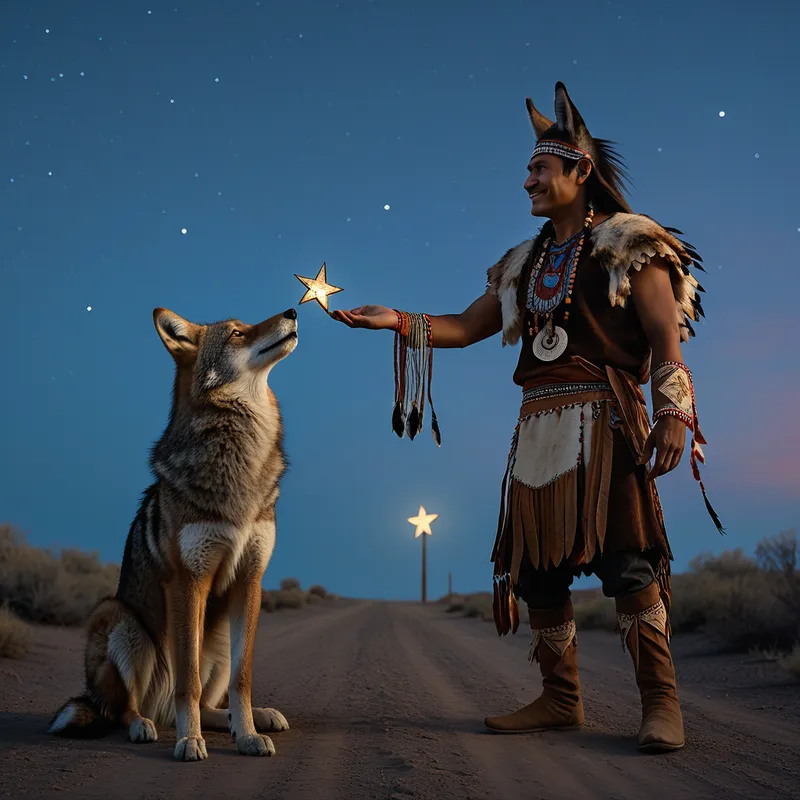
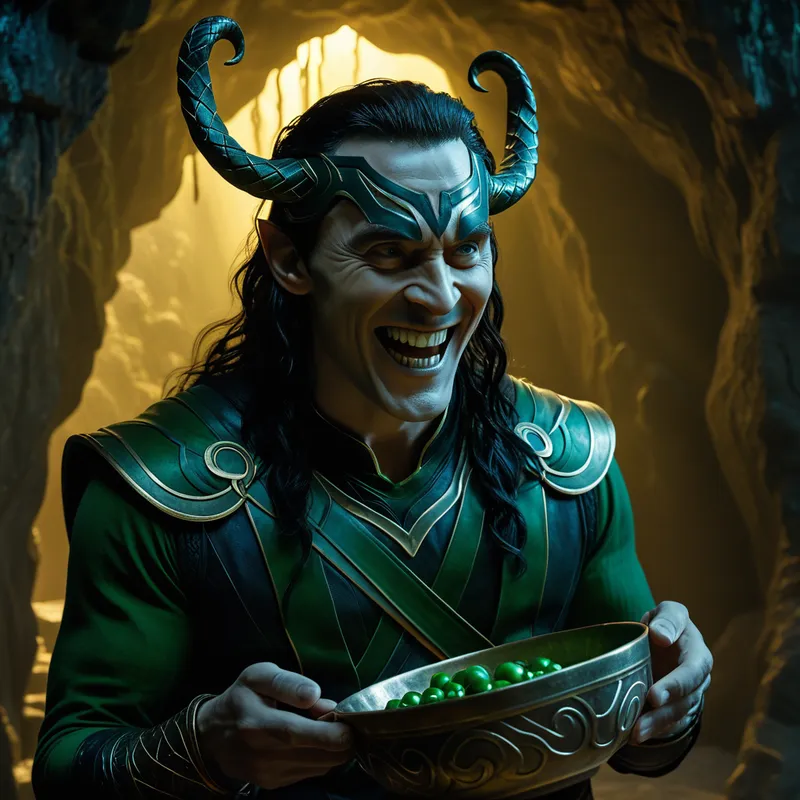
Listen. In the time before time, when the world was soft and unformed, there walked a being who was not one, but many. He was the whisper in the tall grass, the glint in the raven’s eye, the laughter that echoes in an empty canyon. Some called him Coyote. Others knew him as Loki, or Eshu at the crossroads. He is the one who dances on the edge of the map, where the village ends and the wild begins.
He arrives not with a crown, but with a question. He walks into the orderly village of the gods or men, and with a sly smile, he points to the one rule everyone obeys but never questions. “Why?” he asks. And in that moment, the solid ground of tradition becomes shifting sand.
He steals the sun not to plunge the world into darkness, but because he is curious if it will sing. He gives fire to freezing humanity, not from altruism, but to see what beautiful, terrible things they will build with it. He challenges the mightiest warrior not with a spear, but with a riddle that turns the hero’s strength against itself. He shape-shifts—becoming a salmon in the stream, a flea on a queen’s gown, a gentle old woman offering advice. He is the ultimate actor, playing every role but his own, for he has no single self.
His journey is not a straight line to a throne; it is a spiral into chaos and out again. He orchestrates a magnificent, catastrophic joke that brings the entire hall of the gods crashing down in laughter and ruin. He creates a river by tricking a giant into weeping tears of frustration. He dies, often in a foolish, grotesque, or hilarious manner—caught in his own trap, outsmarted by his own game—only to be reborn from his own mischief, because chaos cannot be contained.
And in the wreckage of his passing, something new is always found. The world is not as it was. It is larger, more dangerous, more fertile, and infinitely more interesting. The boundary he crossed is now a bridge. The truth he hid is now revealed. The order he shattered has re-formed, not back into its old, rigid shape, but into something more resilient, more complex, and alive. He departs as he came, a ripple of laughter on the wind, leaving creation forever altered in his wake.
Cultural Origins & Context
The Trickster is not a myth of a single culture, but a psychic fingerprint found on the oldest stories of humanity. He appears in the oral traditions of Indigenous North America as Coyote, Nanabozho, or Raven. In West Africa, he is the divine messenger Eshu, who must be honored first at the crossroads. In Norse sagas, he is Loki, the blood-brother of Odin. In Greek myth, his spirit lives in Prometheus the thief of fire and Hermes the thief of cattle.
These stories were not mere entertainment. Told around fires, in longhouses, and in royal halls, they functioned as societal pressure valves and cognitive tools. The Trickster myth was often a “teaching story” for adults, a sacred comedy that performed a vital function: it challenged dogma, mocked arrogance, and tested the limits of social order from a sanctioned, mythical space. He was the embodiment of the “what if,” the necessary counter-force to the King or the Chief. His antics reinforced social norms by showing the hilarious or disastrous consequences of breaking them, while simultaneously celebrating the cunning and adaptability needed to survive in an unpredictable world. He was the culture’s immune system, introducing a controlled dose of chaos to prevent spiritual and social rigidity.
Symbolic Architecture
Psychologically, the Trickster is the archetype of the unconscious itself—mercurial, amoral, and endlessly creative. He represents the part of the psyche that refuses to be categorized, the shadow that is both destructive and ingenious. His shape-shifting signifies the fluid nature of identity and the ego’s fragility. He is the ultimate deconstructor of personas.
The Trickster does not lie to deceive, but to reveal a deeper, more uncomfortable truth that order has hidden.
His thefts are not mere crimes but acts of necessary redistribution—stealing fire from the complacent gods to give consciousness to nascent humanity. His chaos is not an end, but a catalyst. He represents the creative void, the fertile chaos (Tohu wa-bohu) from which new forms emerge. He is the embodiment of the synchronicity that shocks us out of linear thinking. Crucially, he is the master of boundaries—between sacred and profane, human and animal, life and death, sanity and madness. By crossing them, he proves they are illusions, revealing the interconnected, dynamic web of existence.
The Dreamer’s Resonance
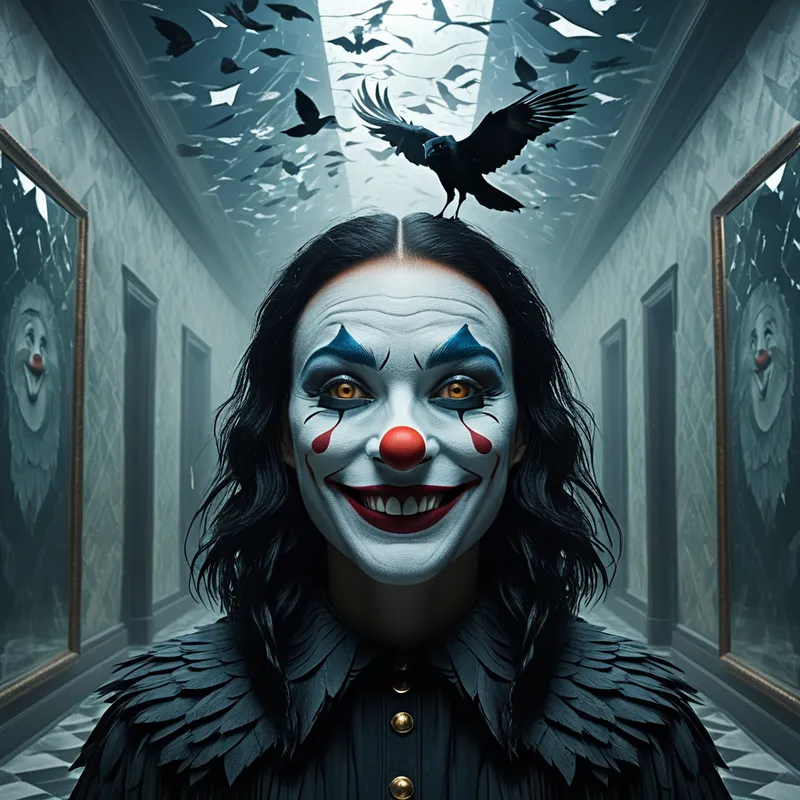
When the Trickster pattern stirs in modern dreams, the psyche is in a state of creative destabilization. To dream of being tricked, of chasing a shape-shifter, or of discovering you yourself are wearing a mask that won’t come off, signals a profound confrontation with the fluidity of the self.
Somatically, this may feel like vertigo, a giddiness, or a nervous, electric energy—the bodily sensation of the ground of identity shifting. Psychologically, it is the process of the ego being “fooled” by the unconscious. The rigid story you tell about yourself—“I am a responsible leader,” “I am a victim,” “I am always in control”—is being hilariously and ruthlessly undermined. The Trickster in dreams exposes the lie of a fixed identity. He appears when life has become too predictable, too sterile, or when you are trapped in a persona that has outlived its usefulness. The laughter he provokes, even if it feels anxious, is the sound of a prison wall cracking.
Alchemical Translation
The Trickster’s journey is the alchemical model for the individuation process, specifically the stage of nigredo—the blackening, the chaotic dissolution of the old, compounded self. The ego, like the ordered village of the gods, must be disrupted for transformation to occur.
The psyche’s transformation begins not with a prayer, but with a prank played by the soul upon itself.
The modern individual undergoes this when a “trickster event” enters life: a sudden job loss, a shocking betrayal, a paradoxical opportunity that seems like a setback, a humiliating failure that later reveals itself as a blessing. This is Loki binding the gods with his cleverness, or Coyote getting his head stuck in a buffalo skull. It is the necessary humiliation of the ego. The alchemical work is not to resist this chaos, but to engage with it—to recognize the Trickster as an aspect of one’s own psyche. One must learn the trickster’s art: adaptability, cunning, the ability to see from multiple perspectives, and the courage to hold contradiction.
The ultimate transmutation is to integrate this energy, not be destroyed by it. This means developing a sense of humor about one’s own suffering, finding creative solutions in impossible binds, and accepting the fluid, multifaceted nature of the self. The goal is not to become the Trickster, but to gain his wisdom—to build a personality that, like the world after his visit, is more resilient, more conscious, and capable of containing both order and creative chaos. You become the crossroads where all possibilities meet.
Associated Symbols
Explore related symbols from the CaleaDream lexicon: