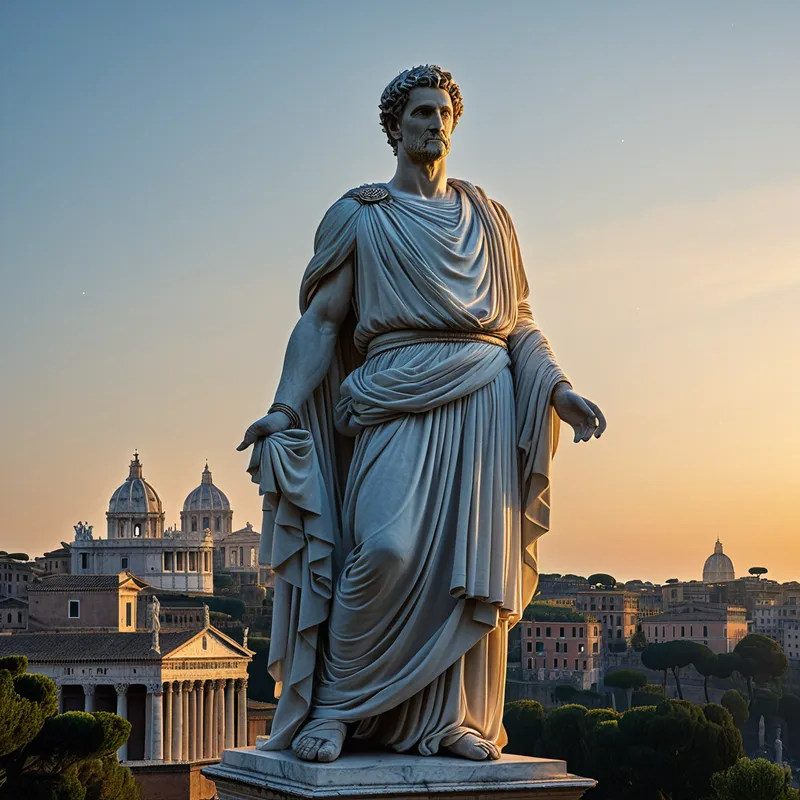
The Toga Myth Meaning & Symbolism
A myth of a mortal who wove a garment of pure light, becoming the living soul of the Republic and the weight of its sacred law.
The Tale of The Toga
Hear now a tale not of a god’s thunder or a hero’s sword, but of a garment. A tale spun in the humid breath of the Tiber, under the watchful eyes of the Capitoline Triad. In the age when Rome was but clay and promise, there lived a man named Gaius. He was no senator, no general, but a weaver of uncommon skill, whose hands understood the language of wool and loom.
One night, as the festival of the Lupercalia approached, a vision came. The goddess Minerva, patron of the cunning hand, stood in his humble workshop. Not with a command, but with a sigh that carried the weight of the seven hills. “The people have numen,” she whispered, “[the divine spark](/myths/the-divine-spark “Myth from Gnostic culture.”/). But it is scattered, like seeds on stone. They have no vessel to contain it, no skin for their new soul.”
She placed before him not dyed yarn, but three spools: one of raw, undyed wool, humble as earth; one thread that glowed with the crimson of life-blood and sacrifice; and one that was pure, unbearable light—the light of Ius. “Weave them,” she said. “Weave a second skin for the citizen. Let it be heavy with duty, bright with right, and anchored in the common ground.”
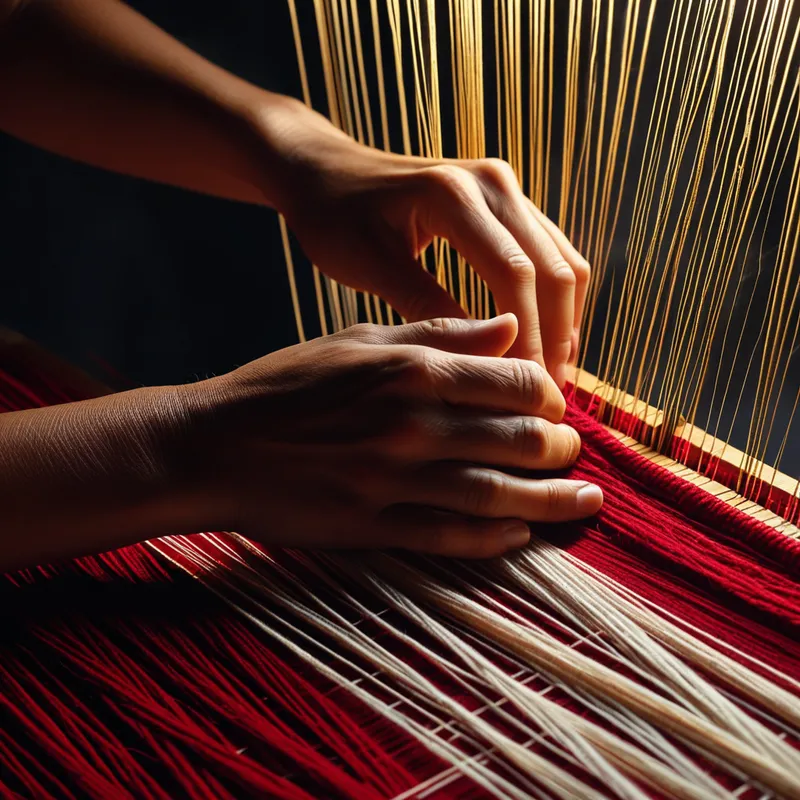
For forty days and nights, Gaius worked. The wool accepted the crimson, drinking it deep. But the thread of light resisted. It burned his fingers, refused the shuttle, and threatened to unravel the very fabric. He despaired, until he remembered the words of the Vestals: “The sacred must be approached not with force, but with reverence, with a prescribed motion.”
He began to move not as a weaver, but as a priest in a ritual. His body traced the solemn steps of a procession. As he moved, the loom became an altar, and the light-thread began to weave itself, guided by his sacred posture. It did not submit; it cooperated, aligning itself with the geometry of right action.
On the forty-first dawn, it was done. Not a robe, not a cloak. It was a vast, semi-circle of fabric, white as a priest’s gown, edged with the solemn purple of authority. It was inert cloth. Then, Jupiter himself breathed upon it from the Capitoline, and [Janus](/myths/janus “Myth from Global/Universal culture.”/), from his two-faced temple, bestowed upon it the memory of past and the obligation to future.
Gaius, instructed by Minerva’s silent gaze, lifted the immense cloth. With a series of folds—a ritual in itself—he draped it over his own tunic. The weight was immense, the heat of the light within it palpable. He walked from his home into the Forum. Where the cloth’s shadow fell, quarreling men fell silent. Petty thieves dropped their spoils. The chaotic noise of [the market](/myths/the-market “Myth from Various culture.”/) softened into the murmur of community.
He had not put on a garment. He had been invested. The Toga did not cover Gaius; it revealed him. It revealed the Roman. In that moment, the individual Gaius receded, and the living idea of Civitas stood forth, tangible and awe-inspiring. The myth tells us he walked until sunset, and where he stopped, the first sacred boundary of the city was drawn, not with a plow, but with the drape of a hem. He did not die; he dissolved into the garment, becoming its eternal spirit, his personal name forgotten, his function eternal.
Cultural Origins & Context
This foundational myth, passed down not in a single epic but in the ritual instructions of the Pontifices and the hushed teachings of fathers to sons, served a critical societal function. Rome was an idea before it was an empire—a pact of shared law and mutual obligation. The toga was the physical sacrament of that pact.
Its story was enacted every time a freeborn boy laid aside his toga praetexta and donned the pure white toga virilis in a ceremony of coming of age. The ritual was the myth in motion: the individual was “woven into” the civic body. Senators wore it to embody the state; defendants stood in it to appeal to the shared [justice](/myths/justice “Myth from Tarot culture.”/) of their peers. It was not daily wear, but sacred vestment, reserved for public, civic life. The myth explained its profound awkwardness—its weight and complex drape were not a design flaw, but a feature. It was meant to be burdensome. It ritualized the burden of citizenship, making the abstract weight of law and social duty physically felt.
Symbolic Architecture
Psychologically, the myth of The [Toga](/symbols/toga “Symbol: The toga is a garment that symbolizes citizenship, authority, and status in ancient Rome, often associated with political power.”/) is a masterful narrative about the [construction](/symbols/construction “Symbol: Construction symbolizes creation, building, and the process of change, often reflecting personal growth and the need to build a solid foundation.”/) of the [Persona](/symbols/persona “Symbol: The social mask or outward identity one presents to the world, often concealing the true self.”/)—not as a false mask, but as a sacred, authentic [vessel](/symbols/vessel “Symbol: A container or structure that holds, transports, or protects something essential, representing the self, emotions, or life journey.”/) for social being. Gaius begins as an individual (the simple [tunic](/symbols/tunic “Symbol: A simple, ancient garment symbolizing identity, social role, and spiritual purity across cultures, often representing modesty, service, or ritual status.”/)). The [Toga](/symbols/toga “Symbol: The toga is a garment that symbolizes citizenship, authority, and status in ancient Rome, often associated with political power.”/) represents the consciously crafted, higher social self that must be woven from disparate inner threads.
The true persona is not a hiding place, but a meeting ground. It is where the raw material of the self encounters the transcendent pattern of the collective.
The three threads are key: the undyed [wool](/symbols/wool “Symbol: A natural fiber representing warmth, protection, and connection to tradition. Often symbolizes comfort, labor, or spiritual purity.”/) is the base matter of one’s inherent [nature](/symbols/nature “Symbol: Nature symbolizes growth, connectivity, and the primal forces of existence.”/), the [prima materia](/myths/prima-materia “Myth from Alchemical culture.”/) of the [soul](/symbols/soul “Symbol: The soul represents the essence of a person, encompassing their spirit, identity, and connection to the universe.”/). The crimson is the [blood](/symbols/blood “Symbol: Blood often symbolizes life force, vitality, and deep emotional connections, but it can also evoke themes of sacrifice, trauma, and mortality.”/)-price of [relationship](/symbols/relationship “Symbol: A representation of connections we have with others in our lives, often reflecting our emotional state.”/), sacrifice, and passionate engagement with [life](/symbols/life “Symbol: The symbol of ‘Life’ represents a journey of growth, interconnectedness, and existential meaning, encompassing both the joys and challenges that define human experience.”/)—the Eros that binds. The thread of light is [the logos](/myths/the-logos “Myth from Biblical culture.”/), [the principle](/symbols/the-principle “Symbol: A fundamental truth, law, or doctrine that serves as a foundation for a system of belief, behavior, or reasoning, often representing moral or ethical standards.”/) of order, reason, and transcendent law. The struggle to weave the light is the central [human](/symbols/human “Symbol: The symbol of a human represents individuality, complexity of emotions, and social relationships.”/) conflict: how to integrate cold, impersonal principle with the warm, messy [reality](/symbols/reality “Symbol: Reality signifies the state of existence and perception, often reflecting one’s understanding of truth and life experiences.”/) of [the self](/myths/the-self “Myth from Jungian culture.”/) without being burned or unraveled.
The myth resolves this not through conquest, but through ritualized [movement](/symbols/movement “Symbol: Movement symbolizes change, progress, and the dynamics of personal growth, reflecting an individual’s desire or need to transform their circumstances.”/). The [psyche](/myths/psyche “Myth from Greek culture.”/) cannot brute-force [integration](/symbols/integration “Symbol: The process of unifying disparate parts of the self or experience into a cohesive whole, often representing psychological wholeness or resolution of internal conflict.”/); it must find the correct, respectful [pattern](/symbols/pattern “Symbol: A ‘Pattern’ in dreams often signifies the underlying structure of experiences and thoughts, representing both order and the repetitiveness of life’s situations.”/)—the “sacred dance”—that allows opposites to cooperate.
The Dreamer’s Resonance
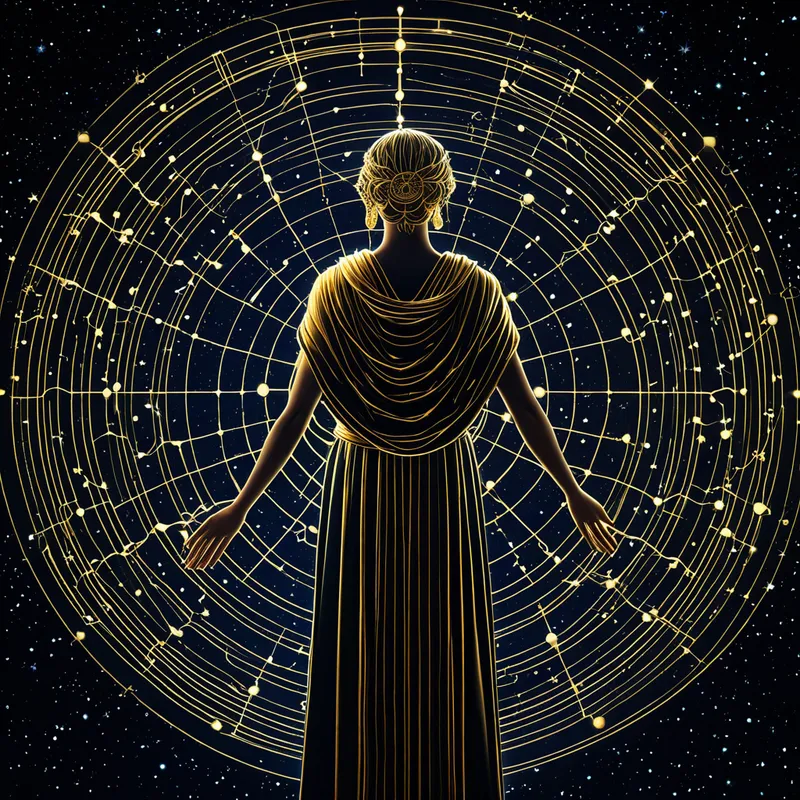
When this myth stirs in the modern unconscious, it often manifests in dreams of awkward clothing, public nakedness, or being tasked with an impossible ceremonial duty. To dream of struggling with a toga—of it being too heavy, too large, or constantly slipping off—points directly to an active confrontation with one’s social or professional [persona](/myths/persona “Myth from Greek culture.”/).
The somatic feeling is one of exposure and unsustainable burden. The dreamer may feel the weight of a role (parent, leader, professional) that feels inauthentic or poorly “fitted.” The slipping drape signifies anxiety that one’s competence or right to hold that role will be revealed as a facade. Conversely, dreaming of donning the toga with ease and feeling its empowering weight can signal the successful integration of a new, mature identity—a psychological “coming of age” where one feels legitimately invested with authority and purpose.

Alchemical Translation
The alchemical journey here is the transmutation of the individual into a vessel for collective meaning. Gaius’s workshop is the vas or crucible of the soul. The process models individuation as a civic act—the creation of a self that can healthily interface with [the world](/myths/the-world “Myth from Tarot culture.”/).
Individuation is not a retreat from society, but the forging of a self so distinct it can enter into covenant with the collective without being dissolved by it.
[The first stage](/myths/the-first-stage “Myth from Alchemical culture.”/) ([nigredo](/myths/nigredo “Myth from Alchemical culture.”/)) is the recognition of the raw, undifferentiated self (the plain wool). The albedo is the washing in the waters of Minerva’s wisdom—the conscious effort to craft. The weaving of the crimson thread is the [rubedo](/myths/rubedo “Myth from Alchemical culture.”/), the passionate, suffering engagement that colors the work. The integration of the blinding light-thread is the final citrinitas, the dawn of a consciousness that can hold divine law (the Self) without annihilating the personal ego.
Gaius’s dissolution into the garment is the ultimate alchemical paradox: In order to gain your true self, you must lose your small self. He becomes the archetype itself—the Ruler. For the modern individual, this translates to the moment when a role ceases to be a performance and becomes an authentic expression. You are no longer “a person doing a job,” you become the teacher, the healer, the guardian. The weight remains, but it is now your weight to bear, a burden chosen and woven with your own hands, illuminated from within by a law you have consented to embody. The myth of The Toga is an invitation to weave a persona worthy of the light it must carry.
Associated Symbols
Explore related symbols from the CaleaDream lexicon: