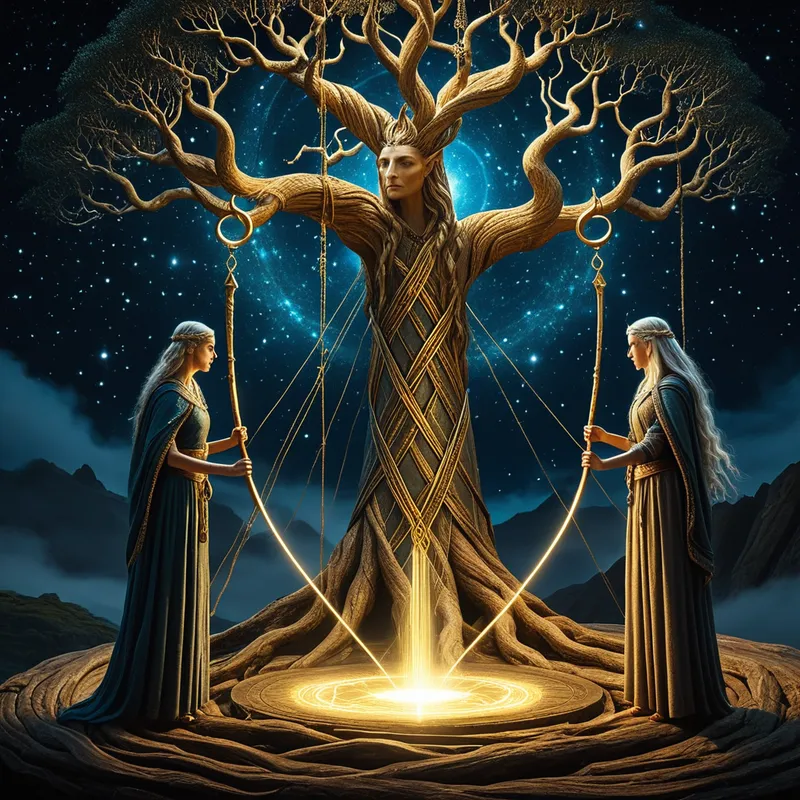
The Threads of the Norns Myth Meaning & Symbolism
Three ancient weavers at the root of the World Tree spin, measure, and cut the threads of fate for all beings, gods and mortals alike.
The Tale of The Threads of the Norns
Beneath the groaning roots of the Yggdrasil, where the earth is dark and damp with the dew of ages, there lies a well. This is no ordinary spring. This is the Urðarbrunnr, whose waters are so pure they hold the memory of all that was, the truth of all that is, and the whisper of all that may yet be. And here, in this sacred gloom, they dwell.
They are three. They are the Norns.
Urd, whose name is That Which Has Become, is ancient beyond telling. Her eyes are pools reflecting the first dawn. From a distaff of ash-wood, she draws the raw stuff of existence—the breath of the wind, the strength of the stone, the spark of consciousness—and with fingers that know no haste, she spins. The thread she creates is not of wool or flax. It is luminous, a strand of potentiality, humming with the song of a life not yet lived.
This thread passes to Verdandi, That Which Is Becoming. She is the present moment, eternally poised. Her gaze is unwavering, fixed upon the thread’s length as it flows over her open palm. She does not merely hold it; she measures it. With each heartbeat of the cosmos, she assesses its strength, its texture, its direction. She feels the tension of every choice, the weight of every action, as the thread passes through her domain. She is the now, the active weaving of destiny from the raw material of the past.
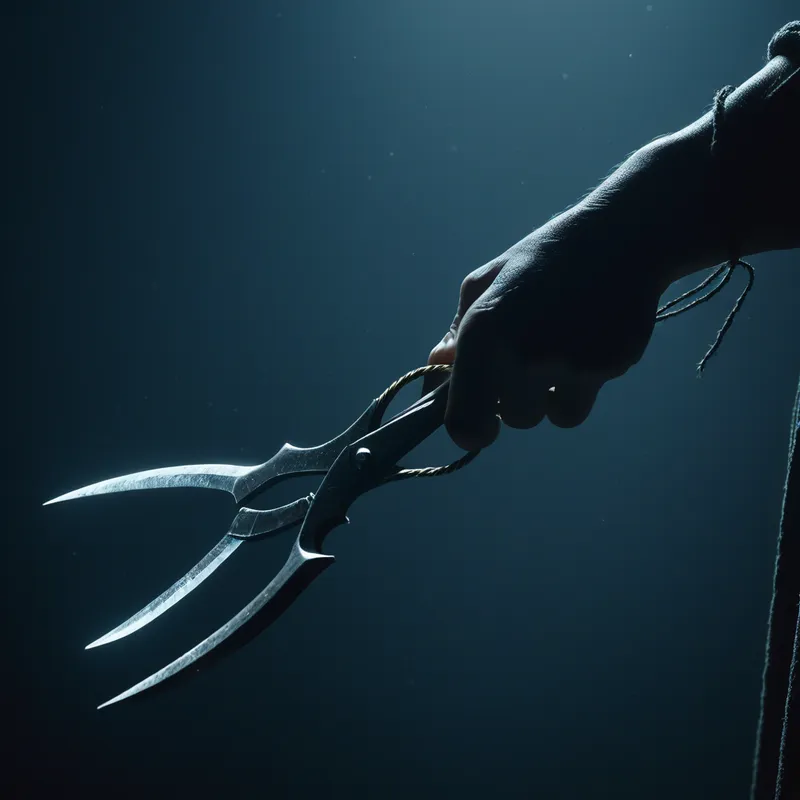
And from her hand, the thread flows to Skuld, That Which Shall Be. She is often veiled, for the future is shrouded. In one hand she holds the scroll of law, the record of debts and duties accrued. In the other, she holds shears of cold iron. She does not look at the thread with sentiment, but with necessity. When the measure is full, when the debt is paid, or when the pattern demands an end to make way for a new beginning, her shears close with a sound like the snapping of a heartstring. Snip. A life ends. A story concludes. A fate is sealed.
They work in a silence broken only by the drip of the well-water and the deep, resonant groan of Yggdrasil above. They weave not just for mortals who scurry upon Midgard, but for the Æsir in their golden hall of Valhalla, for the giants in Jötunheimr, and for the very worms that gnaw at the Tree’s roots. None are exempt. Even Odin, who gave an eye for wisdom and hung nine nights on the Tree, must come to this well to seek counsel. He sees his own shimmering thread, woven into the vast tapestry that hangs damp and glistening in the cavern air, a tapestry that is the cosmos itself. He sees the pattern of Ragnarök being woven, thread by inevitable thread. And he knows that the shears wait for him, too.
Cultural Origins & Context
The myth of the Norns springs from the rich, stark soil of pre-Christian Norse and wider Germanic belief. They are not goddesses of the Æsir or the Vanir, but exist as a fundamental, impersonal force—a cosmic bureaucracy of fate. Our primary sources are the Poetic Edda, particularly the Völuspá (The Prophecy of the Seeress), and the later Prose Edda of Snorri Sturluson.
These stories were not scripture, but living poetry, passed down by skalds and recited in halls. Their function was not merely to entertain, but to orient a people in a world perceived as fundamentally hostile and uncertain. The Norns provided a framework for understanding fortune and misfortune. A short life, a heroic death, a sudden plague—these were not random, but part of a measured pattern woven by ancient, inscrutable powers. This belief fostered a profound courage: if your thread’s length and end were pre-measured, then your dignity lay in how you lived the thread you were given. The myth thus undergirds the famed Norse ethos of fatalistic resilience.
Symbolic Architecture
The Norns represent the tripartite structure of time itself, but not as a simple linear sequence. They are a psychological model of causality and consequence.
Urd (Past) is the given. She is the raw material of our being: our genetics, our ancestry, our childhood, our culture—all that has happened to us and made us. We are born from her distaff.
Verdandi (Present) is the act of choosing. She is consciousness itself, the moment of agency where we take the thread of our past and decide how to weave it now. Every thought, word, and deed is a movement of her measuring hand, determining the thread’s immediate course.
Skuld (Future) is the inevitable result. She is not mere “future,” but “debt” or “that which ought to be.” She embodies the consequences that flow logically from our past and present actions. Her shears represent the necessary endings—of habits, relationships, life stages, or life itself—required by the laws of cause and effect.
The Urðarbrunnr symbolizes the unconscious, the deep, reflective pool where all memories and potentials are stored. Yggdrasil is the interconnected system of life and psyche. The Norns, working at the root, show that fate is not imposed from above, but woven from below, from the foundational, often hidden, layers of reality and self.
The Dreamer’s Resonance
When this myth stirs in the modern dreamer, it often signals a profound encounter with the archetype of destiny and personal accountability. Dreaming of three women weaving, or of a single, luminous thread being measured or cut, points to a somatic and psychological process of reckoning.
The dreamer may be at a life threshold—a career change, the end of a relationship, a health diagnosis. The dream images manifest the psyche’s deep processing of time. Urd appears when we are unconsciously reviewing our past, feeling its weight and texture. Verdandi manifests as intense anxiety or focused presence about a current decision. Skuld’s appearance, often the most unsettling, signals the psyche’s preparation for an ending that the conscious mind may be resisting. The “snip” of the shears in a dream can be terrifying, but psychologically, it represents the unconscious forcing the acceptance of a necessary termination to allow for new growth. It is the self regulating its own pattern.
Alchemical Translation
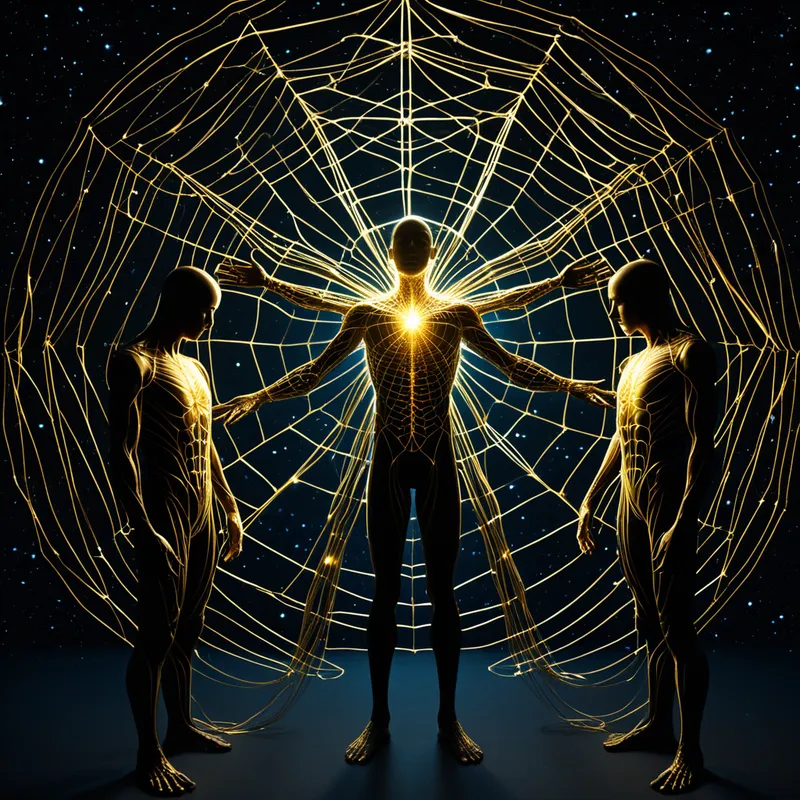
For the individual on the path of individuation—the process of becoming a coherent, whole self—the myth of the Norns is a master guide to psychic transmutation. The alchemical work is to move from being a passive subject of fate to a conscious co-weaver of destiny.
The first stage is Nigredo, the descent to the well. One must confront Urd—honestly assess the “thread” one has been given: the family curses, the cultural conditioning, the personal traumas. This is shadow work.
The second is Albedo, the purification of the present. Here, one cultivates the consciousness of Verdandi. Through mindfulness and rigorous self-honesty, one begins to “measure” each choice, understanding how present actions weave the future. This is where agency is born from within the framework of fate.
The final stage is Rubedo, the integration of the end. This is the conscious alignment with Skuld. It is the courageous acceptance of necessary endings—the death of the ego’s outdated structures, the cutting away of what no longer serves the soul’s purpose. One does not flee the shears, but understands their role in the great tapestry.
In this alchemical reading, we are not the thread alone. We are also the weaver. The Norns are not external deities, but internal capacities: Memory (Urd), Conscious Attention (Verdandi), and the Courage to Let Go (Skuld). To sit at the root of your own Yggdrasil and tend the well of your own becoming is the ultimate translation of this ancient myth. It is to recognize that while the length of your thread may be measured, its beauty, its strength, and the pattern it contributes to the whole are yours to weave.
Associated Symbols
Explore related symbols from the CaleaDream lexicon: