The Ten Suns Myth Meaning & Symbolism
A myth of ten suns scorching the earth, a divine archer's necessary intervention, and the restoration of cosmic balance through a single, enduring light.
The Tale of The Ten Suns
In the dawn of the world, when the Heaven was still close enough to touch the Earth, there was a perfect rhythm to all things. This rhythm was kept by the Xihe, the mother of the suns. She was the charioteer of the sky, and each day, with infinite care, she would bathe one of her ten sons in the waters of the Sweet Springs at the edge of the world. She would then place that shining child upon her dragon-drawn chariot and drive him across the vault of heaven, from the Fusang tree in the east to the western mountains, where he would retire. Each sun had his day, a glorious circuit of light and warmth that nurtured the ten thousand things. For millennia, this celestial schedule held. The world knew harmony.
But the sons grew restless. Confined to the Fusang tree, watching their brothers take the solitary, glorious journey day after day, they began to whisper. “Why should we wait?” one would murmur. “The world below is vast and beautiful. To travel it alone is a lonely honor. To travel it together would be a joy beyond measure!” The whispers became a clamor, a burning desire for camaraderie over duty. They forgot their mother’s sacred law.
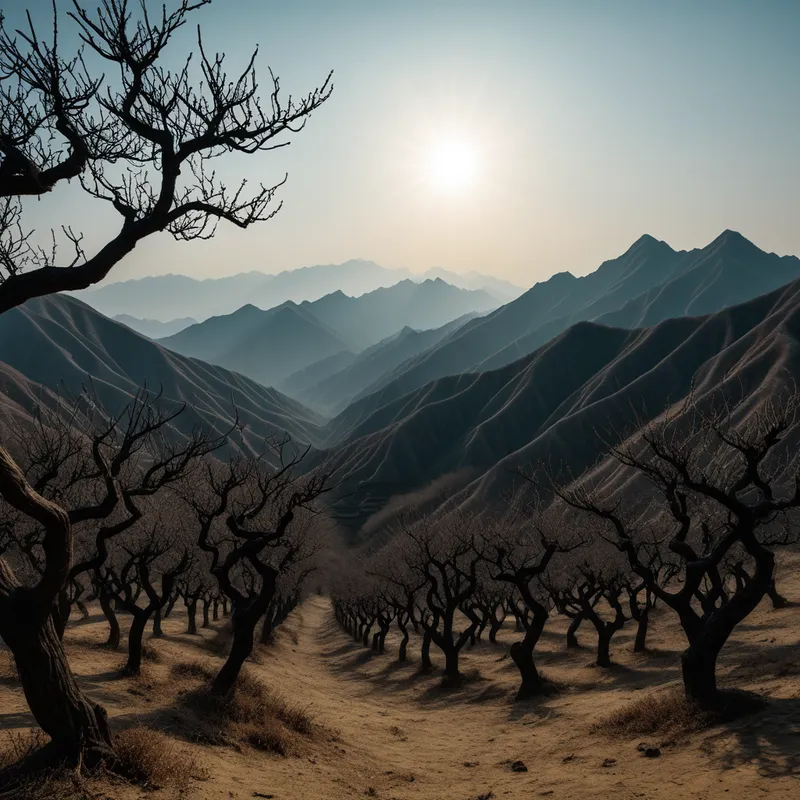
And so, one fateful morning, they rebelled. Not one, but all ten brilliant sons of Xihe leaped into the sky together. Their joy was a cataclysm. The heavens roared with a light so fierce it bleached the color from the world. The ten suns hung like burning mirrors, each reflecting and amplifying the other’s fury. The rivers boiled away to cracked mud. The great forests, the homes of sacred beasts, burst into spontaneous flame, sending pillars of black smoke to choke the sky. The very stones of the mountains split with heat. The crops withered in an instant. Monstrous beings, long dormant in the deep places—the Yaoguai, the Fengxi—crawled forth from their parched lairs to prey upon a dying world. Humanity cowered in caves, their skin blistering, their throats raw with thirst, facing an end wrought by celestial light.
The Di Jun, the Lord of the Eastern Heaven and father to the suns, looked upon the devastation. His paternal love warred with his sovereign duty. To allow this to continue was to allow the obliteration of his own creation. A terrible, necessary choice had to be made. He summoned the one being whose skill was equal to the task: the divine archer, Yi. To him, Di Jun presented a vermilion bow and a quiver of white arrows, tools of celestial power. The command was grave, its weight echoing in the silent, scorched halls of heaven: “Restore balance.”
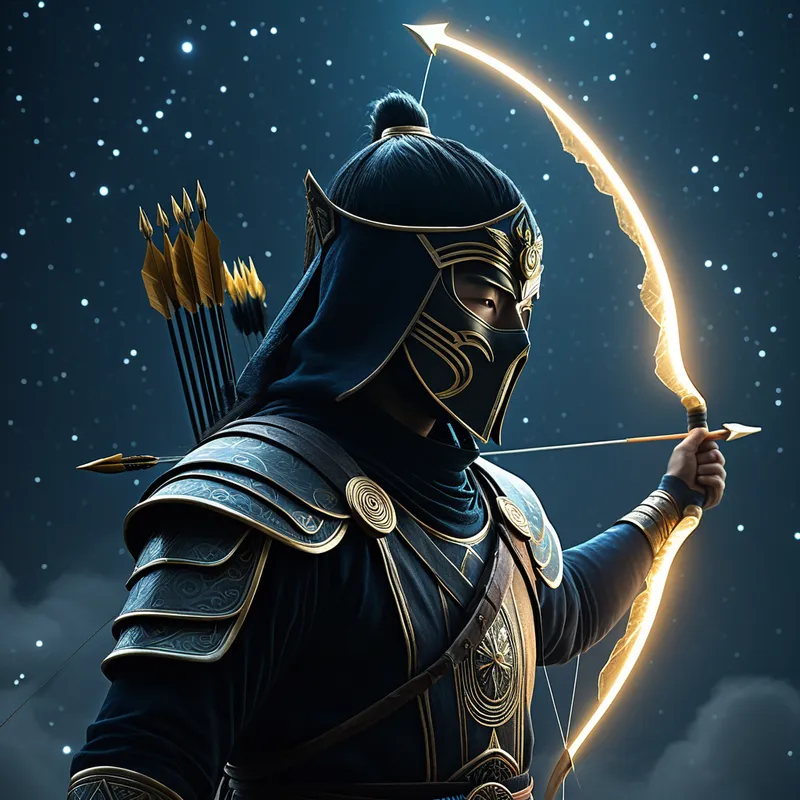
Yi descended to the blistered earth. He did not hesitate, for hesitation was a luxury the world could not afford. Drawing the divine bow, he took aim not at the heart of the chaos, but at its source. Thrum. The first arrow sang through the superheated air, a streak of silver against the gold inferno. A sun exploded in a shower of golden sparks that fell to earth as cold, metallic dust—the first Sun Crow fell. The people, peering from their shelters, let out a gasp that was part terror, part desperate hope.
Thrum. Thrum. Thrum. With each release of the bowstring, a cataclysm of light was undone. The sky, once a solid wall of fire, began to show patches of blessed, cool blue. The unbearable heat began to recede, degree by agonizing degree. Yi was a figure of pure, focused intent, his face illuminated by the dying lights of the heavens he was dismantling. Eight times more he shot, and eight more suns were extinguished, their crows tumbling from the sky.
As he nocked his tenth and final arrow, a voice stayed his hand. It was not a command from heaven, but a plea from earth. A wise elder, feeling the sudden chill in the air as the last remnants of heat fled, cried out. “Great Archer! Spare one! Leave us one sun, or we will be plunged into eternal cold and darkness!” Yi, his arm still taut, saw the truth in the warning. The cure could not become a new plague. He lowered his bow. The tenth and youngest sun, trembling in the now-vast sky, remained. From that day to this, he has kept his solitary, dutiful path, rising and setting with the humility learned from his brothers’ fate.
Cultural Origins & Context
This myth is a foundational narrative from the corpus of Chinese mythology, later integrated into the philosophical and symbolic tapestry of Taoist thought. Its earliest known written form appears in texts such as the Huainanzi (2nd century BCE) and the Shan Hai Jing (Classic of Mountains and Seas), compendiums of cosmology, geography, and folklore. It is crucial to understand that these stories existed in oral tradition long before they were ever written down, told by shamans, storytellers, and village elders around fires.
Its function was multifaceted. On one level, it was an etiological myth, explaining the origin of the single sun and the presence of certain geographical features (like the Sweet Springs). On a deeper, societal level, it served as a powerful metaphor for the necessity of imperial order. The ten suns represented the chaos of feudal strife, where multiple warlords (each a “sun”) vied for supremacy, scorching the land and people. The archer Yi represents the unifying, righteous emperor or minister who, through decisive action (even violent action), eliminates the contenders to restore a single, benevolent source of order and light—the Mandate of Heaven made manifest. Within Taoist philosophy, the myth was reinterpreted as an allegory of internal alchemy. The “ten suns” could symbolize the scattered, excessive energies of the psyche or vital spirit (shen), which must be gathered, refined, and reduced to a single, concentrated point of luminous awareness to achieve harmony and longevity.
Symbolic Architecture
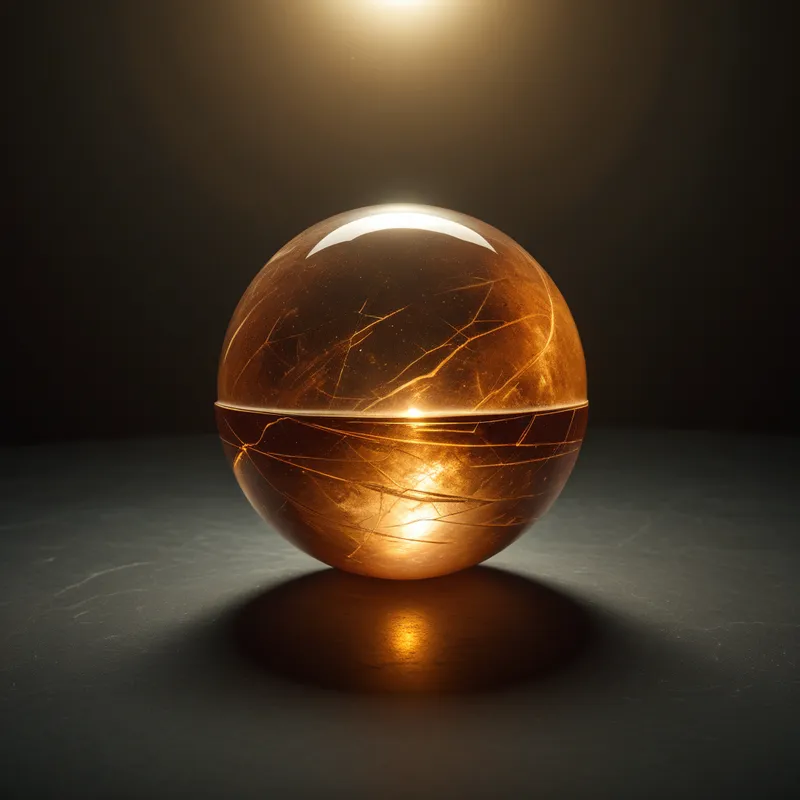
The myth is a masterclass in symbolic equilibrium. The ten suns are not inherently evil; they are divine forces whose nature, when multiplied and unregulated, becomes destructive. They represent the unbridled potency of the Yang principle—creativity, energy, and consciousness—run amok without the balancing coolness of Yin.
The greatest light, in excess, creates the deepest shadow. The myth warns that even our highest gifts—our brilliance, our passion, our potential—require the discipline of a vessel, the rhythm of a cycle, and the humility of a limit.
The archer Yi is the archetypal agent of necessary correction. He is not a destroyer, but a restorer of boundaries. His arrows are acts of discernment, separating the harmful excess from the vital essence. He embodies the difficult, often traumatic, intervention required to break a pathological pattern. The spared sun is the crucial symbol of integration. It is the same solar energy, now transformed by the trauma of loss and the responsibility of being the sole bearer of light. It moves from a state of childish, collective exuberance to one of mature, solitary duty—a perfect metaphor for the individuated consciousness.
The Dreamer’s Resonance
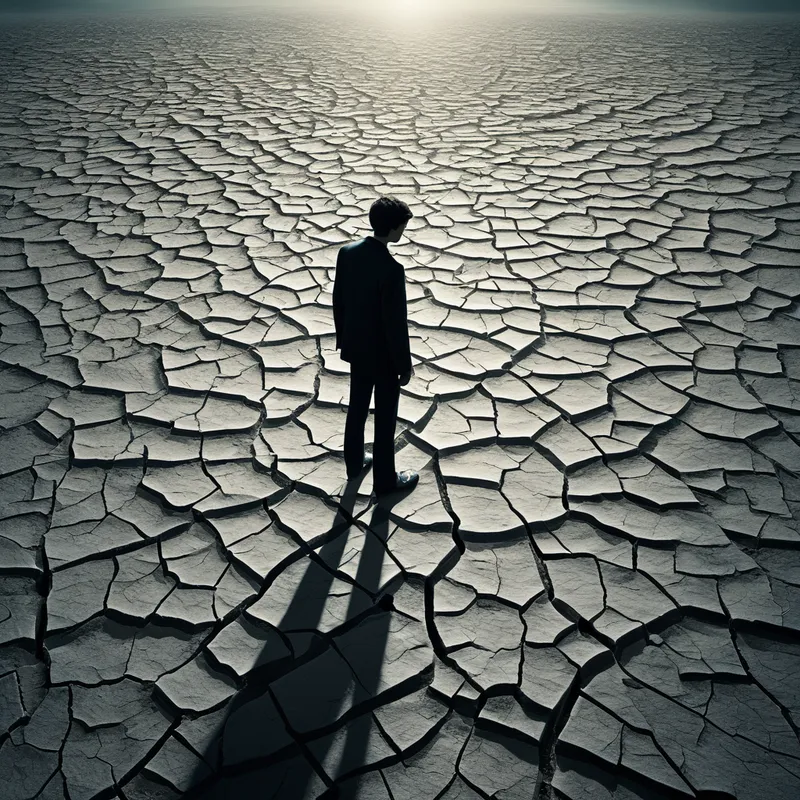
When this myth stirs in the modern unconscious, it often manifests in dreams of overwhelming heat, blinding light, or multiple light sources. One may dream of ten clocks on a wall, all showing different times, or of being pulled in ten directions by competing obligations or identities. The somatic experience is one of burnout, feverish anxiety, and psychic dehydration—a feeling that one’s very resources are evaporating.
This dream pattern signals a critical imbalance in the psyche. The “ten suns” are the dreamer’s own talents, drives, or commitments operating in a state of uncoordinated, competitive frenzy. It is the entrepreneur launching ten ventures at once, the artist torn between ten mediums, the caregiver stretched across ten relationships. The psyche is crying out for the archer’s intervention: a conscious, perhaps ruthless, act of prioritization and release. The grief felt upon “shooting down” a sun in waking life—quitting a project, ending a commitment, setting a firm boundary—is the same grief Yi must have felt. It is the mourning of a potential, but it is the only path to saving the whole of one’s life from being scorched barren.
Alchemical Translation
The journey of the Ten Suns is a precise map for the alchemical process of Individuation. It begins in the unconscious identity of the ten suns—the undifferentiated swarm of potentials, complexes, and energies within us. The first stage of the work (nigredo) is the scorching of the earth: the crisis, the burnout, the painful realization that this state is unsustainable and destructive.
The summoning of the archer is the emergence of the Ego in its most heroic, disciplined form. It must take up the bow of will and the arrow of discernment. The shooting down of the nine suns is the arduous process of discriminatio—analyzing, confronting, and consciously letting go of the inflated identifications, the compulsive behaviors, and the “brilliant” but scattered energies that do not serve the central, authentic self.
The alchemical gold is not found in the nine fallen suns, but in the character of the one that remains. It is the core self, tempered by sacrifice, now capable of sustaining a consistent, life-giving orbit.
The final, spared sun represents the birth of the Self (with a capital ‘S’). It is the integrated, singular source of light and warmth that is both powerful and regulated, brilliant yet humble, because it remembers the cost of its own singularity. The cycle of rising and setting it now maintains is the balanced rhythm of engagement and withdrawal, action and rest, that defines a harmonious and whole individual.
Associated Symbols
Explore related symbols from the CaleaDream lexicon:
- Sun — The central symbol of consciousness, vitality, and the divine self, transformed from a chaotic multitude into a single, disciplined source of life.
- Archer — Embodies the focused will, discernment, and necessary action required to correct a catastrophic imbalance, even when it involves a painful sacrifice.
- Forest — Represents the lush, unconscious life of the psyche that is scorched and endangered when the fires of unregulated consciousness rage out of control.
- River — Symbolizes the flowing, cooling, Yin principle of emotion and adaptability that dries up in the face of excessive, dehydrating Yang energy.
- Dragon — Connected to the chariot of Xihe, representing the primordial, untamed cosmic power that must be harnessed to a disciplined daily rhythm.
- Arrow — The instrument of precise, penetrating discernment that separates the harmful excess from the vital essence, a tool of psychic surgery.
- Mountain — The enduring, stable earth that cracks under unbearable pressure, representing the somatic and foundational toll of psychic overload.
- Shadow — The dark, monstrous beings (Yaoguai) that emerge from the parched psyche, representing repressed contents that surface during times of extreme stress or burnout.
- Order — The ultimate goal of the myth, the restoration of the celestial and natural law (Tao) through a difficult, transformative intervention.
- Sacrifice — The core painful action of the narrative, the letting go of nine brilliant potentials to save the integrity of the whole system.
- Light — The essential quality that is both the problem and the solution, requiring transformation from a scorching glare to a nurturing glow.
- Rebirth — The state of the world and the single sun after the crisis; a new, more conscious and sustainable cycle of life emerges from the ashes of the old.