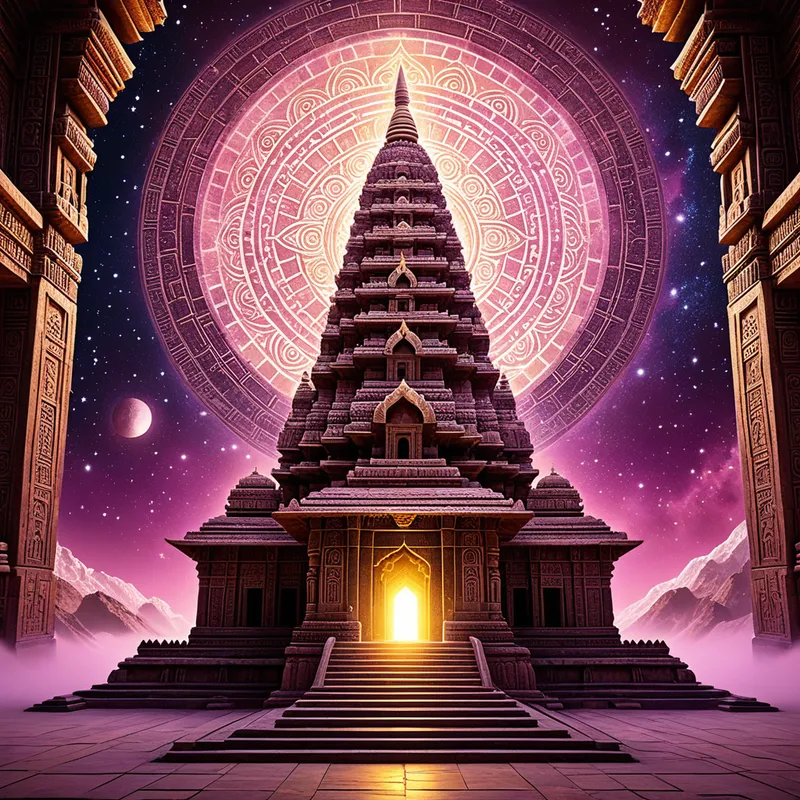
The Temple of the Heart Myth Meaning & Symbolism
A timeless myth of the divine within, where the soul's journey is not outward to a sacred place, but inward to the sanctum of the heart.
The Tale of The Temple of the Heart
Listen. There is a story not written on palm leaves or carved in stone, but whispered on the breath between breaths. It speaks of a king who had everything the world could offer: palaces that scraped the heavens, armies that darkened the plains, and a treasury that spilled like a river of stars. Yet, in the silent watches of the night, a hollow wind blew through the chambers of his being. He was a magnificent shell, echoing with the question, “Where is the treasure that does not rust?”
Driven by this unnamed thirst, he abandoned his throne. He walked through forests where the trees were pillars of an older temple, and across deserts where the sun scoured away all but essence. He sought the holiest of shrines, the most powerful of sages, the most potent of mantras. He bathed in sacred rivers until his skin wrinkled, and fasted until his bones stood bold against the sky. Still, the hollow wind whistled.
One evening, as dusk bled into a violet twilight, he collapsed at the foot of a great banyan tree, its aerial roots forming a natural cathedral. In his despair, he cried out not to a distant god, but from the very pit of his lack. “I have sought you in all directions! I have turned the world inside out! Where are you hiding?”
Then, from the deep silence that followed his cry—a silence so profound it had its own texture—came a voice. It was not in the air, but in the marrow. It did not speak to his ears, but to the cavity of his chest.
“Brahman does not reside in the highest heaven,” the voice murmured, a vibration more than a sound. “Nor is Paramatman found by crossing the widest ocean. Turn your gaze, O seeker, by the distance of the span of your own brow. Turn it inward.”
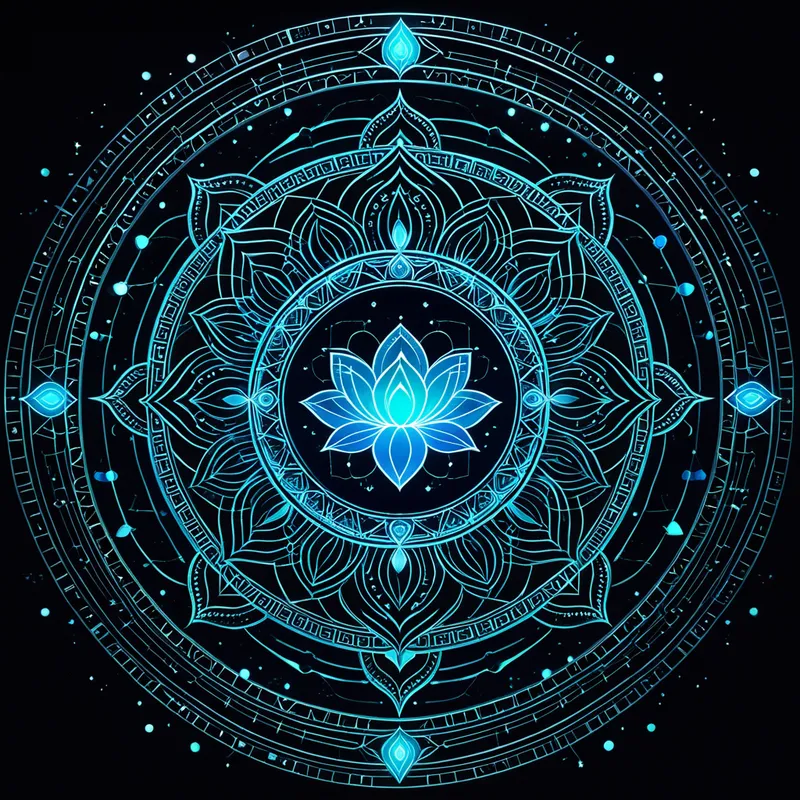
The king, bewildered, placed a hand upon his own chest. The voice continued, a gentle thunder. “Within this city of nine gates—the body—lies a secret shrine, unlit by sun or moon. It is a lotus, inverted, its roots in the crown of the head, its blossom cradled in the chamber of the heart. There, in that tiny space, smaller than a grain of barley, vaster than all the worlds, the universe rests. There, the chariot of the senses is stilled. There, in the sanctum sanctorum where no ritual fire is lit, the flame of awareness burns eternal. This is the Antaryamin, the inner ruler. This is the temple you have traversed the world to find. You are both the pilgrim and the destination. You are the seeker, the path, and the shrine.”
And in that moment, under the banyan’s embrace, the king did not see a new vision. He ceased seeing altogether. The frantic search that had propelled his life dissolved. The hollow wind was gone, replaced by a profound, resonant fullness. He had not found a thing. He had remembered a place. He had come home.
Cultural Origins & Context
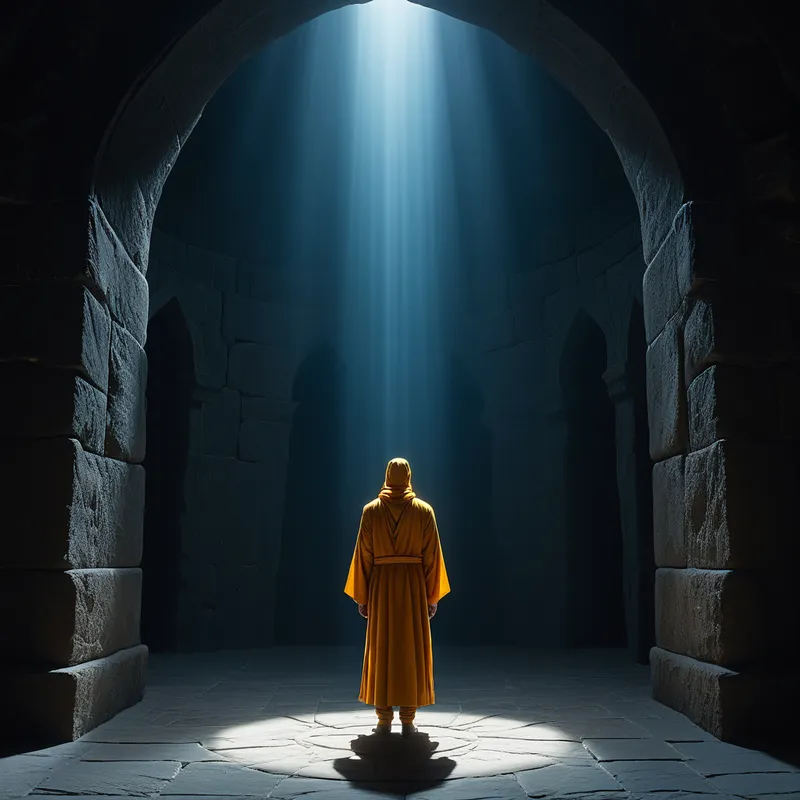
This is not a single myth with one author or scripture, but a pervasive, foundational metaphor woven through the tapestry of Vedanta and mystical Upanishadic thought. Its most famous articulation is in the Katha Upanishad and the Bhagavad Gita. It was the essential teaching of sages to disciples who, like the king in the tale, had mastered external rituals but missed the inner point.
The societal function was radical yet stabilizing. In a culture with elaborate external rituals, vast pantheons, and complex social duties (dharma), this myth served as the ultimate equalizer and internal compass. It told the priest and the warrior, the merchant and the servant, that the ultimate authority and the most sacred space were not the sole property of the temple or the Brahmin, but were the innate birthright of every conscious being. It transformed spirituality from a vertical journey of ascent to an inward journey of depth, making enlightenment accessible not through social station, but through sincere introspection (atma-vichara).
Symbolic Architecture
The symbolism here is an intricate map of the human psyche. The “city of nine gates” is the body (two eyes, two ears, two nostrils, mouth, and two excretory gates). The king represents the ego—the ruler of the external domain who believes sovereignty lies in control and acquisition.
The journey outward is the drama of the ego; the turning inward is the birth of the Self.
The endless seeking in forests and deserts symbolizes the psyche’s projection of wholeness onto external objects: status, relationships, knowledge, experiences. The hollow wind is the symptom of this projection—the psychic inflation followed by inevitable emptiness. The banyan tree, with its roots descending from its branches, is a perfect symbol for the maya that appears rooted in reality, yet points back to a single, hidden source.
The heart-lotus is the symbolic center. It is not the physical organ, but the psychic center of consciousness, the chakra of integration where emotion, intuition, and transcendent awareness meet. The “tiny space” (daharakasha) that contains the universe is the psychological truth that the microcosm of the individual psyche reflects and contains the macrocosm of all archetypal reality.
The Dreamer’s Resonance
When this myth stirs in the modern dreamer, it often manifests not as a clear narrative, but as a potent feeling-toned image. One may dream of discovering a hidden, beautifully preserved room in their own house they never knew existed. They may dream of a key that fits a lock in their own chest. They may find themselves in a vast, external labyrinth only to realize the exit is behind their own eyes.
Somatically, this process can feel like a deep, central ache—not of illness, but of recognition. It is the psyche’s signal that the conscious attitude has become too one-sided, too identified with the persona (the king on his throne). The dream is initiating a process of introversion, pulling libido (life-energy) back from its investments in the world to re-invest it in the inner foundation. The conflict is between the lifelong habit of seeking “out there” and the terrifying, awe-ful invitation to be still and look “in here.”
Alchemical Translation
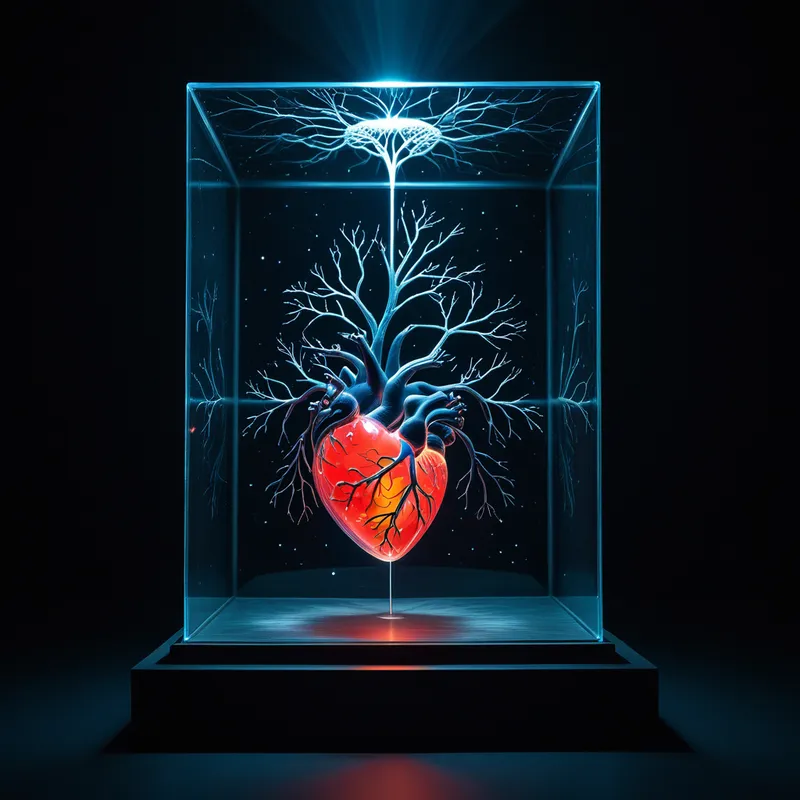
For the modern individual, this myth models the pinnacle of the individuation process: the shift from ego-centeredness to Self-centeredness. The king’s arduous external journey is the necessary first half of life—building the ego, exploring the world, defining oneself against and through others. The crisis of emptiness is not a failure, but the catalyst for the alchemical nigredo, the dark night that forces a re-evaluation of all values.
The temple is not built; it is revealed when the rubble of false identifications is cleared away.
The turning inward is the beginning of serious inner work—the engagement with the shadow, the anima/animus, and the other structures of the personal unconscious. This is the arduous path through one’s own personal forest and desert. The voice that speaks from the silence is the emergent voice of the Self, the transcendent function that arises when the conscious mind admits its bankruptcy.
Finding the “temple of the heart” is the symbolic achievement of the coniunctio or advaita. It represents the integration of the conscious and unconscious into a new, centered totality. The individual no longer “has” a psyche; they are the living psyche, grounded in its own eternal source. The king returns to his throne, but he is no longer the same king. He rules not from egoic will, but from the embodied wisdom of the Self. The outer life continues, but it is now irrigated by an inner, inexhaustible spring. The search ends because the seeker has realized he is what he sought. The pilgrimage was always a homecoming.
Associated Symbols
Explore related symbols from the CaleaDream lexicon: