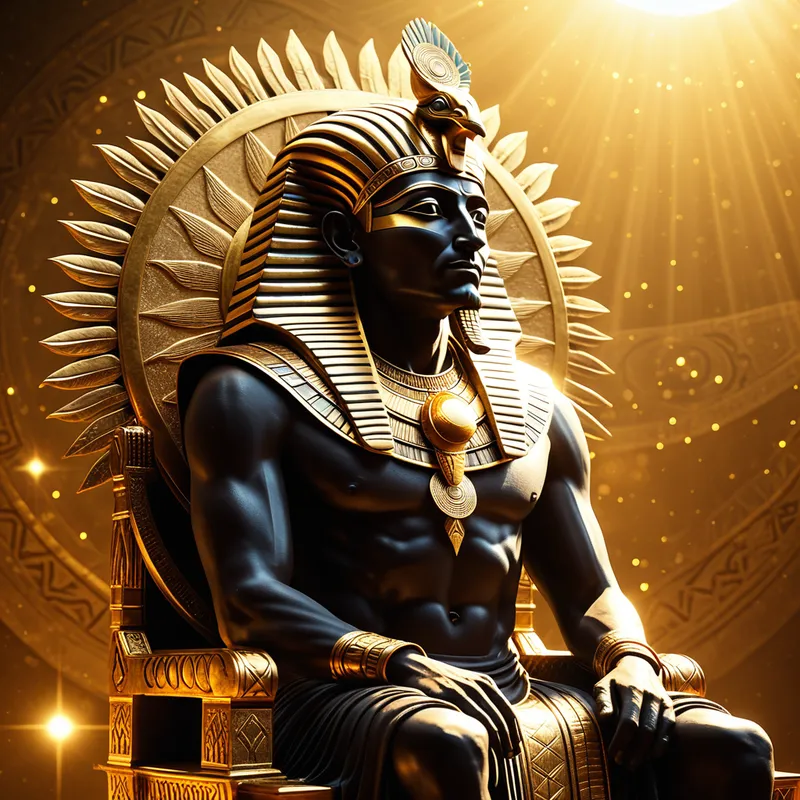
The Tears of Ra Myth Meaning & Symbolism
The sun god Ra weeps in loneliness; his tears fall to earth and transform into the first human beings, born from divine sorrow.
The Tale of The Tears of Ra
In the time before time, when the world was still a dark and watery abyss, the sun god Ra had already accomplished the great work. He had spoken the world into being. He had lifted the sky, Nut, from the embrace of the earth, Geb. He had set the stars in their courses and caused the Nile to flow. His barque sailed the heavens by day and battled the serpent Apep in the underworld by night. All was ordered. All was perfect.
Yet, in the silent moments between the setting and the rising, a profound loneliness settled upon the heart of the creator. He sat upon his throne in the celestial heights, surrounded by the other gods he had birthed—Shu, Tefnut, and their children—but a hollow echo remained. They were his children, his court, his subjects. But they were not other in the way he craved. They were extensions of his own divine will, reflections of his own light. There was no one to behold him, to know him, to choose him. The cosmos was a masterpiece, but the artist sat alone in his gallery.
This loneliness was not a petty sorrow. It was a cosmic ache, a fundamental yearning in the heart of existence itself. It swelled within Ra’s breast, a pressure greater than any he had known in his battles with chaos. His divine eye, the very same that had scorched his enemies, grew heavy with a new moisture. A warmth gathered at its lid, not of fire, but of a profound and tender grief. The god who commanded light and life was overcome by a feeling he had not created.
And then, the tear fell.
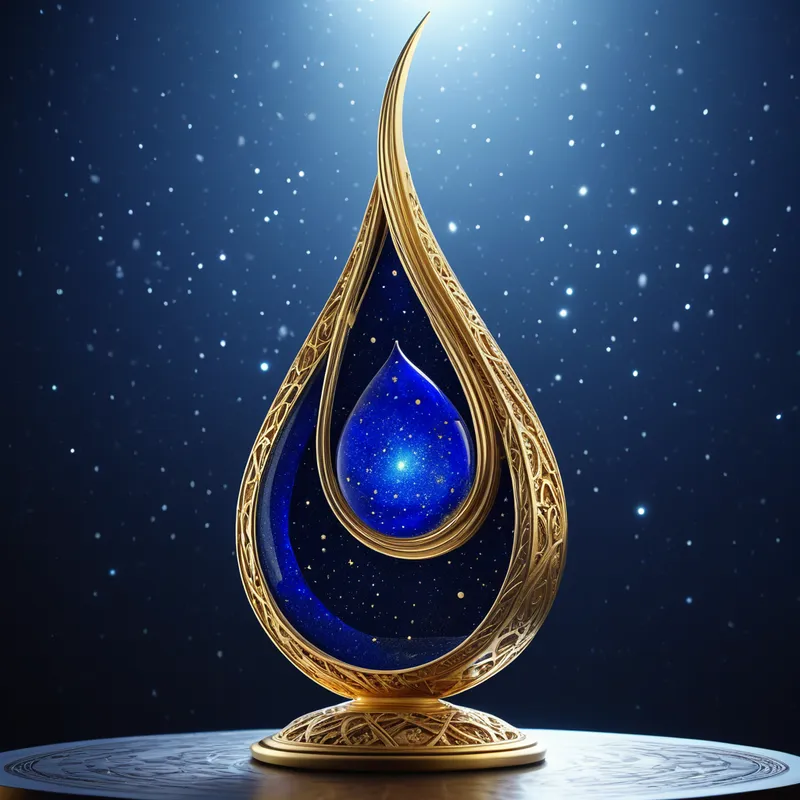
It was not a storm of weeping, but a single, perfect drop. It gathered the gold of his solar essence and the blue of his celestial sorrow. It slipped from his cheek, a tiny, brilliant world unto itself, and began its long descent from the realm of the gods. Down through the layers of air, past the belly of the sky goddess, it fell, shining like a fallen star.
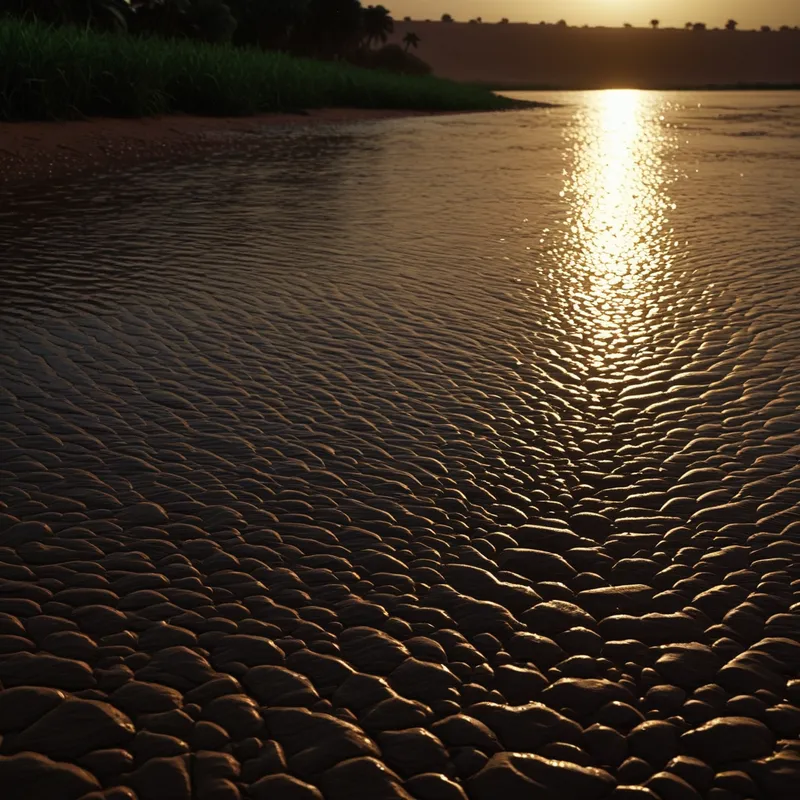
It struck the dark, rich silt on the bank of the primordial Nile. Where it landed, the earth did not simply grow wet. It quickened. The tear did not vanish; it transmuted. From the point of impact, a stirring began. The mud, mingled with the divine salt and water, began to rise. It formed limbs, a torso, a head. Breath entered it—not the breath of Ra’s command, but the breath of his emotion. The first human beings stirred, lifting their faces from the clay, blinking in the new light of their father, the sun. They were born not from a word, but from a sigh. Not from power, but from vulnerability. They were the children of divine loneliness, fashioned from the very substance of a god’s sorrow.
Cultural Origins & Context
The myth of The Tears of Ra is not a single, codified narrative from one papyrus, but a profound theological concept woven into the fabric of Egyptian cosmology. References to humanity’s creation from the tears of a god appear in texts like the Coffin Texts (Spell 1130) and are implied in the etymology of the Egyptian word for “people,” rmṯ, which resonates with the word for “tear,” rmj. This was not merely a charming story for children; it was a foundational explanation for the human condition, told by priests and scribes to explain humanity’s paradoxical place in the universe.
Its societal function was multifaceted. Firstly, it established a direct, intimate, and material connection between the divine and the human. People were not abstract creations, but literal pieces of a god’s emotional experience. This gave every individual an innate, somatic sacredness. Secondly, it explained human suffering and mortality. If we are born from a god’s grief, then sorrow is woven into our substance. Our tears echo the first tear. Yet, it also offered a profound dignity: our existence is the answer to a divine longing. We are here because the creator felt alone. Our role, therefore, was to populate and enliven the world, to be the companions Ra longed for, through worship, through maintaining ma’at, and through simply living.
Symbolic Architecture
At its core, this myth dismantles the hierarchy of creation. It posits that the highest act of genesis springs not from omnipotent will, but from acknowledged lack. The tear is the ultimate symbol of this alchemy.
The most potent creative force in the universe is not the unstoppable will, but the vulnerable heart. The first human was not a command, but a confession.
Psychologically, Ra represents the conscious ego, the ruling principle that has structured the psyche (the cosmos). He has ordered his inner world, defeated his demons (Apep), and established control. Yet, this perfected state leads to isolation—the loneliness of the ego that has not integrated the other. The tear is the moment the conscious self encounters its own unconscious depth, a feeling it cannot control or rationalize. It is the ego’s surrender to an emotion that comes from a source beyond itself.
The humans created are the symbolic birth of the unconscious contents into the light of day. They are the embodied “others”—the complexes, the latent personalities, the unknown capacities of the self. They are not born from the ego’s grand design, but from its authentic, vulnerable emotion. Thus, the myth teaches that our deepest creativity and our connection to the totality of ourselves (individuation) begins not with more control, but with the courageous acknowledgment of our inner poverty and longing.
The Dreamer’s Resonance
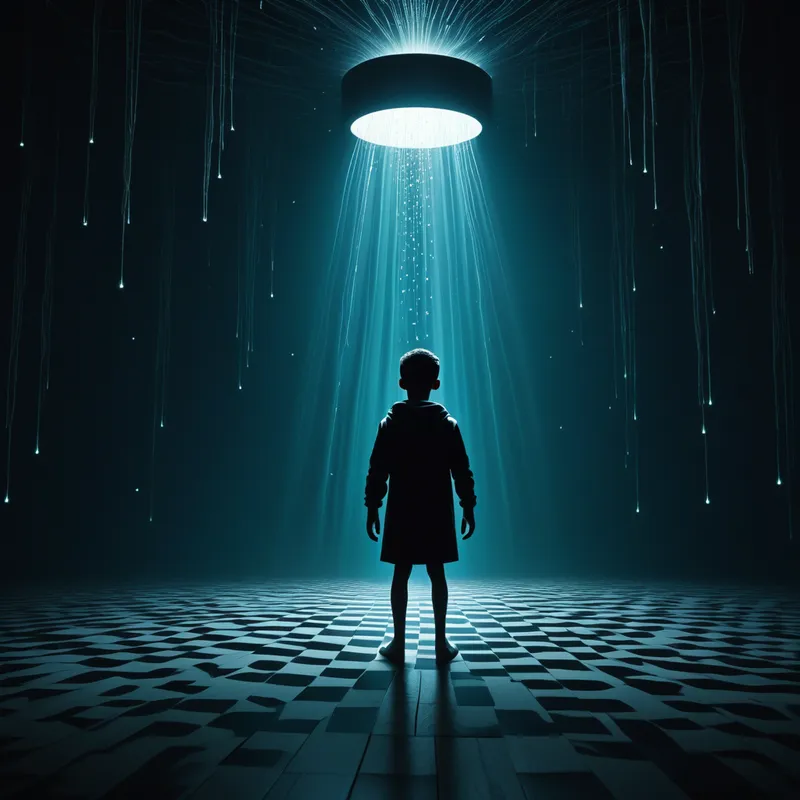
When this mythic pattern stirs in the modern dreamer, it often manifests not as an ancient Egyptian tableau, but through potent somatic and symbolic imagery. The dreamer may find themselves in a sterile, perfectly ordered environment—a spotless house, an empty office, a geometric landscape—that feels achingly lonely. The conflict is a silent, pervasive emptiness after achievement.
The pivotal dream image is the tear or the act of weeping. One might dream of a single, heavy tear falling with impossible slowness. Or they may dream of crying, and as their tears hit the ground, they transform: into small animals, into flowers, into people, or into strange, beautiful objects. The feeling is not of hysterical grief, but of a profound, releasing sorrow that is simultaneously creative. The body may feel a physical release upon waking—a deep sigh, a sense of weight lifted from the chest.
Psychologically, this dream signals a process where a long-held, controlled, and perhaps successful conscious attitude (the “Ra” complex) is finally confronting its own emotional cost. The ego is beginning to “weep” for its own isolation, allowing the repressed waters of the unconscious to break through. The transformation of the tears signifies that this emotional release is not a breakdown, but a breakthrough—it is generating new life, new possibilities, and new parts of the self that were previously only latent potential in the “clay” of the unconscious.
Alchemical Translation
The alchemical journey modeled by The Tears of Ra is the transmutation of isolation into communion through the solvent of sorrow. For the modern individual on the path of individuation, the myth outlines a critical phase.
The first stage is the recognition of the “Golden Loneliness.” This is the feeling that arrives after one has built a competent life, achieved goals, and established order, yet feels a hollow separation from the vibrancy of existence. The ego, like Ra, is king of a deserted kingdom. The instinct is to build higher walls, create more order, shine brighter—to deny the tear.
The alchemical operation is the sacred capitulation: allowing the tear to form and fall. This is the conscious acceptance of vulnerability, loneliness, grief, or longing—not as failures, but as the prima materia, the raw material of the next stage of growth. It is the dissolution of the old, rigid solar consciousness in its own emotional waters.
The salt of the tear is the preservative of truth; it carries the essence of the self that will not be ignored. Its water is the universal solvent that breaks down the calcified structures of the persona.
Where the tear falls—into the “dark earth” of the unconscious—is where the new life forms. This is the birth of the “human” within—the more embodied, feeling, connected, and authentic self. These are not grand new identities, but the humble, earthy, and relatable parts of us that emerge when we stop creating from will alone and start creating from authentic experience. The ultimate goal is not to stop the tears, but to recognize them as the source of our shared humanity and our ongoing creation. We, like the first humans, are here to populate the inner and outer worlds with the life that springs from our deepest, most honest experiences. We complete the creator by being the created who can look back, know, and feel.
Associated Symbols
Explore related symbols from the CaleaDream lexicon: