The Sword of Damocles Hebrew
A Jewish reinterpretation of the classic Roman parable, transforming the dangling sword into a symbol of divine justice and moral accountability.
The Tale of The Sword of Damocles Hebrew
In the hushed study of a rabbi, far from the marble halls of Syracuse, the tale is not of a flatterer and a tyrant, but of a soul and its Creator. Here, the sword is not suspended by a horsehair for a mortal king, but by the breath of the Divine for every human heart.
The story is told of a learned man, pious in observance yet secretly prideful in his righteousness. He stood before the Aron Kodesh one Yom Kippur, the Day of Atonement, and in the solemn silence, he whispered not a confession, but a challenge. “Master of the Universe,” he thought, “my ledger is clean. My deeds are just. Where is the reward for my fidelity? Let me know the weight of Your favor, as I have borne the weight of Your law.”
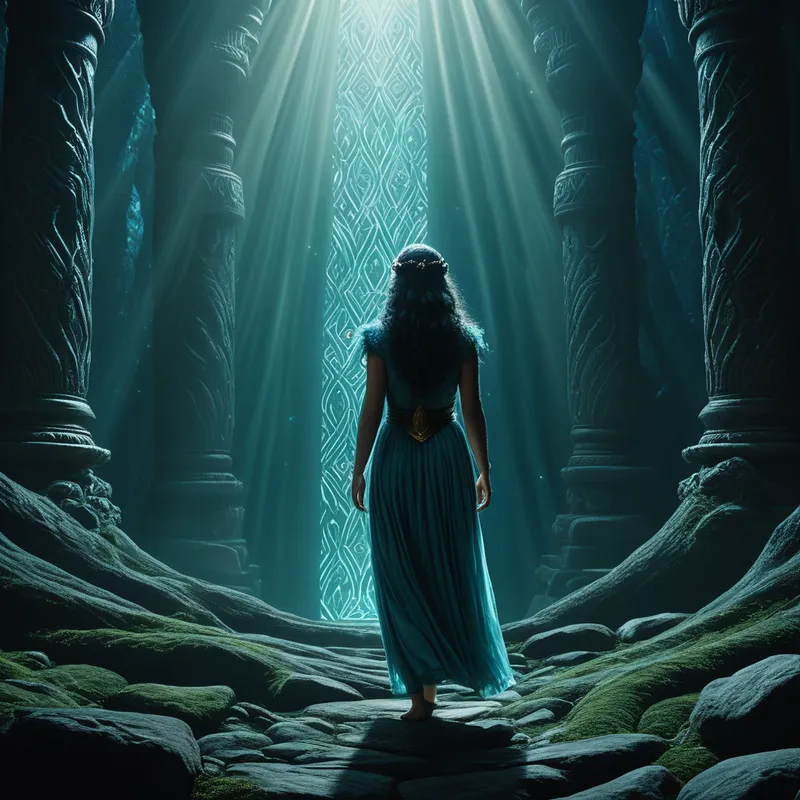
That night, he dreamed. He found himself seated upon a throne of luminous white stone, in a palace of impossible geometry where walls were made of light and floors of polished sky. A crown of intricate silver, etched with holy letters, rested upon his head. Before him lay a feast of understanding, every mystery of [the Torah](/myths/the-torah “Myth from Jewish culture.”/) laid bare, every question answered. This, he knew, was the seat of divine judgment itself. Joy, profound and terrifying, flooded him. This was the clarity, the absolute [justice](/myths/justice “Myth from Tarot culture.”/), he had sought.
Then he looked up.
Directly above the throne, point aimed at [the crown](/myths/the-crown “Myth from Various culture.”/) upon his brow, hung a massive sword. It was not of iron or steel, but forged from a single, frozen beam of light—a light so pure it held the quality of absolute severity. It did not hang by a horsehair, but by a single, trembling letter: the Aleph, the silent first letter of Elohim and Emet—Truth. The sword did not waver, yet its presence vibrated with the potential of all consequence. He understood, in a flash of soul-knowing, that this sword was the other face of the light that built the palace. It was the unwavering standard of Din, of Divine Law, in its total, unmitigated form. The throne was not a reward; it was the vantage point of ultimate accountability. Every hidden thought, every unexamined motive, every slight against another that he had justified, now lay bare under that piercing point. [The crown](/myths/the-crown “Myth from Various culture.”/) of silver was not honor, but the crushing weight of perfect judgment. He could not move, could not breathe, beneath the gaze of that absolute truth.
He awoke with a cry that was a prayer, drenched in the sweat of terror and revelation. The pride was gone, burned away. He finally understood the blessing of the hester panim, the merciful concealment of God’s full presence. He understood that life, in its ambiguities and struggles, was not a distance from justice, but its compassionate container. The dangling sword was not a threat from a capricious ruler, but the ever-present reality of a moral universe, held back only by divine patience and the opportunity for teshuvah.
Cultural Origins & Context
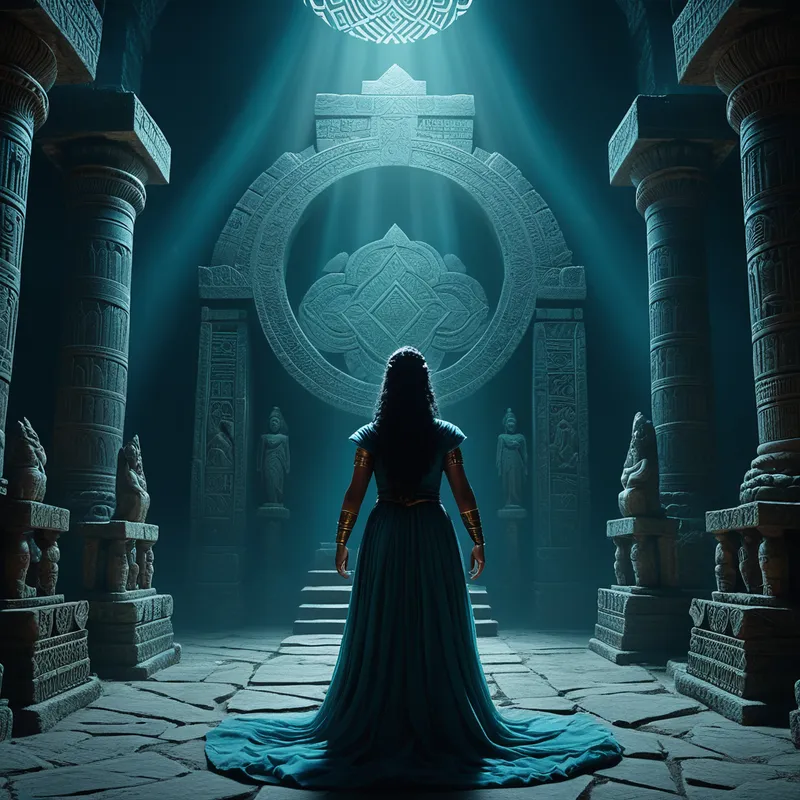
The Roman parable of Damocles, recorded by Cicero, is a secular political warning about the anxieties of power. Its migration into Jewish thought represents a profound act of hermeneutic alchemy, a reclaiming of a universal image for a specific theological and ethical worldview. Jewish tradition has long engaged with wisdom from surrounding cultures, filtering it through the lens of Torah to extract or impart deeper meaning.
The key to this reinterpretation lies in the central Jewish concepts of Din (Strict Justice) and Rachamim (Compassion). The universe, in Jewish mysticism, is sustained by a balance of these forces. Unadulterated Din is an unbearable, world-shattering force—it is the sword of pure law with no allowance for context, repentance, or human limitation. The Talmud and Midrash are replete with narratives where righteous figures challenge or appeal to God to temper Judgment with Mercy.
Thus, the “Hebrew” Damocles is not a courtier but every soul. The “king” is not Dionysius but the internal experience of confronting the ethical absolute. The setting shifts from a palace of temporal power to the inner palace of the soul standing before its Creator. This translation grounds the symbol in the daily Jewish consciousness of hester panim—the idea that God’s face is hidden, not absent, allowing space for human choice, error, and growth without immediate, catastrophic consequence. The sword’s hair-thin suspension becomes a powerful metaphor for the precarious, grace-filled nature of existence itself, sustained moment-to-moment by a will greater than its own inherent logic of justice.
Symbolic Architecture
The transformed [symbol](/symbols/symbol “Symbol: A symbol can represent an idea, concept, or belief, serving as a powerful tool for communication and understanding.”/) is an [architecture](/symbols/architecture “Symbol: Architecture in dreams often signifies structure, stability, and the framing of personal identity or life’s journey.”/) of [consciousness](/symbols/consciousness “Symbol: Consciousness represents the state of awareness and perception, encompassing thoughts, feelings, and experiences.”/). The [Throne](/symbols/throne “Symbol: A seat of authority, power, and sovereignty, representing leadership, divine right, or social hierarchy.”/) is no longer a seat of power, but the [soul](/symbols/soul “Symbol: The soul represents the essence of a person, encompassing their spirit, identity, and connection to the universe.”/)’s [station](/symbols/station “Symbol: Signifies a temporary stop, transition point, or a place of waiting in life’s journey.”/) of ultimate self-[awareness](/symbols/awareness “Symbol: Conscious perception of self, surroundings, or internal states. Often signifies awakening, insight, or heightened sensitivity.”/) and accountability. To sit upon it is to relinquish all illusion, all self-deception.
The [Crown](/symbols/crown “Symbol: A crown symbolizes authority, power, and achievement, often representing an individual’s aspirations, leadership, or societal role.”/) shifts from a symbol of [status](/symbols/status “Symbol: Represents one’s social position, rank, or standing within a group, often tied to achievement, power, or recognition.”/) to one of burden—the [weight](/symbols/weight “Symbol: Weight symbolizes burdens, responsibilities, and emotional loads one carries in life.”/) of the soul’s own record, the cheshbon ha-nefesh (accounting of the soul) made tangible. It is the [knowledge](/symbols/knowledge “Symbol: Knowledge symbolizes learning, understanding, and wisdom, embodying the acquisition of information and enlightenment.”/) of one’s own potential measured against one’s actions.
The suspended Sword is the principle of Din itself. It is not punishment, but the inevitable, logical consequence of action within a moral cosmos. Its presence is not malevolent but structural, like the law of gravity. To be aware of it is to be aware of the real.
Most crucially, the Single [Hair](/symbols/hair “Symbol: Hair often symbolizes identity, power, and self-expression, reflecting how we perceive ourselves and how we wish to be perceived by others.”/) is re-imagined. In the Jewish reading, it is the thread of divine [compassion](/symbols/compassion “Symbol: A deep feeling of empathy and concern for others’ suffering, often involving a desire to help or alleviate their pain.”/), the Rachamim that intervenes in the strict mechanics of justice. It is the [space](/symbols/space “Symbol: Dreaming of ‘Space’ often symbolizes the vastness of potential, personal freedom, or feelings of isolation and exploration in one’s life.”/) for repentance, the divine patience, the yetzer ha-tov (good [inclination](/symbols/inclination “Symbol: A natural tendency or leaning toward something, often representing inner direction, gravitational pull, or predisposition in life’s journey.”/)) that whispers a [chance](/symbols/chance “Symbol: A representation of opportunities and unpredictability in life, illustrating how fate can influence one’s journey.”/) for [course](/symbols/course “Symbol: A course represents direction, journey, or progression in life, often choosing paths to follow.”/) correction before the consequence falls. It is the [breath](/symbols/breath “Symbol: Breath symbolizes life, vitality, and the connection between the physical and spiritual realms.”/) of [life](/symbols/life “Symbol: The symbol of ‘Life’ represents a journey of growth, interconnectedness, and existential meaning, encompassing both the joys and challenges that define human experience.”/) itself, the Aleph, holding back the full force of [Truth](/symbols/truth “Symbol: Truth represents authenticity, honesty, and the quest for knowledge beyond mere appearances.”/) to allow for the process of becoming.
The Dreamer’s Resonance
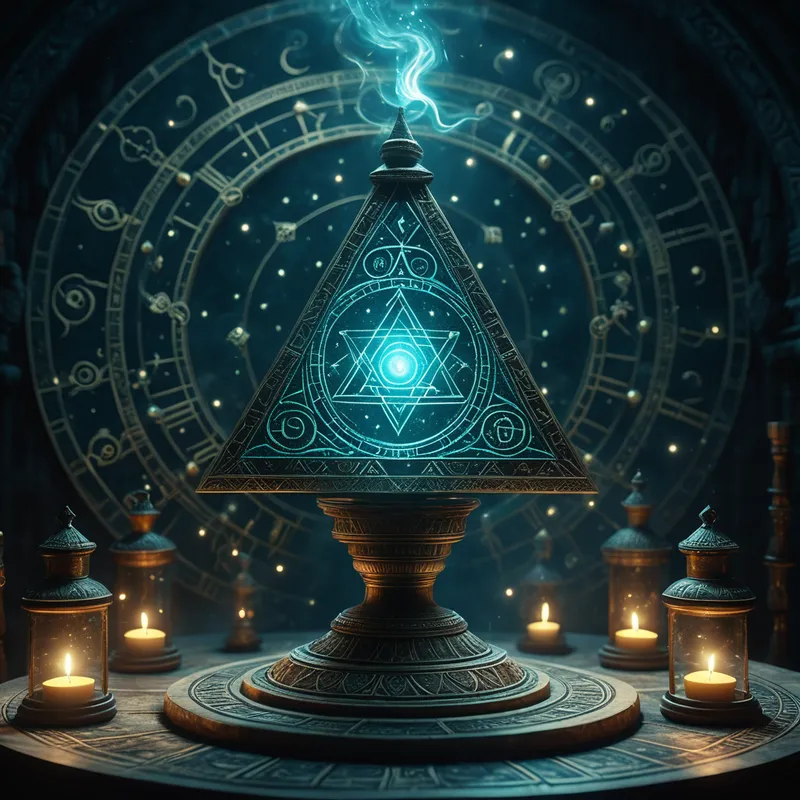
Psychologically, the Hebrew [Sword of Damocles](/myths/sword-of-damocles “Myth from Greek culture.”/) maps onto the superego in its most primordial, archetypal form—not the internalized voice of parents or society, but the voice of [the Self](/myths/the-self “Myth from Jungian culture.”/), the inner divine tribunal. It is the moment of piercing moral clarity that shatters our rationalizations. When we lie to ourselves and feel a sudden, sharp dread, when we betray our own values and experience a wave of existential shame, we feel the tremor in that single hair.
For the dreamer, this symbol manifests not as fear of external punishment, but as the anxiety of authenticity. It asks: Can you bear to see yourself truly? Can you withstand the light of your own conscience? Dreams featuring such a suspended blade often occur at life [crossroads](/myths/crossroads “Myth from Celtic culture.”/), or following actions that conflict with the dreamer’s deep moral code. The terror in the dream is the terror of integration—of bringing [the shadow](/myths/the-shadow “Myth from Jungian culture.”/) into the relentless light of the conscious self. The symbol, however, is ultimately integrative. It does not seek to paralyze with fear, but to awaken with responsibility. The resolution of such a dream is not the sword’s removal, but the dreamer’s humble descent from the illusory throne of self-righteousness, returning to the human, flawed, and merciful world of relationship and action.

Alchemical Translation
The alchemical process here is the transformation of lead—the heavy, paralyzing fear of judgment—into gold: the liberated energy of conscious, ethical living. The initial stage is [nigredo](/myths/nigredo “Myth from Alchemical culture.”/), the blackening: the confrontation with the sword, the crushing weight of pure Din, the annihilation of [the ego](/myths/the-ego “Myth from Jungian culture.”/)’s pretensions.
The crucial work is in the separatio: learning to distinguish the sword of destructive self-condemnation from the sword of sacred accountability. One kills the spirit; the other refines it.
The [albedo](/myths/albedo “Myth from Alchemical culture.”/), or whitening, is the acceptance of the suspended state. It is the realization that the hair’s-breadth is not a curse, but the space of grace—the chesed (loving-kindness) in the balance. This acceptance leads to citrinitas, the yellowing or dawning insight: the understanding that moral vigilance is not a burden, but the very faculty that makes love, trust, and justice possible. The final [rubedo](/myths/rubedo “Myth from Alchemical culture.”/), the reddening, is not a removal of the sword, but the embodiment of its lesson. The individual lives with a “holy anxiety,” a sober joy, carrying the awareness of consequence into acts of compassion, justice (tzedakah), and diligent repair (tikkun). The sword is internalized as a moral compass, its point guiding rather than threatening.
Associated Symbols
Explore related symbols from the CaleaDream lexicon:
- Sword — The archetypal instrument of division, discernment, and moral consequence, representing the power to separate truth from falsehood.
- Justice — The principle of moral rightness and equity, here experienced not as an abstract ideal but as a living, dynamic force with which one must engage.
- Divine — The ultimate source of both the absolute standard (the sword) and the suspending mercy (the hair), representing the transcendent ground of all ethics.
- Scale of Justice — The balancing apparatus between Din (Judgment) and Rachamim (Compassion), the ever-adjusting measure of deed and intent.
- Judgmental Voice — The internalized aspect of the sword, the superego’s call to accountability that can either cripple or catalyze growth.
- Light — The dual-natured substance of the sword; a source of illuminating truth that can also be a searing, unbearable force of exposure.
- Shadow — All that within the self which the sword of truth seeks to illuminate, the hidden motives and unacknowledged flaws that demand integration.
- Temple — The inner sanctuary of the soul where this confrontation between the self and the divine standard takes place.
- Repentance — The active process, made possible by the sword’s suspension, of turning and returning to one’s ethical center.
- Dream — The realm where this profound moral and psychological confrontation is often staged, allowing the soul to grapple with truths too stark for waking denial.
- Fear — The initial, necessary response to the sword’s presence, which must be transformed from a paralyzing dread into a respectful awe that guides action.
- Rebirth — The potential outcome of surviving the sword’s gaze; the emergence of a humbler, more authentic, and ethically engaged self.