The Sumerian Flood Myth Ziusudra Myth Meaning & Symbolism
A righteous king, warned by a god, survives a divine flood to preserve life, receiving immortality for his piety and foresight.
The Tale of The Sumerian Flood Myth Ziusudra
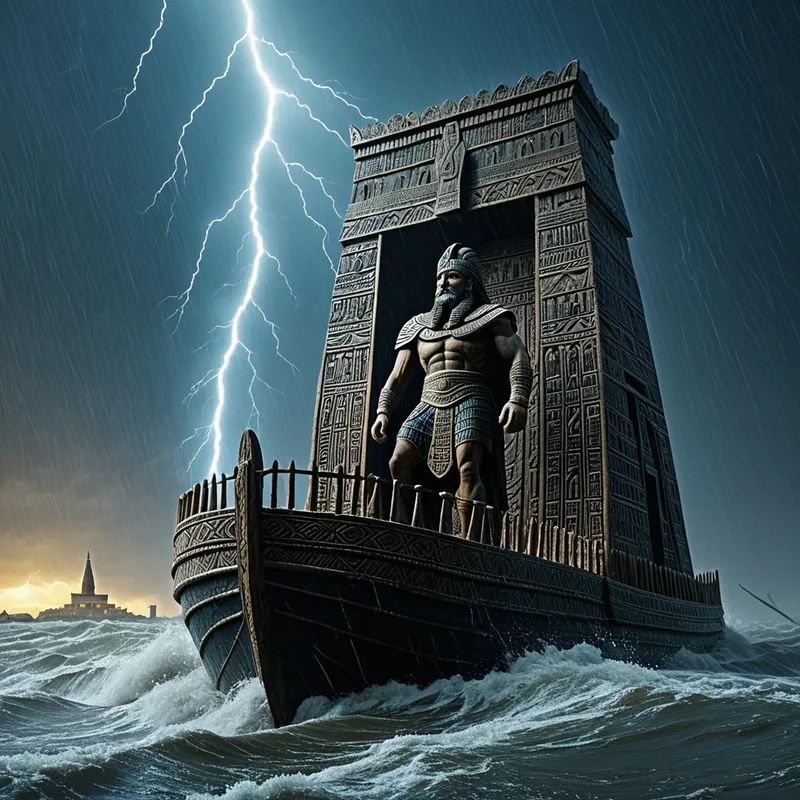
Listen. The air in the assembly of the great gods was thick with a silence that presaged storm. In the luminous, inaccessible heights where An and Enlil presided, a decision had congealed from divine discontent. The clamor of humanity had risen like smoke, an incessant buzz that reached even their celestial abode. It was too much. The divine essence, the me—the fundamental decrees of civilization—felt profaned by the sheer, teeming number of lives. A word was spoken, a decree sealed in the heart of the council: to return the world to the primeval Apsu. To unleash the binding of heaven and earth. To send the Flood.
But in the shadow of that decree, a heart stirred with dissent. Enki, lord of the sweet waters and deep wisdom, whose nature is to shape and preserve, could not abide the utter silence to come. He went not to the king of men directly, for the walls of heaven have ears loyal to Enlil. Instead, he positioned himself at the reed wall of the pious king, Ziusudra, ruler of Shuruppak. There, Enki did not speak with a god’s voice. He let his words seep through the woven reeds, a murmuring on the wind, a truth disguised as a dream for the king’s sleeping ear.
“Wall, listen! Reed wall, pay heed! Ziusudra, man of Shuruppak, son of Ubara-Tutu… dismantle your house, build a great vessel. Abandon possessions, seek life. Bring the seed of all living creatures aboard.”
Ziusudra awoke, the divine whisper etched upon his soul. He did not question; he obeyed. With the dread and urgency of one who has seen the future in a drop of water, he commanded his city. Not for war, but for survival. A vast boat was built, a mountain of pitch and wood and woven reeds. Into its dark hold went his family, his craftsmen, and animals—the oxen, the sheep, the wild creatures of the steppe. The sun rose and set on a scene of frantic, faithful labor, while the sky above remained deceptively calm.
Then, the horizon darkened. The Storm itself was unleashed. For seven days and seven nights, the south wind roared. The Imhullu of Enlil scoured the land. The great boat was tossed like a reed in a torrent, the world beneath vanished beneath a roiling, churning expanse that knew no shore. All light from heaven was extinguished; only the terrible sound of water and wind remained. Inside the vessel, a microcosm of the lost world trembled in darkness. Then, on the seventh day, the war of the elements ceased. An immense quiet fell, heavier than the storm. Ziusudra ventured to an opening. He looked upon a world made new and utterly empty. A flat, endless sea of clay-grey water under a washed-clean sky. His boat ground to a halt upon the summit of Mount Nisir.
To know if life persisted beyond the ark, he released a dove. It circled and returned, finding no perch. He released a swallow. It, too, came back. Finally, he released a raven. The black bird flew out, and did not return. It had found land. The waters were receding. Ziusudra then emerged. He built an altar of stones upon the mountain and made a lavish sacrifice, pouring out libations of sweet oil and barley. The scent of the offering, the first smoke to rise in the new world, drifted up to the heavens.
The gods, who had crowded like flies around the sacrifice of the one survivor, inhaled the sweet savor. Nintu wept, her lapis lazuli beads tears for her destroyed children. Enki defended his cleverness in preserving life. And Enlil, arriving in wrath, was calmed. He saw the righteousness of Ziusudra. In that moment, on the wet stones of the mountaintop, wrath was transmuted. Enlil took Ziusudra and his wife by the hand, blessed them, and bestowed upon them the gift reserved for gods: “Life like a god you shall breathe. In the distant place, the land of Dilmun, where the sun rises, you shall dwell.” The preserver of life was granted life everlasting, crossing the waters from the world of death to a timeless shore.
Cultural Origins & Context
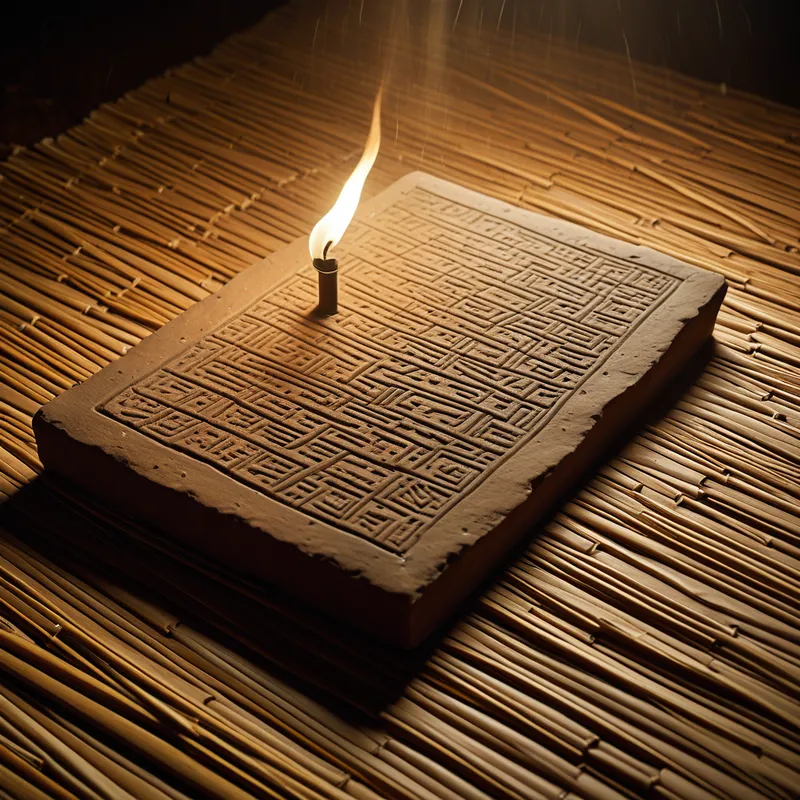
This myth reaches us from the fragmentary edges of history, inscribed on a single, damaged clay tablet from Ur, dating to the late 3rd millennium BCE. It is the oldest known iteration of the Mesopotamian flood narrative, a foundational story that would later flow into the Akkadian [Atrahasis](/myths/atrahasis “Myth from Babylonian culture.”/) and the Babylonian Epic of Gilgamesh. In Sumer, this was not mere entertainment. It was a sacred text, likely recited during rituals or by scribal scholars, explaining the precariousness of the human condition within a cosmos governed by powerful, often capricious, deities.
The society that told this tale lived at the mercy of the very rivers that gave them life—the Tigris and Euphrates. Seasonal floods were both a source of fertile silt and potential catastrophe. The Great Flood myth provided a cosmic rationale for this ever-present threat: divine displeasure. More importantly, it established a template for survival. Ziusudra is not a warrior-king, but a pious, wise ruler who listens. His survival hinges on heeding divine warning and undertaking meticulous, practical preparation. The myth thus functioned as a theological anchor, justifying the necessity of obedience to the gods and the priestly institutions that interpreted their will, while also offering a profound narrative about the cyclical nature of cosmic order—creation, destruction, and re-creation.
Symbolic Architecture
At its core, the myth of Ziusudra is an archetypal [drama](/symbols/drama “Symbol: Drama signifies narratives, emotional expression, and the exploration of human experiences.”/) of the conscious mind navigating an [inundation](/symbols/inundation “Symbol: A flood or overwhelming deluge, often representing emotional overwhelm, cleansing, or uncontrollable forces.”/) from the unconscious. The gods represent autonomous psychic forces. Enlil is [the principle](/symbols/the-principle “Symbol: A fundamental truth, law, or doctrine that serves as a foundation for a system of belief, behavior, or reasoning, often representing moral or ethical standards.”/) of order, [structure](/symbols/structure “Symbol: Structure in dreams often symbolizes stability, organization, and the framework of one’s life, reflecting how one perceives their environment and personal life.”/), and ruthless judgment, which can turn destructive when it feels its boundaries are overwhelmed by the unregulated [chaos](/symbols/chaos “Symbol: In Arts & Music, chaos represents raw creative potential, uncontrolled expression, and the breakdown of order to forge new artistic forms.”/) of undifferentiated [life](/symbols/life “Symbol: The symbol of ‘Life’ represents a journey of growth, interconnectedness, and existential meaning, encompassing both the joys and challenges that define human experience.”/) (humanity’s [noise](/symbols/noise “Symbol: Noise in dreams signifies distraction, confusion, and the need for clarity amidst chaos.”/)). Enki is the tricksterish principle of [intuition](/symbols/intuition “Symbol: The immediate, non-rational understanding of truth or insight, often described as a ‘gut feeling’ or inner knowing that bypasses conscious reasoning.”/), subterranean wisdom, and creative [adaptation](/symbols/adaptation “Symbol: The process of adjusting to new conditions, often involving psychological or physical change to survive or thrive.”/)—the voice from the other side of the [wall](/symbols/wall “Symbol: Walls in dreams often symbolize boundaries, protection, or obstacles in one’s life, reflecting the dreamer’s feelings of confinement or security.”/) that knows how to navigate the coming [deluge](/symbols/deluge “Symbol: A massive, overwhelming flood representing cleansing, destruction, or emotional inundation.”/).
The flood is not merely punishment; it is the necessary dissolution of a world-structure that has become too rigid, too noisy, too alienated from its sacred source. The ark is the vessel of consciousness itself, built from the reeds of attention and sealed with the pitch of intention, tasked with preserving the fragile seeds of potential during the psychic cataclysm.
Ziusudra embodies the nascent Self. He is the ego that aligns itself with the deeper, guiding wisdom (Enki) against the annihilating decree of the ruling [attitude](/symbols/attitude “Symbol: Attitude symbolizes one’s mental state, perception, and posture towards life, influencing emotions and actions significantly.”/) (Enlil). His [journey](/symbols/journey “Symbol: A journey in dreams typically signifies adventure, growth, or a significant life transition.”/) is one of encapsulation, endurance, and ultimate transcendence. The birds he releases—dove, swallow, [raven](/symbols/raven “Symbol: The raven is often seen as a messenger of the divine and a symbol of transformation, wisdom, and the mysteries of life and death.”/)—map the gradual re-[emergence](/symbols/emergence “Symbol: A process of coming into being, rising from obscurity, or breaking through a barrier, often representing birth, transformation, or revelation.”/) of [consciousness](/symbols/consciousness “Symbol: Consciousness represents the state of awareness and perception, encompassing thoughts, feelings, and experiences.”/), from tentative hope (dove) to final confirmation of a new psychic [terrain](/symbols/terrain “Symbol: Terrain in dreams often represents the landscape of one’s life, including challenges, opportunities, and feelings about one’s current circumstances.”/) ([raven](/symbols/raven “Symbol: The raven is often seen as a messenger of the divine and a symbol of transformation, wisdom, and the mysteries of life and death.”/)). His final [apotheosis](/symbols/apotheosis “Symbol: The transformation of a mortal into a divine or godlike state, representing ultimate spiritual elevation and transcendence of human limitations.”/) in Dilmun symbolizes the [achievement](/symbols/achievement “Symbol: Symbolizes success, mastery, or reaching a goal, often reflecting personal validation, social recognition, or overcoming challenges.”/) of a new, more permanent level of psychological [integration](/symbols/integration “Symbol: The process of unifying disparate parts of the self or experience into a cohesive whole, often representing psychological wholeness or resolution of internal conflict.”/), where the mortal ego, having survived the flood of the unconscious, attains a godlike [perspective](/symbols/perspective “Symbol: Perspective in dreams reflects one’s viewpoints, attitudes, and how one interprets experiences.”/), reconciling the warring divine forces within.
The Dreamer’s Resonance
When this myth stirs in the modern unconscious, it often manifests in dreams of overwhelming floods, of being the sole survivor in a lifeboat, or of receiving a crucial, whispered warning. Somaticly, one may feel a sense of pressure, of being submerged or gasping for air upon waking. Psychologically, this signals a period of profound emotional or life-structure inundation. A long-held identity, career, or relationship pattern is being dissolved by forces that feel both impersonal and devastating.
The dream-ark is the dreamer’s nascent, fragile sense of self-preservation amidst this crisis. The dream may highlight the frantic, practical work of “building the ark”—gathering resources, securing loved ones (aspects of the personality), preparing to let go of material attachments. The voice of Enki in such dreams could be an unexpected insight, a remembered piece of advice, or a sudden, clear knowing of what must be done to survive the coming emotional storm. This dream pattern does not promise the storm will be avoided, but that a vessel of meaning can be constructed to ride it out, preserving the essential “seed” of who one is meant to become.

Alchemical Translation
The alchemical process mirrored here is solutio—dissolution in the primal waters. For the individual, this is the often-terrifying stage of individuation where the conscious personality and its attendant complexes are broken down. The “noise” Enlil despises can be interpreted as the neurotic chatter of the unexamined life, the compulsive identities and personas that prevent contact with the deeper Self.
To build Ziusudra’s ark is to consciously choose the work of inner observation and containment as the outer world (or one’s inner emotional world) falls apart. The pitch that seals the vessel is one’s commitment to the process itself, a willingness to stay with the darkness and the tossing.
The climax of the opus is not the survival alone, but the sacrifice upon the mountain. This is the critical act of sublimatio—offering back to the psychic totality (the gods) the fruits of the ordeal. Ziusudra does not hoard his survival; he gives thanks. Psychologically, this is the integration of the experience into a new worldview, a gratitude for the destruction that made renewal possible. The final gift of immortality in Dilmun is the alchemical gold: the establishment of a connection to the transcendent, timeless Self. The individual is no longer solely identified with the mortal, flood-vulnerable ego, but has established a dwelling in that “distant place” within—the inner Dilmun—where consciousness is sustained by the breath of the eternal.
Associated Symbols
Explore related symbols from the CaleaDream lexicon:
- Flood — The overwhelming, cleansing, and destructive force of the unconscious or fate that dissolves the old world order, necessitating a complete psychic rebirth.
- Water — Represents the primordial, chaotic, and life-giving substance of the unconscious itself, both the medium of destruction and the source of all potential renewal.
- Boat — The vessel of consciousness, the constructed ego-structure and intentionality that must be sealed against chaos to preserve the essential seeds of life and psyche during transformation.
- Bird — Messengers of reconnaissance between the isolated self (the ark) and the new, unknown world; symbols of spirit, intuition, and the return of hope after catastrophe.
- Mountain — The stable, elevated point of revelation and sacrifice that emerges after the flood; the symbol of a new foundation for consciousness and a meeting place with the divine.
- Sacrifice — The essential act of giving back to the cosmic order, the libation that appeases divine wrath and transforms survival into sacred covenant, enabling blessing.
- God — The autonomous, overwhelming psychic forces (like Enlil and Enki) that govern the inner cosmos, representing principles of order, judgment, wisdom, and creativity in conflict.
- Dream — The medium through which the saving wisdom (Enki’s warning) is often transmitted, a direct channel from the deeper unconscious to the conscious mind in times of crisis.
- Destiny — The inescapable decree of the gods that sets the flood in motion, and the rewritten fate of Ziusudra who, through piety and wisdom, alters his personal destiny to one of immortality.
- Stone — The material of the altar Ziusudra builds, representing the first act of solid, enduring culture and worship in the new world, a foundation for meaning after dissolution.
- Wind — The agent of the flood storm (the south wind) and later the breath of life granted to Ziusudra; a symbol of invisible, powerful spirit that can both destroy and animate.
- Seed — The essential potential for all future life, biological and psychological, that is preserved within the ark, guaranteeing continuity and regeneration after the end of a world.