The Square and Compasses Myth Meaning & Symbolism
A myth of the celestial architect who bequeathed the tools of moral geometry to humanity, teaching the art of building a worthy life from rough stone.
The Tale of The Square and Compasses
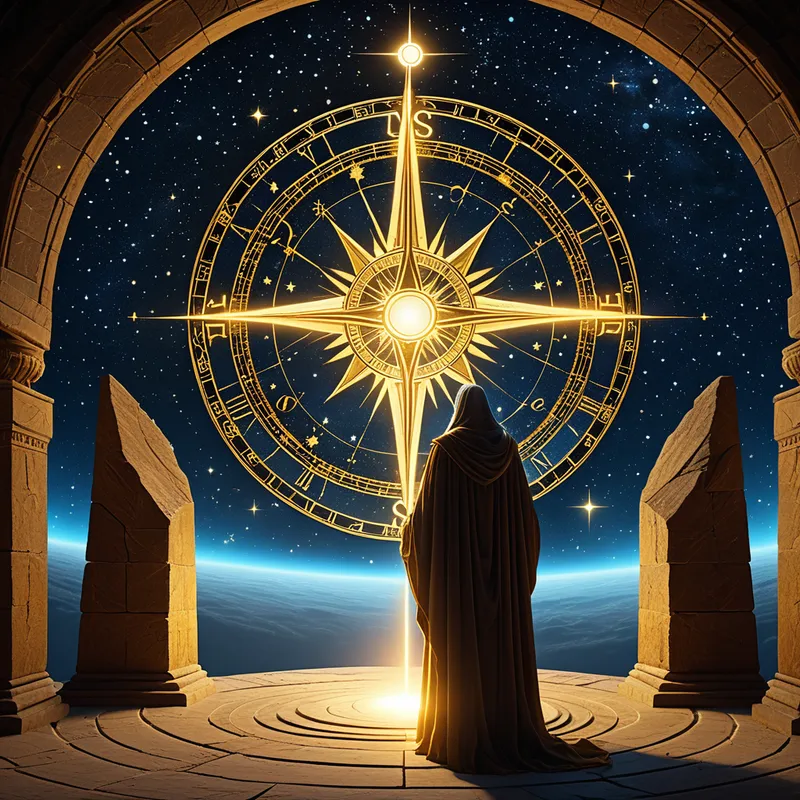
Listen, and hear the tale not carved in any common stone, but etched upon the cornerstone of the world itself. In the time before time was measured, when the substance of creation was a formless sea of potential—the Rough Ashlar—there moved a presence. Not a god of thunder or love, but the Great Architect. Its thoughts were angles; its breath, proportion.
The universe lay in chaos, a splendid, terrifying jumble of light and shadow. Stars burned without pattern, elements warred without truce, and the soul of things cried out for a law, a principle, a form. The Architect gazed upon this raw majesty and saw not disorder, but possibility. From the forge of its will, it drew forth two instruments: the Square, of steadfast line and unbending corner; and the Compasses, whose single point anchors, while the other sweeps the boundless curve.
With the Square, the Architect struck the first true line across the face of the deep. A right angle was born—the principle of limit, of here and there, of uprightness. Mountains found their bases, trees their vertical striving. With the Compasses, it planted a point in the heart of chaos and drew a perfect, encompassing circle—the principle of spirit, of eternity, of the horizon that forever recedes. Planets found their orbits, seasons their cycle.
But the work was not complete. The cosmos now had frame and motion, yet it lacked a witness, a being within the geometry who could perceive its beauty and continue the work. So, from the clay of the formed earth, the Architect fashioned the first human. And into their hands—not as a weapon, not as a crown—but as a sacred trust, it placed the tools. The Square was laid upon the human heart, to teach rectitude. The Compasses were placed between their hands, to teach aspiration.
“You are born of the Rough Ashlar,” the Architect’s voice echoed, not in sound, but in the sudden understanding of gravity and grace. “Your life is the quarry. With these, you must hew, measure, and shape yourself. Build not outward first, but inward. Raise an inner temple where the Square of your actions meets the Circle of your spirit.”
And so the first human stood, trembling, the weight of the tools both a burden and a liberation. They looked at the unshaped stone of their own nature, then at the perfect models of the Square and the Compasses now crossed upon their altar of purpose. The great work had been gifted. The greater work had just begun.
Cultural Origins & Context
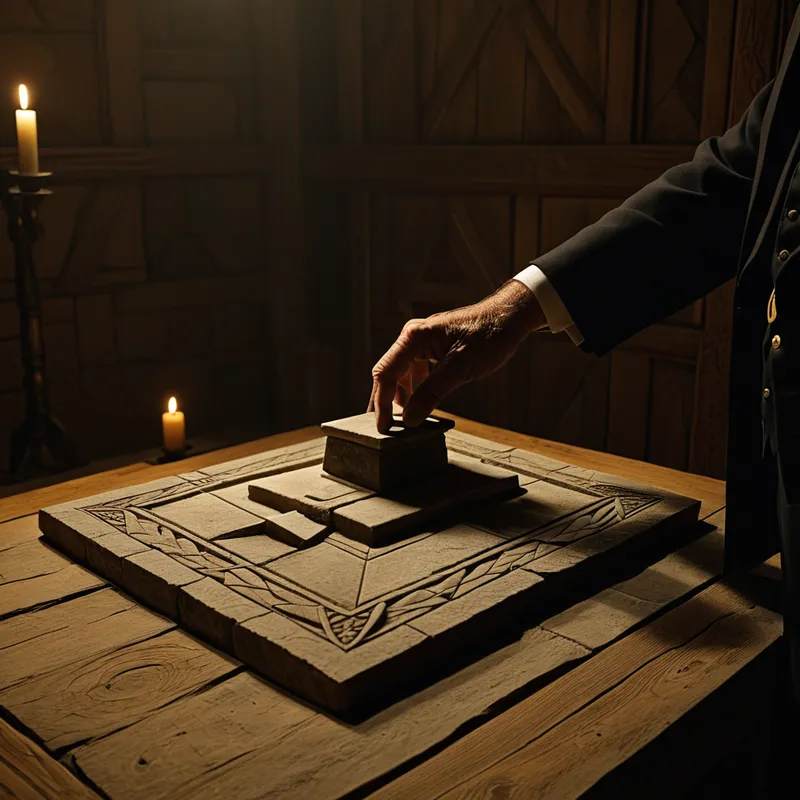
This is not a myth of antiquity in the classical sense, but a living narrative woven into the ritual and symbolic fabric of Freemasonry. It is passed down not through public epics, but within the solemn theater of the lodge room, a consecrated space that becomes a microcosm of the cosmos. The tellers are not bards, but Worshipful Masters and senior brethren, who use allegorical drama, symbolic props, and precise ritual to impart the lesson.
Its societal function is profound. In the 18th century, as Freemasonry took its modern form amidst the Enlightenment, this myth served as a non-dogmatic, universal framework for ethical development. It provided a common language of virtue for men of different faiths and stations. The lodge itself, often called a “speculative” rather than “operative” body, shifted the focus from building physical cathedrals to constructing the “temple of humanity.” The myth of the tools became the core curriculum for this inward architecture, a guide for personal transformation that emphasized self-knowledge, moral discipline, and brotherly love as the means to bring order to the inner chaos of the human condition.
Symbolic Architecture
The myth presents a dualistic cosmology resolved not by conflict, but by complementary application. The Square represents all that is earthly, solid, and ethical: our actions, our relationships, our duties to others. It is the law of reciprocity, the “square deal.” The Compasses represents the divine, the spiritual, and the boundless: our conscience, our higher aspirations, our connection to the infinite. The human being is the point where these two realms intersect.
The Square is the morality that grounds us; the Compasses is the spirituality that inspires us. One without the other leads either to rigid dogmatism or unmoored mysticism.
The Rough Ashlar is the primal self—full of potential but unshaped by discipline or vision. The Perfect Ashlar is the self after a lifetime of application of the tools: the individual whose character has been squared by virtue and whose spirit has been circumscribed by wisdom. The act of building is the lifelong process of individuation, where one consciously participates in creating one’s own wholeness.
The Dreamer’s Resonance
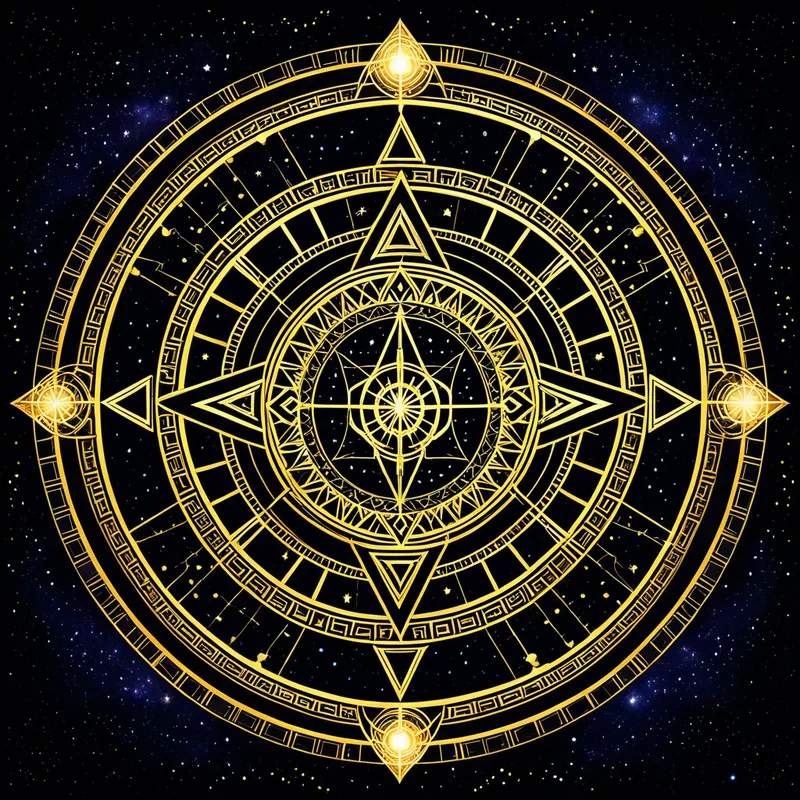
When this myth surfaces in modern dreams, it often appears during periods of existential reassessment or moral dilemma. To dream of struggling to use a square or compasses on a shifting, unstable material signifies a somatic feeling of being “out of true”—a life out of alignment with one’s core values. The dreamer may feel like the Rough Ashlar, aware of their potential but frustrated by a lack of form or direction.
Conversely, a dream of successfully fitting a perfectly shaped stone into a grand, luminous structure speaks to a psychological process of integration. It marks a moment where one’s actions (Square) and one’s deepest ideals (Compasses) have converged, creating a sense of profound integrity and purpose. The tools themselves, especially if they are oversized, glowing, or made of unusual materials, can represent an awakening to an internal moral and spiritual authority that the dreamer is being called to wield.
Alchemical Translation
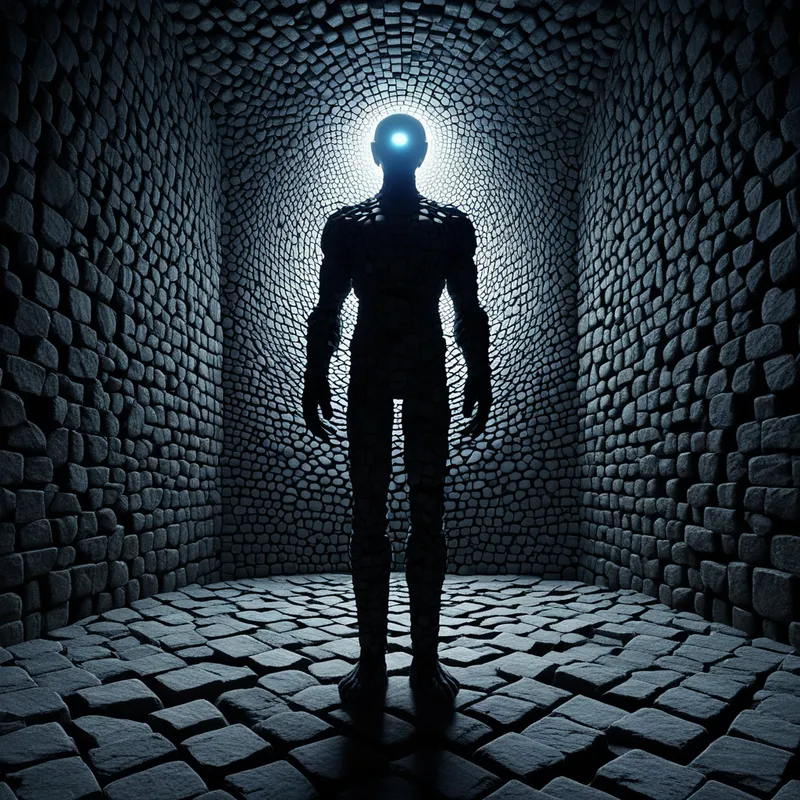
The alchemical process mirrored here is the opus, the great work of turning base lead (the chaotic self) into spiritual gold (the realized self). The myth provides a precise, three-stage formula for this psychic transmutation.
First, Calcinatio: The confrontation with the Rough Ashlar. This is the burning away of illusion, where one must honestly assess the raw, unimproved material of one’s character—the biases, passions, and unfinished aspects of the personality.
Second, Coagulatio: The application of the tools. The Square represents the conscious, disciplined work of the ego: setting boundaries, practicing virtues, “squaring” one’s behavior with ethical principles. The Compasses represents the influence of the Self, the transcendent function that draws a sacred boundary around the psyche, protecting its core and defining its spiritual reach.
The alchemy occurs in the crucible of their intersection: where disciplined action meets inspired vision, the base metal of habit is transmuted into the gold of character.
Finally, Sublimatio: The emergence of the Perfect Ashlar. This is not a state of sterile perfection, but of functional integrity. The transformed individual becomes a coherent unit, ready to take their unique place in the larger, collective “temple” of humanity. They have become both the artisan and the artifact, the builder and the living stone, completing the circuit of creation begun by the mythical Architect. The tools are no longer external implements, but the very shape of a soul in right relationship with itself and the cosmos.
Associated Symbols
Explore related symbols from the CaleaDream lexicon: