
The Song of Solomon Myth Meaning & Symbolism
A lyrical dialogue of passionate, sacred love between a bride and king, celebrating union, yearning, and the soul's journey to its beloved.
The Tale of The Song of Solomon
Hear now a song of songs, a melody woven not of harp strings but of heartstrings, sung in the secret chambers of the soul. It begins not with a thunderclap, but with a whisper of longing: “Let him kiss me with the kisses of his mouth…”
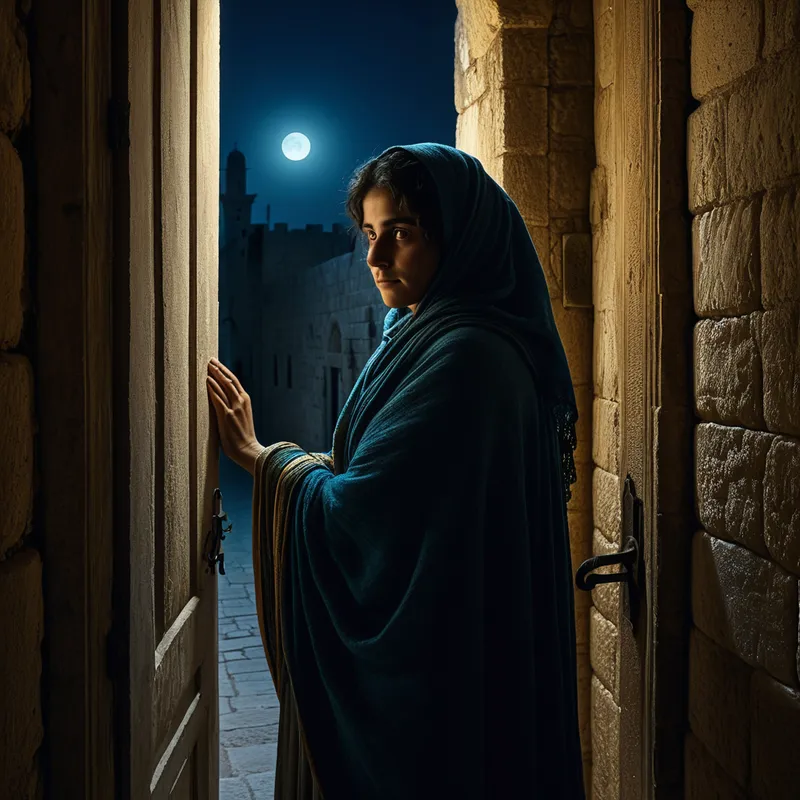
Behold the Shulamite, a daughter of the vineyards, her skin darkened by the sun, her spirit wild and fragrant as the gardens of Lebanon. She is keeper of the vineyards, but her own vineyard—her very self—she has not kept. For it is awakened, alive with a yearning that pulls her from her mother’s house into the night.
And there is the King, Solomon in all his majesty, come in his palanquin of cedar and gold. Yet when he speaks to her, he is not a distant monarch but a shepherd-bridegroom, calling from the clefts of the rock, from the secret places of the stairs. “Rise up, my love, my fair one, and come away.”
The world becomes a tapestry of sensation in their seeking. He compares her to a mare among Pharaoh’s chariots, her hair a flock of goats streaming down Mount Gilead, her teeth like shorn ewes, her neck a tower of ivory. She finds him an apple tree among the trees of the wood; his fruit is sweet to her taste. She wanders the city by night, questioned by the watchmen, searching, always searching. “I sought him whom my soul loves; I sought him, but I found him not.”
The tension is the rhythm of their love: presence and absence, finding and losing, union and separation. She dreams he is at the lattice, his hand thrust through the opening. He calls her to arise, for the winter is past, the rain is over and gone. The flowers appear on the earth; the time of singing has come.
In gardens of spice, among beds of henna and nard, saffron and calamus, cinnamon and myrrh, they meet. “Set me as a seal upon your heart, as a seal upon your arm,” she pleads, “for love is strong as death, jealousy cruel as the grave.” The flashes thereof are flashes of fire, a very flame of Yahweh himself.
The resolution is not a conquest, but a consummation. It is an eternal call and response. “Make haste, my beloved,” she cries as the song closes, “and be like a gazelle or a young stag upon the mountains of spices.” The seeking is the finding. The song does not end; it lingers in the air like the scent of frankincense, an open door, an everlasting invitation.
Cultural Origins & Context
The Song of Songs stands as a unique blossom in the garden of Biblical literature. Its place in the canon has long been a subject of awe and debate. Traditionally attributed to King Solomon (10th century BCE), its linguistic texture suggests later refinements, possibly from the post-exilic period. It is wisdom literature of the most intimate kind, passed down not as law or prophecy, but as lyrical poetry, likely performed at weddings as a celebration of human eros.
Its societal function operated on multiple levels. On the surface, it was a rapturous celebration of earthly, sexual love within the covenant of marriage, affirming the goodness of the body and passionate commitment in a culture with deeply structured social laws. Yet, from its earliest interpretations within Kabbalah and by the early Church Fathers, it was simultaneously heard as an allegory. For Judaism, it became the supreme expression of the love between Yahweh and Israel. For Christianity, it depicted the union between Christ and the Church, or Christ and the individual soul. This dual resonance—literal and symbolic—allowed it to be both profoundly human and transcendentally divine, a bridge between the world of the senses and the world of the spirit.
Symbolic Architecture
At its core, the Song is a map of the soul’s relationship with the Self. The two lovers are not merely a man and a woman, but representations of complementary psychic forces seeking wholeness.
The Shulamite symbolizes the Anima in the masculine psyche and the embodied soul in the feminine. She is the principle of relatedness, eros, instinct, and nature. Her darkness is not a flaw but a mark of her reality, her groundedness in the earth and the unconscious. Her active seeking—leaving her comfort, braving the city streets at night—represents the soul’s courageous initiative toward integration.
The beloved is not found in the comfortable mother-house, but in the perilous, moonlit streets of one’s own longing.
Solomon, the king-shepherd, represents the Animus in the feminine psyche and the sovereign consciousness in the masculine. He is spirit, wisdom, and the organizing principle. Crucially, he appears in dual forms: as the majestic king in his splendor and as the intimate shepherd in the wild places. This signifies that the transcendent Self meets us both in our highest aspirations and in our most humble, natural states.
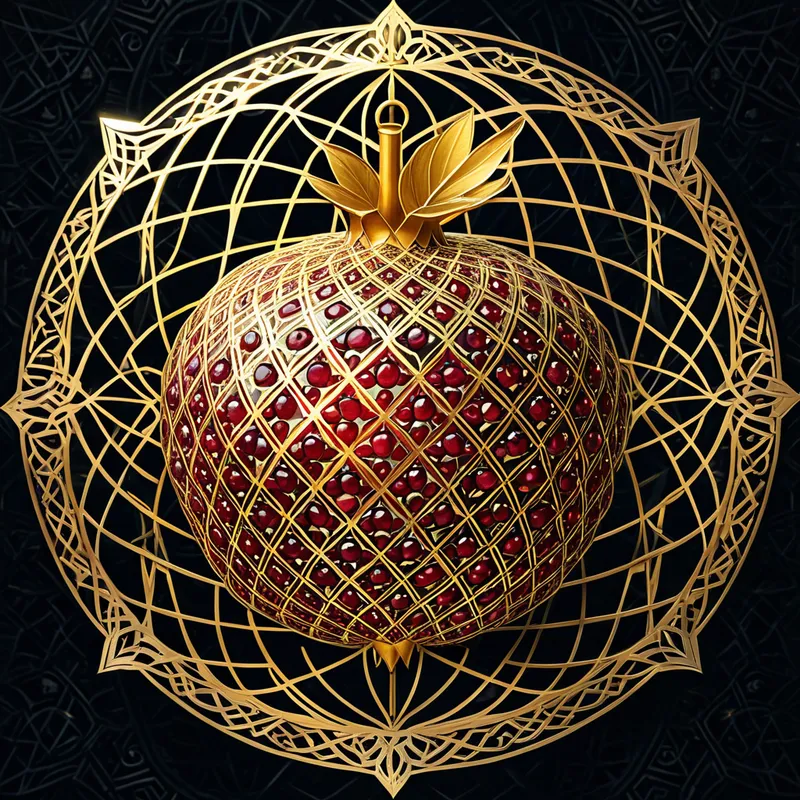
The garden is the temenos, the sacred enclosed space of the psyche where this alchemical marriage occurs. The recurring motifs of spices, fruits, and precious metals are symbols of the soul’s latent treasures, which only bloom through the heat of desire and the waters of attention.
The Dreamer’s Resonance
When this myth stirs in the modern dreamer, it signals a profound activation of the eros principle—the urge toward connection, beauty, and passionate engagement with life. To dream of searching for a beloved through labyrinthine streets points to a soul-yearning, a sense that a vital part of oneself (the inner king or queen, the anima/animus) is missing from conscious life.
Dreams of lush, walled gardens or vineyards ready for harvest suggest the dreamer’s inner world is fertile and ripe for a deeper relationship with themselves. Conversely, dreams of being separated by a wall or door, like the Shulamite at the lattice, often correlate with a somatic feeling of frustration or heartfelt longing—a sense of being so close to a breakthrough in intimacy (with oneself or another) yet unable to fully cross the threshold.
The somatic process is one of quickening. There may be a felt sense of arousal not merely sexual, but psychic—a heightened sensitivity to beauty, a restlessness with mundane existence, a craving for something “more” that feels sacred and essential. This is the soul’s immune response to a life lived only on the surface.

Alchemical Translation
The Song of Songs models the alchemical coniunctio oppositorum, the central mystery of individuation. It is a guide for transmuting base loneliness or fragmented desire into the gold of conscious relationship with the inner Other.
The process begins with the nigredo, the darkening: the Shulamite’s declaration, “I am black but comely.” This is the acknowledgment and acceptance of one’s shadow, one’s “sun-darkened” reality, all that is wild, instinctual, and not socially polished. The seeker must own their longing as she does.
The albedo, the whitening, is the purification through pursuit. Her nightly wanderings, her encounters with the watchmen (often symbols of internal critics or societal judgments), represent the necessary trials of consciousness. One must leave the safety of the known (“my mother’s house”) to seek the beloved in the unknown territories of the psyche.
Individuation is not a solitary ascent, but a passionate dialogue. The Self is not achieved; it is courted.
The final stages, citrinitas and rubedo (the yellowing and reddening), are depicted in the garden scenes—the flourishing of the spices, the flash of fire that is “a flame of Yahweh.” This is the incarnation of spirit into matter and the ignition of matter by spirit. The love becomes creative, generative, and holy. The plea, “Set me as a seal upon your heart,” signifies the final stage of coagulation: the permanent imprinting of this union onto the fabric of one’s being. The love is now as strong as death—it has overcome the fragmentation of the ego and become an indestructible core of the personality.
Thus, the Song teaches that the path to wholeness is not through ascetic denial, but through the sacred channel of eros. It is by fully entering our human longing, by honoring the beauty of the other and the beauty within our own “vineyard,” that we stumble upon the divine. The search for the beloved other becomes the discovery of the Beloved Self.
Associated Symbols
Explore related symbols from the CaleaDream lexicon: