The Sleep-Thorn of Odin Myth Meaning & Symbolism
Odin uses a magical thorn to cast the valkyrie Brynhild into an ageless sleep, a profound act of punishment and protection that echoes through the ages.
The Tale of The Sleep-Thorn of Odin
Hear now a tale not of thunderous battle, but of a silence more profound than any clash of steel. It begins in the high halls of Asgard, where the air hums with the weight of fate. Odin, the one-eyed wanderer, sees further than any. His ravens, [Huginn and Muninn](/myths/huginn-and-muninn “Myth from Norse culture.”/), bring him whispers from the roots of [the world](/myths/the-world “Myth from Tarot culture.”/)-tree, [Yggdrasil](/myths/yggdrasil “Myth from Global/Universal culture.”/). And from these whispers, he learns of a defiance that strikes at the very order of things.
The defiance has a name: Brynhild. A shield-maiden of peerless might, a chooser of the slain for her lord Odin. Yet, within her warrior’s heart, a different law stirred—[the law](/myths/the-law “Myth from Biblical culture.”/) of compassion. Sent to oversee a fated duel between two kings, she looked upon the doomed hero and saw not just a name for Odin’s hall, but a life of honor, of love promised. The ørlög, the primal law, was clear. But Brynhild, in a moment that shook the foundations of her being, turned her shield. She protected the man fated to die.
The reaction in Asgard was not a shout, but a chilling quiet. Odin did not rage. His single eye, which had seen the birth of worlds and glimpsed their end, regarded his wayward [valkyrie](/myths/valkyrie “Myth from Norse culture.”/) with a sorrow deeper than [the sea](/myths/the-sea “Myth from Greek culture.”/). Her crime was ultimate: she had chosen mortal love over divine decree; individual mercy over cosmic necessity. For this, she could no longer ride the winds of war. She was stripped of her divinity, made mortal, and cast down to the realm of [Midgard](/myths/midgard “Myth from Norse culture.”/).
But this was not punishment enough, nor was it protection. A mortal Brynhild, with her fury and her grief, was a spark that could set the world ablaze. And in Odin’s deep seeing, perhaps there was another thread, a longer game. So he descended to a peak called Hindarfjall, a place where the winds scoured stone and the clouds tore like banners. There stood Brynhild, mortal now, yet burning with an undimmed fire.
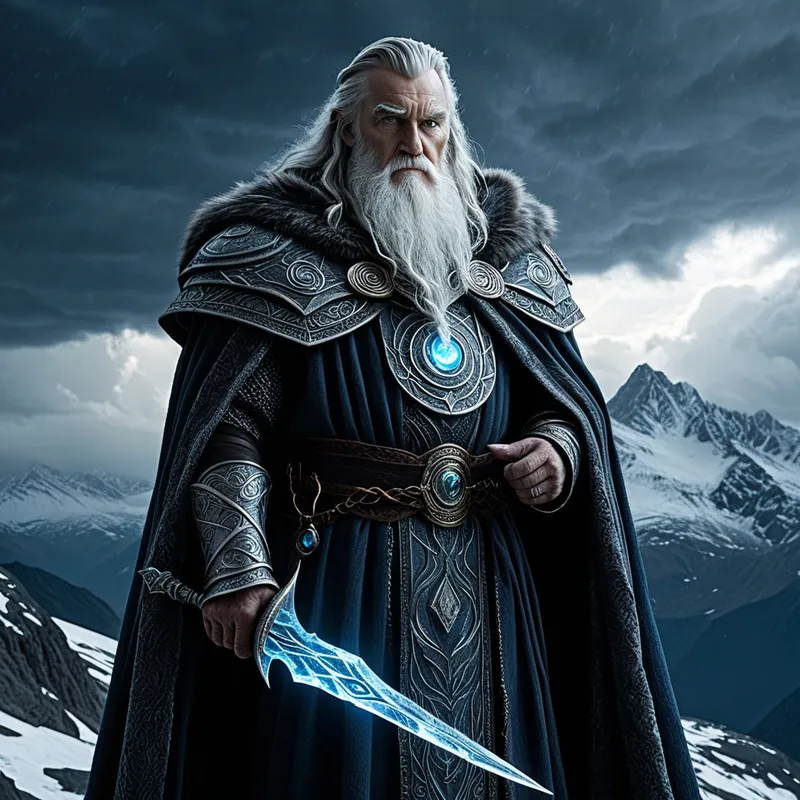
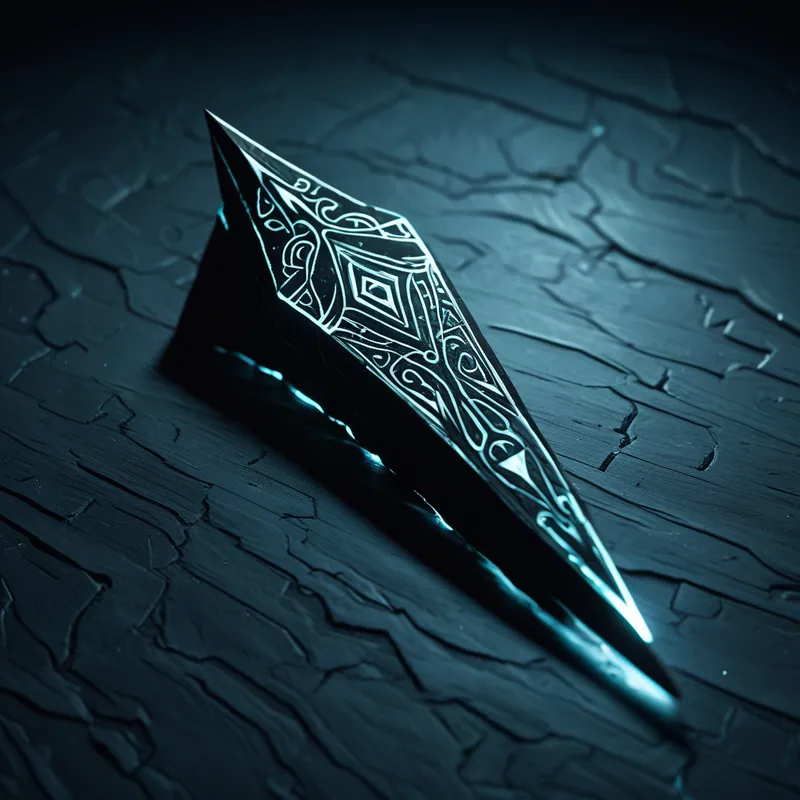
From his cloak, Odin did not draw a sword. He drew forth a svefnþorn—a sleep-thorn. It was no simple splinter, but a sliver of magic forged in the stillness between thoughts, cooled in the tears of forgotten dreams. It gleamed with a cruel, soft light. Without a word, for words were now beyond the point, he pricked the valkyrie’s skin with its tip.
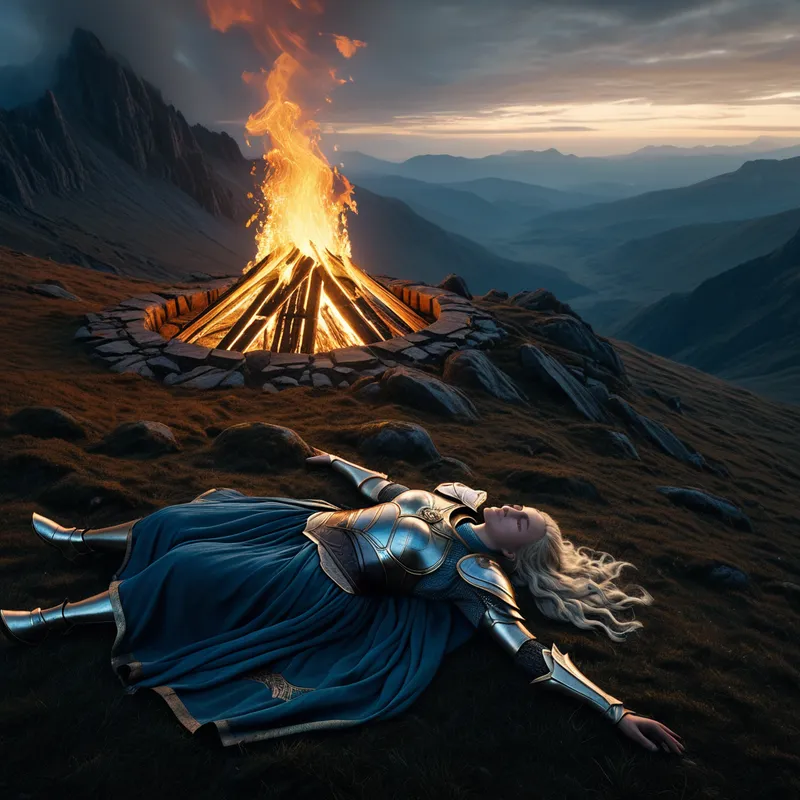
The effect was not a collapse, but a transformation. Her fiery defiance did not extinguish; it was encased. Her mortal form did not fall, but settled upon the rock as if upon a throne. Her eyes, which had flashed with battle-light, closed not in defeat, but in entry to another realm. Around her, with a sweep of his spear [Gungnir](/myths/gungnir “Myth from Norse culture.”/), Odin kindled a wall of flame, a barrier that would burn until the end of days, or until one came who knew no fear. There, on the mountain, within the fire-ring, Brynhild slept. Not dead, but removed from the stream of time, a warrior in amber, a heart suspended between a beat. And the thorn, invisible now, worked its eternal magic: not to kill, but to preserve; not to punish, but to hold in perfect, terrible stasis.
Cultural Origins & Context
This myth, primarily preserved in the later Poetic Edda (in the Sigrdrífumál and Völsunga Saga), is a fascinating layer within the Norse heroic cycles. It functions as a crucial prelude to the saga of [Sigurd](/myths/sigurd “Myth from Norse culture.”/) (Sigurðr), the greatest of Germanic heroes. Unlike the cosmological myths of creation or the apocalyptic drama of [Ragnarök](/myths/ragnark “Myth from Norse culture.”/), this is a myth of interpersonal and divine-mortal conflict. It was likely told and retold by skalds not just as a divine anecdote, but as the essential “once upon a time” that sets a human epic in motion.
Its societal function was multifaceted. For a warrior culture, it served as a stark lesson on the inflexibility of fate (ørlög) and the dire consequences of disobeying the sovereign god, Odin. Yet, it also complexly validated the very human, heroic values of compassion and love that Brynhild embodies. The myth creates the ultimate test for a hero (to brave the flames) and the ultimate prize (the awakened wisdom of the valkyrie). It bridges the world of the gods and the world of heroic endeavor, showing how divine curses create human opportunities for legendary deeds.
Symbolic Architecture
At its core, the Sleep-[Thorn](/symbols/thorn “Symbol: A symbol of pain, protection, and hidden beauty, representing obstacles that guard growth or cause suffering.”/) myth is a profound [allegory](/symbols/allegory “Symbol: A narrative device where characters, events, or settings represent abstract ideas or moral qualities, conveying deeper meanings through symbolic storytelling.”/) for the cost and [nature](/symbols/nature “Symbol: Nature symbolizes growth, connectivity, and the primal forces of existence.”/) of [consciousness](/symbols/consciousness “Symbol: Consciousness represents the state of awareness and perception, encompassing thoughts, feelings, and experiences.”/). Odin, the god who sacrificed an eye for wisdom and hung on Yggdrasil for [the runes](/myths/the-runes “Myth from Norse culture.”/), is himself the master of painful awakening. Here, he becomes the agent of enforced sleep.
The Sleep-Thorn is not an instrument of death, but of suspended animation. It represents the psychic defense of encapsulation—a traumatic or overwhelming truth is not integrated, but isolated, put to sleep to protect the whole system.
Brynhild symbolizes a potent, autonomous complex within the [psyche](/myths/psyche “Myth from Greek culture.”/)—specifically, the [anima](/symbols/anima “Symbol: The feminine archetype within the male unconscious, representing soul, creativity, and connection to the inner world.”/) in its highest, most dynamic form (the [valkyrie](/symbols/valkyrie “Symbol: A Valkyrie represents a strong and powerful female figure in Norse mythology, often embodying the roles of warrior and chooser of the slain.”/) as chooser and inspirer). Her “[crime](/symbols/crime “Symbol: Crime in dreams often symbolizes guilt, inner conflict, or societal rules that are being challenged or broken.”/)” is favoring relatedness (love/[compassion](/symbols/compassion “Symbol: A deep feeling of empathy and concern for others’ suffering, often involving a desire to help or alleviate their pain.”/)) over impersonal, ruling principle (Odin’s law). This clash between the [heart](/symbols/heart “Symbol: The heart symbolizes love, emotion, and the core of one’s existence, representing deep connections with others and self.”/)‘s law and the head’s law, between Eros and [Logos](/myths/logos “Myth from Christian culture.”/), is so catastrophic to the existing psychic order that it necessitates a radical intervention. The fiery ring is both [prison](/symbols/prison “Symbol: Prison in dreams typically represents feelings of restriction, confinement, or a lack of freedom in one’s life or mind.”/) and protection, ensuring this powerful, disruptive [energy](/symbols/energy “Symbol: Energy symbolizes vitality, motivation, and the drive that fuels actions and ambitions.”/) cannot be accessed casually or destructively. It can only be approached by the “fearless one”—[the ego](/myths/the-ego “Myth from Jungian culture.”/) consciousness strong enough to confront the dormant power.
The Dreamer’s Resonance
When this mythic pattern stirs in the modern unconscious, it often manifests in dreams of magical stasis. You may dream of a loved one, a part of yourself, or a potent memory trapped in crystal, ice, or amber. You may encounter a sleeping figure in a locked room or a walled garden. There is a sense of profound potential held in abeyance, of a life or a talent “on hold.”
Somatically, this can feel like a creative or emotional constipation, a sense of being stuck in a life pattern that is safe but utterly lifeless. Psychologically, it signals that a vital part of the personality—often connected to deep passion, authentic voice, or spiritual calling—was “put to sleep” long ago. This was likely an act of psychic self-preservation, a svefnþorn you wielded on yourself to survive a childhood environment that could not tolerate your full Brynhild-like intensity or compassion. The dream is the soul’s reminder that the fire-ring still burns, and the sleeper within awaits the fearless approach.
Alchemical Translation
The individuation process modeled here is the heroic journey to reclaim one’s encapsulated potential. [The first stage](/myths/the-first-stage “Myth from Alchemical culture.”/) is recognizing the “[sleeping beauty](/myths/sleeping-beauty “Myth from Greek culture.”/)” within—the anima/animus, the genius, the dormant passion. This is Brynhild on her rock. The second stage is acknowledging the Odin-force within—the internalized, often tyrannical, ruling principle (the super-ego, societal expectations, parental injunctions) that cast the thorn to maintain order.
The alchemical work is not to slay Odin, but to understand his terrible necessity, and then to become the hero who transcends his law.
You must become your own Sigurd. This requires cultivating fearlessness—not the absence of anxiety, but the courage to walk through the protective flames of your own defenses (addictions, busyness, cynicism) that keep the potent, sleeping self safely isolated. Awakening the sleeper is never a gentle kiss; it is a disruptive integration. The awakened Brynhild brings immense wisdom and passion (she teaches Sigurd runic lore), but also unleashes a chain of fateful, tragic, and ultimately transformative events. To integrate the sleep-thorn complex is to accept that awakening your deepest self will irrevocably change your life’s story. It ends the safe stasis and commits you to a fateful, authentic, and necessarily more complex existence. The thorn is removed not to return to a prior state, but to begin the saga you were always meant to live.
Associated Symbols
Explore related symbols from the CaleaDream lexicon: