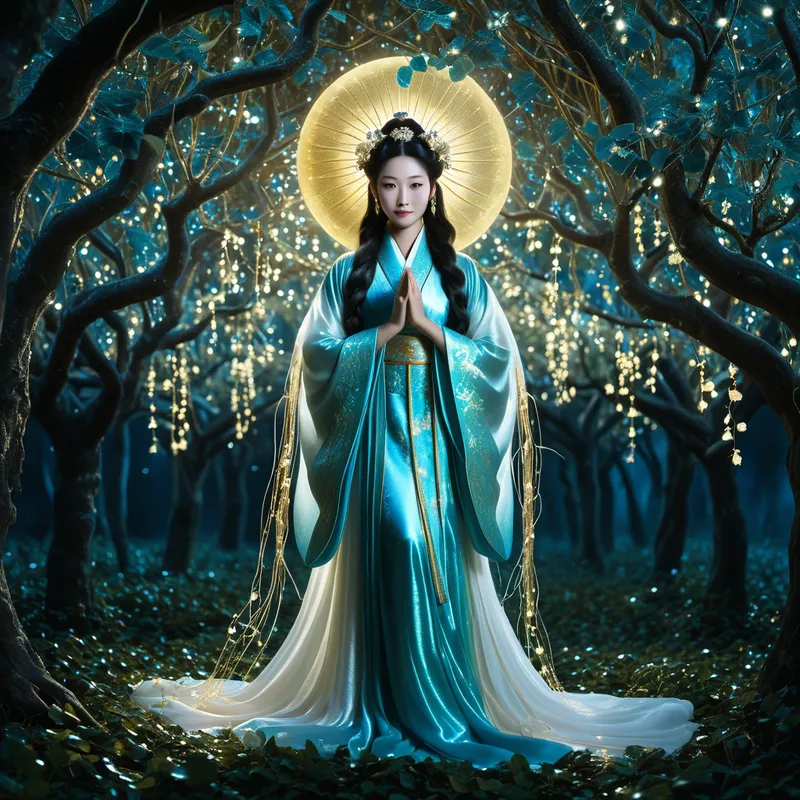
The Silkworm Goddess Myth Meaning & Symbolism
A celestial maiden descends to Earth, sacrifices her divine form to become a silkworm, and gifts humanity the sacred art of silk-making.
The Tale of The Silkworm Goddess
In the time before time, when the [Jade Emperor](/myths/jade-emperor “Myth from Chinese culture.”/)’s court shone with a light untouched by mortal dust, there lived a daughter of heaven. She was not a warrior or a queen of storms, but a tender spirit, a weaver of celestial clouds and spinner of dawn’s first light. Her name was Can Nü, and her heart held a deep, unspoken sorrow for [the world](/myths/the-world “Myth from Tarot culture.”/) below.
For on [the Earth](/myths/the-earth “Myth from Hindu culture.”/), under the vast and indifferent sky, the children of [the Yellow Emperor](/myths/the-yellow-emperor “Myth from Chinese culture.”/) shivered. Their lives were bound to the harsh soil, their bodies clad in rough hemp and hides. They knew cold. They knew the bite of [the wind](/myths/the-wind “Myth from Various culture.”/). They did not know softness.
One day, as Can Nü gazed down from her heavenly balcony, she saw a father unable to warm his coughing child, a mother’s chapped hands mending threadbare cloth. A resolve, fierce and quiet, crystallized within her. It was a resolve that defied celestial law. To intervene directly in mortal affairs was forbidden; to gift a divine secret was to court dissolution.
She did not hesitate.
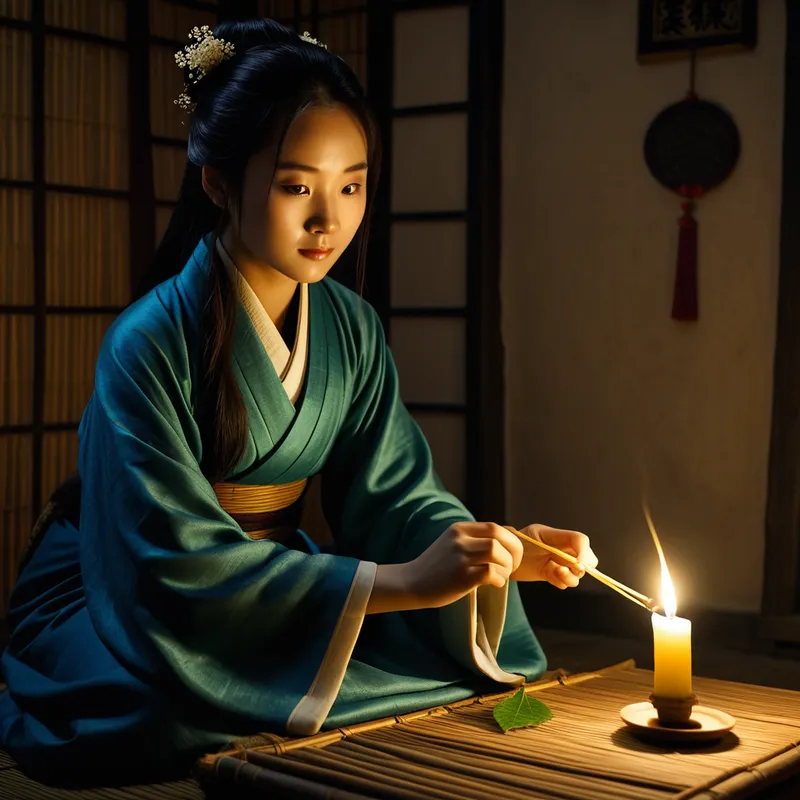
Descending on a moonbeam, she arrived in a humble village. Taking the form of a maiden of peerless grace, she sought shelter with a kindly old couple. They took her in, seeing only a lost soul. For days, she watched, she learned, she felt the texture of their poverty. Then, one evening, as the mulberry trees whispered in the twilight, she gathered the family.
“I must leave you a gift,” she said, her voice like wind through silk. “But to give it, I must change. Do not be afraid.”
Before their astonished eyes, her luminous form began to shimmer and contract. The air hummed. Her flowing robes dissolved into strands of light, her body softening, shrinking. Where the celestial maiden stood, now there crawled a small, pure white creature—a [silkworm](/myths/silkworm “Myth from Chinese culture.”/). From its mouth, it began to draw forth a single, endless, gleaming thread.
The family wept, but they understood. They cared for the creature, feeding it the freshest leaves from the mulberry tree. The silkworm spun, day and night, weaving not just a cocoon, but a mystery. When the spinning was done, the creature entered its silken tomb. The family waited in vigil.
From the cocoon, no moth emerged. Instead, Can Nü’s spirit manifested once more, hovering above the delicate oval. With gentle hands, she showed the old woman how to carefully unwind the single, miraculous thread from the cocoon in hot [water](/myths/water “Myth from Chinese culture.”/), how to combine the fragile strands into a strong yarn, and how to weave it upon a simple loom.
The first length of cloth that emerged was not mere fabric. It held the coolness of [the moon](/myths/the-moon “Myth from Tarot culture.”/), the sheen of a river at dawn, and a warmth that was not of fire, but of spirit. Can Nü, her gift given, her form forever bound to the cycle she had initiated, faded from sight. But she left behind the silent, crawling progeny and the sacred knowledge. The secret of silk, born from a divine sacrifice, was now in mortal hands.
Cultural Origins & Context
The myth of Can Nü is woven into the very fabric of ancient Chinese civilization. Its origins are lost to antiquity, likely emerging from the Neolithic Yangshao culture, where the domestication of the Bombyx mori silkworm first occurred. This was not merely a technical discovery; it was a cosmological event that demanded a mythic explanation.
The story was preserved and formalized in early texts like the Huayang Guo Zhi and later in the official Twenty-Four Histories, often linked to the legendary [Yellow Emperor](/myths/yellow-emperor “Myth from Chinese culture.”/) and his consort [Leizu](/myths/leizu “Myth from Chinese culture.”/). In folk tradition, however, Can Nü remained the central, empathetic figure.
This myth served a critical societal function. It sacralized the labor-intensive, female-dominated practice of sericulture. Each spring, at the Lantern Festival or before the silkworm season, rituals and offerings were made to the [Silkworm Goddess](/myths/silkworm-goddess “Myth from Chinese culture.”/) to ensure a bountiful harvest of cocoons. The myth transformed a cottage industry into a holy rite, connecting the mundane acts of feeding worms and reeling thread to a divine, sacrificial narrative. It was a story told by mothers to daughters, a spiritual thread linking generations of women through their sacred craft.
Symbolic Architecture
At its core, the myth is a profound map of transformative sacrifice. The [Goddess](/symbols/goddess “Symbol: The goddess symbolizes feminine power, divinity, and the nurturing aspects of life, embodying creation and wisdom.”/) does not bestow [silk](/symbols/silk “Symbol: A luxurious natural fiber representing refinement, sensuality, and transformation from humble origins to exquisite beauty.”/) as a finished object; she becomes the process itself. Her descent is an incarnation, a willing immersion into the limitations of earthly form (the [silkworm](/symbols/silkworm “Symbol: The silkworm represents the idea of creativity, labor, and the intricate processes of transformation.”/)) and the ultimate [confinement](/symbols/confinement “Symbol: A dream symbol representing restriction, limitation, or being held back physically, emotionally, or psychologically.”/) (the [cocoon](/symbols/cocoon “Symbol: Represents potential, protection, and the process of transformation.”/)).
The most sacred gifts are not handed down, but unlocked through a dissolution of the giver.
The silkworm symbolizes the potential within a humble, even repulsive, container. The cocoon is the liminal [space](/symbols/space “Symbol: Dreaming of ‘Space’ often symbolizes the vastness of potential, personal freedom, or feelings of isolation and exploration in one’s life.”/), the alchemical [vessel](/symbols/vessel “Symbol: A container or structure that holds, transports, or protects something essential, representing the self, emotions, or life journey.”/) where [dissolution](/symbols/dissolution “Symbol: The process of breaking down, dispersing, or losing form, often representing transformation, release, or the end of a state of being.”/) occurs. It is a tomb that is also a [womb](/symbols/womb “Symbol: A symbol of origin, potential, and profound transformation, representing the beginning of life’s journey and the unconscious source of creation.”/). Crucially, in this myth, the [metamorphosis](/symbols/metamorphosis “Symbol: A profound, often irreversible transformation of form, identity, or state, representing a complete journey from one condition to another.”/) is interrupted—the [moth](/symbols/moth “Symbol: The moth is a symbol of transformation, intuition, and exploration, representing a journey towards enlightenment and the desire for freedom.”/) (symbolizing transcendent [flight](/symbols/flight “Symbol: Flight symbolizes freedom, escape, and the pursuit of one’s aspirations, reflecting a desire to transcend limitations.”/), spiritual [rebirth](/symbols/rebirth “Symbol: A profound transformation where old aspects of self or life die, making way for new beginnings, growth, and renewal.”/)) is sacrificed. The cocoon is not for the [creature](/symbols/creature “Symbol: Creatures in dreams often symbolize instincts, primal urges, and the unknown aspects of the psyche.”/)’s own liberation, but is unraveled for the benefit of others. The silk thread, then, is the [logos](/myths/logos “Myth from Christian culture.”/) made manifest—the tangible, beautiful [product](/symbols/product “Symbol: This symbol represents tangible outcomes of one’s efforts and creativity, often reflecting personal value and identity.”/) of a hidden, sacrificial process. It represents the refined essence drawn from a [period](/symbols/period “Symbol: Periods in dreams can symbolize cyclical patterns, renewal, and the associated emotions of loss or change throughout life.”/) of intense, isolated work on [the self](/myths/the-self “Myth from Jungian culture.”/).
The Dreamer’s Resonance
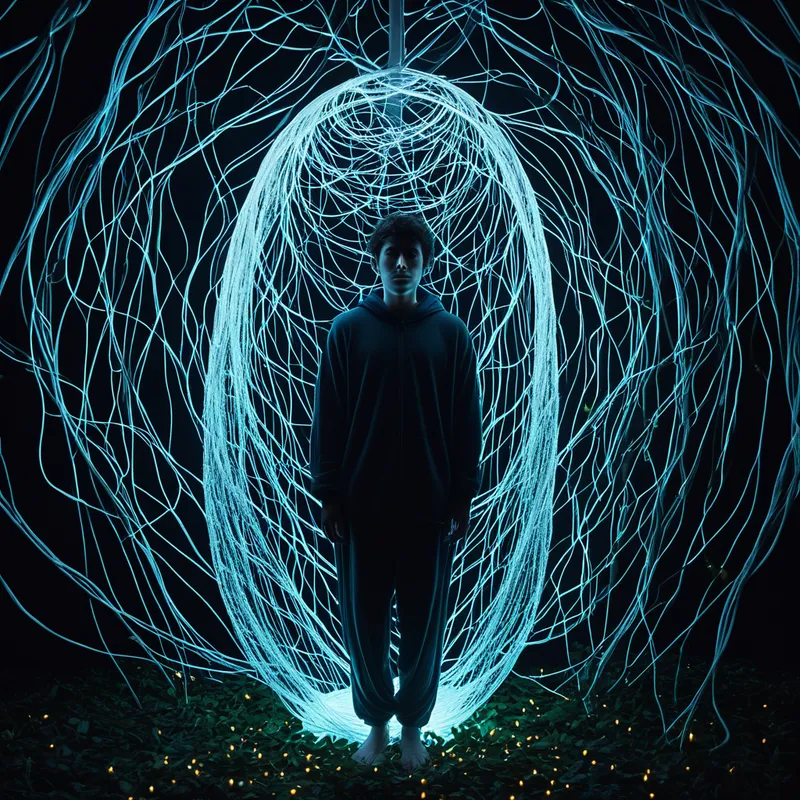
When this myth stirs in the modern unconscious, it often surfaces in dreams of profound personal transformation that feel simultaneously chosen and imposed. One may dream of being wrapped in binding threads, not by an external force, but from one’s own mouth. There is a somatic feeling of constriction, of being in a necessary but claustrophobic process.
This is the [psyche](/myths/psyche “Myth from Greek culture.”/)’s signal of entering a numinous incubation phase. The dreamer is in their cocoon stage. The “mulberry leaves” are the often mundane, repetitive, but essential nutrients—the daily practices, the therapy sessions, the quiet study—that feed the transformation. The dream may carry anxiety, as [the ego](/myths/the-ego “Myth from Jungian culture.”/) fears it will not re-emerge, that it will be “unraveled” for some unknown purpose. To dream of the Silkworm Goddess is to confront the reality that true creation—of art, of a new self, of a deep relationship—requires a period where one must become small, focused, and seemingly regress, to spin the substance of one’s future from the raw material of one’s current being.
Alchemical Translation
For the individual on the path of individuation, the myth of Can Nü models the ultimate alchemical act: the transmutation of spirit into substance for the sake of relatedness.
The journey begins with the “celestial perspective”—a state of potential, ideas, and compassion disconnected from earthly reality. The first sacrifice is incarnation: the decision to bring one’s lofty ideals or wounded psyche down into the gritty, specific work of life. One must become the “worm,” engaging with the lowly, instinctual, and repetitive tasks of healing and building.
The cocoon is not a retreat from the world, but the intensive, focused laboratory where the soul weaves its new form.
The critical alchemical stage is the cocooning. This is the disciplined withdrawal, the therapy, the artistic obsession, the monastic focus where the conscious ego submits to a deeper, autonomic process. Here, the old form dissolves. The modern temptation is to break out prematurely as a “moth,” seeking enlightenment or escape. But the myth demands a harder truth: the product of this dissolution—the strong, beautiful “silk”—is meant to connect and clothe the community of the self and others. It is not for solitary flight.
The final transmutation is in the unraveling. The ego does not get to keep its cocoon as a trophy of transformation. The refined essence—the insight, the forgiveness, the created work, the matured love—must be drawn out carefully, sometimes painfully, and woven into the fabric of one’s life in the world. The Goddess vanishes, but her pattern remains in the loom. In the end, the individuated self is not the celestial being, nor [the worm](/myths/the-worm “Myth from Biblical culture.”/), nor the cocoon, but the enduring, connective, and nourishing thread that now runs through the tapestry of existence. One becomes, at last, both the gift and the giver.
Associated Symbols
Explore related symbols from the CaleaDream lexicon: