The Shore of Ithaca Myth Meaning & Symbolism
The moment of homecoming, where the hero must recognize his own kingdom after a lifetime of wandering, disguised even to himself.
The Tale of The Shore of Ithaca
Hear now the tale not of the journey, but of its end. Not of the cyclops’s cave, nor the song of [the sirens](/myths/the-sirens “Myth from Greek culture.”/), nor the descent to the sunless halls of [Hades](/myths/hades “Myth from Greek culture.”/). Hear the tale of the shore.
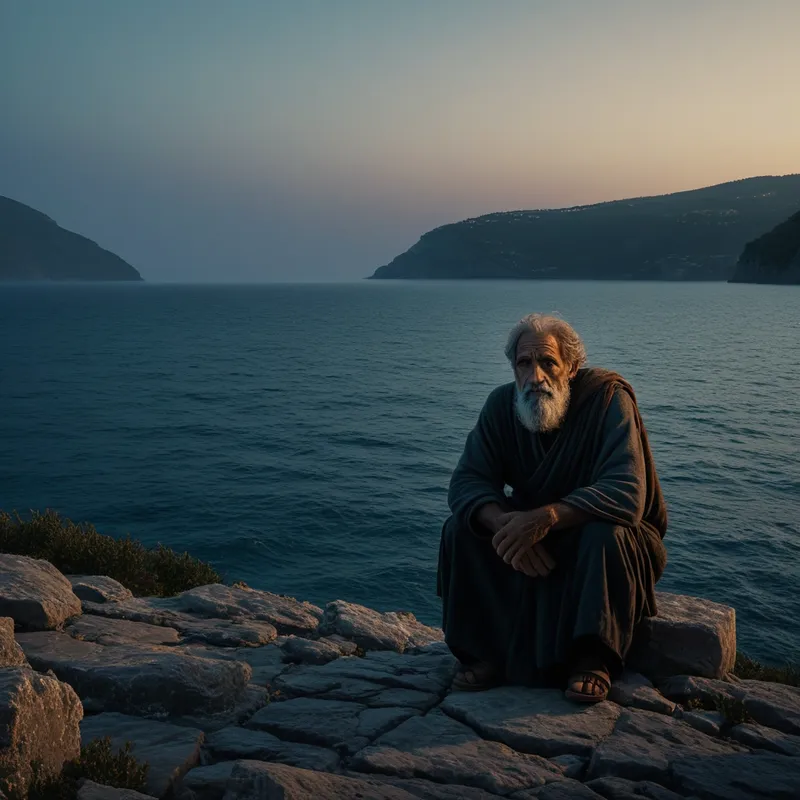
For twenty years, [the sea](/myths/the-sea “Myth from Greek culture.”/) had been his prison and his road. [Odysseus](/myths/odysseus “Myth from Greek culture.”/), the man of twists and turns, was worn smooth by the salt and [the wind](/myths/the-wind “Myth from Various culture.”/). His skin was leather, his eyes held the grey of a thousand storms, and his heart was a heavy stone in his chest. The gods, capricious and finally appeased, allowed his raft to break upon the one shore his soul had cried for through every trial: Ithaca.
But this was no triumphant landing. Athena, she of the gleaming eyes, shrouded the land in a mist. He awoke to a coastline that was at once achingly familiar and utterly strange. The scent of [thyme](/myths/thyme “Myth from Greek culture.”/) and pine was there, the cry of the gulls, the particular way the waves lapped against the pebbles of a certain cove. Yet, he did not know it. The man who had navigated by the stars was lost within sight of his own hearth. His kingdom was a phantom, a dream that dissolved upon waking.
Then she came to him, not as a goddess, but in the guise of a young shepherd. “What land is this, friend?” asked the weary king, his voice rough from disuse and the sea. The shepherd-boy, his eyes holding the ancient light of Olympus, spoke of Ithaca—a name that struck Odysseus like a physical blow. He listened to tales of his own palace, of suitors devouring his wealth and courting his faithful queen, [Penelope](/myths/penelope “Myth from Greek culture.”/). And in that moment, the master strategist was born anew not in war, but in deception. He spun a false tale of his own life, a cloak of lies to hide the king within. He became a beggar, a nobody, to walk his own land unseen.
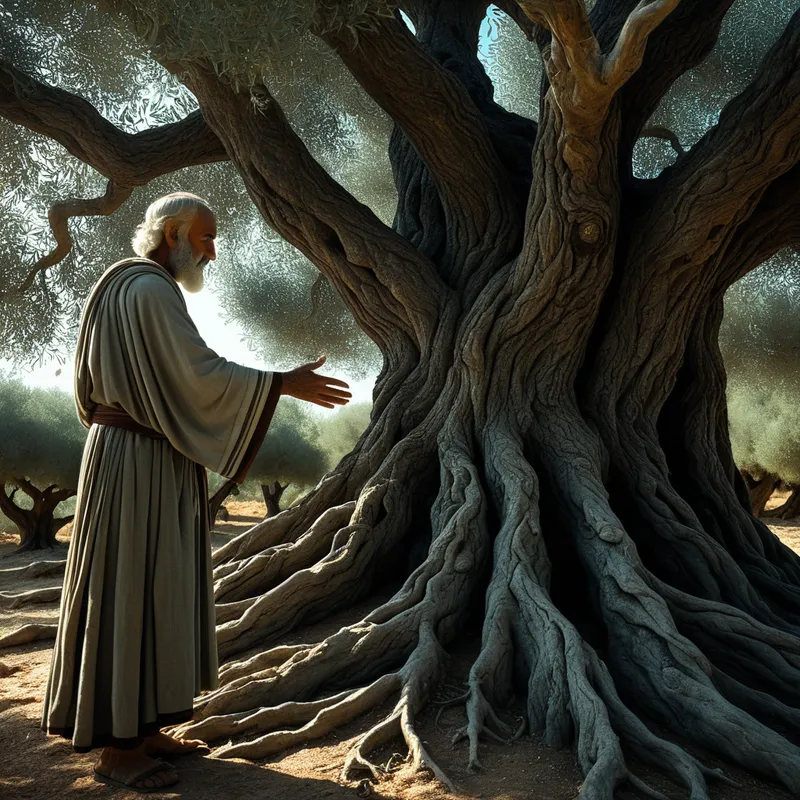
The true test was not recognizing the shore, but being unrecognized upon it. He walked the paths of his youth as a ghost. He saw the old olive tree, its trunk thick and gnarled, that he himself had built their bed around. He endured the insults of the arrogant suitors in his own hall. He was tested by the old hound, Argos, who alone, in a final flicker of life, knew him with a wag of its tail before passing into the darkness. The shore of Ithaca was not a destination, but a final, cruel [labyrinth](/myths/labyrinth “Myth from Various culture.”/). Its walls were the faces of those who should have known him, its [minotaur](/myths/minotaur “Myth from Greek culture.”/) the terrifying possibility that the man who left had been utterly erased by the sea. The homecoming was a death of [the wanderer](/myths/the-wanderer “Myth from Taoist culture.”/), and the birth of the king was a painful, secret labor.
Cultural Origins & Context
This moment of veiled return is the narrative and emotional climax of [Homer](/myths/homer “Myth from Greek culture.”/)’s epic poem, the Odyssey. Composed in the 8th century BCE, it was not read but performed orally by bards (rhapsodes) for aristocratic audiences. The tale functioned as more than entertainment; it was a cultural compass. In a world defined by [xenia](/myths/xenia “Myth from Greek culture.”/) (the sacred guest-host relationship) and kleos (glory won through great deeds), Odysseus’s anonymous return presented a profound paradox. It asked the audience: what is true identity when stripped of social recognition? What is a king without his crown?
The story validated the Greek ideals of cunning ([metis](/myths/metis “Myth from Greek culture.”/)) over brute force, of endurance (ponos), and of ultimate fidelity to the oikos (the household, the fundamental unit of society). Odysseus’s disguised testing of his household reaffirmed the proper social order. The shore became a symbolic threshold where the chaotic, monstrous world of the journey met the civilized, ordered world of home, and the hero had to integrate both to reclaim his place.
Symbolic Architecture
The Shore of Ithaca is not a geographical [location](/symbols/location “Symbol: The symbol of ‘Location’ signifies a sense of place, context, and the environment in which experiences unfold.”/), but a state of [soul](/symbols/soul “Symbol: The soul represents the essence of a person, encompassing their spirit, identity, and connection to the universe.”/). It represents the point of [arrival](/symbols/arrival “Symbol: The act of reaching a destination, marking the end of a journey and the beginning of a new phase or state.”/) after the long [journey](/symbols/journey “Symbol: A journey in dreams typically signifies adventure, growth, or a significant life transition.”/) of experience, where [the self](/myths/the-self “Myth from Jungian culture.”/) confronts its own [origin](/symbols/origin “Symbol: The starting point of a journey, often representing one’s roots, source, or initial state before transformation.”/) [story](/symbols/story “Symbol: The symbol of ‘Story’ represents the narrative woven through our lives, embodying experiences, lessons, and emotions that shape our identities.”/), now [alien](/symbols/alien “Symbol: Represents the unknown, otherness, and the exploration of new ideas or experiences.”/) and transformed.
The greatest journey ends not in a foreign land, but in the terrifying familiarity of a self you have outgrown and must now recognize as your own.
Odysseus is the <abbr title=“The conscious ego, the “I” that experiences the world”>[psyche](/myths/psyche “Myth from Greek culture.”/) returning to its core complex after a lifetime of [projection](/symbols/projection “Symbol: The unconscious act of attributing one’s own internal qualities, emotions, or shadow aspects onto external entities, people, or situations.”/) and engagement with the outer world (the adventures). [The mist](/myths/the-mist “Myth from Celtic culture.”/) of Athena symbolizes the necessary [dissolution](/symbols/dissolution “Symbol: The process of breaking down, dispersing, or losing form, often representing transformation, release, or the end of a state of being.”/) of old, naive perceptions. One cannot simply resume an old [life](/symbols/life “Symbol: The symbol of ‘Life’ represents a journey of growth, interconnectedness, and existential meaning, encompassing both the joys and challenges that define human experience.”/); one must see it with new, disillusioned eyes. The disguise is crucial—it represents the [shadow](/symbols/shadow “Symbol: The ‘shadow’ embodies the unconscious, repressed aspects of the self and often represents fears or hidden emotions.”/) and the [persona](/symbols/persona “Symbol: The social mask or outward identity one presents to the world, often concealing the true self.”/) [the ego](/myths/the-ego “Myth from Jungian culture.”/) has constructed to survive. The [hero](/symbols/hero “Symbol: A hero embodies strength, courage, and the ability to overcome significant challenges.”/) must consciously wear this “[beggar](/symbols/beggar “Symbol: A symbol representing vulnerability, need, and social inequality, often reflecting the dreamer’s feelings of lack, dependence, or neglected aspects of self.”/)” [identity](/symbols/identity “Symbol: Identity represents the sense of self, encompassing personal beliefs, cultural background, and social roles.”/), integrating his own humility and suffering, to approach his true home (the Self).
The olive-[tree](/symbols/tree “Symbol: In dreams, the tree often symbolizes growth, stability, and the interconnectedness of life.”/) bed is the ultimate [symbol](/symbols/symbol “Symbol: A symbol can represent an idea, concept, or belief, serving as a powerful tool for communication and understanding.”/) of this [integration](/symbols/integration “Symbol: The process of unifying disparate parts of the self or experience into a cohesive whole, often representing psychological wholeness or resolution of internal conflict.”/). It is the living, rooted center of his identity (his [marriage](/symbols/marriage “Symbol: Marriage symbolizes commitment, partnership, and the merging of two identities, often reflecting one’s feelings about relationships and social obligations.”/), his kingship, his craft). His recognition of it is the [moment](/symbols/moment “Symbol: The symbol of a ‘moment’ embodies the significance of transient experiences that encapsulate emotional depth or pivotal transformations in life.”/) the disparate strands of his experience—the wanderer and the [king](/symbols/king “Symbol: A symbol of ultimate authority, leadership, and societal order, often representing the dreamer’s inner power or external control figures.”/), the liar and the truthful [husband](/symbols/husband “Symbol: In dreams, the symbol of a husband often represents commitment, partnership, and the dynamics of intimate relationships.”/)—are woven back into a coherent whole.

The Dreamer’s Resonance
When this myth stirs in the modern dreamer, it often manifests as dreams of returning to a childhood home that is eerily different, or of being unrecognized by family and old friends. The somatic experience is one of profound disorientation and poignant longing—a tightness in the chest, a feeling of being a ghost.
Psychologically, this signals a critical phase in what James Hillman called the “soul’s code.” The individual has gathered experiences, perhaps endured trials (career changes, relationships, personal losses), and is now attempting to “return” to a sense of core identity. The dream reveals the anxiety that this core self may no longer exist, or that [the world](/myths/the-world “Myth from Tarot culture.”/) one left behind will not accommodate the person one has become. It is the psyche working through the death of the former self and the vulnerable, hidden approach to a new, more integrated identity. The dreamer is Odysseus in the mist, touching the shore of a new stage of life, required to be both stranger and king.

Alchemical Translation
The alchemical process mirrored here is coagulatio—the making solid, the return to earth after the dissolution ([solutio](/myths/solutio “Myth from Alchemical culture.”/)) of the sea journey. The psychic transmutation is from the wanderer archetype (the exploring, restless ego) to the ruler archetype (the centered, responsible Self). This is not a social rulership, but an inner sovereignty.
The alchemy of homecoming is the slow, patient work of fitting the shape of your journey into the bed of your origins, and discovering they were carved from the same living wood.
The “shore” is the [temenos](/myths/temenos “Myth from Greek culture.”/), the sacred precinct where this final operation occurs. The suitors in the dreamer’s life are the persistent, immature complexes and outdated desires that consume psychic energy. The disguised approach is the necessary shadow-work—owning one’s humility, failures, and cunning without inflation. The recognition scene with Penelope (or the olive tree bed) is the coniunctio, [the sacred marriage](/myths/the-sacred-marriage “Myth from Various culture.”/) of the conscious mind with the soul’s abiding truth. It is the moment of full self-recognition, where the story of one’s life finally makes sense as a coherent narrative directed, however tortuously, toward this wholeness. One does not simply arrive home. One must, through a supreme act of conscious memory and embodied truth, become the home one seeks.
Associated Symbols
Explore related symbols from the CaleaDream lexicon: