The She-Wolf Myth Meaning & Symbolism
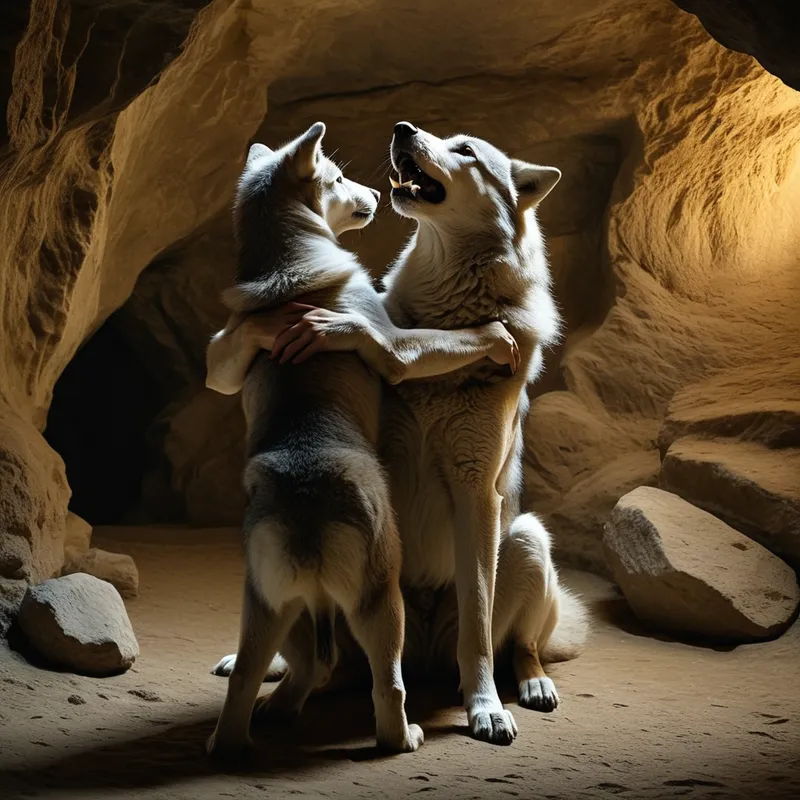
A divine she-wolf rescues and suckles the abandoned twins Romulus and Remus, an act of wild nurture that leads to the founding of Rome.
The Tale of The She-Wolf
Listen. Before there were walls of stone, before the legions marched, there was only [the river](/myths/the-river “Myth from Buddhist culture.”/)’s murmur and the raw hunger for a throne. On the banks of the Tiber, a king trembled. His name was Amulius, a usurper who had stolen [the crown](/myths/the-crown “Myth from Various culture.”/) from his brother, Numitor. Fear is a poison that breeds cruelty. To secure his stolen power, Amulius ordered the unthinkable: the twin sons of Numitor’s daughter, Rhea Silvia, were to be cast into the swollen, unforgiving river. Their crime was birth. Their sentence was death by [water](/myths/water “Myth from Chinese culture.”/).
The servant tasked with this dark deed could not bear it. He placed the squalling infants in a basket and set them adrift on the Tiber’s current, a fragile ark on a churning brown road. The river, perhaps moved by a deeper will, carried them gently. The waters subsided, and the basket caught in the roots of the ancient Ficus Ruminalis, its branches a silent witness. The twins cried out into [the wilderness](/myths/the-wilderness “Myth from Biblical culture.”/), their voices thin against the vast silence.
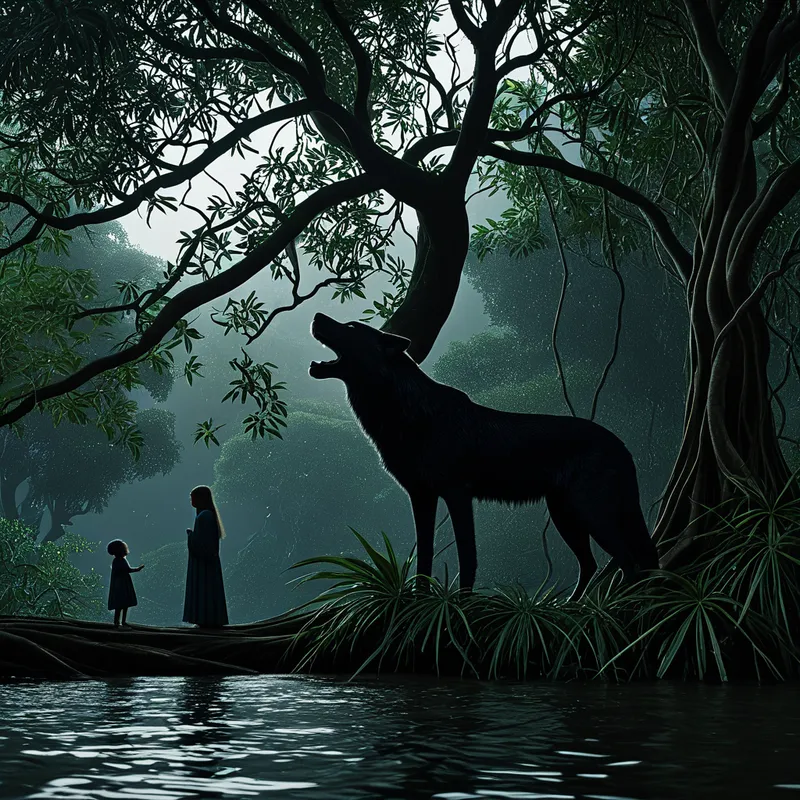
Then, from the dappled shadows of the Palatine hill, She came. Not with malice, but with a curious, low-slung grace. A she-wolf, Lupa, her coat the color of storm clouds and earth. She had come to drink, but found life instead. She sniffed the tiny, vulnerable forms. The instinct to kill warred with another, deeper impulse—the pull of the litter, the call of the den. The wild chose nurture. She bent her head, her rough tongue cleaning them. She lay down, offering her teats. The twins, [Romulus and Remus](/myths/romulus-and-remus “Myth from Roman culture.”/), clung to her, drinking the milk of the wilderness itself. She warmed them with her body, guarded them with her presence. The god of the river, Tiberinus, watched from his reedy throne, ensuring no harm came.
In time, their cries were heard by another: Faustulus. He and his wife, Acca Larentia, took the wolf-suckled boys into their humble home. They grew strong on the hills, shepherds with royal blood burning in their veins, their first mother a creature of tooth and claw, their destiny written in the stars above the seven hills.
Cultural Origins & Context
The myth of the She-Wolf is the foundational pre-history of Rome, a story crafted not in a single moment but woven over centuries. Its earliest known tellers were likely the Romans themselves, seeking an origin that was both humble and divinely sanctioned. The myth served a crucial societal function: to explain the paradoxical character of Rome. How could a civilization of unparalleled law, order, and civic virtue have arisen from such a violent, fratricidal beginning? The She-Wolf provided the answer.
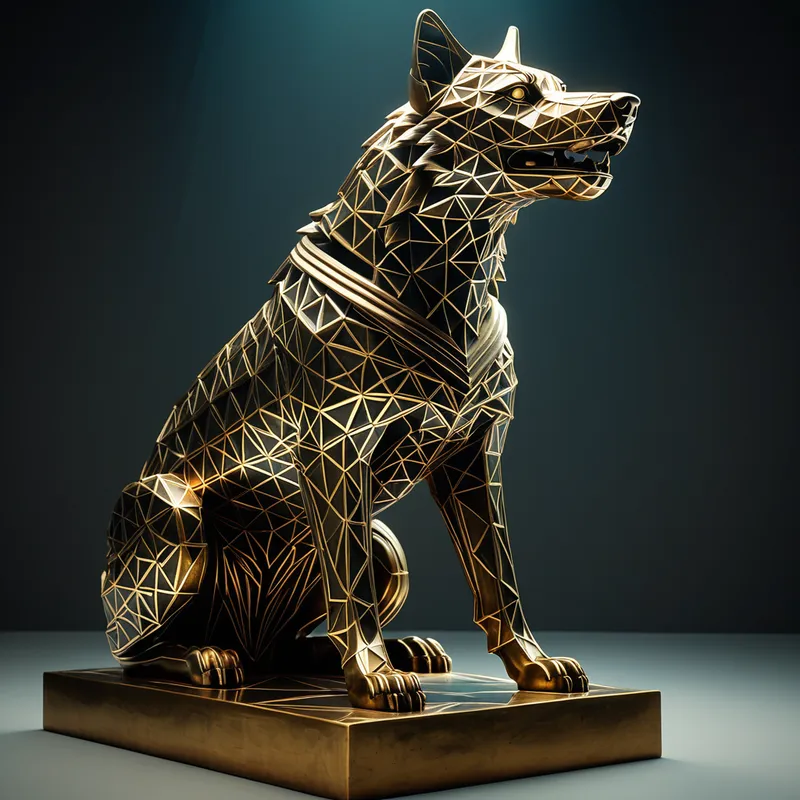
She represented the numen—the sacred spirit—of the land itself, wild and untamed. By suckling the founders, she transferred that raw, potent, and ferocious vitality directly into the Roman lineage. The myth was not merely a cute story; it was a political and religious tool. It connected the Julian clan (and later, emperors like Augustus) directly to the divine twins and their celestial father, Mars. The famous Capitoline Wolf statue became a powerful symbol of the state, embodying Rome’s protective and fierce nature. The tale was recited, depicted in art, and celebrated in the Lupercalia festival, where priests (Luperci) ran through the city, striking people with strips of goat hide—a ritual of purification and fertility echoing the wild, life-giving force of Lupa.
Symbolic Architecture
At its core, the myth presents a profound symbolic [paradox](/symbols/paradox “Symbol: A contradictory yet true concept that challenges logic and perception, often representing unresolved tensions or profound truths.”/): the [source](/symbols/source “Symbol: The origin point of something, often representing beginnings, nourishment, or the fundamental cause behind phenomena.”/) of civilization’s nurture is the untamed wild. The She-[Wolf](/symbols/wolf “Symbol: Wolves in dreams symbolize instinct, intelligence, freedom, and a deep connection to the wilderness and primal instincts.”/) is not a domesticated animal; she is the embodiment of instinct, survival, and fierce protectiveness. Her act bridges two worlds that civilization often sees as opposed.
The first law is not of the city, but of the den. Before justice, there is mercy; before order, there is the raw, instinctive act of care.
Psychologically, Lupa represents the archetypal Great [Mother](/symbols/mother “Symbol: The symbol of ‘Mother’ represents nurturing, protection, and the foundational aspect of one’s emotional being, often associated with comfort and unconditional love.”/), but in her most primal, non-[human](/symbols/human “Symbol: The symbol of a human represents individuality, complexity of emotions, and social relationships.”/) form. She is the [mother](/symbols/mother “Symbol: The symbol of ‘Mother’ represents nurturing, protection, and the foundational aspect of one’s emotional being, often associated with comfort and unconditional love.”/) who does not smother with culture, but strengthens with [nature](/symbols/nature “Symbol: Nature symbolizes growth, connectivity, and the primal forces of existence.”/). She offers sustenance without [condition](/symbols/condition “Symbol: Condition reflects the state of being, often focusing on physical, emotional, or situational aspects of life.”/), protection without domestication. The twins represent the nascent ego, abandoned by the corrupt “[king](/symbols/king “Symbol: A symbol of ultimate authority, leadership, and societal order, often representing the dreamer’s inner power or external control figures.”/)” (the old, tyrannical order of the [psyche](/myths/psyche “Myth from Greek culture.”/)) and left to die. Their salvation comes not from a [human](/symbols/human “Symbol: The symbol of a human represents individuality, complexity of emotions, and social relationships.”/) hand, but from the deep, instinctual [layer](/symbols/layer “Symbol: Layers often symbolize complexity, depth, and protection in dreams, representing the various aspects of the self or situations.”/) of the [psyche](/myths/psyche “Myth from Greek culture.”/) itself—the animal [soul](/symbols/soul “Symbol: The soul represents the essence of a person, encompassing their spirit, identity, and connection to the universe.”/) that knows how to survive and thrive before the conscious mind has formed.
The [river](/symbols/river “Symbol: A river often symbolizes the flow of emotions, the passage of time, and life’s journey, reflecting transitions and movement in one’s life.”/) Tiber symbolizes the flow of [destiny](/symbols/destiny “Symbol: A predetermined course of events or ultimate purpose, often linked to spiritual forces or cosmic order, representing life’s inherent direction.”/) and the unconscious, carrying the fragile ego to where it needs to be. Faustulus and Acca Larentia then represent the necessary humanization, the [translation](/symbols/translation “Symbol: The process of converting meaning from one form or language to another, representing communication, adaptation, and the bridging of differences.”/) of that raw, wolf-given power into a social context, preparing it for its destined [role](/symbols/role “Symbol: The concept of ‘role’ in dreams often reflects one’s identity or how individuals perceive their place within various social structures.”/).
The Dreamer’s Resonance
When the She-Wolf pads into modern dreams, she announces a profound somatic and psychological process. She appears when the dreamer feels abandoned—by family, by society, by their own sense of purpose. This is not a gentle abandonment, but a violent exposure, a feeling of being cast into chaotic emotional waters.
Dreaming of Lupa suggests the psyche is activating its most fundamental survival resources. It is a call back to instinct. The dreamer may be in a period where over-reliance on rational thought or social personas has left them malnourished. The She-Wolf offers the “milk” of primal self-care, fierce boundaries, and the courage to protect what is most vulnerable within oneself. She can also appear as a corrective to a too-sanitized self-image, reintroducing healthy aggression, territoriality, and the unapologetic will to live.
If the dreamer is the she-wolf, it may signal the emergence of a powerful, protective, and nurturing energy that feels foreign yet deeply authentic—often related to defending one’s creative offspring, a new project, or a vulnerable part of [the self](/myths/the-self “Myth from Jungian culture.”/).
Alchemical Translation
The myth models the alchemical process of psychic transmutation, or individuation, with stark clarity. The [prima materia](/myths/prima-materia “Myth from Alchemical culture.”/)—the base, discarded matter—is the abandoned Self (the twins). [The first stage](/myths/the-first-stage “Myth from Alchemical culture.”/), [nigredo](/myths/nigredo “Myth from Alchemical culture.”/) (the blackening), is the basket on the dark river, the feeling of being utterly cast out and left to die.
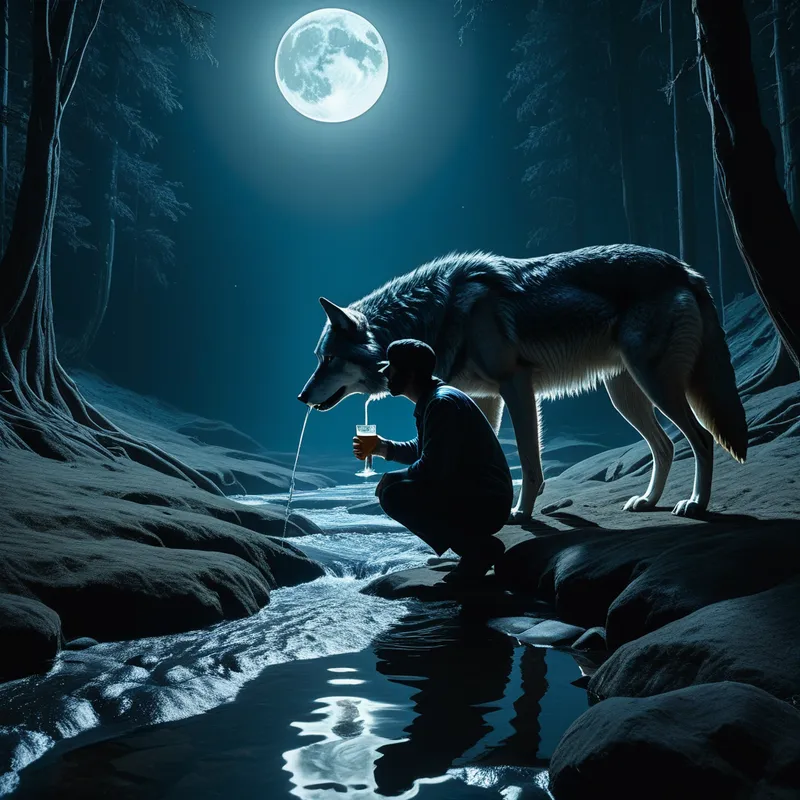
The she-wolf embodies the next crucial stage: the paradoxical, unexpected nourishment that arises from the depths. This is the albedo (the whitening), not a spiritual light, but the milky, life-giving sustenance of the instinctual psyche. It is the realization that what you perceived as wild and dangerous within yourself (your anger, your hunger, your territorial instincts) is actually the very force that preserves and nurtures your core identity.
The foundation of the individual is laid not in the light of reason, but in the dark den of instinctual acceptance.
Faustulus and Acca Larentia represent the citrinitas (the yellowing), the humanizing and socializing of that raw power—learning its name, its history, its place in [the world](/myths/the-world “Myth from Tarot culture.”/). The final stage, the [rubedo](/myths/rubedo “Myth from Alchemical culture.”/) (the reddening), is the founding of the city, the conscious establishment of a new order ([the ego](/myths/the-ego “Myth from Jungian culture.”/)) built upon, and forever indebted to, that wild foundation. The fratricide between [Romulus](/myths/romulus “Myth from Roman culture.”/) and Remus that follows is the tragic shadow of this process—the civil war within the psyche as the new conscious structure solidifies, often at the cost of other potentialities. The myth teaches that true individuation requires acknowledging, honoring, and integrating the She-Wolf within—the fierce, untamed, and ultimately nurturing spirit of our own wild nature.
Associated Symbols
Explore related symbols from the CaleaDream lexicon: