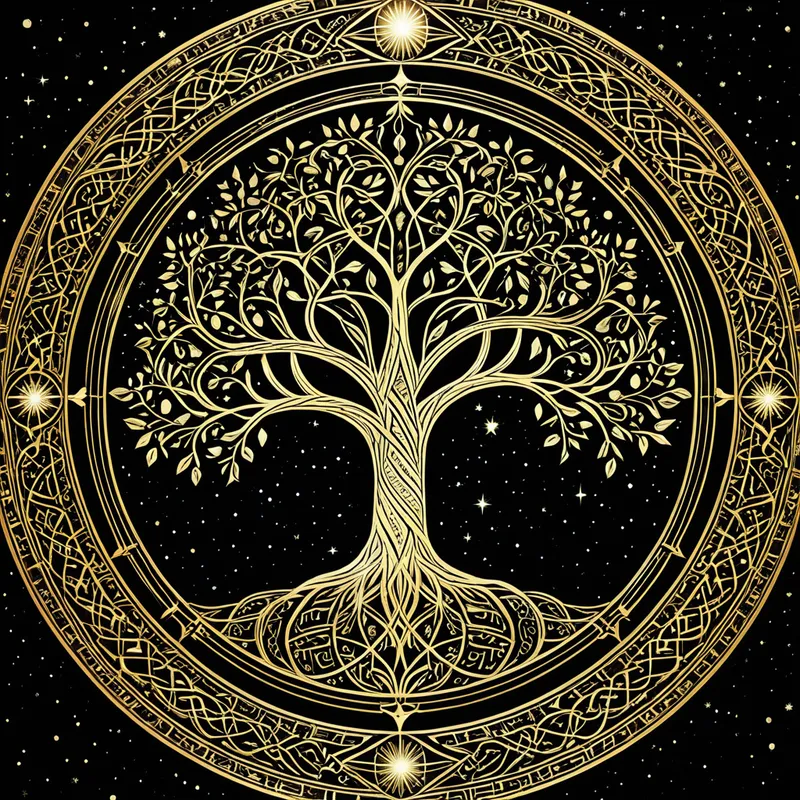
The Seven Lower Sephiroth Myth Meaning & Symbolism
A myth of divine emanation and cosmic repair, where fractured vessels of light descend into form, creating the world and the path back to unity.
The Tale of The Seven Lower Sephiroth
Listen, and hear the tale not of creation, but of descent. Before time was measured, there existed only Ein Sof, a boundless, nameless light so pure and concentrated it could know only itself. From this stillness, a yearning arose—a desire to be known, to pour forth. And so, the light contracted, making space for what was to come.
Into this primordial womb, ten vessels were formed, conceived from the divine breath. These were the Sephiroth, chalices meant to receive the streaming light of Ein Sof. The first three, the highest, were strong, forged of a subtler substance. They drank the light and held it, shining with a terrible, peaceful clarity.
But the lower seven… they were different. Fashioned for the work of forming worlds, they were brittle, untested. When the torrent of light cascaded into them, they could not contain its fierce glory. A great cosmic cry echoed through the void as they shattered—Shevirat HaKelim. The vessels broke, and the holy light within them fractured into a billion, billion sparks.
These sparks fell. They fell through endless realms of thickening substance, becoming entangled with the sharp, dark shards of the broken vessels themselves. This mixture of light and shell, of spirit and matter, coalesced into the world we know—a world of beauty and brutality, of divine hints buried in opaque forms. At the very bottom of this cascade sat the tenth Sephirah, Malkhut, the Kingdom. She, the recipient of all that flowed down the tree, was now orphaned, separated from her source by a cosmos of broken glass and hidden fire. Her light was dimmed, a queen in exile, feeling only the faintest echo of the love from above.
And so the cosmos was born from a catastrophe. Not from a word, but from a breaking. Not from an act of will alone, but from an act of vessel-ing that failed, scattering the seeds of divinity into the dark soil of existence. The seven lower realms, from Chesed to Malkhut, became a ladder of descent—and now, the only possible ladder of return.
Cultural Origins & Context
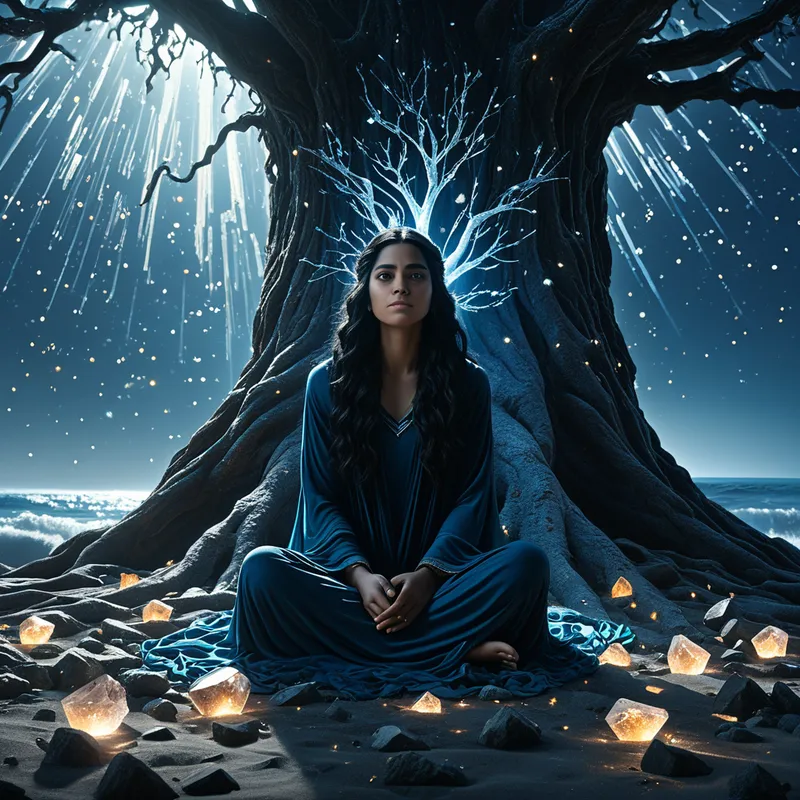
This is not a myth told around campfires, but one whispered in the study halls of medieval mystics. Its most elaborate form emerges in the 16th century within the school of Lurianic Kabbalah, founded by Rabbi Isaac Luria in Safed. It was an answer to the existential crisis of exile—not just the physical exile of the Jewish people from their land, but the spiritual exile of the divine from itself, and the soul from its source.
The myth was transmitted orally, in hushed and fervent tones, from master to a select few disciples. It was a secret doctrine, a map of cosmic trauma meant to explain the profound imperfection of the world and the sacred responsibility placed upon humanity. Its societal function was revolutionary: it framed human ethical and ritual action as nothing less than a cosmic therapy. Every prayer, every good deed, became an act of gathering the scattered sparks, of healing the fractured body of God. It transformed despair into purpose, making every individual a crucial actor in the drama of universal restoration, or Tikkun Olam.
Symbolic Architecture
The myth is a profound blueprint of the psyche’s structure and its fundamental wound. The Sephiroth are not distant gods but archetypal potentials within consciousness itself. The shattering represents the inevitable trauma of incarnation—the descent of pure, undifferentiated awareness into the confines of individual identity, body, and history.
The fall into form is the birth of the soul, and its fragmentation is the price of becoming.
The seven lower vessels map the architecture of the human experience: Chesed (expansive love) and Gevurah (necessary restraint) form the arms of the soul. Tiferet is the harmonizing heart. Netzach (victorious drive) and Hod (receptive intellect) are the legs that move us through the world. Yesod is the generative subconscious, and Malkhut is the embodied self, the “I” that feels separate and real. The broken shells, the <abbr title=“The “shells” or forces of fragmentation and illusion”>Kelipot, represent our neuroses, our defenses, our egoic rigidity—the hard casing that both protects and imprisons the spark within.
The Dreamer’s Resonance
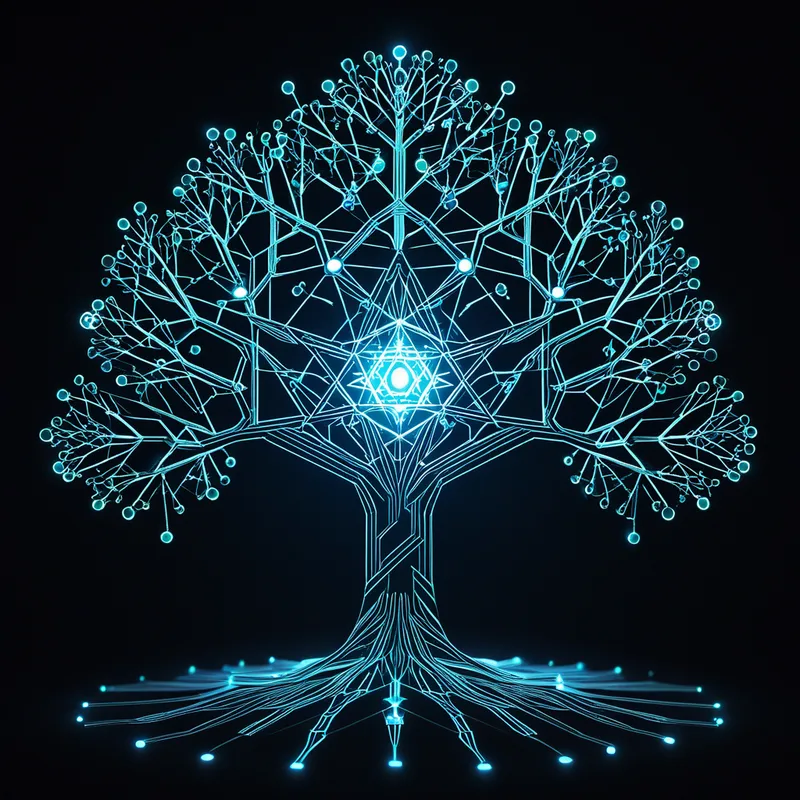
When this myth stirs in the modern unconscious, it manifests not as a vision of a cosmic tree, but as the somatic feeling of being a container under immense pressure. One may dream of a beloved house with rooms that are beautiful but cannot be connected, of a priceless vase cracking as one tries to hold too much water, or of searching through rubble for precious, glowing fragments.
Psychologically, this is the process of confronting one’s own inherent multiplicity and fracture. The dreamer is experiencing the truth that the personality is not a monolithic whole, but a constellation of sometimes conflicting parts—the inner critic (a shard of Gevurah), the boundless giver (a spark of Chesed), the strategic mind (an aspect of Hod), all housed in a vessel (Malkhut, the body-ego) that often feels inadequate to hold them. The dream is an invitation to acknowledge the breakage not as a failure, but as the precondition for a more conscious, integrated wholeness.

Alchemical Translation
The alchemical work modeled here is the opus of Tikkun—repair. It is the individuation journey from a state of identification with the broken shells to the reclamation and re-integration of the scattered light. The first stage is recognition: seeing the fragmentation in one’s life—the repetitive patterns, the projected shadows, the disconnected talents. This is the mapping of one’s own inner <abbr title=“The “shells” or forces of fragmentation and illusion”>Kelipot.
The second is gathering. This is the painstaking psychological work of retrieving those exiled parts. Why does your compassion feel walled off by severity? (Chesed trapped in Gevurah). Why does your creative vision lack foundation? (Tiferet disconnected from Yesod). Each act of integration—feeling the grief one has armored against, expressing the love one has restrained—is the lifting of a holy spark.
The goal is not to return to a pre-shattered innocence, but to forge a wholeness that remembers the fracture.
The final stage is ascent: re-establishing the flow. As the lower vessels are repaired from within, the channels to the higher three—the realms of wisdom, understanding, and crown—begin to clear. The exiled Shekhinah, our embodied sense of self, no longer feels abandoned, but becomes the conscious vessel through which the transcendent finally meets the immanent. The hero’s journey here is not to slay a dragon, but to lovingly reassemble the cosmos from the inside out, discovering that the divine light we seek has been hidden within the very fabric of our broken world all along.
Associated Symbols
Explore related symbols from the CaleaDream lexicon: