The Selkie Myth Meaning & Symbolism
A seal sheds its skin to walk on land, is trapped in human form, and forever yearns for the sea, embodying the soul's dual nature and the ache of displacement.
The Tale of The Selkie
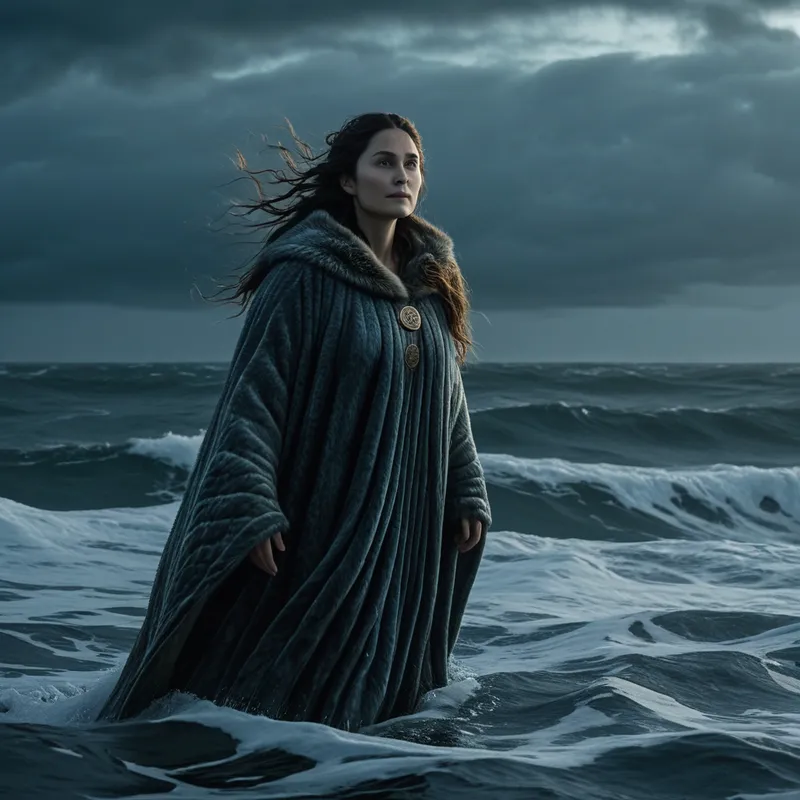
Listen now, by the peat-fire’s glow, to a tale born of salt spray and longing. It begins not on the land, but in the cold, clear fathoms of the North Sea, where the Selkie folk dwell. They are the seal-people, graceful and wise in the deep, wearing their pelts as we wear our souls. But on certain nights, when the moon hangs fat and low, painting a silver road upon the water, they are drawn by a force older than memory. They slip from their skins upon the rocky shore, folding them with care, and step forth as men and women of unearthly beauty, their eyes holding the dark, placid depth of the ocean abyss.
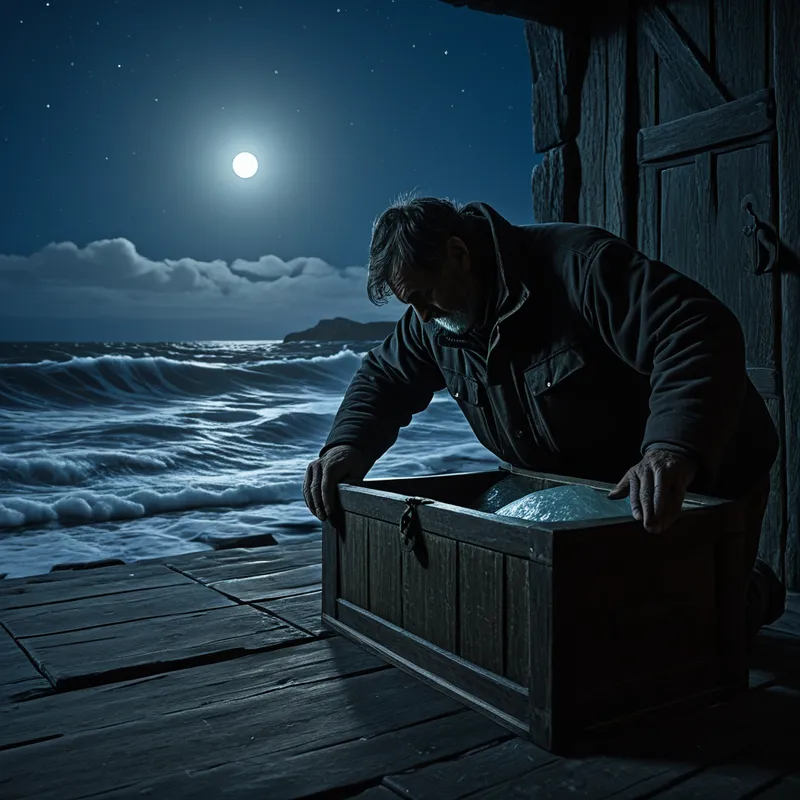
On such a night, a lonely fisherman, his heart hollowed by the wind’s constant lament, wandered the cliff path. Below, on a hidden cove of moon-washed sand, he saw them dancing. Their laughter was the sound of waves caressing stone, their forms luminous. Among them was one whose grace stole the very breath from his lungs. As dawn’s first grey finger touched the east, the others retrieved their skins, slid into the surf, and were gone. But she, lingering for one last moment with her face turned to the vanishing stars, did not see the fisherman emerge from the shadows. He saw her pelt, a sleek, wet shadow on the rock, and seized it. Without her skin, she could not return. She stood revealed, a woman of surpassing beauty, shivering not from cold but from a severing more profound than any blade could make.
He wrapped her in his rough woolen cloak, speaking gentle, desperate words. He brought her to his stone croft, promising warmth, safety, love. She, severed from her true self, became his wife. A good wife she was, by all accounts—tending hearth, bearing children—yet her gaze was ever drawn to the window, to the line where the grey sea met the grey sky. A profound melancholy clung to her like mist, and in the quiet hours, she would sing a wordless song that made the kettle’s steam weep and the fire sigh. Her children, though loved, sensed the ocean in her touch, the tidal pull in her lullabies.
Years passed. The fisherman, both loving and fearful, hid the stolen skin in a locked chest, or beneath the roof thatch, or in a crevice of the byre—moving it often, haunted by the dread of loss. But the soul’s truth has a magnetism of its own. One day, playing in a place they were forbidden to go, the children found it. Not knowing its power, but sensing its profound importance, they brought it to their mother. The moment her fingers touched the familiar, salt-cured hide, a tremor passed through the world. The mournful song in her heart found its key. She looked at her sleeping children, her face a landscape of impossible conflict—then she turned, and with the skin clasped to her breast, she fled the croft, down the path to the shore.
She did not pause at the water’s edge. She did not look back. Wrapping the skin around her shoulders, she plunged into the surf. For a moment, there was only the churning foam. Then, a sleek, dark head broke the surface, eyes meeting those of the fisherman now standing stricken on the cliff. A single, echoing bark—a sound of sorrow, of farewell, of homecoming—and she was gone, a ripple merging with the endless sea. Behind, on the land, a man was left with a silent hearth and children who would forever watch the waves, knowing a part of themselves was forever out of reach.
Cultural Origins & Context
The Selkie myth is not a singular, codified story but a living pattern woven into the oral traditions of coastal communities across the North Atlantic rim—the Scottish Isles (especially Orkney and Shetland), Ireland, the Faroe Islands, and Iceland. While often grouped under the broad umbrella of “Celtic” folklore, its roots are specifically in the Norse-Gaelic cultural fusion of these sea-bound places. It was a story told by the hearth, passed from grandmother to grandchild, a narrative born from the intimate and perilous relationship between the human and the marine world.
The societal function of the tale was multifaceted. For communities whose survival depended on the seal hunt, the myth created a sacred, psychological boundary. The Selkie was a kind of kin-under-the-skin, explaining the seal’s intelligent, almost human eyes and fostering a complex relationship of respect, guilt, and identification. The story also served as a profound metaphor for the human condition in these isolated outposts: it spoke to the arrival of strangers (often from across the sea), the mystery of spouses whose inner lives remained opaque, and the deep, genetic pull of the sea that called many men to their doom. It was a narrative container for the experience of longing, displacement, and the unbridgeable gap between two natures—the domestic and the wild, the known and the unknown.
Symbolic Architecture
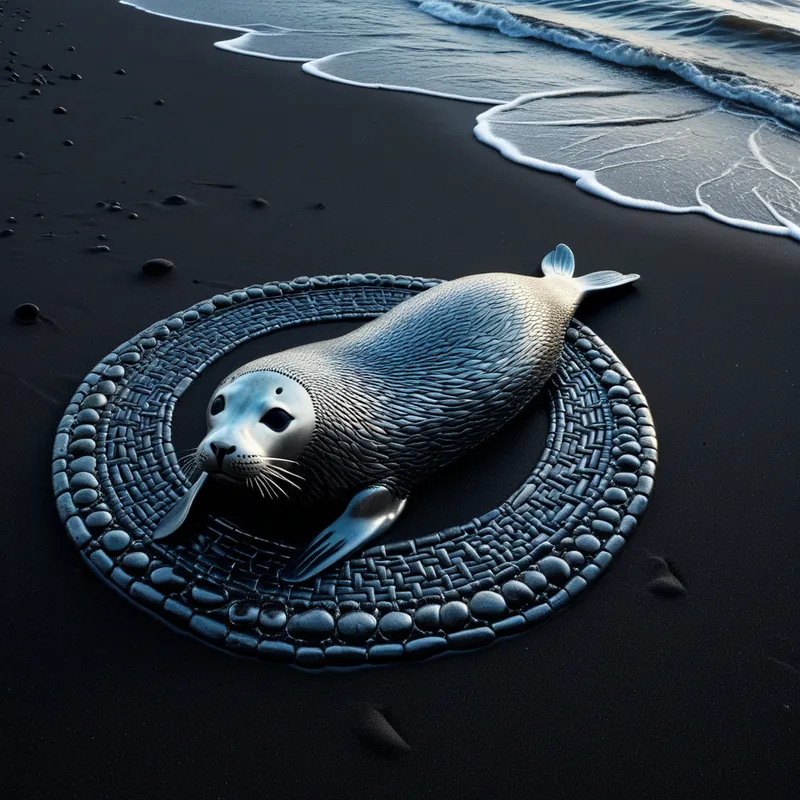
At its core, the Selkie myth is an exquisite map of the divided self. The pelt is not merely a costume; it is the Self in its most integrated, natural state. To possess it is to be whole, moving fluidly between depths and surfaces, between the unconscious (the sea) and consciousness (the land). Its theft represents the primal wound of adaptation: the moment our instinctual, soulful nature is captured, hidden, or repressed by the demands of the world—by duty, by trauma, by societal expectation, or by another’s possessive love.
The stolen skin is the soul in exile, and the croft is the persona—the comfortable, constructed life built atop a foundational loss.
The Selkie-wife embodies the anima or the animus forced into a foreign shape. She is creative, melancholic, and profoundly productive (bearing children, tending home), yet her gaze is forever turned toward the source. Her melancholy is not a pathology but a fidelity—a soul remembering its true ecology. The children represent the new life, the creative potential, that can emerge from this union of opposites (human and other), yet they are inherently liminal, belonging to both worlds and neither. The myth’s resolution is not a tragedy of abandonment, but a painful triumph of re-integration. The return to the sea is not an escape, but a reclaiming of authenticity, however high the cost.
The Dreamer’s Resonance
When the Selkie pattern surfaces in modern dreams, it signals a critical moment of soul-reckoning. The dreamer may find themselves searching through the attic of a childhood home, or a forgotten cellar, for a lost, vital object—a garment, a key, a book. This is the search for the pelt. Somatic sensations often accompany these dreams: the feeling of being suffocated by dry air, of itchy, ill-fitting clothes, or a powerful, somatic longing to immerse oneself in water.
To dream of being the Selkie, trapped on land, points to a deep sense of inauthenticity. The dreamer may be living a life that is successful by external measures but feels alien, as if performing a role. The longing is for the fluid, instinctual, and deeply knowing part of the self that has been locked away. Conversely, to dream of being the fisherman, hiding the skin, can indicate a part of the psyche that is possessive, fearful of loss, and attempting to control or domesticate a vital, wild energy (a relationship, a creative spirit, one’s own emotions) to catastrophic effect. The dream is the soul’s insistent, tidal reminder: a part of you is not here. A part of you is calling from the deep.

Alchemical Translation
The alchemical journey modeled by the Selkie myth is the opus of reclaiming the hidden skin—the process of individuation. The initial state is separatio: the soul-skin is stolen, the Self is split. Life in the “croft” represents the necessary but incomplete stage of development, where we build an ego-structure, form relationships, and contribute to the world, all while nursing a sacred wound.
The turning point is nigredo, the blackening: the melancholia deepens into an unbearable tension. This is not a depression to be medicated away, but the fertile darkness of the seafloor, where the pressure forces a choice: dissolution or transformation. Finding the skin is the moment of illuminatio, a shocking clarity. It is the recovery of a forgotten memory, the sudden recognition of one’s own repressed passion, talent, or truth.
The return to the sea is the final stage, rubedo: not a regression, but a conscious, willing descent into the depths of one’s own nature to reclaim wholeness.
For the modern individual, this does not literally mean abandoning one’s life. It means daring to retrieve what was hidden—the artistic impulse, the vulnerable emotion, the unconventional path, the quiet truth—and integrating it. It means wearing one’s soul openly, despite the risk. The children left on the shore are not abandoned; they are the aspects of our life and creativity that are born from the union of our human striving and our soul’s depth. They remain as our legacy on the conscious shore, while we, the core Self, regain the freedom to move in the vast, unconscious deep, whole once more. The myth teaches that wholeness requires both the courage to be trapped and the greater courage to be free, and that the call of the deep, wild Self is a tide that will always, eventually, reclaim its own.
Associated Symbols
Explore related symbols from the CaleaDream lexicon: