The Sacred Heart Myth Meaning & Symbolism
A myth of divine love made vulnerable, where a heart wounded by the world becomes the radiant, universal source of compassion and spiritual fire.
The Tale of The Sacred Heart
Listen, and let the veil between worlds grow thin. In a time when the divine walked cloaked in flesh, there was one whose essence was love made manifest. He spoke in parables of seeds and shepherds, his touch a balm for fevered brows and withered limbs. The people flocked to him, a river of hope drawn to a living spring. Yet, in the courts of power and the temples of stone, his message of a kingdom not of this world was a tremor threatening foundations.
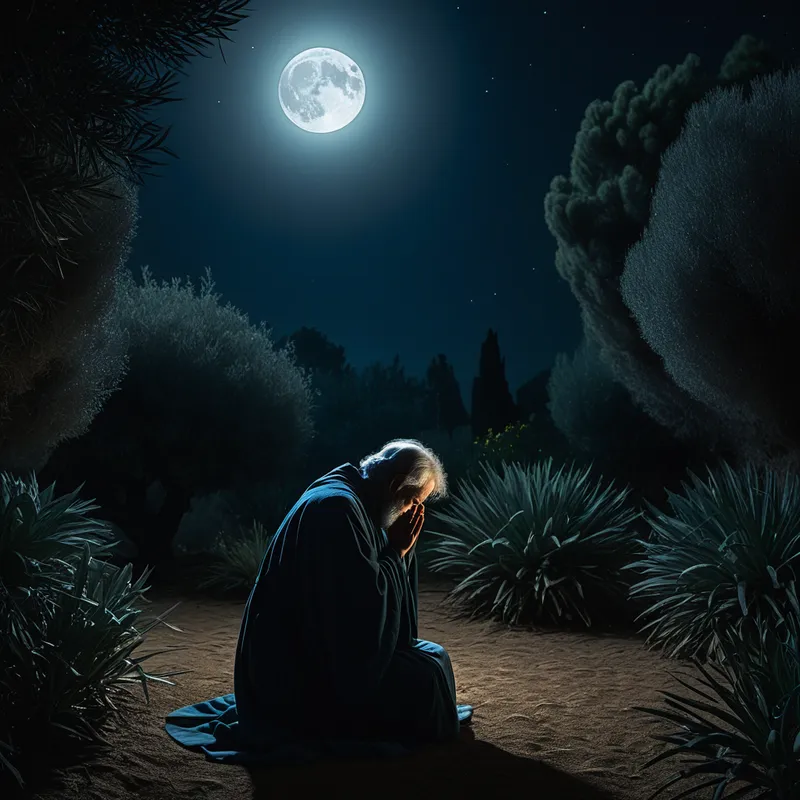
The conflict was not of clashing armies, but of clashing truths. The light he carried exposed every shadow, and the shadows conspired. In a walled garden under a heavy moon, the weight of what was to come pressed upon him like a physical stone. He prayed, and his sweat fell to the earth like drops of blood. Here, in the solitude of impending sacrifice, the mythic heart of the story first quickened—a heart feeling the totality of human betrayal, fear, and loneliness.
The rising action was a brutal symphony. The kiss of a friend became a signal. The mock trial, the scorn of the crowd, the lash of the Roman flagrum. With each strike, the love within did not harden, but grew more vast, a sea absorbing the poison of violence. Then, the ascent to the Place of the Skull. Nails forged in human hatred pierced hands that had only ever healed. As he was raised between earth and sky, a thief reviled him, while another, in his final moments, saw the truth and was promised paradise.
At the zenith of his agony, he cried out to the Abba he called Father. The resolution was not a rescue, but a consummation. A soldier, following the grim duty of his office, thrust a spear into the side of the suspended figure. And from that wound—from the very seat of life, now stilled—flowed not just blood and water, but a revelation. The heart, the sacred center, had been physically opened. It was an ultimate vulnerability, the final seal broken. In that moment, the myth tells us, the boundless, compassionate love that had animated the flesh was now released into the world, no longer contained by a single form. The tomb would be found empty, but the true vessel of transformation—the wounded, open heart—remained as the eternal symbol.
Cultural Origins & Context
The specific devotion to the Sacred Heart crystallized in the late Middle Ages, most prominently through the mystical visions of St. Margaret Mary Alacoque in the 17th century. However, its roots tap deep into the foundational soil of Christian thought: the Johannine spear-thrust, the imagery in Ephesians of being “rooted and grounded in love,” and the early Church Fathers’ meditation on Christ’s side as the source of the sacraments.
This was not a myth born in palaces or academic halls, but in the cloisters and among the laity. It was passed down through visions, private revelations, and popular piety—a heart-centered counterpoint to more juridical theologies. Its societal function was profoundly emotional and integrative. In an age of plague, war, and schism, it offered a tangible, visceral focus for divine compassion. It presented a God who did not merely command from afar but who had felt human suffering in its most intimate chamber. The devotion provided a model for turning personal suffering into empathetic love, making the mystical accessible through the deeply human symbol of the heart.
Symbolic Architecture
The Sacred Heart is a master symbol of profound paradox. It represents the ultimate conjunction of opposites: divine and human, eternal and temporal, impassible and vulnerable, glory and gore. The heart itself is the universal archetype of the center—the seat of life, emotion, and true essence.
The wound is not a defect, but the aperture through which the infinite pours into the finite.
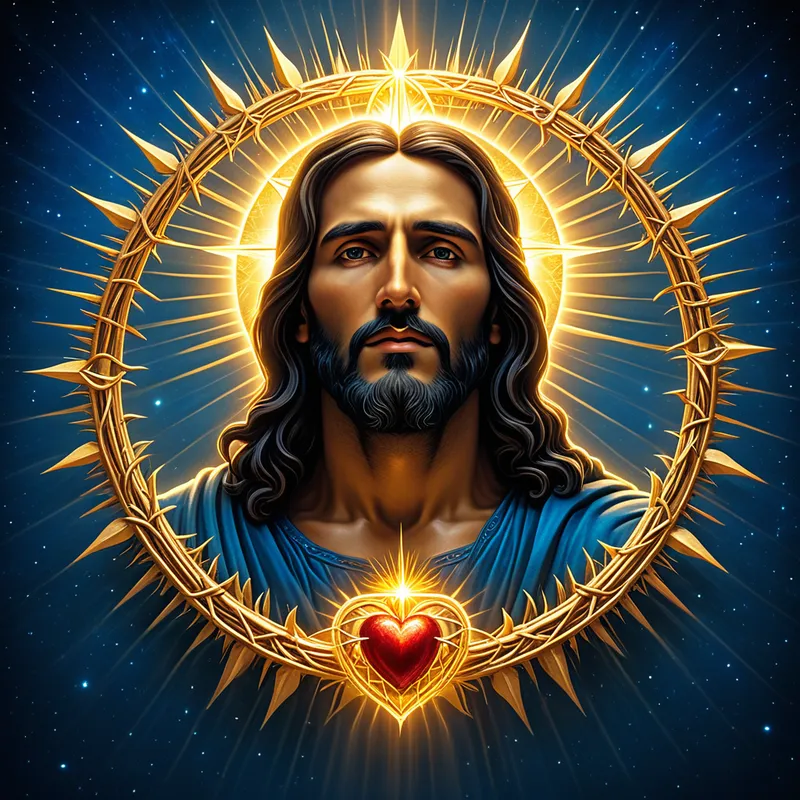
The crown of thorns encircling it symbolizes the suffering inherent in a love that fully engages with a wounded world; it is the price of consciousness. The flame erupting from its apex is the divine fire—love as an active, consuming, transformative force, not a passive sentiment. The wound, often shown bleeding, is the critical element. It signifies that this love is not abstract or protected. It is pierced open, making it accessible. The sacred is rendered vulnerable, and in that vulnerability lies its irresistible power and its call to reciprocal love.
Psychologically, it represents the ultimate integration of the shadow. Every betrayal, lance-thrust, and thorn is absorbed into the core of being and, rather than destroying it, becomes part of its radiant identity. It is the symbol of the ego shattered by the Self, not into fragments, but into a wider, more compassionate configuration.
The Dreamer’s Resonance
When this mythic pattern stirs in the modern dreamer, it often signals a profound initiation into the realm of emotional and spiritual vulnerability. To dream of a radiant, wounded heart—whether it is one’s own, a loved one’s, or a symbolic, free-floating image—points to a critical moment in the psyche’s development.
Somatically, one might feel a literal pressure or warmth in the chest area upon waking, a sign of the heart chakra’s activation or distress. Psychologically, the dreamer is likely navigating a deep process of heartbreak, compassion fatigue, or the terrifying risk of loving deeply. The dream presents the archetypal solution: the heart does not armor itself or retreat. It transmutes the piercing pain into the very substance of its light. The thorns in the dream are not just threats; they are the necessary boundaries that define and contain this powerful energy. Such a dream asks the dreamer: Where in your life are you being asked to love from a place that has been hurt? Where is your compassion being born from your own wounds?
Alchemical Translation
The alchemical journey modeled by the Sacred Heart is the opus contra naturam—the work against nature’s first impulse, which is to protect, contract, and harden. The base material of the prima materia is the human heart in its natural state: capable of love, but also of self-preservation, bitterness, and closure.
The calcinatio is the burning away of these defenses through the fires of suffering, betrayal, or profound disappointment. The mortificatio is the piercing, the feeling of death at the core of one’s emotional being. Here, the ego’s desire for a closed, safe, autonomous self “dies.”
The alchemical gold is not perfection, but perfected vulnerability—a heart strong enough to remain open.
The miraculous sublimatio occurs when, instead of sealing the wound with scar tissue, the psyche learns to let it remain an opening. The personal heartache is lifted from its purely biographical context and connected to the universal human condition. This is the moment the heart bursts into flame—not the destructive fire of anger, but the illuminating fire of boundless empathy. The final stage, the coniunctio oppositorum, is achieved: the individual no longer sees love and pain as opposites, but as inseparable aspects of a single, vast capacity to feel. The individuated Self that emerges is one whose center is a hearth—a wounded, flaming, open heart that warms and illuminates not from a position of invulnerable power, but from shared, sanctified fragility.
Associated Symbols
Explore related symbols from the CaleaDream lexicon: