The Sacred Grove Myth Meaning & Symbolism
A king must sacrifice his own hand to a sacred tree to heal a blighted land, discovering that true sovereignty is born from surrender.
The Tale of The Sacred Grove
Listen. The wind in the high branches is not just wind. It is the breath of the land itself, and the land was sick.
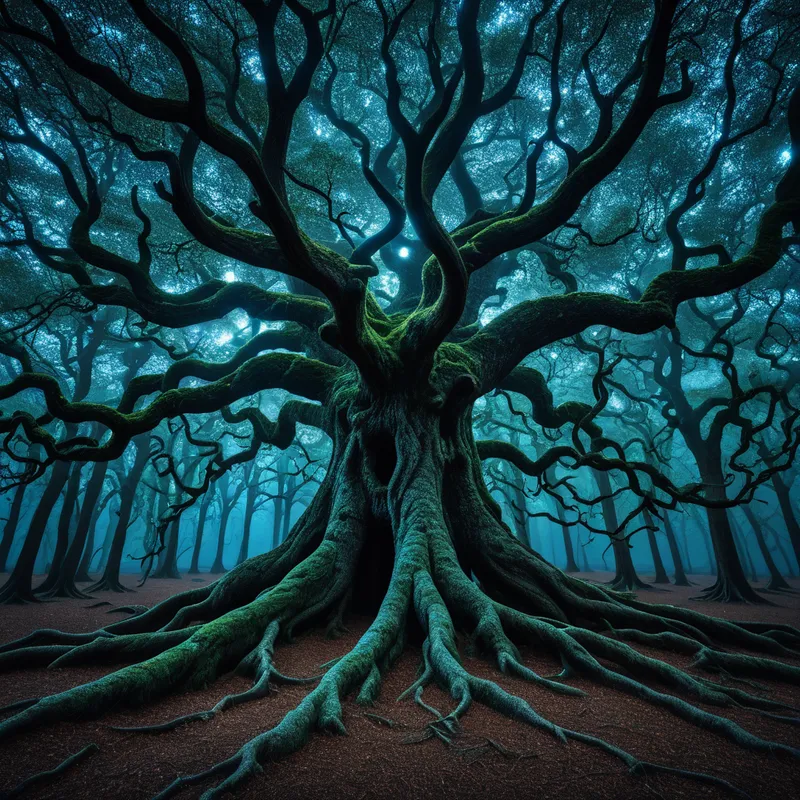
In the time of King Núadu, a blight fell upon the kingdom of Ériu. It began at the edges, a creeping grey silence. The rivers, once silver with salmon, ran slow and thick. The cattle gave sour milk. The songs of the people turned thin and fearful, for the very soul of the earth was fading. The druids gathered, their faces etched with dread. They cast the ogham sticks, read the flight of crows, and listened to the whispers in the sacred wells. Their verdict was a cold stone in the king’s belly: the Nemeton, the heart-grove where the first tree of the island had taken root, was wounded. A great oak at its center, the Bile, was bleeding dark sap from a deep crack in its trunk. The pact between the people and the land was broken.
Núadu, whose name meant “Cloud-Maker,” a king chosen for his unblemished form and just rule, journeyed to the grove. The air within was still and heavy, smelling of damp earth and sorrow. The great trees, once vibrant pillars holding up the sky, stood like sentinels in a tomb. Before the wounded Bile, he felt the weight of his crown as the weight of a failing world. The voice that came was not a sound, but a knowing that grew in his blood, as clear as water from a spring: The king and the land are one. What is taken must be returned. The hand that receives must also give.
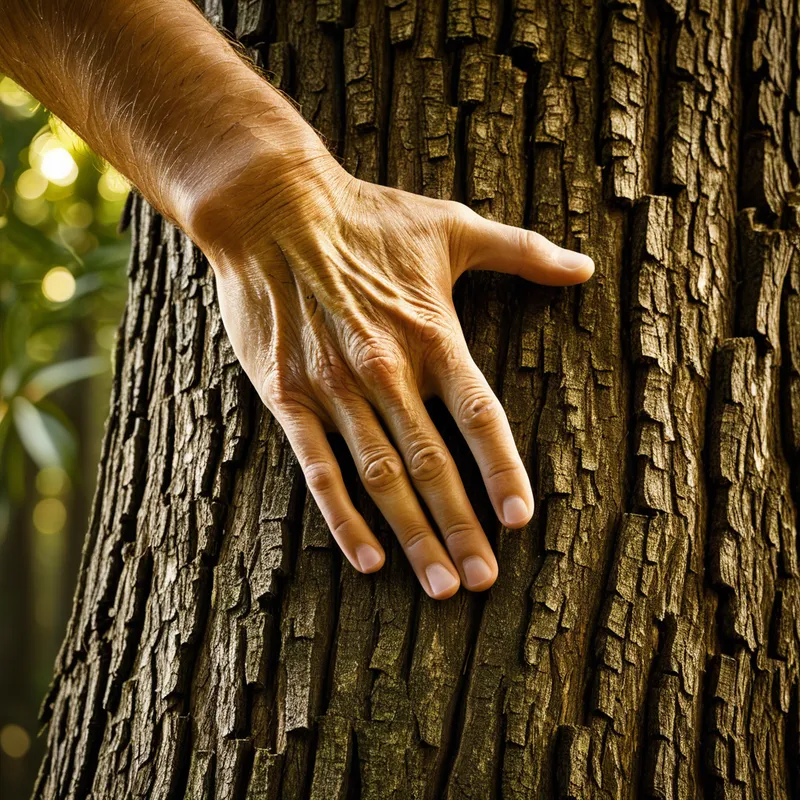
He understood. The sovereignty of the land was not taken by force, but received through sacrifice. The king’s wholeness was not in his perfect body, but in his willingness to become incomplete for the whole. Without a word, Núadu drew his silver-handled knife. He placed his right hand, the hand of giving and of oath-making, against the weeping wound in the oak’s heartwood. He did not look away as the blade fell. His blood, royal and red, met the tree’s dark, golden sap.
The grove inhaled.
A shudder passed through the roots underfoot, up through the trunks, and out into the trembling leaves. The grey receded like a tide. From the joined wound of king and tree, a light not of sun or moon blossomed—a warm, green-gold radiance that pulsed through every vein of leaf and blade of grass. The river’s song returned on the wind. In the space where his hand had been, where his blood had fed the roots, Núadu felt not absence, but a profound connection. He was root-bound to the land, his sovereignty no longer a title, but a living bond. He rose not as a whole man, but as a true king, and the land rose with him, whole once more.
Cultural Origins & Context
The motif of the Sacred Grove, or Nemeton, is not a single myth but a foundational pattern woven through the Celtic world-view, from Gaul to Ireland. These groves were not mere clusters of trees but temples without walls, the direct dwelling places of the genii locorum and the gods. The story of the king’s sacrifice to the tree synthesizes several attested themes: the sacredness of the king’s body as a mirror of the land’s health (the concept of hieros gamos), the maiming of the sovereign (as seen in the lore of Núadu Silver-Arm), and the animistic belief that trees, especially oaks (dair), were vessels of immense power and wisdom.
These narratives were the province of the druids and filid, transmitted orally in high poetic forms. Their function was societal and psychic: to encode the law that human dominion is a covenant, not a conquest. The myth served as a ritual map, reminding the tribe that their survival was contingent upon a conscious, painful, and reciprocal relationship with the wild, unseen forces that sustained them.
Symbolic Architecture
At its core, the myth of the Sacred Grove is a blueprint for the dialogue between consciousness (the King) and the unconscious (the Land/Grove).
The Blighted Land represents a state of psychic stagnation, where the flow of life energy (libido) has been blocked. Creativity dries up, relationships sour, and a pervasive sense of meaninglessness sets in. The Wounded Bile is the injured Self, the central archetypal core of the psyche that connects the personal to the transpersonal. Its crack symbolizes a rupture in one’s fundamental wholeness or connection to instinct and nature.
The king and the land are one. Consciousness, in its attempt to order and rule, often severs itself from its own rooting in the instinctual and the unknown. The resulting illness is felt by both.
King Núadu embodies the ruling principle of the ego. His initial “wholeness” is an illusion of perfect, untested control. The Sacrifice of the Hand is the pivotal act. The hand symbolizes agency, grasping, and control—the very tools of the conscious ego. To surrender it is the ultimate act of relinquishing control, of allowing a part of one’s identified power to be “fed” back to the deeper, autonomous psyche (the tree). This is not a loss, but an investment in a different kind of power.
The Transfusion of Blood and Sap symbolizes the alchemical coniunctio, the sacred marriage. Human will (blood) merges with ancestral, instinctual wisdom (sap). From this union blooms the Green-Gold Light, the new consciousness born of the reconciliation—a consciousness that rules through connection, not dominance.
The Dreamer’s Resonance
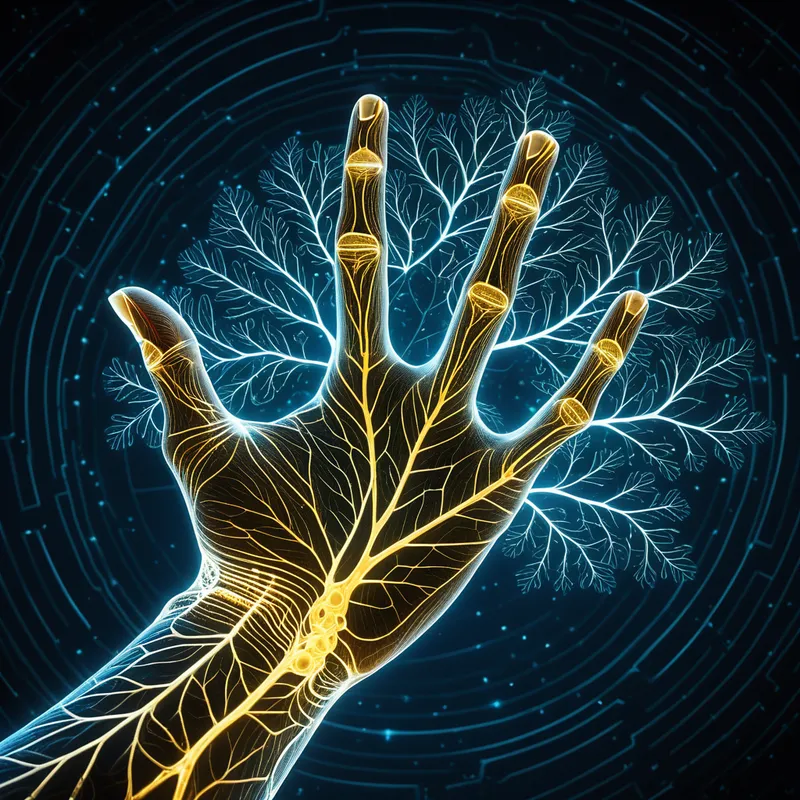
When this myth stirs in the modern soul, it often manifests in dreams of neglected inner landscapes. You may dream of a house you own but have never visited—a dusty, overgrown conservatory with a dying, magnificent plant at its center. You may dream of a polluted river running through your childhood backyard, or of trying to sign an important document with a pen that leaks or a hand that will not obey.
The somatic experience is one of constriction in the chest, a literal heaviness, or a feeling of being “dried out.” Psychologically, this is the groan of the Self, indicating that the ego’s current mode of operation is unsustainable. It is a call to identify what “hand”—what faculty of control, what prized skill, what rigid identity—you are being asked to place upon the wound. The dream is the Bile itself, showing its crack. The anxiety upon waking is the blight upon the land. The work is to find the courage to make the offering.

Alchemical Translation
The journey of Núadu is a perfect model for the process of individuation—the psychic transmutation of the lead of egoic isolation into the gold of an integrated Self.
The first stage, Recognizing the Blight (Nigredo), is the darkening. One must confront the depression, anxiety, or creative void that signals a disconnect from the soul’s roots. This is the painful but necessary acknowledgment that one’s current “kingdom” is failing.
The second, The Sacrifice at the Tree (Mortificatio), is the core of the work. It is the voluntary dissolution of an ego-attachment. This could be sacrificing the need to be right, the identity as a perpetual caregiver, the obsession with productivity, or any “hand” you use to grasp at the world. It feels like a death, a maiming.
True power is not gathered, but surrendered into the greater pattern. The hand given to the root becomes the root that holds the world.
The third, The Communion of Blood and Sap (Coniunctio), is the sacred marriage that occurs in the darkness after the sacrifice. This is not an act of will, but a state of grace where the conscious mind finally listens to and blends with the intelligence of the body, the intuition, and the ancestral whispers of the unconscious.
The final stage, The Greening (Albedo/Rubedo), is the renewal. Energy flows again. What emerges is a new governing principle. Like Núadu, who later received a silver hand made by the god Dian Cécht, the ego is not destroyed but reconstituted. It becomes a vessel, a silver instrument—precious, reflective, and skillful—but now in service to the life that flows from the re-sanctified grove within. One rules not from a throne above, but from a rooted place within the sacred, whispering wood of the Self.
Associated Symbols
Explore related symbols from the CaleaDream lexicon: