The Round Table Myth Meaning & Symbolism
A mythic circle of equals forged by Merlin, where knights swear to a higher code, embodying the quest for wholeness and the sacred within the human community.
The Tale of The Round Table
Hear now, and listen well, to the tale not of a sword, nor a stone, but of a circle. In the days when the mist clung low to the valleys of Camelot, and the memory of Rome was a ghost in the stones, a king dreamed of a kingdom that would not break.
Arthur, Pendragon, he who drew the sword from the stone, sat upon a throne that felt like a pinnacle—and a prison. He saw his warriors, the best of men, hardened by Saxon steel, yet their pride was a cold, sharp thing. They jostled for position at the long, straight board, the highest seat a prize for blood and bluster. Discord, that sly serpent, coiled in the hall, born from the question: Who sits closest to the king’s right hand?
Into this gathering storm walked Merlin, whose eyes held the depth of forgotten forests. He saw the fracture in the king’s dream. He did not speak of armies or spells, but of geometry. “A kingdom,” he whispered, his voice like wind in oak leaves, “is not a line leading to one man. It is a circle, encompassing all.”
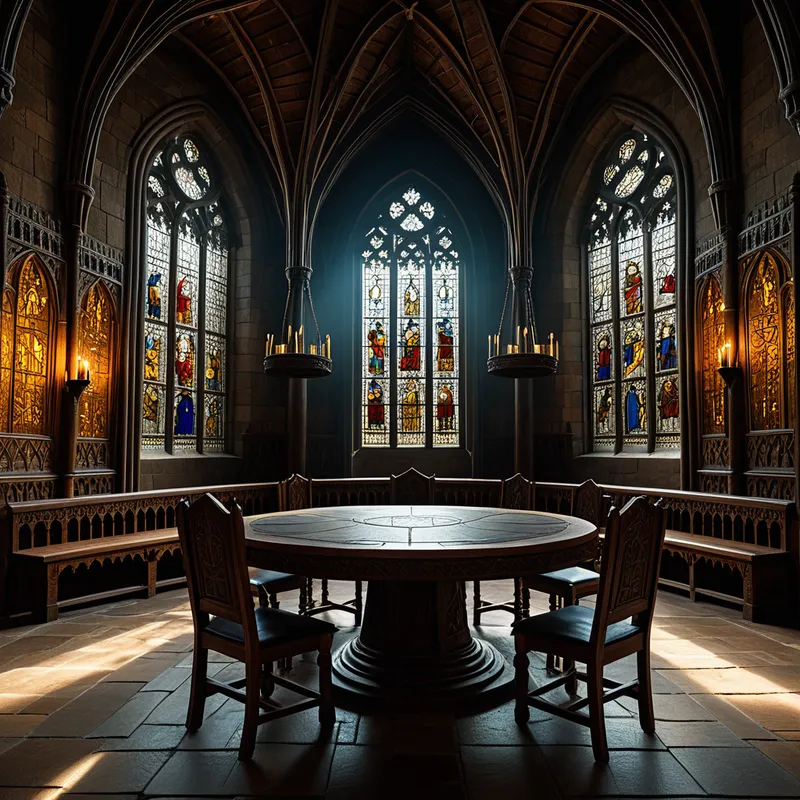
And so the marvel was wrought. Not in a forge of fire, but in a hidden glen by craftsmen who remembered older magics. They built a table, massive as a millstone, hewn from a single, sacred oak. It was a perfect circle, its surface polished to a deep, silent sheen, like dark water reflecting the sky. One hundred and fifty seats, no more, no less, were carved around its perimeter. No head. No foot. No high seat. Only the circle.
Arthur summoned his knights. They entered the new hall and stood, confused. The throne was gone. Before them stood only this vast, wooden O. “Behold,” Arthur said, his voice ringing with a new kind of authority. “Here, no man is above another. Here, the only precedence is virtue; the only rank, courage; the only quest, the shared good. This table is not a piece of furniture. It is a covenant.”
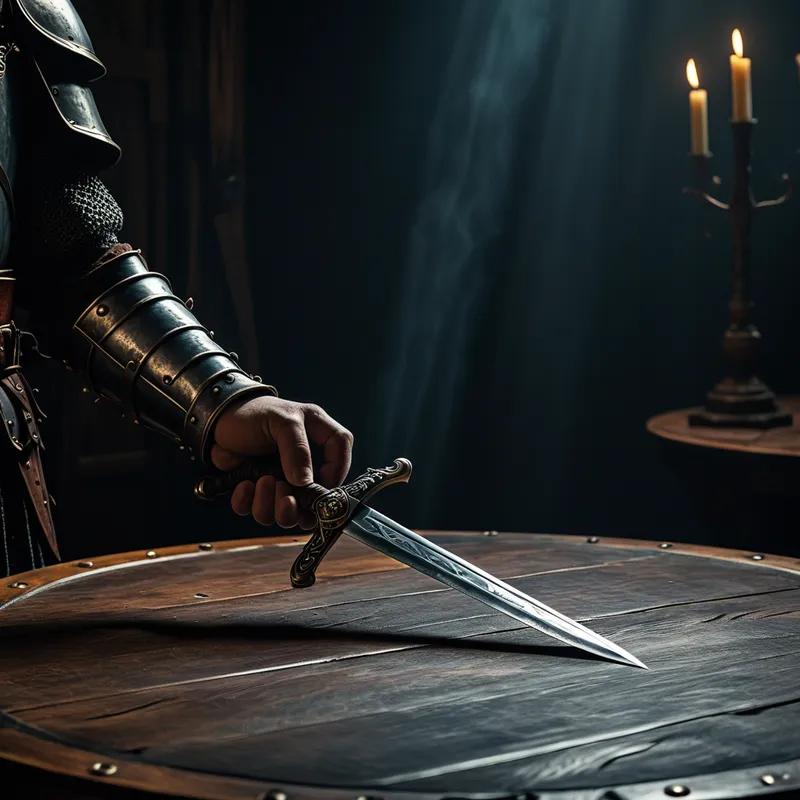
One by one, the greatest warriors of Britain—Lancelot, Gawain, Bors—approached. They laid their swords upon the dark wood and swore the oath. Not to land or loot, but to a code: to protect the weak, to show mercy, to speak truth, and to seek a glory that was not their own. As the last vow echoed, a strange silence fell, thick with possibility. The Table was no longer wood and craft. It had become an entity, a third thing in the room, a silent witness and a perfect judge. The quest for the Holy Grail could now begin, not as a scramble for favor, but as a sacred charge from the center of the circle itself.
Cultural Origins & Context
The myth of the Round Table is a relatively late and profoundly literary addition to the Arthurian cycle. While the core of Arthur as a dux bellorum dates to much earlier Welsh and Breton lore, the Table itself emerges in the 12th century, crystallized in the work of the poet Wace and, most significantly, Chrétien de Troyes. It was a myth forged not in the smoke of Dark Age battle-halls, but in the courts of Anglo-Norman and French nobility.
Its societal function was aspirational and instructional. In an era of rigid feudal hierarchy, where a lord’s “high table” physically embodied social stratification, the Round Table presented a radical ideal. It was a narrative tool to explore the concept of chivalric communitas—a brotherhood of equals bound by a shared, transcendent code, rather than mere feudal obligation. The storytellers, often clerics or court poets, used the Table to preach a gospel of ordered unity, justice, and spiritual questing to the warrior class. It transformed the knight from a landed thug into a sacred aspirant, his violence legitimized and sanctified by the oath sworn at the circle. The myth was passed down through lavish manuscripts like the Lancelot-Grail cycle and later Malory’s Le Morte d’Arthur, evolving from a clever detail into the very heart of the Arthurian political and spiritual vision.
Symbolic Architecture
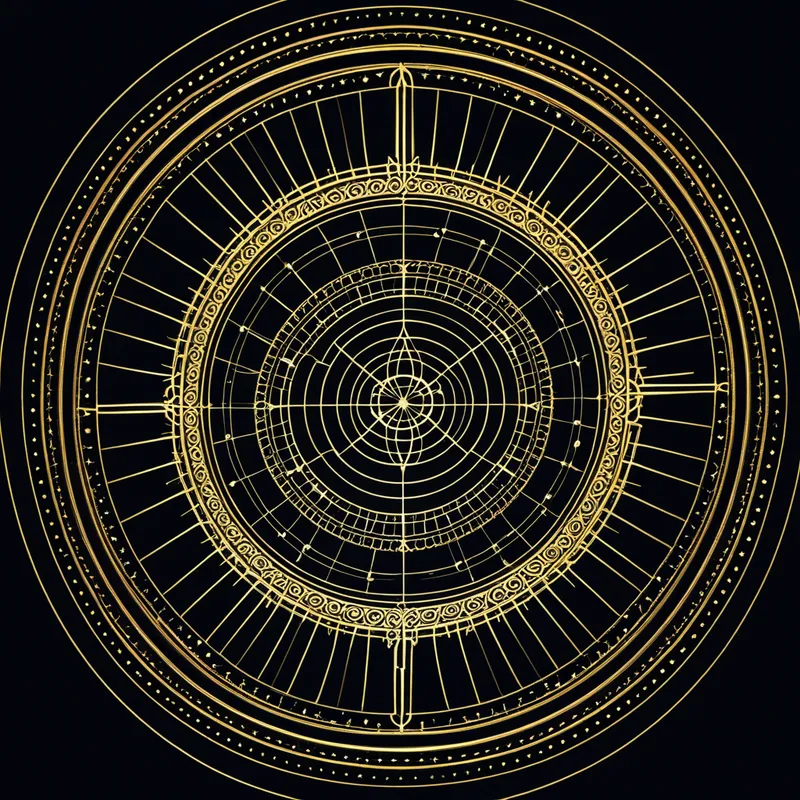
At its core, the Round Table is a mandala—a symbol of wholeness, containment, and psychic order. It is not a symbol of democracy, but of enlightened hierarchy, where the only authority is the shared ideal at the center.
The circle has no beginning and no end; it resolves the conflict of precedence into the harmony of purpose. The king is not removed, but integrated—one point on the circumference, his authority derived from his embodiment of the circle’s central law.
The Table represents the conjunctio oppositorum—the coming together of opposites. The fierce individuality of each knight is not erased but contained and oriented by the unifying structure. Lancelot’s passionate love and Galahad’s ascetic purity, Gawain’s earthly strength and Percival’s naive wisdom—all find a place, however tension-filled, within the circle. The Table itself becomes the symbol of the Self, the central archetype of order, while the knights represent the myriad competing complexes and archetypes (the Hero, the Lover, the Shadow) that must be organized into a coherent personality.
The empty seat, the Siege Perilous, is its most potent negative symbol. It represents the ultimate standard, the unattainable ideal that judges all present. It is the placeholder for divine grace (the Grail) and a reminder that the circle, while aiming for wholeness, is perpetually incomplete in the human realm, awaiting a perfection that will ultimately dissolve it.
The Dreamer’s Resonance
To dream of a round table is to encounter the psyche’s deep longing for inner council and ordered integration. The dreamer may find themselves sitting at such a table, or observing one, often in a vast, empty hall.
If the table is full of figures, the dream signals a critical moment of internal negotiation. Each figure likely represents a distinct sub-personality or complex: the inner critic, the wounded child, the ambitious achiever, the sensualist. The dream asks: Can these disparate parts of you meet as equals? Is there a governing principle (the “king” or the “oath”) that can harmonize their conflicting demands? Anxiety in the dream often points to a “Siege Perilous” in the psyche—a standard of perfection or a repressed aspect of the Self that feels dangerous to acknowledge.
A dream of an empty Round Table speaks to a profound feeling of potential unrealized. The structure for wholeness exists within, but the “knights”—the active, committed parts of the personality—have not yet been summoned or sworn to the common cause. It is a call to vocation, to commit one’s diverse energies to a central, unifying life quest. Somatically, such dreams can coincide with feelings of fragmentation or, conversely, a sudden, calm centeredness—the physical echo of finding one’s true seat in the circle of the self.
Alchemical Translation
The myth of the Round Table models the alchemical opus of individuation—the process of forging a coherent, conscious Self from the base matter of the unconscious. The chaotic, prideful warriors (the uncontrolled instincts and competing personas) are the prima materia. The oath, dictated by Merlin (the archetype of the Senex or guiding wisdom), is the formula, the sacred text that gives direction to the work.
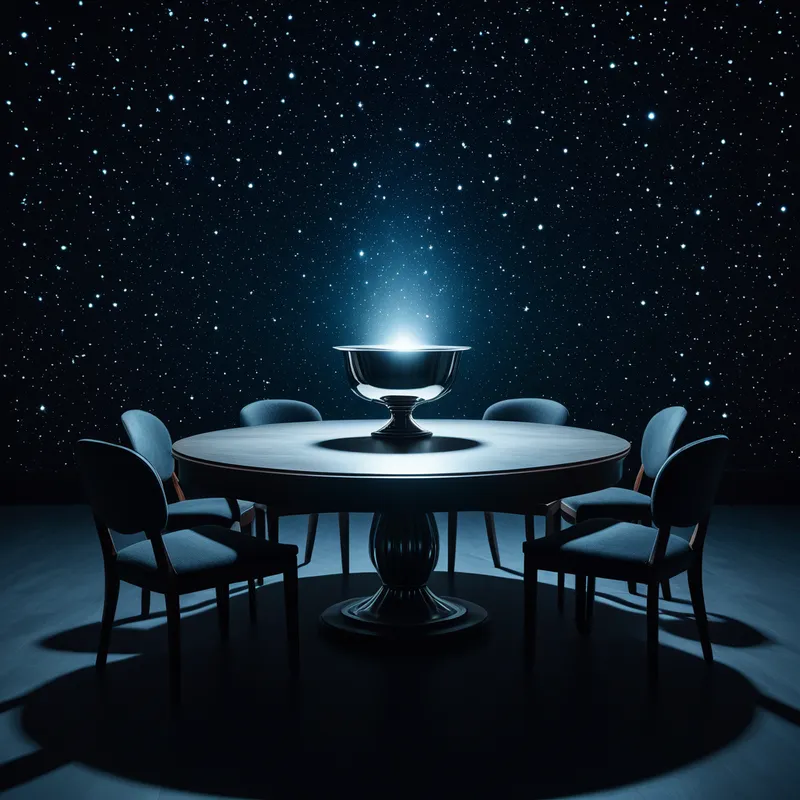
The circular vessel is the first and most essential tool of the alchemist. Without it, the transforming elements escape. The Round Table is that vessel for the soul—a psychological container strong enough to hold the heat of conflict, the dissolution of old identities, and the long, slow coagulation of a new being.
The knights’ adventures are the myriad separatio and coniunctio processes of analysis and integration faced in life. Each challenge—a dragon of rage, a giant of despair, a enchantress of seduction—requires the knight to consult not just his strength, but the oath he swore at the Table. This is the conscious application of a personal ethic, the Ego aligning itself with the greater pattern of the Self.
The ultimate goal, the Grail Quest, represents the final stage of rubedo or illumination: the direct, transformative encounter with the sacred center. Not all knights achieve it; most see only fragments. This, too, is true to the individuation process. Wholeness is not a permanent state of perfection, but a lifelong orientation toward the center. The Round Table remains, in the end, both the method and the symbol of this sacred work—a human-made circle that aspires to reflect a divine one, teaching us that true sovereignty begins when we take our humble, equal seat in the great work of becoming whole.
Associated Symbols
Explore related symbols from the CaleaDream lexicon:
- Arena
- Sofa
- Circular
- Antique
- Manner
- Friendship
- Political
- Groups
- Invitation
- Diner
- Council
- Seminar
- Silverware Set
- Portal Pizza
- Cupcake Tower
- Sizzling Fajitas
- Patterned Tie
- Formal Suit
- Slicing Cake
- Almandine Garnet
- Ruby Cufflinks
- Tourmaline Crystal
- Garnet Brooch
- Gamer’s Den
- Book Club
- Candlelit Dinner
- Winston Churchill’s Brooch
- Freud’s Couch
- Abraham Lincoln’s Top Hat
- Crown Jewels
- Glass Coffee Table
- Curvy Couch
- Retro Bar Cart
- Leather Couch
- Lounge Sofa
- Chesterfield Sofa
- Curved Sofa
- Gilded Bedframe
- Stylish Bar Cart
- Foldable Picnic Bench
- Tableware
- Pizza Cutter
- Choker
- Plush Limousine
- Mouse Pad
- Id Badge
- Celtic Roundhouse
- Community Center
- Victorian Tea House
- Vintage Parlor
- Fabled Dining Hall
- United Hands
- Forest Clearing
- Tribal Gathering
- The Class
- The Aristocracy
- Sovereign Seal
- Status
- Jury
- Political Office
- Political Power
- Public Trust
- Alliance
- Federation
- Multiplayer
- Oligopoly
- Inclusion