The Rough Ashlar Myth Meaning & Symbolism
An allegory of the soul's journey from raw, unrefined potential to a perfected, harmonious state through the disciplined work of self-knowledge.
The Tale of The Rough Ashlar
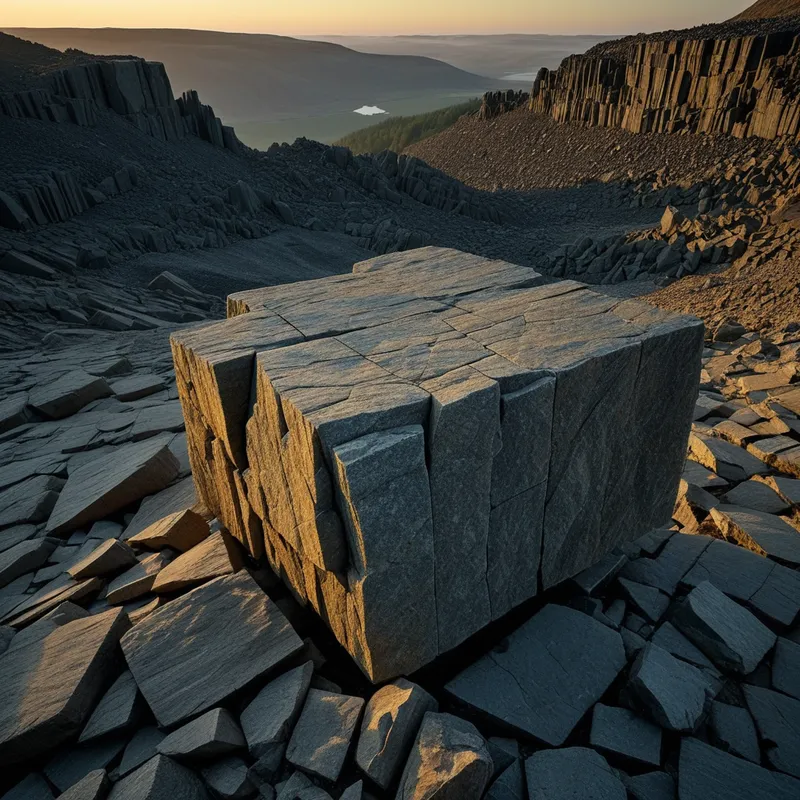
Listen, and hear the story not carved in marble, but whispered in the dust of the quarry. It begins not with a king or a god, but with a stone. A stone like any other, torn from the womb of the living earth. It is the Rough Ashlar.
It rests in the bed of the mountain, a thing of weight and wildness. Its face is a testament to chaos: scarred by ancient rivers, pocked by forgotten rains, its angles born of fracture and pressure, not of intention. It knows only the language of gravity and the patient, crushing embrace of the strata. It is potential, but a sleeping one—a symphony of form locked in dissonance.
Then comes the Call. It is not a voice, but a presence: the Master Builder. His shadow falls upon the stone, not as a threat, but as a question. His eyes, which have seen the hidden geometry within a thousand such stones, measure it. He sees not what it is, but what it must become. His tools are laid out—the Gauge, the Square, the Compasses. They lie silent, yet they hum with a terrible purpose.
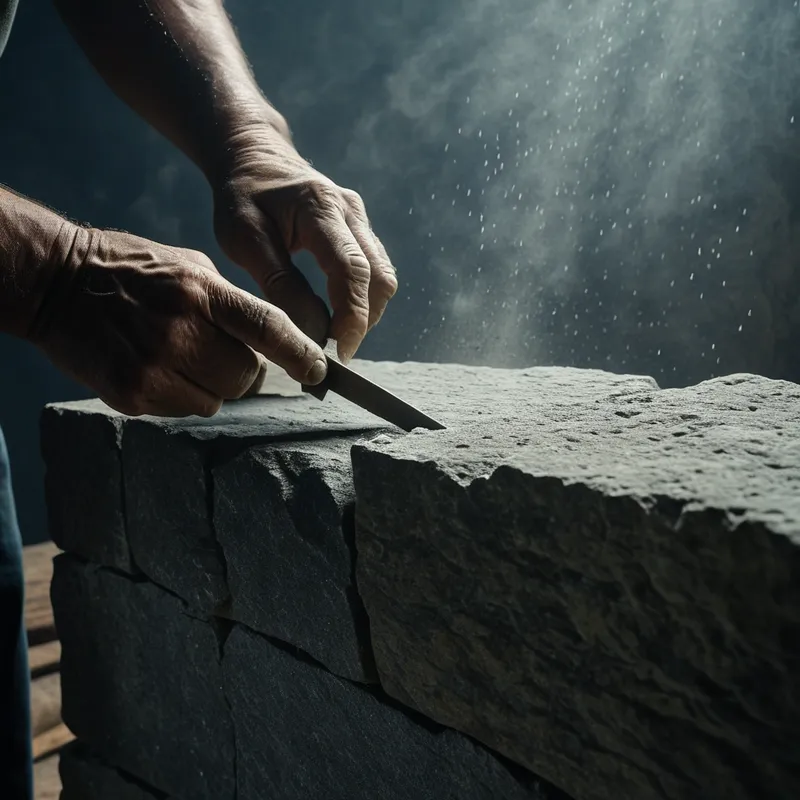
The first touch of the hammer is a shock of awakening. The chisel bites, and a fragment of the stone’s wild self shears away. This is the first pain of becoming. Blow follows blow, a rhythm as old as consciousness. The stone does not yield gladly; it resists with the grit of its nature. Sparks fly, not as fire, but as cries of old identities being shattered. The rough projections are knocked off, the gross imperfections revealed and removed.
This is the long labor, under the sun and the moon. The Builder works not with rage, but with relentless, compassionate precision. Each strike is a question: Is this line true? Is this surface plane? Does this angle serve the whole? The stone, in its silent, mineral way, answers by yielding a little more of its hidden form. The dust that falls is the shed skin of its former self.
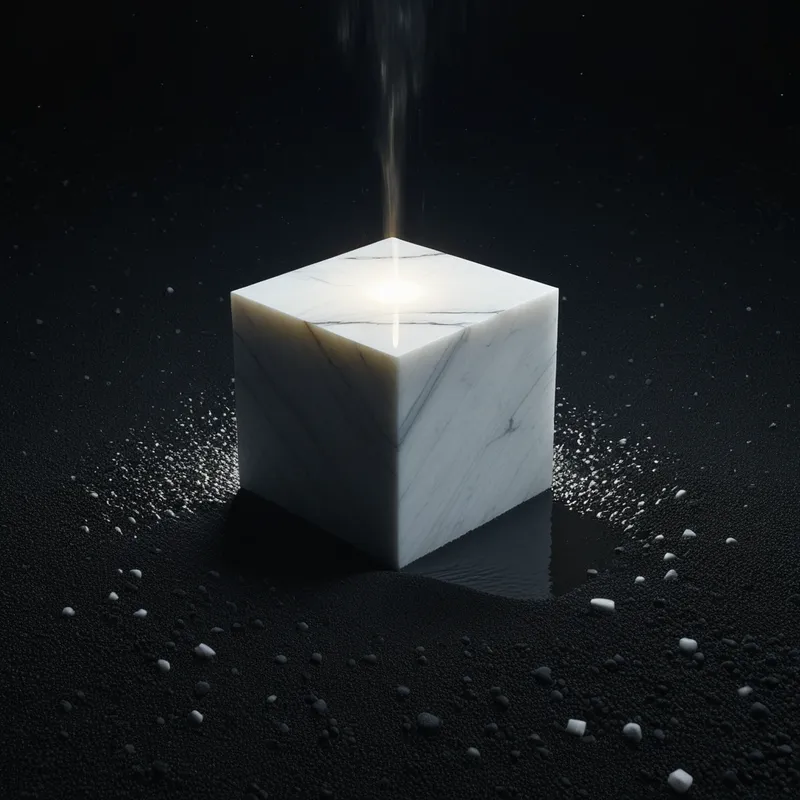
And then, one day, the hammering stops. The last fragment of unnecessary stone drops to the earth. What remains is no longer rough. It is the Perfect Ashlar. Its faces are smooth and true, its corners exact, its proportions harmonious. It is ready. It does not gleam with vanity, but with a quiet integrity. The Builder places his tools upon it—not as masters, but as companions in the work completed. The stone is now a building block. It awaits its place in a wall it cannot yet see, in a temple whose plan is known only to the Great Architect. Its journey from the chaotic quarry to ordered perfection is complete. It has remembered the geometry it always contained.
Cultural Origins & Context
The allegory of the Rough Ashlar and the Perfect Ashlar is a cornerstone of Speculative Masonry, the system of moral and philosophical allegory taught within the fraternity. It is not a myth of antiquity in the classical sense, but a living, pedagogical narrative passed down through ritual and lecture.
Its origins are deeply rooted in the transition from operative masonry (the actual craft of stoneworking) to speculative masonry (the use of that craft's tools and terms as moral symbols). In the lodges of the 17th and 18th centuries, this story was not merely told; it was experienced. A candidate, the "rough stone" of a man, would be led through ceremonies where the tools of the mason were explained not as instruments to shape limestone, but to shape the self. The story functioned as a societal and psychological mirror. It provided a shared language for the Enlightenment ideal of self-improvement—a secular gospel of progress through reason, ethics, and disciplined labor. It was told by the Master or the Senior Warden, transforming the lodge culture.") room into a metaphysical quarry and every member into both the stone and the craftsman.
Symbolic Architecture
At its heart, the myth is a map of the psyche. The Rough Ashlar represents the natural, uninitiated human being—brimming with potential but dominated by the irregularities of the untamed ego: prejudice, passion, ignorance, and selfish desire. It is the "self" as given by nature and circumstance.
The stone is not flawed; it is unfinished. Its roughness is not a sin, but a starting condition.
The Master Builder symbolizes the activating principle of consciousness itself—the observing ego, the will to evolve, or what in depth psychology might be called the guiding influence of the Self. The tools are the faculties of discernment and virtue: the Gauge for managing one's time and energy, the Square for integrity of action, and the Compasses for circumscribing desires and establishing proper boundaries. The hammer and chisel are the trials, reflections, and difficult choices of life that wear away our psychic excess.
The final product, the Perfect Ashlar, is not a state of sterile perfection, but of functional integrity. It represents the individual who has achieved a degree of self-mastery, whose character is "square" and true, capable of bearing weight and fitting harmoniously into the larger social and cosmic structure—the "Temple not made with hands."
The Dreamer's Resonance
When this myth stirs in the modern unconscious, it often manifests in dreams of profound personal groundwork. One may dream of being lost in a vast, rocky landscape (the internal quarry), searching for a specific stone or tool. They may dream of trying to build a wall, but every stone they pick up is misshapen and will not fit—a direct expression of the frustration of the unrefined ego clashing with the demands of life and relationship.
Somatically, this process can feel like a deep, structural pressure—an ache for order amidst internal chaos. The dreamer might experience sensations of being "worked on," a subtle but persistent feeling of old defensive layers, stubborn habits, or outgrown identities being chipped away, often during periods of significant life transition, therapy, or introspective work. The dream-ego is in the position of the stone, enduring the necessary, sometimes painful, process of being shaped by a force (the Self) wiser than the conscious personality.
Alchemical Translation
The journey from Rough to Perfect Ashlar is a pristine model of psychic alchemy—the individuation process. The rough stone is the prima materia, the leaden, unconscious mass of the personality. The lodge or quarry is the vas hermeticum, the sealed container of the therapeutic or transformative process.
The alchemical "solve et coagula"—dissolve and coagulate—is enacted by the hammer and chisel. The irregular ego is dissolved (broken down) so the essential, true self can coagulate (take its proper form).
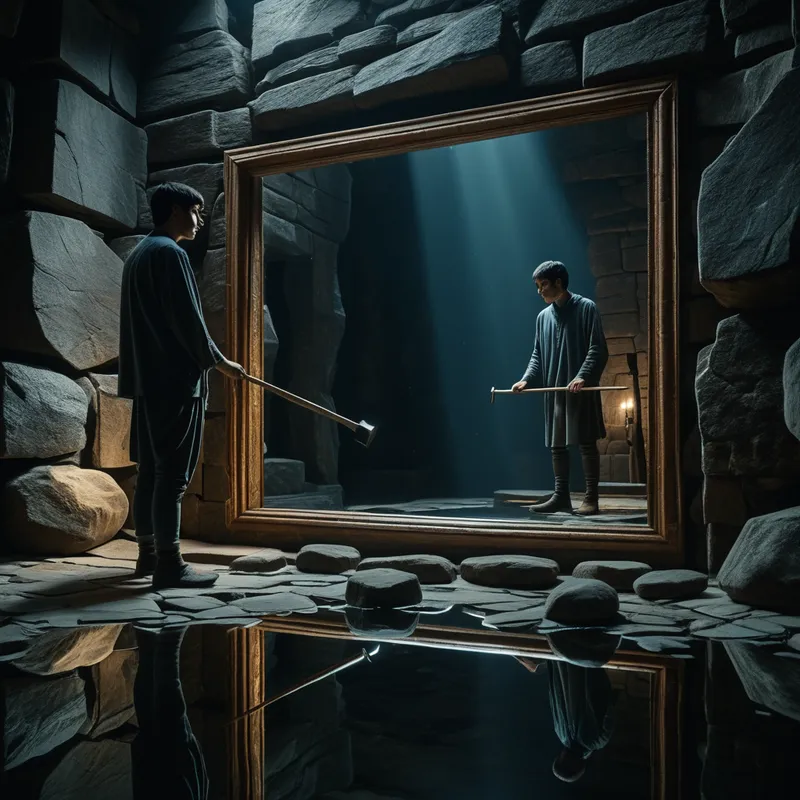
The disciplined application of the tools represents the conscious engagement with the shadow. Each blow of the hammer is a confrontation with a shadow aspect: a recognized prejudice, an acknowledged fear, a taken responsibility. The dust that falls is the liberated energy that was trapped in maintaining those rough projections. The final, polished cube is the lapis philosophorum, the philosophical stone—not a magical object, but the achieved state of psychological wholeness and resilience. The individual is transmuted. They are no longer common "lead" (driven by base impulses) but have discovered the "gold" of their authentic, responsible nature, ready to contribute their unique shape to the collective human endeavor. The myth teaches that we are both the raw material and the artisan of our own souls.
Associated Symbols
Explore related symbols from the CaleaDream lexicon: