The Roman atrium or the Garden Myth Meaning & Symbolism
A timeless story of a sacred, enclosed space at the heart of existence, where the divine meets the human, and the soul finds its true center.
The Tale of The Roman atrium or the Garden
Listen. Before the clamor of the forum, before the march of legions, there is a silence. It is not the silence of absence, but of profound presence. It is the silence at the heart of the home, under the open eye of the sky.
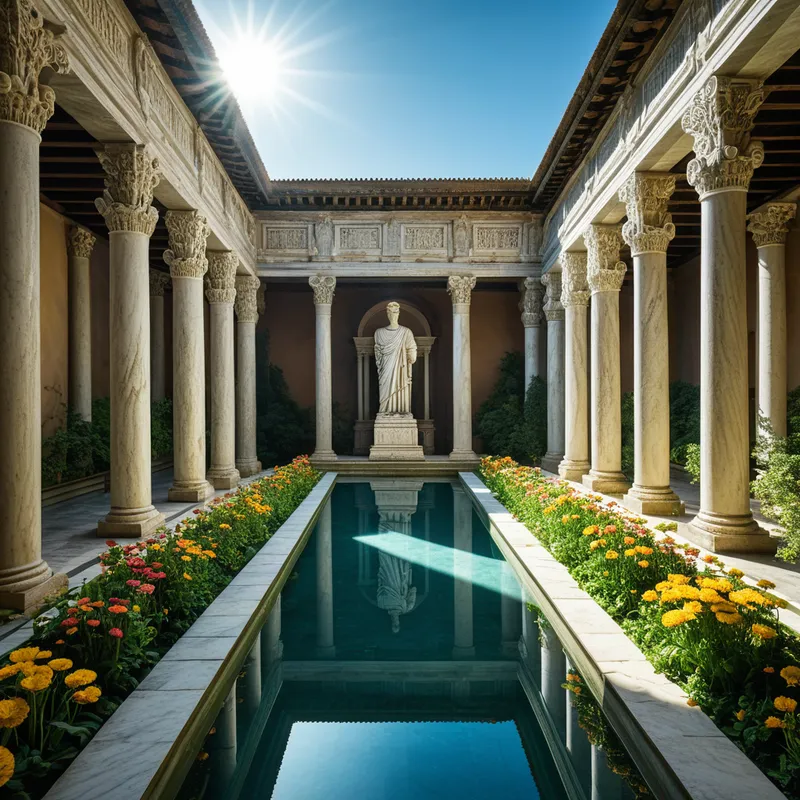
In the beginning, there was the boundary—the strong, defining walls of the domus, raised against the chaos of the world. And within that boundary, the builders did not raise a roof to the heavens. Instead, they carved out a piece of the sky itself. This was the atrium. Its floor was not mere stone, but a shallow, waiting bowl—the impluvium. The family gathered here, not as spectators, but as participants in a daily sacrament.
The drama was not of clashing swords, but of falling water and rising light. Each dawn, the sun, Sol Invictus, would begin his arc across the compluvium—the open square in the roof. His light did not flood; it descended, a slow, golden column touching the lararium shrine where the small figures of the Lares and Genius stood watch. Then, the light would find the impluvium, setting the collected rainwater ablaze. The house drank light from above and reflected it back from below.
Then came the rain. Not as a storm, but as a blessing. It fell through the compluvium in a shimmering curtain, a direct gift from Jupiter Pluvius. It struck the impluvium with a sound like a thousand tiny bells—the music of the sky meeting the earth within the sanctuary of the human home. This water was not lost to the ground; it was gathered, sacred, used for libations, for purification. It was the world-sustaining cycle made intimate, personal, familial.
In this space, the most profound acts were quiet. The father offered wine and grain to the ancestors. The mother tended the small, potted plants—rosemary, laurel, violets—that transformed the marble-edged basin into a garden. Children’s laughter echoed off the walls, contained and safe. Here, the public citizen became the private soul. Here, under the open sky yet within the strongest walls, the human found their center. The conflict was the world’s chaos; the resolution was this ordered, sacred peace. The story ended every evening, as the last light faded from the pool and the household lamps were lit, creating a new constellation within the walls, a mirror to the one forming in the rectangle of sky above. The garden was not outside; it was the heart, and the heart was open to heaven.
Cultural Origins & Context
This is not a myth with a single author or epic poem, but a living, architectural mythos embedded in the very bones of Roman society from the Republican era onward. It was passed down not by bards, but by builders, by fathers showing sons the lararium, by the daily rituals of the household. Its societal function was foundational: to encode a cosmic order into domestic life. The atrium was the axis mundi of the family, the physical manifestation of the pax deorum (the peace with the gods). It was where the divine, the natural, and the human realms were in constant, regulated dialogue. The open roof was a theological statement—the home was not sealed off from the gods, but in active reception of their grace (sunlight) and their favor (rain). This architectural pattern was so potent it became a blueprint for the psyche, a universal model of the sacred center that transcends its specific Roman origins, speaking to a human need to create a protected, open space where the inner and outer worlds can safely meet.
Symbolic Architecture
The myth of the atrium-garden is a profound map of the psyche’s ideal structure. It symbolizes the necessity of creating a conscious, bounded temenos (sacred precinct) within oneself.
The soul requires both a wall and an opening—a defined self that is nevertheless permeable to the transcendent.
The walls represent the persona and the strength of the ego, necessary for coherence and survival in the outer world. The open roof (compluvium) symbolizes the opening of consciousness to the influences of the Self (the divine) and the wider unconscious. It is the channel for intuition, inspiration, and numinous experience. The central pool (impluvium) is the heart of this inner sanctuary—the reflective, deep pool of the unconscious itself, which gathers and holds what descends from above. It represents the function of feeling and reflection, where the light of consciousness is mirrored in the waters of the unconscious, creating a dynamic, self-sustaining system. The lararium with its Lares signifies the internalized guiding principles, ancestral wisdom, and enduring values that orient the individual from within. The entire structure is a mandala of wholeness—a protected, integrated center where opposites (sky/earth, inner/outer, divine/human) are held in harmonious, reciprocal relationship.

The Dreamer’s Resonance
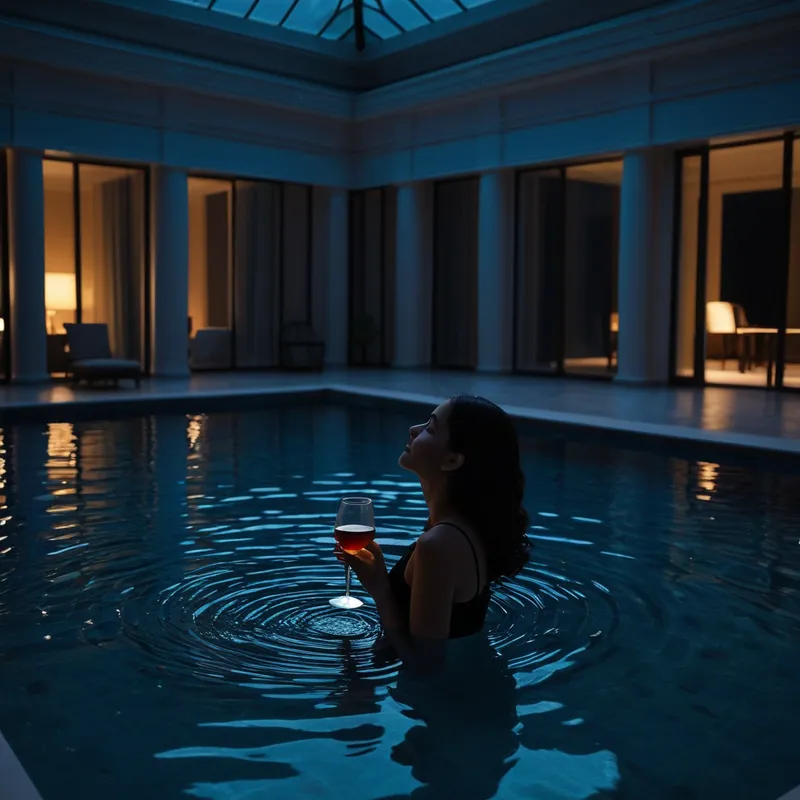
When this myth stirs in the modern unconscious, it often manifests in dreams of discovering or tending a hidden, interior space. A dreamer may find a forgotten room in their house with a skylight and a fountain. They may dream of cultivating a lush garden in a concrete courtyard, or of repairing a broken roof over a tranquil pool. These are not dreams of external exploration, but of internal reclamation.
Somatically, this process can feel like a deep, centering breath—a release of tension in the chest and diaphragm as the psyche carves out a space for itself. Psychologically, it marks a movement away from identification with the bustling “forum” of daily persona-driven life (achievement, social masks) and toward the cultivation of the inner sanctum. The conflict in the dream is often the state of neglect—the pool is dry, the roof is boarded over, the space is cluttered. The act of cleaning, opening, or filling the pool symbolizes the dreamer’s active engagement in creating psychic interiority, making room for reflection, and re-establishing a conscious connection to what Jung called the “objective psyche” or the transpersonal realm. It is the somatic and psychological process of coming home to oneself.
Alchemical Translation
The alchemical process mirrored here is that of vas creation and solutio (dissolution in water). The first task of the alchemist was to fashion the hermetic vessel, the sealed yet dynamic container for the great work. This is the construction of the ego’s atrium—a strong, defined consciousness capable of containing the transformative process.
Individuation is not a journey out, but a cultivation in. The gold is not found in a distant land, but precipitated from the waters gathered at your own center.
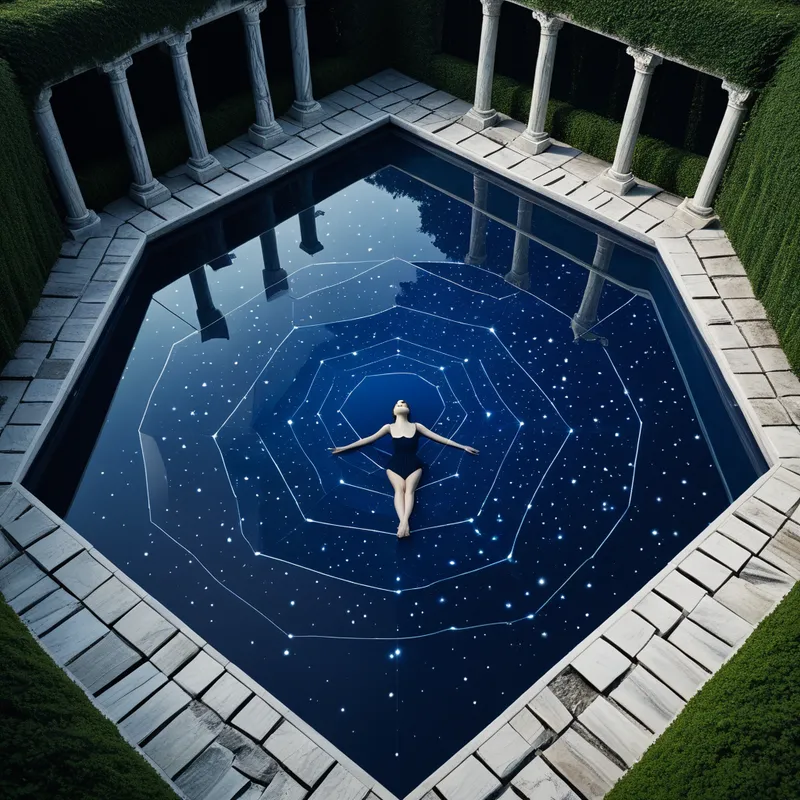
The solutio is represented by the rainwater—the divine, celestial influence (Sol) that must descend and dissolve rigid, hardened aspects of the personality (Luna as the reflective pool). This blessed water softens, purifies, and connects. The ensuing process is one of circulation: light reflects on water, water nourishes the small garden (the growth of new life, insights, and values), and evaporates back towards the sky (conscious insights returning to the unconscious for further refinement). The triumph is not a heroic conquest, but the achievement of a self-sustaining circulatio within the protected vessel of the self. The individual becomes both the temple and the celebrant, the garden and the gardener, continuously mediating between heaven and earth within their own soul. The goal is the hieros gamos of structure and openness, resulting in the inner peace (pax anima) that mirrors the mythic pax deorum.
Associated Symbols
Explore related symbols from the CaleaDream lexicon: