The River Styx Queue Myth Meaning & Symbolism
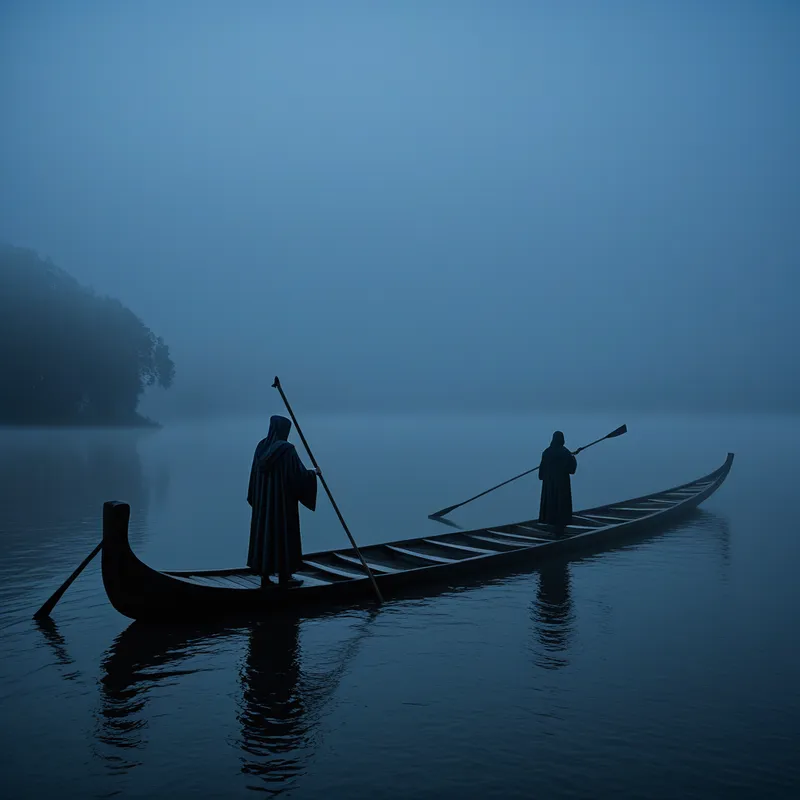
A soul's journey to the underworld, confronting the eternal queue at the River Styx, overseen by the ferryman Charon and the judge of the dead.
The Tale of The River Styx Queue
Hear now the tale of the final journey, the one path all must walk, yet none remember. The breath has fled the body, a final sigh released to the upper air. The [psyche](/myths/psyche “Myth from Greek culture.”/), untethered, flutters like a moth drawn to a distant, cold flame. It descends.
[The world](/myths/the-world “Myth from Tarot culture.”/) of light and substance fades, replaced by the gray, scentless plains of Asphodel. A chill, not of wind but of absence, seeps into the essence of the soul. Before it lies the reason for the chill: the [River Styx](/myths/river-styx “Myth from Greek culture.”/). Its waters are the color of forgotten things, flowing silent and deep, a barrier of solemn oath and finality.
And along its barren shore, a line. A queue of countless shades, each a pale echo of a once-vibrant life. They stand in a silence so profound it hums in the soul’s ears. No weeping, no laughter, only the patient, dreadful stillness of eternity deferred. They are the unburied, the unpaid, the unprepared. Their forms are translucent, their eyes fixed on a single point downstream: a rocky landing where a boat of aged, blackened wood rests.
Upon that boat stands Charon. His back is perpetually bent from his labor, his face hidden within a hood of shadows, from which only the glint of weary, knowing eyes can be seen. In his gnarled hand is an oar that has never known the sun. He does not speak. He only waits, his empty palm extended.
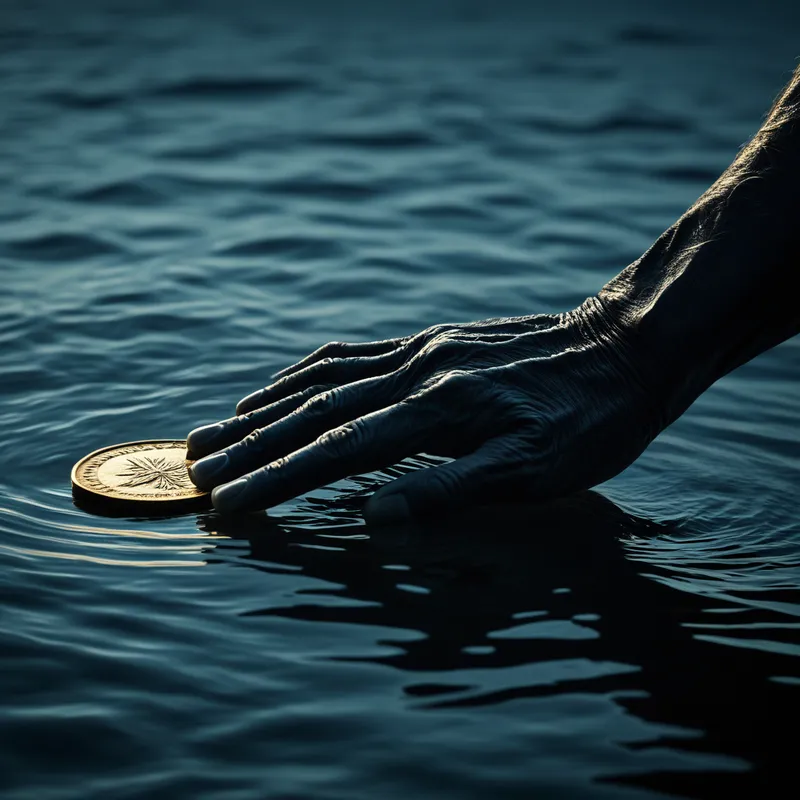
This is the first great trial of the dead: the Queue. It is not a place of torment, but of profound existential weight. Here, the soul learns the cost of passage. It remembers the rituals left undone, the coin that was not placed upon its tongue by loving hands. That single obol is the key. Those who possess it feel its cool, metallic weight in their spectral hand—a last anchor to the world of the living, a ticket to movement. Those who do not, simply wait. And wait. They watch as the fortunate shade, coin gleaming dully, steps forward, places the payment in Charon’s palm, and is silently gestured aboard.
The ferry pushes off with a soft groan of wood. The black [water](/myths/water “Myth from Chinese culture.”/) makes no sound as it is parted. The soul on the boat looks back at the endless, silent queue on the shore—a sea of waiting—before the mists of the far bank swallow it whole. It is bound for the throne of [Hades](/myths/hades “Myth from Greek culture.”/) and the judgment of [Minos](/myths/minos “Myth from Greek culture.”/). For those left behind, the queue shifts forward by one. The wait continues, under the watchful eyes of the gods who swore their most binding oaths upon these very waters.
Cultural Origins & Context
This imagery of the Stygian queue is not the plot of a single, unified epic, but a composite picture pieced together from shards of poetry, funerary art, and philosophical speculation across centuries of ancient Greek thought. It finds its most vivid early descriptions in [Homer](/myths/homer “Myth from Greek culture.”/)’s Odyssey, where the hero descends to the edge of [the underworld](/myths/the-underworld “Myth from Greek culture.”/) and witnesses the gathering shades, and is later systematized in works like Virgil’s Aeneid. The myth was not mere entertainment; it was a functional, societal narrative.
It was told by poets at festivals, painted on funeral vases placed in tombs, and whispered as part of burial rites. Its primary tellers were the living, for the benefit of the living and the recently departed. The function was deeply pragmatic and psychologically stabilizing. It provided a concrete, ritualized map for the unimaginable journey of death. By prescribing the act of placing the obol in the corpse’s mouth, it gave the bereaved an active role—a final act of care that ensured their loved one would not be stranded. The queue at the shore served as a powerful social motivator, reinforcing the critical importance of proper burial rites. To leave a body unburied was not just an insult; it was to condemn a soul to a limbo of endless, passive waiting.
Symbolic Architecture
The [River](/symbols/river “Symbol: A river often symbolizes the flow of emotions, the passage of time, and life’s journey, reflecting transitions and movement in one’s life.”/) Styx [Queue](/symbols/queue “Symbol: A line of people waiting for something, often representing anticipation, social order, or delayed gratification in dreams.”/) is one of humanity’s most potent symbols for the ultimate transition. It is not [death](/symbols/death “Symbol: Symbolizes transformation, endings, and new beginnings; often associated with fear of the unknown.”/) itself, but the process immediately after—the bureaucratic, liminal [space](/symbols/space “Symbol: Dreaming of ‘Space’ often symbolizes the vastness of potential, personal freedom, or feelings of isolation and exploration in one’s life.”/) where the [soul](/symbols/soul “Symbol: The soul represents the essence of a person, encompassing their spirit, identity, and connection to the universe.”/) is processed.
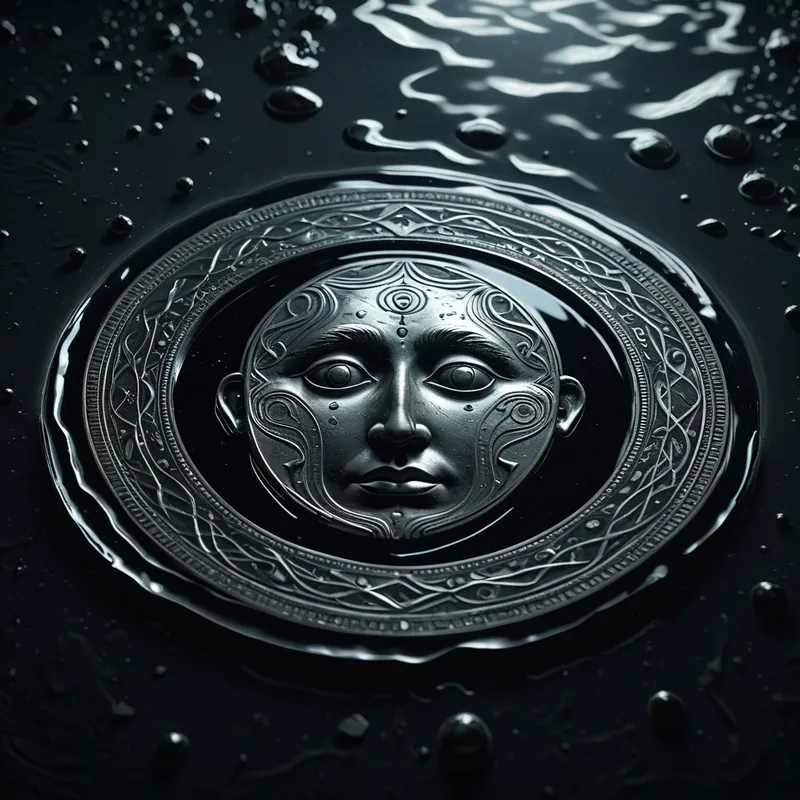
The Queue represents the [weight](/symbols/weight “Symbol: Weight symbolizes burdens, responsibilities, and emotional loads one carries in life.”/) of the unlived [life](/symbols/life “Symbol: The symbol of ‘Life’ represents a journey of growth, interconnectedness, and existential meaning, encompassing both the joys and challenges that define human experience.”/), the unresolved matters, the debts (literal and karmic) left unpaid. It is pure potential [energy](/symbols/energy “Symbol: Energy symbolizes vitality, motivation, and the drive that fuels actions and ambitions.”/) stalled, the [agony](/symbols/agony “Symbol: Intense physical or emotional suffering, often representing unresolved pain, internal conflict, or profound transformation.”/) of unfinished [business](/symbols/business “Symbol: Dreaming of ‘business’ often symbolizes the dreamer’s ambitions, desires for success, and management of resources in their waking life.”/). The Coin is the [symbol](/symbols/symbol “Symbol: A symbol can represent an idea, concept, or belief, serving as a powerful tool for communication and understanding.”/) of conscious preparation and the love of the [community](/symbols/community “Symbol: Community in dreams symbolizes connection, support, and the need for belonging.”/). It is the tangible [artifact](/symbols/artifact “Symbol: An object from the past carrying historical, cultural, or personal significance, often representing legacy, memory, or hidden knowledge.”/) of a [life](/symbols/life “Symbol: The symbol of ‘Life’ represents a journey of growth, interconnectedness, and existential meaning, encompassing both the joys and challenges that define human experience.”/) properly concluded, of rites observed and relationships honored. Without it, the soul is orphaned, adrift in a collective anonymity.
The shore of the Styx is the soul’s first confrontation with the absolute economy of the cosmos: nothing proceeds without correct exchange.
Charon is the archetypal Threshold [Guardian](/symbols/guardian “Symbol: A protector figure representing safety, authority, and guidance, often embodying parental, societal, or spiritual oversight.”/). He is impersonal, unwavering, and bound by ancient law. He does not judge the quality of the soul, only the [presence](/symbols/presence “Symbol: Presence in dreams often signifies awareness or acknowledgment of something significant in one’s life.”/) of its fare. He represents the necessary, often harsh, gatekeeping function of the psyche that allows transition from one state of being to another. The act of Crossing is the [moment](/symbols/moment “Symbol: The symbol of a ‘moment’ embodies the significance of transient experiences that encapsulate emotional depth or pivotal transformations in life.”/) of irreversible psychic change, leaving behind the stagnant “waiting [room](/symbols/room “Symbol: A room in a dream often symbolizes the self, representing personal space, mental state, or aspects of one’s identity.”/)” of the old self for the unknown trials of judgment and re-[assignment](/symbols/assignment “Symbol: An assignment signifies tasks, responsibilities, or challenges that need to be addressed in one’s waking life, often representing personal growth.”/).
The Dreamer’s Resonance
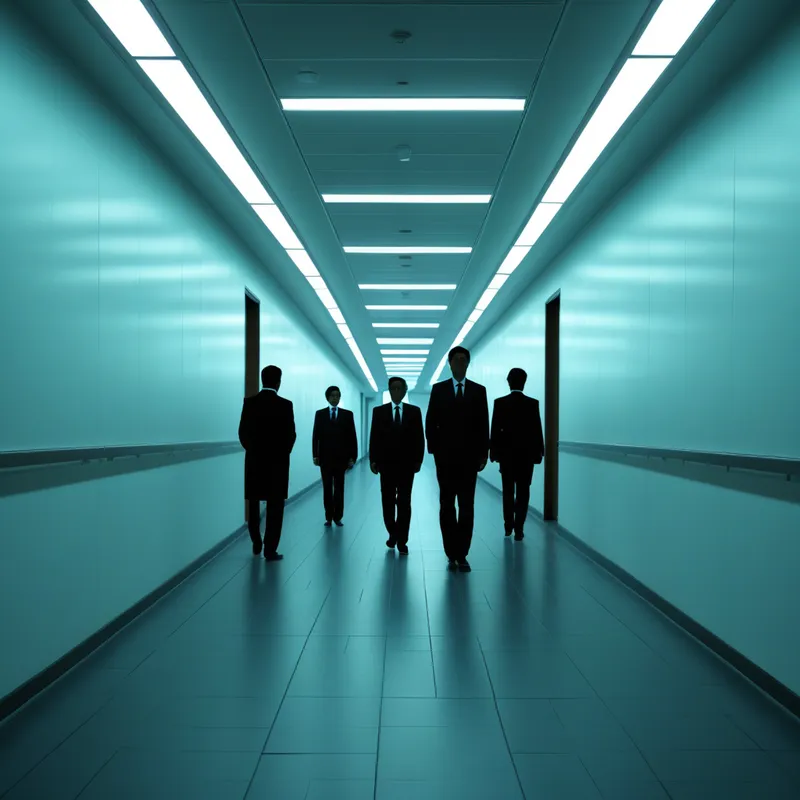
When this myth surfaces in modern dreams, it rarely appears with classical robes and a black river. Instead, the dreamer finds themselves in an endless line at an airport with no destination boards, in a government office where the clerk never looks up, or waiting for a train that never arrives. The somatic feeling is one of profound stagnation, frustration, and powerless anxiety—a “soul-cold” feeling.
Psychologically, this signals that the dreamer is in a potent liminal space in their waking life. They have “died” to an old identity, job, relationship, or belief system, but have not yet “crossed” into the new one. They are in the queue. The dream is highlighting the unpaid fee: perhaps an unexpressed emotion, an unacknowledged truth, a necessary ending they are refusing to formally enact. The silent, faceless crowd represents the dissociated parts of [the self](/myths/the-self “Myth from Jungian culture.”/), all waiting for the conscious ego to produce the “coin” of decisive action or acceptance to move the whole system forward.
Alchemical Translation
In the alchemy of individuation—the process of becoming a whole, integrated Self—[the River Styx](/myths/the-river-styx “Myth from Greek culture.”/) Queue models the crucial, often overlooked stage of mortificatio followed by [separatio](/myths/separatio “Myth from Alchemical culture.”/). The death of an outworn attitude (mortificatio) is not enough. The psyche then enters a grey, depressive, listless state (the queue), where it feels disconnected, unmoored, and stuck.
The coin for Charon is the conscious sacrifice of the thing that keeps you nostalgically attached to the shore you have already left.
This “coin” is the hard, metallic truth one must pay. It might be the sacrifice of a comforting victim narrative, the acceptance of full responsibility, or the conscious decision to let go of a cherished grievance. Placing it in [the ferryman](/myths/the-ferryman “Myth from Various culture.”/)’s hand is an act of submission to the psyche’s own inner laws, which are as impersonal and demanding as Charon. Only this payment activates the next phase: the journey across the dark water (separatio), where the dissolved elements of the old self are carried to the inner throne of Hades—the deep, structuring principle of the unconscious—for reassessment and eventual rebirth. The queue teaches that healing is not just about the death of the old, but about having the correct currency to fund the birth of the new.
Associated Symbols
Explore related symbols from the CaleaDream lexicon: