
The River Styx and River Lethe Myth Meaning & Symbolism
Two rivers of the Greek underworld: Styx, the unbreakable oath, and Lethe, the draught of forgetfulness, define the boundaries of death and memory.
The Tale of The River Styx and River Lethe
Hear now of the waters that do not reflect the sun, the currents that carry what is no longer flesh. Deep in the belly of the world, past the groves of whispering asphodel and the echoing halls of Hades, two rivers flow with a purpose older than sorrow.
The first is the Styx. Its name is a hiss, a finality. Its waters are black, cold, and slow, coiling through the gloom like a great serpent asleep. This is the ninth and mightiest loop around the realm of the dead, the final barrier. To cross it, you must meet the ferryman, Charon, his eyes like chips of flint in a withered face. He demands his coin, placed upon the tongue of the dead by pious hands. Those who cannot pay are left to wander the misty shore for a hundred years, their whispers joining the ceaseless sigh of the bank. When the bronze prow of his skiff cuts the silent water, you are severed from the world above. The far shore is a place of irrevocable change. Even the gods fear this river. To swear an oath by the Styx is to bind oneself with the ultimate force; to break it is to lie breathless and senseless for a great year, exiled from nectar and ambrosia. It is the water of absolute consequence.
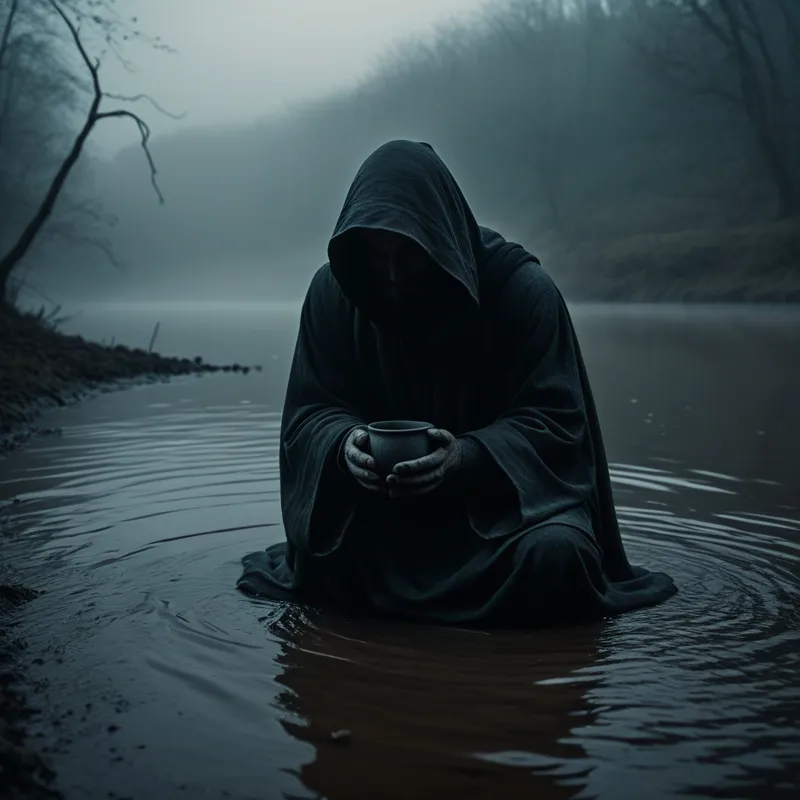
But the journey is not done. Further in, where the grey light softens even the memories of light, flows the Lethe. Its waters are not black, but a pale, inviting silver, wreathed in a gentle, numbing mist. This is the river of unminding. Before a soul can find rest in the Elysian Fields or be assigned its lot, it must drink. The draught is not a punishment, but a mercy—a cleansing. With each sip, the sharp edges of a life are smoothed: the searing grief, the clinging guilt, the burning love, the sting of betrayal. All of it dissolves into a quiet, peaceful blankness. The soul becomes a clean slate, ready to be spun once more on the wheel of life by the Moirai. To drink from Lethe is to consent to an end, to offer your story back to the universe so that you may begin again.
Cultural Origins & Context
These rivers were not the inventions of a single poet, but emerged from the deep well of Greek religious thought and practice, flowing through the works of Homer, Hesiod, and later poets like Virgil. They served a critical societal and psychological function. In a culture where proper burial rites were sacrosanct—the subject of epic tragedies like Antigone—the coin for Charon was a tangible link between the living and the dead, a final act of piety. The unbreakable oath by the Styx provided a divine anchor for social and political order, a guarantee in a world where trust was fragile.
The myth was passed down through epic recitations and ritual dramas, reinforcing a profound cultural map of the afterlife. It answered the human dread of chaos after death by providing a structured, albeit somber, process: a journey, a payment, a crossing, and finally, a cleansing. The rivers gave form to the formless, turning the terror of the unknown into a landscape with rules, however stern. They were the ultimate expression of the Greek pursuit of kosmos—order—imposed even upon the realm of chaos.
Symbolic Architecture
Psychologically, these two rivers represent the fundamental architecture of a profound transition. They are not merely locations in a fantastical underworld; they are sequential stages of a transformative ordeal.
The Styx symbolizes the Boundary of the Self. It is the moment of ultimate commitment, the point of no return in any great life change—death, yes, but also initiation, marriage, or a vow that redefines one’s identity. Its dark, solemn waters represent the dissolution of the old ego-structure. To cross it is to accept that the person you were cannot continue.
The oath sworn by Styx is the psyche’s contract with its own deepest transformation; to break it is to fracture the soul’s integrity.
The Lethe, in contrast, symbolizes the Necessity of Forgetting. It is not mere amnesia, but the unconscious process of psychic digestion and release. We cannot integrate a new consciousness while clinging to the raw, unprocessed data of the old one. The Lethe represents the merciful function of the unconscious that allows traumatic memories, fixed identities, and outworn narratives to soften and recede, making space for new growth. It is the water of psychological compost.
Together, they form a complete alchemical sequence: first, the nigredo of the Styx (the blackening, the death), followed by the albedo of the Lethe (the whitening, the purification).
The Dreamer’s Resonance
When these rivers flow into modern dreams, they signal a psyche undergoing a foundational transition. Dreaming of a dark, impassable river often coincides with feelings of being stuck, of facing a non-negotiable life change (a Styx-moment). The somatic sense is one of weight, cold, and immobility. Where is the ferryman? Do you have the coin? The dream asks you to identify what “coin”—what inner resource or acceptance—is required to cross.
Dreaming of a misty, gentle stream or being offered a drink of clear, cool water may point to the Lethe process. This can surface during recovery from grief, after leaving a long-held identity (a career, a relationship), or when the mind is naturally integrating a healing process. The somatic sense is often light, floaty, or detached. The psyche is gently urging you to let go, to allow certain memories or self-concepts to be released from active duty, not out of cowardice, but as a prerequisite for renewal.

Alchemical Translation
For the modern individual on the path of individuation, the myth models the essential, non-negotiable stages of psychic rebirth. Our “underworld descents”—periods of depression, loss, crisis, or profound introspection—follow this same riverine map.
First, we must encounter our personal Styx. This is the confrontation with a truth so binding it feels like an oath: I cannot go on like this. This pattern must die. This version of me is finished. We pay the “coin” of our old comforts, our familiar stories. We cross into the unknown, committing to the process.
To drink from Lethe is not to erase the past, but to dissolve its tyranny over the present, allowing the essence of experience to fertilize the soul without the poison of unprocessed pain.
Then, in the aftermath of that crossing, we must find our Lethe. This is the often-overlooked stage of active forgetting—not repression, but the compassionate release of the old self’s grievances, triumphs, and self-importance. It is the therapeutic work of moving memory from a haunting narrative to integrated, silent wisdom. In Jungian terms, it is allowing the contents of the personal unconscious to be assimilated back into the objective psyche, freeing energy for new life.
The ultimate goal is not to remain in the blankness of Lethe, but to emerge on its far shore into a renewed state. Having been stripped by the Styx and cleansed by the Lethe, the soul is prepared for its own Elysium: a more authentic, less burdened way of being in the world. The two rivers teach that every true beginning requires both an unwavering end and a merciful release.
Associated Symbols
Explore related symbols from the CaleaDream lexicon: