The Right Cheek Tradition Myth Meaning & Symbolism
A Roman myth where a soldier's honor is forged not in defiance of a slap, but in the sacred, conscious acceptance of it.
The Tale of The Right Cheek Tradition
Listen, and hear the tale that is not sung in triumphs or carved on triumphal arches. It is whispered in the barracks after wine, and in the quiet of the lararium before dawn.
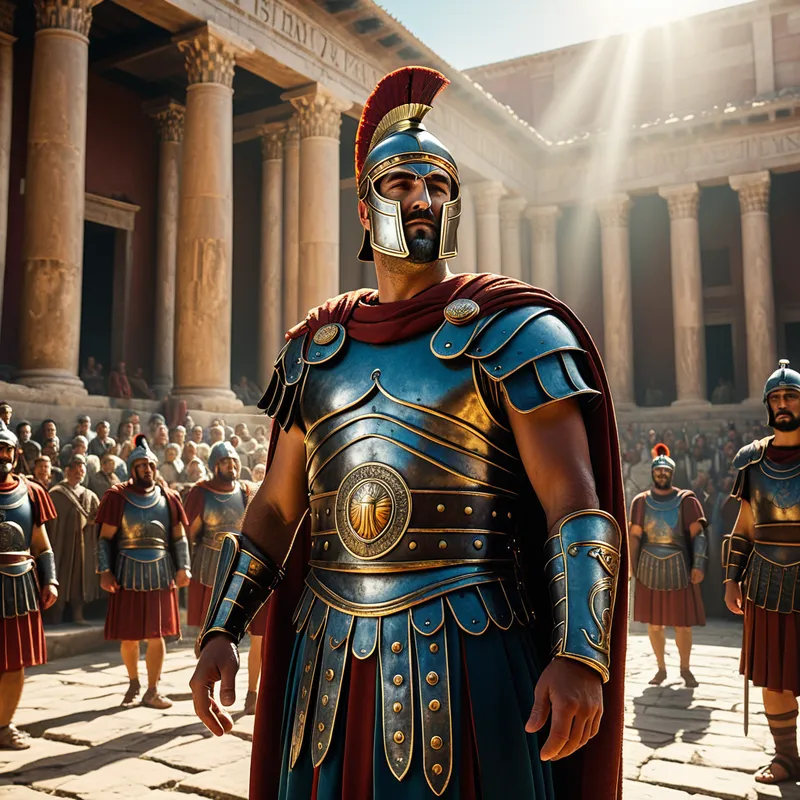
In the days when the Republic’s heart beat with both marble and mud, there was a soldier of the Primus Pilus. His name is lost, for the story is not about a name, but a face. This soldier, let us call him Constans, served with a discipline so fierce it was like a living statue. His shield was unscarred from retreat, his gaze never wavered. Yet, for all his valor, a coldness clung to him. He was a perfect instrument of imperium, but the warmth of communitas had never touched his heart.
The crisis came not in battle, but in the forum. A magistrate, swollen with pride and petty power, sought to humble the legion. He summoned Constans before the crowd. The charge was a trifle—a misplaced spear, a moment’s hesitation—but the intent was annihilation. Not of the body, but of the spirit. “Your honor is mine to strip,” the magistrate hissed. “You are a dog of the state, and I shall remind you.”
The command was given. A junior lictor, face pale, was ordered to strike the veteran centurion. A public slap. The ultimate civilian insult to military dignitas. The air grew thick and still. The crowd held its breath, anticipating the roar, the defiance, the beautiful, violent rebellion that would confirm the soldier’s pride.
Constans looked at the magistrate. He looked at the trembling hand of the lictor. He looked into the abyss of his own humiliation. And he saw not an end, but a terrible, silent path.
He did not flinch. He did not roar. Instead, with a movement that echoed the precise drill of a lifetime, he turned his head. Deliberately. Ritually. He presented not his left cheek, which would be an instinctive turn away, a submission to fate. He presented his right cheek.
The slap, when it came, was not a crack of violence, but a sound like a sacred seal being stamped. The lictor’s hand connected, and in that contact, a miracle of inversion occurred. The insult did not land on a victim; it was received by a sovereign. The power intended to degrade him flowed into him and was transformed. The magistrate’s face, once smug, crumpled into confusion, then dawning, awful respect. The crowd did not jeer; they stood in a silence more profound than any cheer.
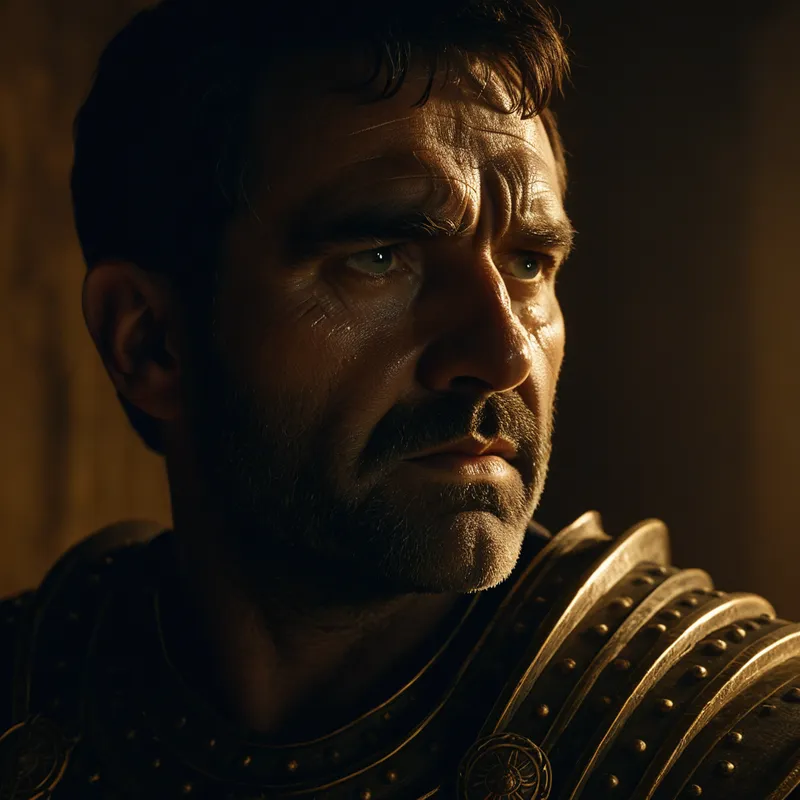
Constans, his cheek burning with the proof of his choice, simply straightened his tunic, nodded once—a nod that held the weight of a world understood—and walked back to the barracks. He carried the mark not as a wound, but as a sigil. The tradition was born not from a law, but from a single man’s alchemy in the crucible of shame.
Cultural Origins & Context
This narrative exists in the liminal space of Roman military lore, a “soldier’s myth” rather than a state-sanctioned legend. It circulated not in the texts of Livy or Tacitus, but in the oral culture of the legions—shared around campfires, in garrison towns, and in the thermae. Its tellers were grizzled centurions and wise optiones, using it to teach raw recruits the profound difference between brute reaction and conscious response.
Its societal function was psychological armor. In a culture obsessed with dignitas (personal worth) and existimatio (public reputation), public insult was a social death. The myth provided a paradoxical script for survival. It taught that true honor could not be taken by another; it could only be surrendered by the self. By ritualizing the response—the deliberate turn to the right cheek—it transformed a moment of passive victimhood into an active, albeit deeply painful, ceremony of integrity. It was a tool for maintaining psychological sovereignty in a rigid hierarchy where one was often powerless.
Symbolic Architecture
The myth’s power lies in its stark, almost unbearable symbolism. The cheek represents the interface between the self and the world, the point of contact where external judgment lands. The right side, in Roman (and broader ancient) symbolism, was the side of honor, law, and conscious action—the dextera, the “right hand” of favor and oath.
The hero is not the one who avoids the blow, but the one who consciously designates where it may land, thereby transforming its meaning.
The slap symbolizes the unavoidable injustices, insults, and diminishments of life within a system—the petty tyrannies, the unfair criticisms, the blows to our pride that we cannot outwardly fight. The deliberate turn is the core of the myth. It is the moment of inner choice, the activation of free will in a situation designed to remove it. It represents the conscious acceptance of a painful reality, not with resignation, but with a transformative intent. The soldier becomes both the sacrifice and the priest of his own ordeal.
The Dreamer’s Resonance
When this myth stirs in the modern psyche, it often manifests in dreams of profound, silent tension. One may dream of being in a workplace or family setting, unable to speak or move, while a figure of authority levies a crushing, unfair criticism. The dream ego feels the heat of shame rising. But in the potent version, the dreamer finds themselves performing a slow, deliberate, and oddly ceremonial gesture—adjusting their posture, turning their head, or offering an object. This is the somatic signature of the Right Cheek.
The psychological process is one of integrating the Shadow of powerlessness. The ego, which wants to fight or flee, is being compelled by the Self to stay. To feel the full, humiliating impact without dissolving. The burning sensation on the “cheek” in the dream is the psyche’s way of marking the spot where consciousness is being forged through painful friction. The dreamer is rehearsing the ability to hold a paradox: to be vulnerable yet inviolable, to be acted upon yet remain the author of their own dignity.

Alchemical Translation
The alchemy here is the transmutation of insult into integrity, of humiliation into sovereignty. In the process of individuation, we inevitably encounter outer figures and inner complexes that “slap” us—that diminish, criticize, or attempt to negate our evolving self. The instinct is the heroic rebellion or the orphan’s collapse.
The Right Cheek Tradition models a third, more profound path: the Magnum Opus of the spirit.
The prima materia is the raw sting of shame. The nigredo, the blackening, is the moment of impact, the feeling of annihilation. The albedo, the whitening, is the conscious, clarifying turn—the choice to face it fully. The rubedo, the reddening, is the dignity that emerges, not in spite of the wound, but crystallized within it.
For the modern individual, this translates to the moments we cannot change the external action, but we can radically alter our internal relationship to it. It is the employee who receives unfair feedback and, instead of rebutting or crumbling, internally acknowledges the pain while consciously deciding what part, if any, to own and transform. It is the partner who, in a conflict, stops defending and simply says, “That must have hurt you to say. Tell me more.” It is the act of turning the other cheek, not as weakness, but as the ultimate strength—the strength to hold the tension of opposites until a new, golden consciousness is born in the fire of the encounter. The tradition teaches that our sacred ground is not where we stand untouched, but precisely where we have chosen to receive the blow.
Associated Symbols
Explore related symbols from the CaleaDream lexicon: