The Red Stone Myth Meaning & Symbolism
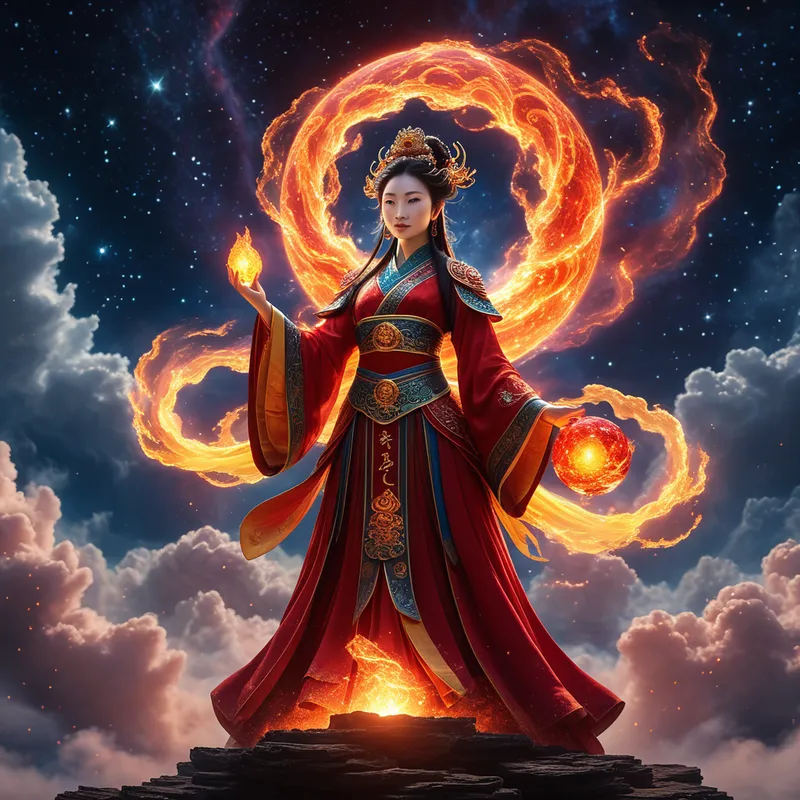
A celestial goddess mends the broken heavens with a molten stone, sacrificing her form to restore cosmic order and infuse the world with transformative potential.
The Tale of The Red Stone
In the time before time was measured, when the sky was a young vault of Hundun and the earth still sighed with its first breaths, a calamity shook the pillars of creation. A titan of ambition and rage, Gong Gong, fought a war for the throne of heaven. In his defeat, he smashed his head against the celestial pillar, the great mountain Buzhou. The pillar shattered. The sky tore open.
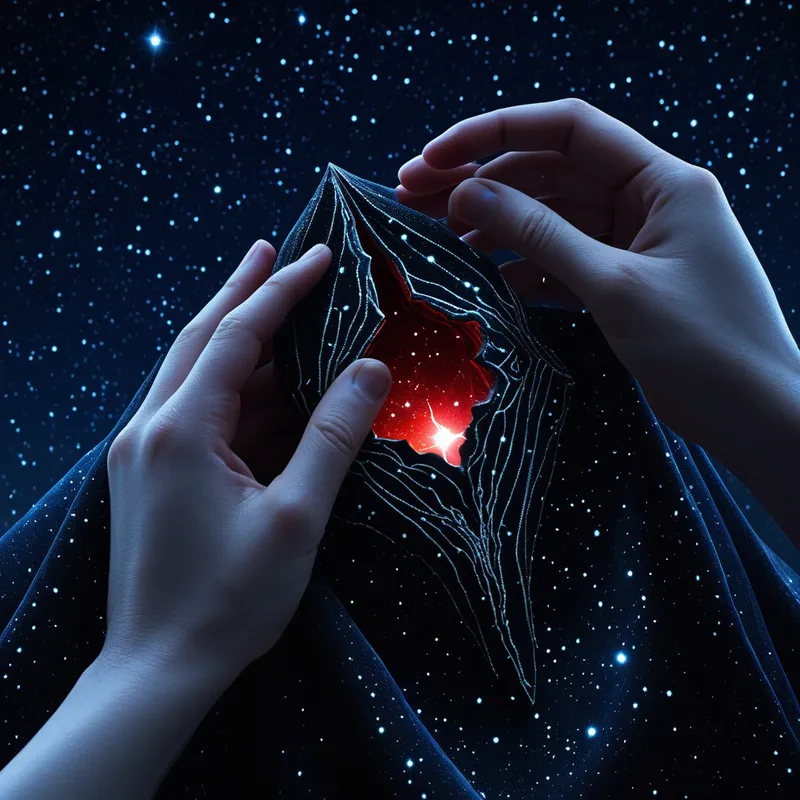
A great black wound appeared in the northwest heavens. Through this rent, the ordered cycles of the world bled out. Stars fell like extinguished embers. A bitter, eternal wind howled from the void, chilling the earth. Torrential floods, unchained from the celestial rivers, swept across the lands. The people despaired, for the cosmos itself was broken.
From the heart of this chaos arose Nüwa, the serpent-tailed goddess, she who had fashioned humanity from yellow clay. Her heart, a furnace of compassion, could not bear the suffering. She journeyed to the sacred riverbeds and gathered stones of five colors, each humming with an elemental virtue. But the task demanded a stone of a different order—a stone of pure, unyielding resolve, capable of withstanding the cold fire of the void.
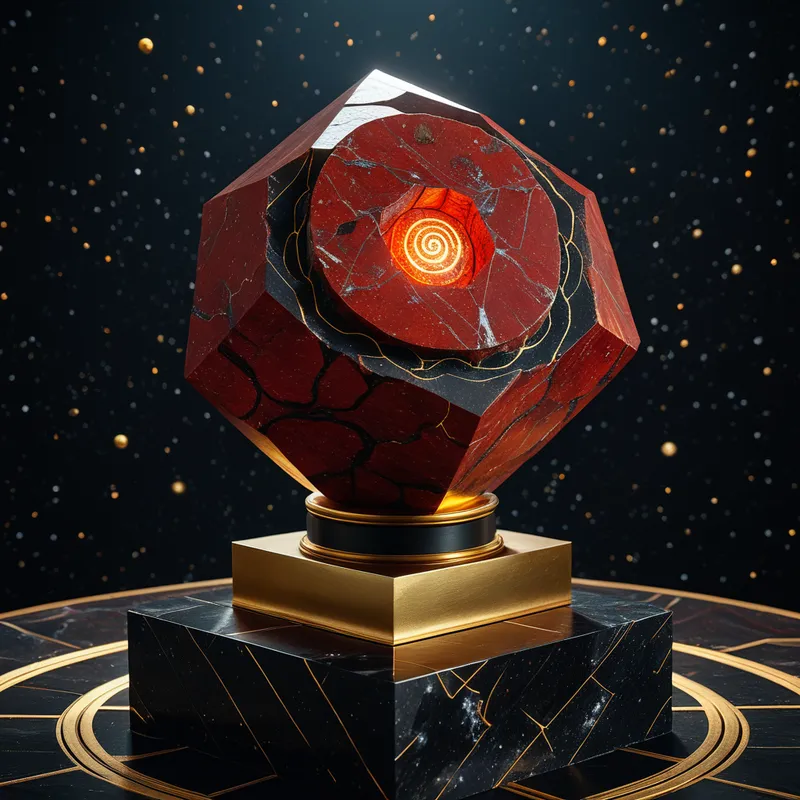
She traveled to the flaming mountains at the edge of the world, where the earth’s blood runs as fire. There, in a crater that breathed heat like a dragon, she found it: a single, colossal stone, the color of lifeblood and molten sunset. This was no ordinary rock. It held within it the concentrated essence of Yang, the primal fire of creation itself. For forty-nine days and nights, Nüwa tempered the stone in the celestial fires of the sun and the forge of her own divine will, refining it, shaping it, until it glowed with an inner luminescence that rivaled the absent stars.
With the molten Red Stone held aloft, she ascended to the jagged tear in the firmament. The void’s breath was a physical force, seeking to freeze her essence and extinguish her fire. Ignoring the pain that cracked her divine form like fine porcelain, she began her work. Piece by piece, she fused the molten stone into the gaping wound. The substance flowed like liquid ruby, then hardened into a scar stronger than the original sky. She used the legs of a great turtle to prop up the four corners of the heavens, restoring its balance. Finally, with the last fragment of the stone, she quelled the floods and slew the black dragon that had spawned from the chaos.
The heavens were mended. Order was restored. But Nüwa, spent of her power and forever marked by the void’s touch, receded from the world. The Red Stone remained, a permanent testament in the celestial dome. And it is said that where fragments of that stone fell to earth, they became seeds of transformative potential, waiting in the deep places of the world and the soul.
Cultural Origins & Context
The myth of Nüwa mending the heavens with the five-colored stones, with the Red Stone as its pivotal, fiery heart, is one of China’s most foundational cosmological narratives. It is primarily preserved in texts like the <abbr title=""Annals of the Masters of Huainan,” a 2nd-century BCE compilation of philosophical and mythological knowledge”>Huainanzi and later compiled in works such as the <abbr title=""Records of the Grand Historian,” a monumental history of China”>Shiji. Unlike state-sanctioned ancestor myths, this tale functioned as a profound etiological story—explaining why the sky leans to the northwest and rivers flow to the southeast, and more importantly, how order is wrestled from chaos through benevolent, self-sacrificing action.
It was a story told not just by court scribes but by folk storytellers and village elders. Its societal function was multifaceted: it reinforced the Confucian ideal of the benevolent ruler or parent who intervenes to correct catastrophic disorder (Nüwa as the ultimate <abbr title=""Caregiver” archetype”>caregiver), while its Taoist undercurrents spoke of the dynamic balance of Yin and Yang. The broken sky represented a catastrophic imbalance; the Red Stone, pure Yang essence, was the necessary corrective force. The myth served as a cultural anchor, a reminder that the cosmos is not eternally stable but requires active, compassionate maintenance, a principle that extended to the family, the community, and the state.
Symbolic Architecture
At its core, the Red Stone is an alchemical symbol of the prima materia transformed by conscious intent. It begins as raw, terrestrial matter in a volcanic crucible and is transmuted into a celestial healing agent.
The stone is not merely a tool; it is the solidified will to make whole that which is shattered. It represents the point where raw potential meets conscious sacrifice to become functional, world-repairing power.
Nüwa herself embodies the archetypal Great Mother, but here her creativity takes the form of radical repair. Her act is not creation ex nihilo, but re-creation from fragmentation. The torn sky symbolizes a rupture in the psychic or social fabric—a trauma, a loss of meaning, a foundational breach in one’s worldview. The Red Stone is the concentrated life-force, the passionate resolve (Yang), that one must gather and forge within oneself to mend that rupture.
The myth presents a non-violent triumph. The enemy is not a dragon to be slain first, but the void itself—the nihilistic wind of meaninglessness. The victory is achieved through steadfast application, endurance, and the willingness of the self to be the crucible and the catalyst. The repaired sky, now containing the Stone, is stronger for its scar; it integrates the transformative event into the very structure of reality.
The Dreamer’s Resonance
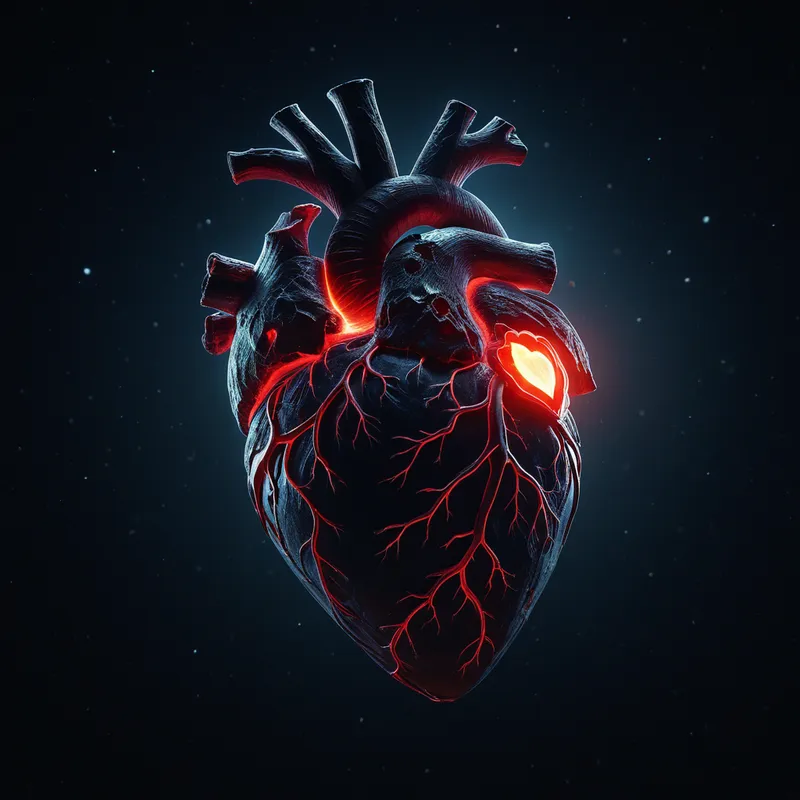
When the motif of the Red Stone appears in modern dreams, it seldom appears whole. One may dream of searching for a red pebble in a riverbed, of holding a warm, pulsating red rock that feels alive, or of trying to fit a jagged red fragment into a crack in a wall or in one’s own chest.
These dreams often surface during periods of profound personal crisis or integration—after a trauma, at the end of a relationship, or during a career collapse that has torn one’s sense of identity. The somatic sensation is frequently one of heat, density, or magnetic pull. Psychologically, the dreamer is encountering the Nüwa archetype within their own psyche. The search represents the gathering of one’s scattered energies and strengths. The feeling of the stone’s warmth is the somatic recognition of one’s own latent, unapplied vitality.
The act of trying to mend a crack with the stone is the central process. It signifies the ego’s attempt to use this gathered inner resource (the stone) to repair a perceived structural flaw in the self or one’s life. The frustration often felt in the dream mirrors the real difficulty of this psychic work. The dream is an affirmation from the unconscious: the raw material for healing exists within you, but it must be recognized, claimed, and deliberately applied.
Alchemical Translation
For the individual on the path of individuation, the myth of the Red Stone is a master blueprint for psychic transmutation. It models the journey from fragmentation to wholeness, not by avoiding the break, but by healing through it.
The first stage is the Rupture—the Gong Gong moment. This is the necessary crisis, the shattering of an outdated, perhaps rigid, structure of the personality (the pillar of Buzhou). While painful, this breach allows the “winds of the void”—previously unconscious contents—to flood in. The second stage is The Gathering. This is the conscious work of Nüwa: sifting through the riverbed of one’s experiences (the five-colored stones of memory, skill, and emotion) to find the core, fiery essence of one’s will and passion (the Red Stone).
Individuation is the alchemy of taking the shards of one’s personal Buzhou and, through the heat of conscious attention, transmuting them into the very substance that seals the celestial tear.
The third and most critical stage is The Mend. This is the slow, meticulous, often exhausting application of that forged essence to the wound. In psychological terms, this is the integration of shadow material, the bearing of anxiety without fleeing, the steadfast commitment to therapy or creative work. One becomes both the mender and the mended. The final stage is The Scar Integrated. The healed sky, with the Red Stone as part of its fabric, is the new psychic structure. It is not a return to the naive wholeness that existed before the rupture. It is a more complex, resilient, and conscious wholeness, forever marked by the transformative fire that created it. The individual discovers that their greatest wound, once healed with their own forged essence, becomes the source of their unique strength and capacity to bring order to their own world.
Associated Symbols
Explore related symbols from the CaleaDream lexicon: