The Puzzle of Kabbalistic Time Myth Meaning & Symbolism
A tale of a shattered vessel of primordial light, where humanity gathers the scattered sparks of time to mend the broken world through sacred action.
The Tale of The Puzzle of Kabbalistic Time
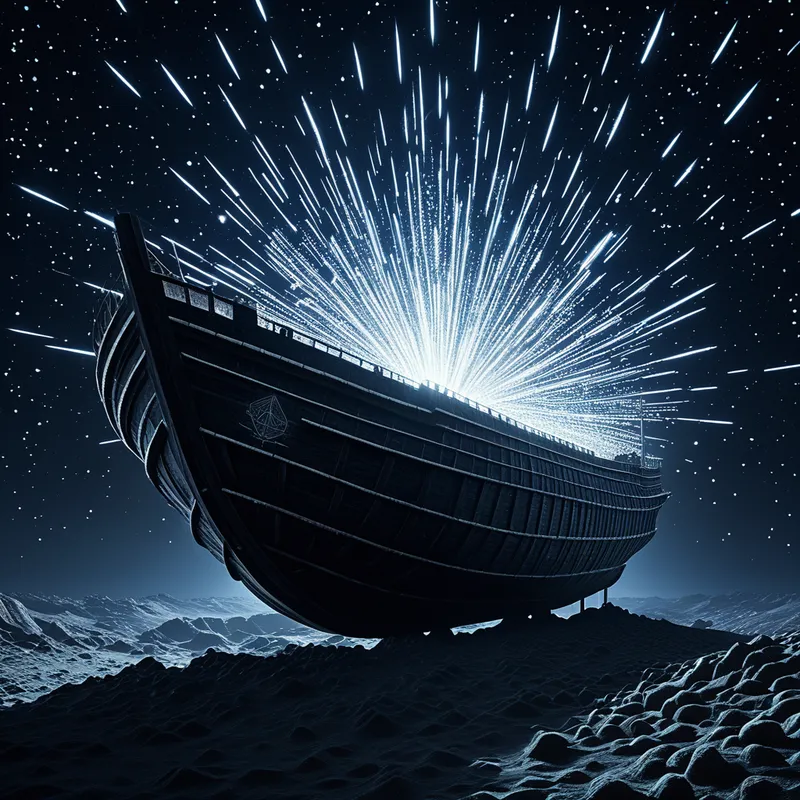
Before the world was a world, there was only the Ein Sof, the Without-End, a presence so absolute and filled that there was no room for an Other. In its boundless compassion, to make a place for creation, it performed the great withdrawal, the Tzimtzum. Into the resulting void, it emanated a ray of its own essence, a vessel to carry the light of the ten Sefirot.
This vessel, formed from the very letters of the Holy Tongue, was to be the blueprint of all that would be. But the light was too fierce, too pure, a love too intense for any form to bear. The vessel could not contain the influx. With a sound like the shattering of all the stars in the universe, it broke.
The holy light did not vanish. It shattered into ten thousand thousand sparks, each a fragment of the original divine radiance. These sparks fell through the abyss of the forming worlds. Most were caught, ensnared by the fragments of the broken vessels, which became the <abbr title=“The “shells” or husks of impurity that conceal the divine sparks”>Kelipot—hard shells of darkness that cloaked the light. The sparks scattered, tumbling down through the layers of reality, coming to rest in the most unlikely of places: in stones and streams, in the hearts of beasts, in human thoughts, and in the very fabric of time itself.
Time, which was to have been a smooth river from creation to redemption, became a fractured puzzle. The present moment was no longer a clear window but a shard of a broken mirror, reflecting only a partial truth. The past held trapped light in forgotten events; the future was a promise obscured by shadow. The world was born broken, a divine equation with its variables scattered, a story with its pages out of order.
And then came humanity, fashioned from the clay of this fractured earth. Within each human soul was placed a map—not of lands, but of time. A deep, wordless knowledge that something was amiss, that the world was not as it should be. The human task was not to rule, but to repair. To wander through the labyrinth of days and years, to perform acts of mindful kindness and fierce justice, and in so doing, to recognize the hidden sparks. To lift them, through sacred intention and deed, from their imprisonment in the <abbr title=“The “shells” or husks of impurity that conceal the divine sparks”>Kelipot.
With every spark redeemed, a fragment of the vessel is restored. With every act of Tikkun, a piece of the puzzle of time clicks into place. The present moment becomes slightly more transparent, the echo of the original light a little clearer. The work is vast, spanning generations, and no one person sees the complete picture. Yet, the myth whispers that the gathering continues, that every soul holds a piece of the puzzle, and the final piece will restore not just space, but time itself, into a perfected, eternal now.

Cultural Origins & Context
This is not a single myth with one author, but a profound metaphysical narrative that crystallized within the Jewish mystical tradition of Kabbalah, particularly in the teachings of Rabbi Isaac Luria (the Ari) in 16th-century Safed. It is the story of <abbr title=“The “Breaking of the Vessels,” a central Kabbalistic cosmogony”>Shevirat HaKelim (the Shattering of the Vessels) and the subsequent imperative for Tikkun Olam (Repair of the World).
Passed down through esoteric circles, from teacher to initiated disciple, it was considered secret wisdom, too potent for public discourse. Its societal function was revolutionary: it provided a theodicy, explaining the presence of evil and fragmentation in a world created by a benevolent God. More importantly, it assigned ultimate cosmic significance to human ethical action. Every mitzvah (commandment), every act of kindness, was not merely obedience but a direct participation in the divine surgery of reality, a gathering of the scattered pieces of holiness to mend the broken flow of time and being.
Symbolic Architecture
The myth presents a [universe](/symbols/universe “Symbol: The universe symbolizes vastness, interconnectedness, and the mysteries of existence beyond the individual self.”/) born from a [crisis](/symbols/crisis “Symbol: A crisis symbolizes turmoil, urgent challenges, and the need for immediate resolution or change.”/) of containment—a love too great to be held. The shattered [vessel](/symbols/vessel “Symbol: A container or structure that holds, transports, or protects something essential, representing the self, emotions, or life journey.”/) symbolizes the fragility of [structure](/symbols/structure “Symbol: Structure in dreams often symbolizes stability, organization, and the framework of one’s life, reflecting how one perceives their environment and personal life.”/) when confronted with raw, unmediated essence. The world we inhabit is not a fallen world, but a broken one; the [difference](/symbols/difference “Symbol: Difference symbolizes diversity, change, and the contrast between ideas or people.”/) is crucial. Fall implies sin, but broken implies an original, compassionate [accident](/symbols/accident “Symbol: An accident represents unforeseen events or mistakes that can lead to emotional turbulence or awakening.”/) that awaits repair.
The puzzle is not a test, but an invitation to co-creation. The divine light yearns for the vessel, and the vessel, in its fractured state, yearns for the light. Humanity is the consciousness that bridges the longing.
The <abbr title=“The “shells” or husks of impurity that conceal the divine sparks”>Kelipot are not pure evil, but the necessary byproduct of the shattering—the “divine waste” that hardens into obstruction. They represent psychological complexes, historical traumas, and systemic injustices: the hardened forms that trap the spark of potential, meaning, and [connection](/symbols/connection “Symbol: Connection symbolizes relationships, communication, and bonds among individuals.”/). Time itself becomes the primary [dimension](/symbols/dimension “Symbol: Represents the fundamental structure of reality, consciousness, or existence beyond ordinary perception.”/) of this [fragmentation](/symbols/fragmentation “Symbol: The experience of breaking apart, losing cohesion, or being separated into pieces. Often represents disintegration of self, relationships, or reality.”/), with the past holding unresolved [trauma](/symbols/trauma “Symbol: A deeply distressing or disturbing experience that overwhelms the psyche, often manifesting in dreams as unresolved emotional wounds or psychological injury.”/) (sparks in shells) and the future holding unrealized potential (sparks awaiting [discovery](/symbols/discovery “Symbol: The act of finding something previously unknown, hidden, or lost, often representing personal growth, new opportunities, or hidden aspects of the self.”/)).
The Dreamer’s Resonance
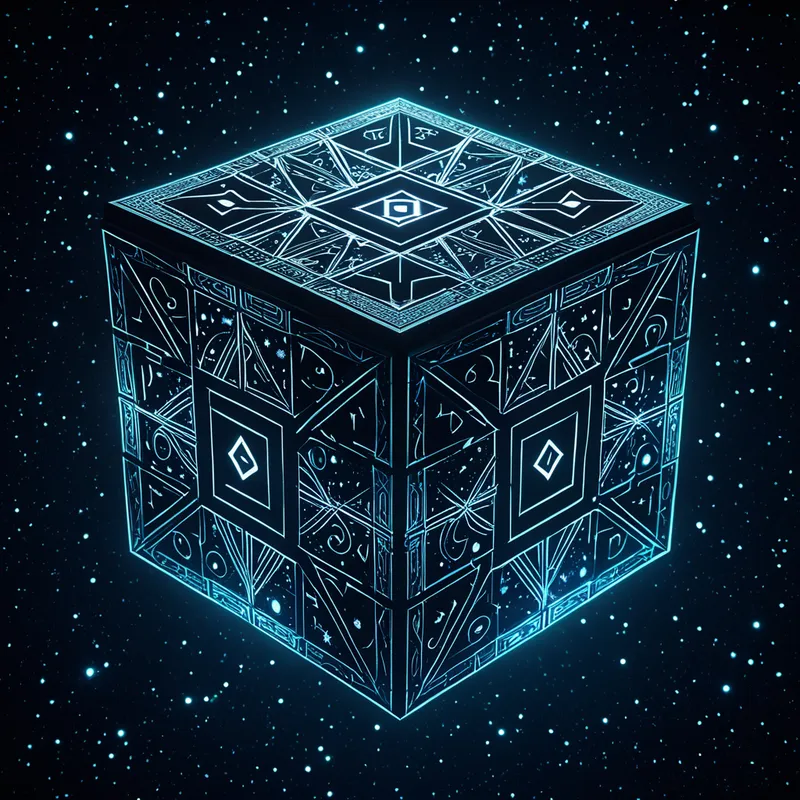
When this myth stirs in the modern unconscious, it often manifests in dreams of searching and assembling. The dreamer might find themselves in a vast, ruined library, trying to organize books with pages from different eras. They may dream of picking up glowing fragments from a dirty street, or trying to solve a clock that is also a three-dimensional puzzle.
Somatically, this can feel like a profound sense of responsibility mixed with anxiety—the weight of a task whose full scope is unknown. Psychologically, it signals the process of individuation: the ego becoming aware that it is not the center, but a gatherer. The dream-ego is tasked with recognizing and integrating its own “scattered sparks”—the disowned talents, the buried memories, the unlived potentials—each encased in the “shell” of shame, fear, or neglect. The puzzle of time in the dream reflects the dreamer’s struggle to make their own life narrative cohere, to find meaning and continuity in a fragmented personal history.

Alchemical Translation
The alchemical process mirrored here is the opus contra naturam—the work against nature—which in psychological terms is the work against the ego’s natural state of identification with the fragments. The first stage is Nigredo: the confrontation with the brokenness, the “shattering” awareness that one’s inner world and life story are not whole. This is the dark night of realizing the puzzle is in pieces.
The Albedo is the slow, careful work of gathering. It is the mindful examination of every complex, every memory, every relationship, to find the trapped “spark” of truth or value within it. This requires discrimination, separating the light (the authentic feeling, the core need) from the shell (the defensive behavior, the old story).
The final transmutation is not creating gold from lead, but restoring the original vessel. The Self, the total, integrated psyche, is that restored vessel—a container now capable of holding the full intensity of being without shattering.
The Rubedo, the reddening or completion, is the moment of Tikkun. It occurs each time a spark is integrated, each time a piece of the personal puzzle snaps into place, creating a moment of profound meaning and timeless clarity. The ultimate goal is not perfection, but wholeness—a psyche where time is no longer a linear sentence of cause and effect, but a redeemed field where past, present, and future illuminate each other in the service of the soul’s purpose.
Associated Symbols
Explore related symbols from the CaleaDream lexicon:
- Light — The primordial divine essence, shattered into sparks of consciousness, truth, and potential that are scattered and hidden throughout creation and the psyche.
- Vessel — The structure of reality and the individual soul, designed to contain consciousness but fragile, requiring repair to hold the full intensity of being.
- Puzzle — The state of the cosmos and the human life after the primordial fracture, a divine mystery whose pieces are scattered across time and matter, awaiting assembly.
- Circle — The original, perfect state of the Ein Sof and the desired state of restored wholeness, where beginning and end, cause and effect, are harmonized.
- Key — The human act of mindful intention and ethical deed, which unlocks the <abbr title=“The “shells” or husks of impurity that conceal the divine sparks”>Kelipot to release the trapped spark, fitting a piece into the cosmic puzzle.
- Time — The primary dimension fractured in the myth, transformed from a smooth continuum into a puzzle of disconnected moments, epochs, and potentials that must be consciously re-linked.
- Shadow — The psychological equivalent of the <abbr title=“The “shells” or husks of impurity that conceal the divine sparks”>Kelipot, the dark, rejected aspects of the self that paradoxically contain the hidden sparks of one’s greatest potential.
- Ritual — Any conscious, repeated action performed with the intention of Tikkun, serving as a tool to locate, isolate, and elevate a divine spark from the mundane.
- Soul — The human entity tasked with the gathering work, itself a microcosm of the shattered vessel containing its own constellation of sparks and shells to be reconciled.
- Journey — The necessary path through the fragmented world and the timeline of a life, a pilgrimage whose purpose is not arrival at a destination but the gathering performed along the way.
- Tree — The Etz Chaim, the symbolic structure of the ten Sefirot, representing both the original blueprint of wholeness and the map for its restoration.
- Rebirth — The moment a spark is liberated and integrated, causing a micro-restoration of the world and the self, a small death of the old shell and a birth of new coherence.