
The Psychopomp Myth Meaning & Symbolism
The timeless archetype of the guide who escorts souls from the land of the living to the realm of the dead, found across world mythology.
The Tale of The Psychopomp
Listen. The world is not just the sunlit path you walk. There is a borderland, a shore where the known world ends and the great mystery begins. It is a place of mist and whispering reeds, where the air grows thin and the stars press close. Here, the living cannot go, and the newly dead are lost, bewildered by the sudden silence of their own hearts.
They stand at the water’s edge, their forms faint as memory, staring into the impenetrable fog that cloaks the far bank. They are afraid. The familiar warmth of the hearth is gone, the weight of the body lifted, leaving only the echo of a life—its loves, its regrets, its unfinished songs. They do not know the way. The path is not written in stone or star; it is written in the soul, and they have forgotten how to read it.
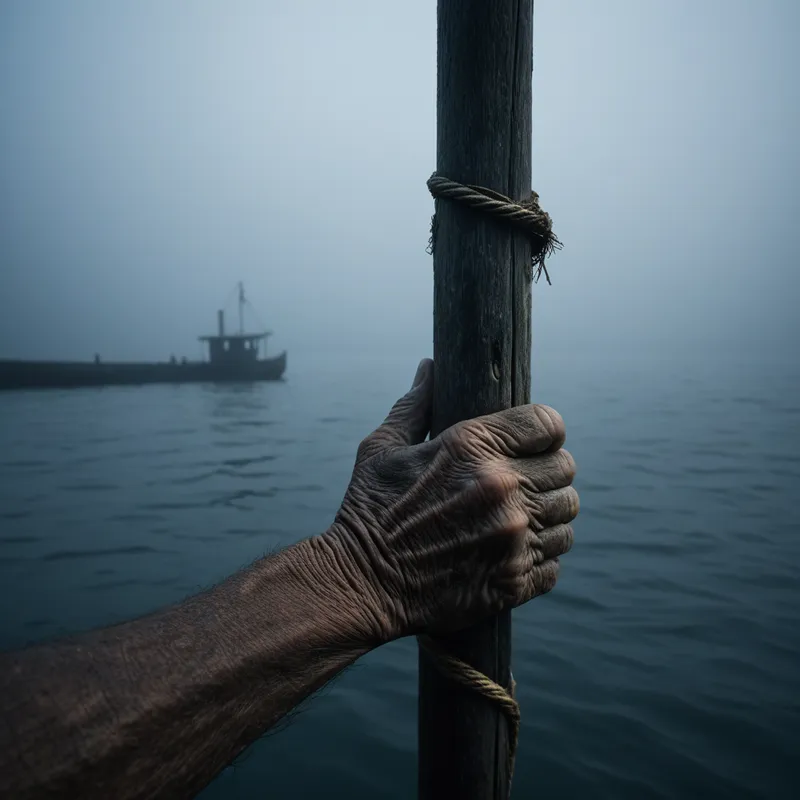
And then, a sound. Not a footstep, for feet do not truly touch this ground. A presence. A shift in the quality of the twilight. From the mist glides a boat, long and dark, carved from a single, ancient log. At its stern stands the Ferryman. You cannot see his face clearly, for it is hidden in the deep shadow of a hood, but you feel his gaze—immeasurably old, patient, and utterly devoid of judgment. In his hand is a pole, longer than time, which he pushes soundlessly into the black waters.
He does not speak. He merely extends an empty, open palm. This is the first law of the threshold: passage requires recognition. The soul must understand it is leaving one shore for another. Some fumble, confused, until they remember the two coins placed upon their eyes by loving hands—the obol for Charon. The coins are placed in the waiting palm, where they gleam with a cold, final light. The payment accepted, the Ferryman gestures. The soul steps into the boat.
The journey is silence itself. The waters are not water as we know it, but the substance of forgetting and remembrance, flowing slow and deep. The Ferryman poles onward, his movement the only rhythm in the stillness. The soul watches the shore of life recede, becoming a smudge of color, then a memory, then a story told by others. Fear begins to soften into a profound, aching melancholy, and then, sometimes, into a strange peace. The Ferryman is the fixed point in this dissolution, the unwavering witness to the soul’s unraveling.
There is no fanfare upon arrival. The boat simply nudges against a different shore, one cloaked in a gentler gloom. The Ferryman points with his pole—a slight, definitive motion. A path, faint but discernible, leads away into a landscape of grey meadows and quiet groves. This is the realm of Hades, the Asphodel Meadows, the ancestral lands. The soul disembarks. It does not look back, for the Ferryman has already turned his boat, already begun his return journey to the misty shore, to wait for the next soul, and the next, and the next, until the end of days.
Cultural Origins & Context
The psychopomp is not a myth belonging to one culture, but a human response to the universal mystery of death. The word itself is Greek—psychopompos, meaning “guide of souls”—but the figure appears globally, from the jackal-headed Anubis who weighs the heart against the feather of truth, to the Norse Valkyries on their winged steeds, to the Aztec dog-god Xolotl. This was not mere storytelling; it was a crucial psycho-spiritual technology.
In oral traditions, these tales were told not to frighten, but to orient. They were recited at funerary rites, woven into epic poetry like Homer’s Odyssey, and inscribed on burial artifacts. The psychopomp myth served a vital societal function: it provided a map for the unimaginable. By giving death a geography (a river, a bridge, a mountain path) and a protocol (a payment, a password, a guide), it offered the living a framework for grief and the dead a perceived destination. It transformed a terrifying existential void into a navigable, if solemn, journey. The psychopomp was the essential custodian of this transition, a figure who legitimized the passage and ensured cosmic order was maintained.
Symbolic Architecture
At its core, the psychopomp represents the principle of conscious transition. It is the archetypal function that facilitates movement from one state of being to another, especially when that movement involves a dissolution of the known self.
The psychopomp does not live in the land of the living or the dead; it exists only in the crossing. It is the embodiment of the threshold itself.
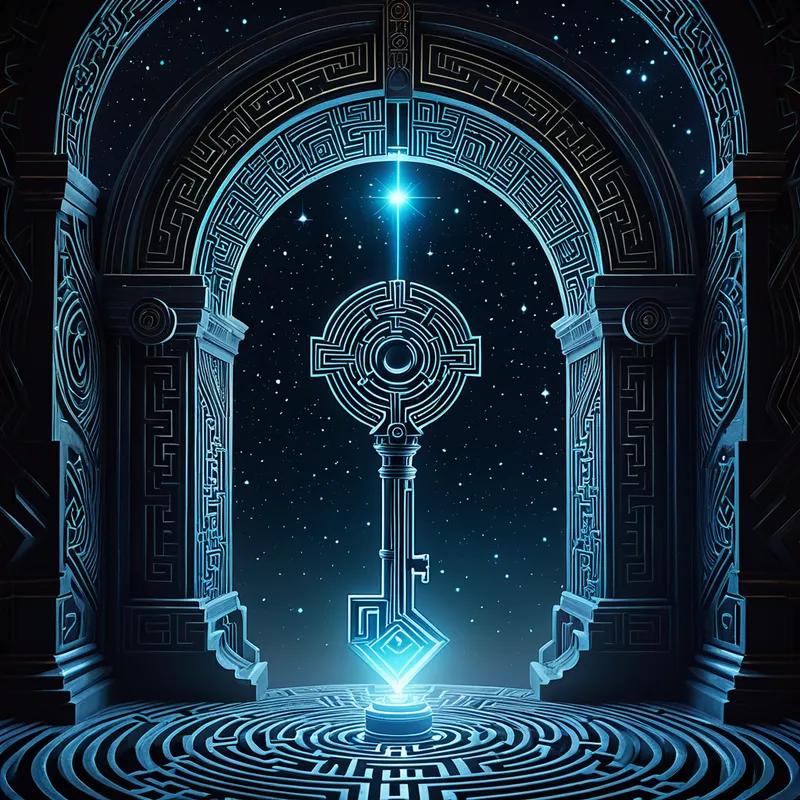
Psychologically, the psychopomp symbolizes the guiding intelligence that emerges during profound inner change. It is not our everyday ego, which clings to familiar shores, but a deeper, more impartial aspect of the psyche—what Jung might call a facet of the Self. This guide appears when we are “between stories,” when an old identity (a job, a relationship, a belief) has died, but a new one has not yet formed. The coins for the Ferryman represent the necessary “payment” for such a passage: the conscious acknowledgment of an ending, the sacrifice of an old attitude, or the acceptance of a painful truth. Without this payment, we remain stuck on the shore, ghosts of our former selves.
The Dreamer’s Resonance
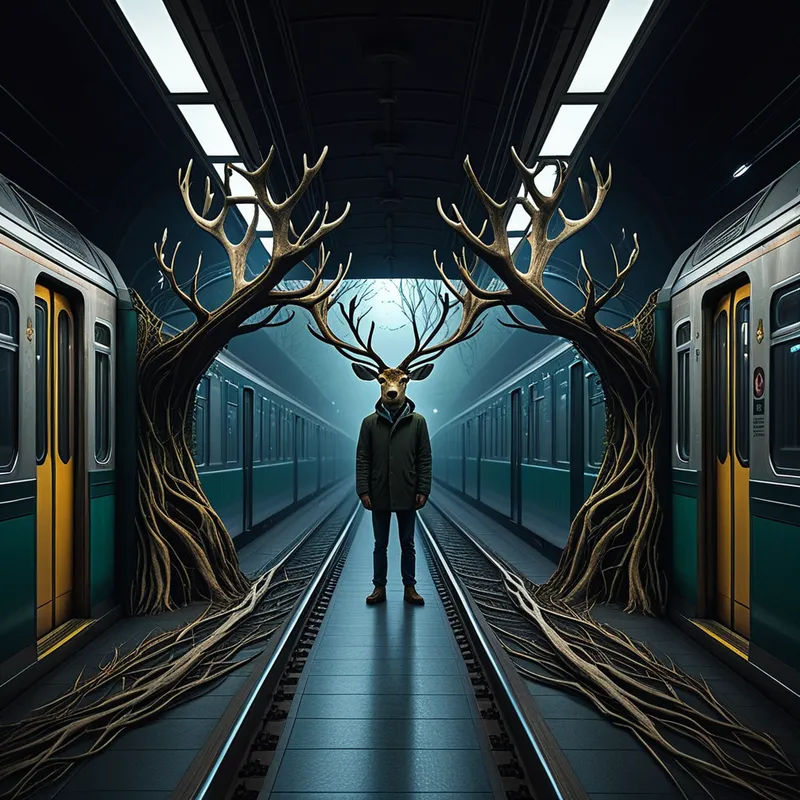
When the psychopomp archetype stirs in the modern unconscious, it often manifests in dreams of enigmatic guides during times of crisis or deep change. You may dream of a silent taxi driver taking you through a labyrinthine city at night, a mysterious animal (a stag, an owl, a dog) leading you through a dark forest, or finding an unexpected door or staircase attended by a calm, unfamiliar figure.
These dreams are somatic signals of an ongoing psychic transition. The feeling tone is crucial: it is rarely terror, but more often a solemn awe, a quiet urgency, or a melancholic peace. The body may register this as a sensation of weightlessness, of being led, or of crossing a bridge. The psychopomp in a dream confirms that a process of necessary ending is underway within the psyche. It reassures the dreamer that they are not lost, but in passage. The guide’s presence indicates that the unconscious itself is providing structure and direction for a journey the conscious mind may be resisting.
Alchemical Translation
The myth of the psychopomp is a perfect allegory for the alchemical process of solutio—dissolution—and the Jungian journey of individuation. Our rigid, conscious personality (the ego) is like the soul clinging to the familiar shore. Life eventually forces a crisis—a loss, a failure, an insight—that dissolves this structure. This is the ego’s “death,” a terrifying descent into chaos and uncertainty.
The alchemical vessel is not the crucible, but the journey across the dark water. The heat is not fire, but the silence of the between.
Here, the psychopomp function activates. It is the inner compass that allows us to submit to the dissolution without panicking, to get into the boat instead of fleeing back into a dead past. The “payment” is our conscious participation: the willingness to feel the grief, to journal, to therapy, to meditate—to actively honor the ending. The guide poles us through the nigredo, the blackening, where all seems lost. This journey is the transmutation. By enduring the liminal space with a witness (the inner psychopomp), the soul is not merely transported; it is subtly re-organized. We do not arrive on the far shore as the same person who left. A heavier, more ego-bound element has been left behind. What emerges is a consciousness that has encountered its own depths and carries a new, more nuanced relationship with life, death, and transition. The psychopomp thus models the ultimate psychic alchemy: learning to die before we die, so we may live more fully.
Associated Symbols
Explore related symbols from the CaleaDream lexicon: