The Prytaneion Myth Meaning & Symbolism
The myth of the sacred, unquenchable hearth-fire at the civic heart, representing the soul of the community and the divine contract of civilization.
The Tale of The Prytaneion
Listen. Before the agora’s clamor, before the assembly’s debate, there was the silence of the first stone and the crackle of the first fire. This is not a tale of a single hero, but of the heartbeat of the polis itself.
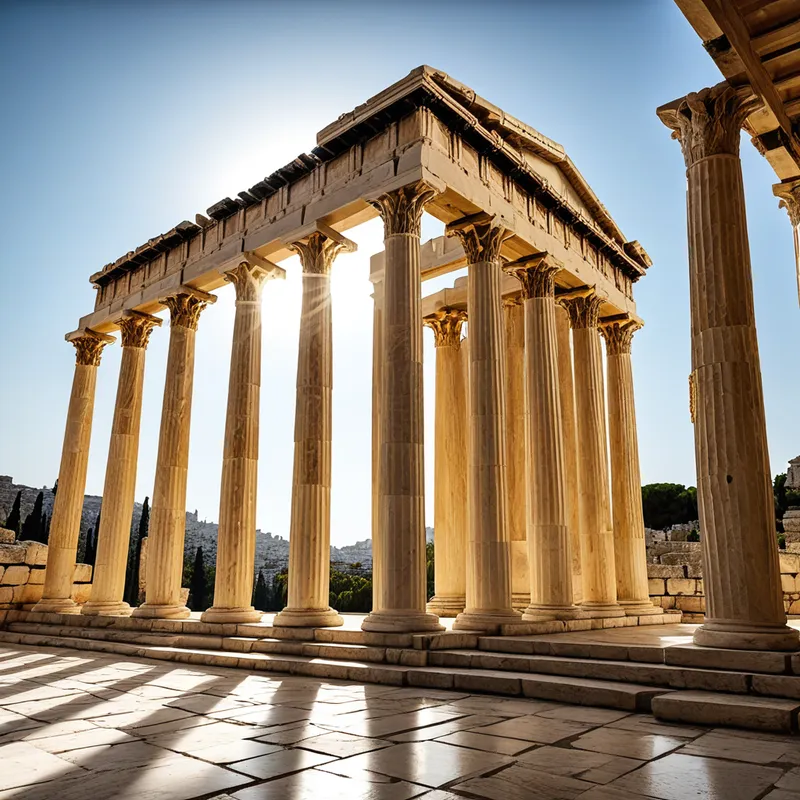
In the beginning, when men gathered from scattered hills and built not just homes, but a common home, they knew a truth in their bones: a people cannot live by walls alone. A soul must be kindled. So, at the very center of the newborn city, on ground hallowed by priests and measured by sacred geometry, they raised a simple, sturdy building. They called it the Prytaneion. Its walls were of local stone, cool to the touch, but its heart was of fire.
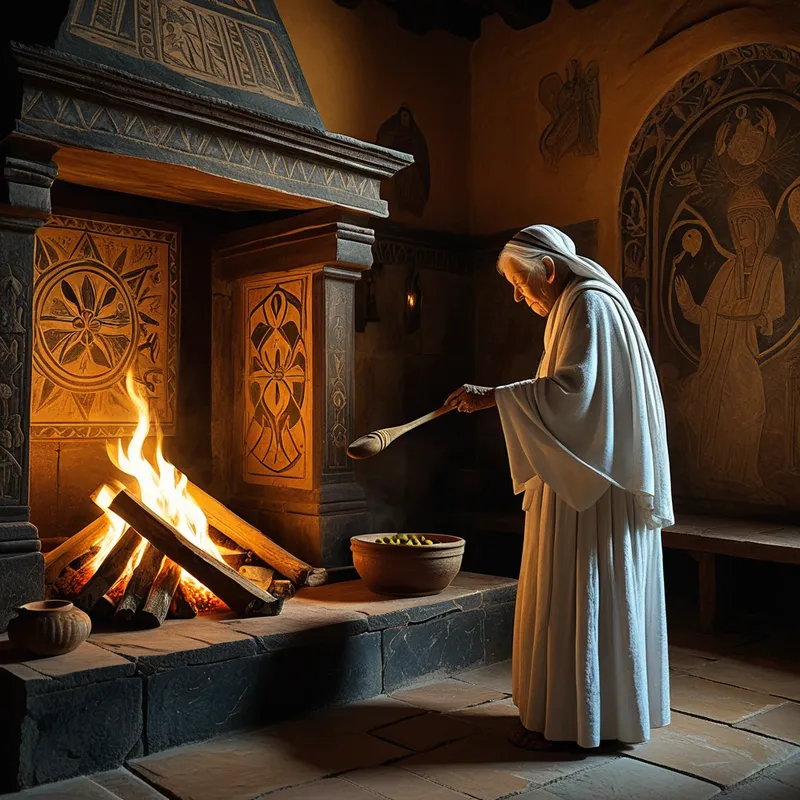
Into this hallowed space, the founding elders brought a single branch of olive wood, blessed at the altar of Hestia. With solemn hands, they struck the spark. Not from common flint, but from the focused rays of the sun, caught in a polished bronze mirror—a fragment of Helios himself gifted to the community. The first tendril of smoke curled upward, a new axis between earth and Olympus. The flame caught, hungry and bright.
This was no cook-fire. This was the Hestia Koine, the Common Hearth. Its light was the city’s first sovereign. Its warmth was the first law. Day and night, in rotating vigil, the chosen attendants—the prytaneis—would tend it. Theirs was the most sacred duty: to never let the flame die. To let it gutter was to let the city’s soul extinguish, to sever the covenant with the gods, to become a mere collection of strangers once more.
The fire witnessed all. It warmed the ambassadors from foreign lands who were feasted before it, sharing salt and meat roasted in its glow, binding guest-friendship into something holy. It witnessed the honoring of the city’s greatest benefactors and saviors, whose names were spoken with reverence as they were granted sitesis—the right to dine at the public hearth for life. Its ashes were used to sanctify new colonies; a burning brand carried from this mother-flame would cross the wine-dark sea to light the hearth of a daughter-city, a thread of fire connecting the diaspora.
And in times of terrible crisis, when plague stalked the streets or enemy armies darkened the horizon, the people would not look first to the general or the orator. They would look to the smoke rising steady from the Prytaneion’s roof. If that column persisted, thin and grey against a troubled sky, hope persisted. The center held.
Cultural Origins & Context
The Prytaneion was not merely a mythological concept but the tangible, physical and ritual center of every polis. Its myth is the myth of civilization’s contract with itself. Historically, it was the seat of the prytaneis and the repository of the state’s sacred objects. Its primary function was custodial: to house the eternal public hearth.
The myth was passed down not through a single epic poem, but through lived, daily ritual. Every citizen knew its significance through participation. The public sacrifices that began civic ceremonies, the feasts for honored guests, the very process of becoming a recognized part of the political body—all were anchored to this flame. It was the ultimate symbol of political and religious unity, a direct echo of the royal hearth in the Homeric palaces, now democratized (though still aristocratic) for the civic community. To be “fed from the public hearth” was the highest civic honor, akin to being adopted into the family of the city itself.
Symbolic Architecture
The Prytaneion is the archetype of the Sacred Center. It represents the established, consecrated point from which order radiates. It is not the adventurous, outward-thrusting energy of the hero, but the stable, inward-pulling gravity of the ruler.
The hearth-fire is the soul made visible, a burning core of identity that must be tended, not conquered.
Psychologically, it symbolizes the ego complex in its healthiest, most civic form: not as an isolated monarch, but as the steward of a central, warming fire that serves a whole internal community. It is the “I” that understands its role is to maintain the light of consciousness and value at the center of the psyche, providing warmth and hospitality to the various “guests” of the unconscious (instincts, emotions, archetypes) and uniting them into a coherent polity. The fear of the flame dying is the fear of psychic dissolution, of a return to chaos where no inner authority or warmth exists.
The building’s architecture is equally symbolic: the sturdy walls (defenses, boundaries, tradition) exist solely to protect the vulnerable, living flame (spirit, life, consciousness) within. One cannot exist without the other. The fire gives purpose to the stone; the stone gives permanence to the fire.

The Dreamer’s Resonance
To dream of a Prytaneion is to dream of one’s inner citadel. Common motifs include: discovering a forgotten, ancient fireplace in the basement of one’s modern home, with embers still glowing; being tasked with keeping a candle lit in a vast, drafty hall; or feeling a profound, anchoring warmth emanating from the geometric center of a maze or a city.
Such dreams often surface during life transitions that threaten one’s sense of core identity or stability—a career change, a relational shift, a period of moral or ethical confusion. The somatic sensation is one of seeking grounding and centering. The psyche is performing a ritual check on its own “eternal flame.” Is it still burning? Is it being tended? Or has it been neglected for the dramas at the periphery? The dream asks: What is the non-negotiable, sacred center of your being? What is the one flame you must protect above all else, the source from which all your other “public works” derive their legitimacy and warmth?
Alchemical Translation
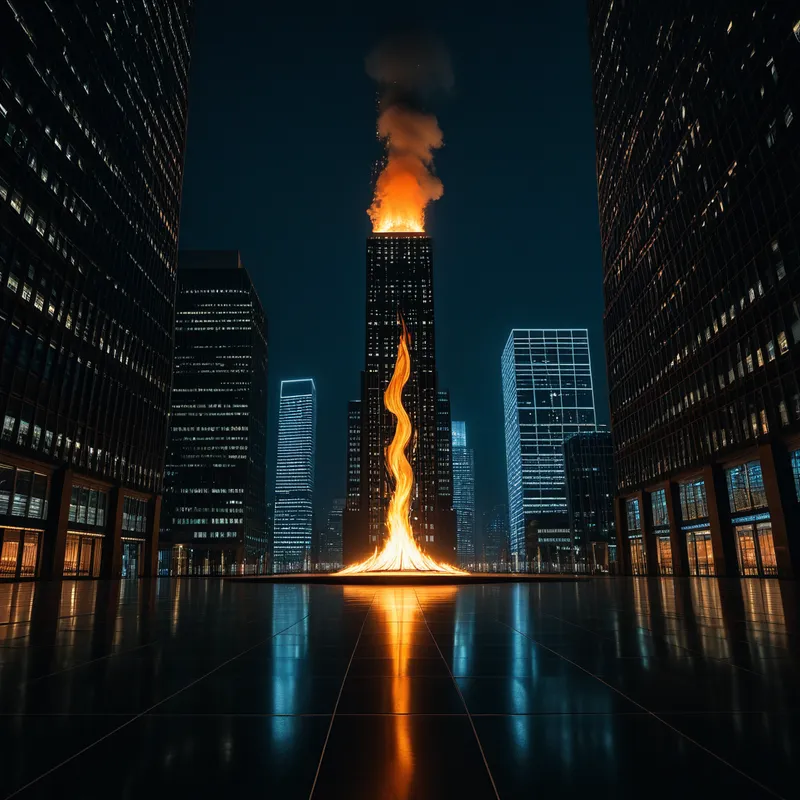
The individuation process is not only a heroic journey into the unknown; it is equally the solemn, patient work of building and maintaining the inner Prytaneion. The alchemical rubedo stage—the reddening, the infusion of soul—is mirrored in the kindling and sustaining of the sacred hearth.
First, one must consecrate the center: identify what is truly sacred and central to the Self, beyond the ego’s whims. This is the prima materia of identity. Then comes the ignition: the conscious commitment to that central value, the striking of the spark that initiates the opus. The long, often tedious work of tending follows—the daily, weekly, yearly rituals of self-care, reflection, and realignment that feed the flame. This is the solutio and coagulatio in endless cycle, dissolving rigidities in the fire’s heat and reforming them in its light.
The ultimate alchemical gold is not a trophy to be won, but a warmth to be maintained—a sustained state of inner civilization.
Finally, the work of hospitality begins: the ability to host and integrate the foreign, the shadowy, the “other” parts of oneself at this inner hearth, transforming them through the warmth of conscious acceptance. The individual who has successfully built their inner Prytaneion does not rule a tyrannical psyche, but governs a cosmos—an ordered, warmed, and hospitable world within, whose central fire nourishes their entire being and radiates, quietly but unmistakably, into the world. They have moved from being a subject of chaos to being the steward of their own sacred, unquenchable flame.
Associated Symbols
Explore related symbols from the CaleaDream lexicon: