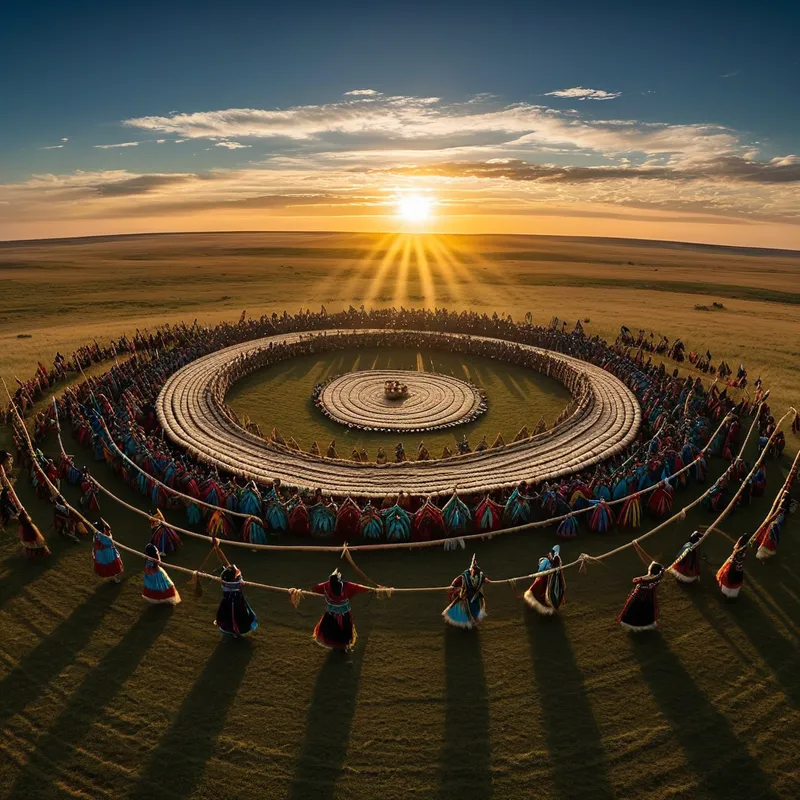
The Powwow Myth Meaning & Symbolism
A sacred gathering where drum, dance, and prayer weave the world back together, healing the rift between the people and the spirit of the land.
The Tale of The Powwow
Listen. Can you hear it? Not with your ears, but with the bone at the base of your spine. A deep, resonant thrum, steady as a heartbeat, older than memory. It begins in the silence, when the world has grown thin. The people are scattered, their songs forgotten, their connections to the land frayed like old sinew. A great forgetting has settled over them. The animals grow wary, the plants withhold their medicine, and the very air feels empty, a hollow between breaths.
In this time of quiet despair, a call is felt, not heard. It pulls at the spirit. From isolated lodges and lonely trails, they come. The weary hunter whose prayers find no echo. The grieving mother whose tears water only dust. The restless youth who knows the names of everything but feels the meaning of nothing. They are drawn to a chosen place, a clearing beneath the watching sky. No one commands it; the need itself is the summons.
As the first star pierces the twilight, the fire is lit. Its light is a promise. The drummers gather around the great Grandfather Drum. Hands, calloused and gentle, take up the padded beaters. They do not begin a song; they awaken one. Boom… boom… boom… The sound is not loud, but immense. It vibrates in the chest, shakes the dew from the grass. It is the heartbeat of the earth, remembered.
And then, the dancers emerge. Not as performers, but as prayers in motion. Each step is a word. The jingle of a dress is a sentence of healing. The sway of an eagle feather is a paragraph of honor. They move in a circle, the sacred hoop that has no end and no beginning. The Fancy Dancer becomes a whirlwind of color and energy, a celebration of life’s fierce joy. The Traditional Dancer moves with deliberate grace, each footfall a story of the hunt, the harvest, the journey. The Grass Dancer, with flowing fringes, mimics the whispering prairie, becoming the land itself.
All night, the circle turns. The drum is the pulse, the dancers are the blood. The forgotten songs rise from the throats of the singers, weaving through the drumbeats, climbing into the night. With every circuit, the frayed threads are gathered. The grief of the mother is carried by the circle, shared, and softened. The loneliness of the hunter is met by the solidarity of the beat. The confusion of the youth finds direction in the ancient patterns of the feet.
As dawn bleeds into the east, a change is felt. The air is no longer hollow; it is thick with presence. The people are no longer scattered individuals, but a single, breathing entity. They have not just watched a ceremony; they have become the ceremony. The powwow is not something they did; it is something that happened through them. The world, for this moment, is whole again. The heartbeat has been restored.
Cultural Origins & Context
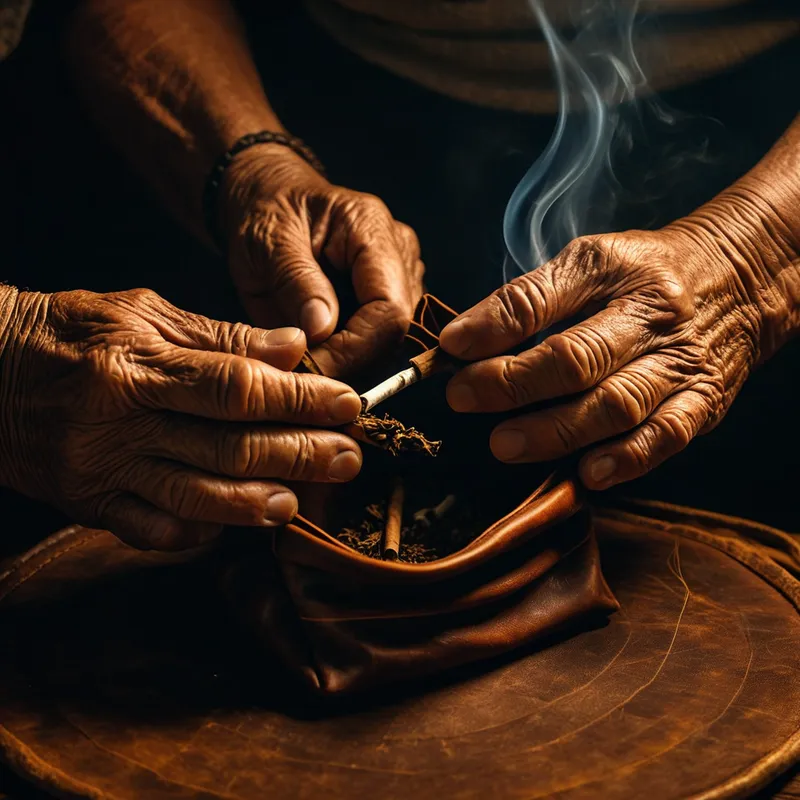
The term Powwow finds its roots in the Algonquian languages, originally referring to a gathering of spiritual leaders for healing, divination, or council. Far from the modern pan-tribal celebration and competition often seen today, its deepest origins lie in sacred, community-specific ceremonies of renewal. These gatherings were the social and spiritual immune system of the people.
The mythos of the powwow as a restorative, world-making event was not a single story told by a single bard, but a living narrative enacted and reaffirmed through practice. It was passed down not merely in words, but in the muscle memory of the dance steps, the vocal patterns of the songs, and the protocols of the drum. Elders and medicine people were the custodians of its deeper meaning, teaching that the circle of the dance ground was a microcosm of the cosmos, and the act of gathering in a good way was an act of cosmic maintenance.
Its societal function was multifaceted: it was a healing clinic for the soul, a court for resolving disputes, a school for transmitting cultural knowledge, and a strategic council for the community’s future. Most profoundly, it was a ritual of remembering—remembering kinship, remembering obligations to the land and the ancestors, remembering one’s place within the sacred hoop of life.
Symbolic Architecture
At its core, the myth of the Powwow is a masterful symbolic blueprint for the repair of a fractured world, both outer and inner. The central symbols form a potent architecture of integration.
The Circle is the primary symbol. It represents the Sacred Hoop, the cycles of nature, and the egalitarian unity of the community. There is no hierarchy in the circle; all are equally part of the circumference, facing the central fire and drum. Psychologically, it symbolizes the goal of individuation: a unified, whole Self where all parts are acknowledged and integrated.
The drum is the heart that remembers the rhythm when the mind has forgotten the song.
The Drum is the heartbeat. It is the auditory anchor, the constant, unifying pulse that synchronizes the individual dancers into a collective body. It represents the foundational, often unconscious, rhythm of life and instinct. In a state of psychic fragmentation, this inner rhythm is lost. The drum in the myth calls it back, providing the steady ground upon which the complex melody of the individual psyche can safely dance again.
The Dance is the embodied prayer. Each style and regalia tells a story, externalizing an inner state—grief, petition, celebration, honor. The dance translates spirit into motion, thought into action. It symbolizes the necessary expression required for healing; suffering held silently within fractures the soul, but suffering given form and movement in a supportive container can be transformed.
The Dreamer’s Resonance
When the imagery and essence of the Powwow arise in modern dreams, it signals a profound process of psychic re-membering at work. The dreamer is not merely recalling a cultural event; their unconscious is utilizing its deep symbolic logic.
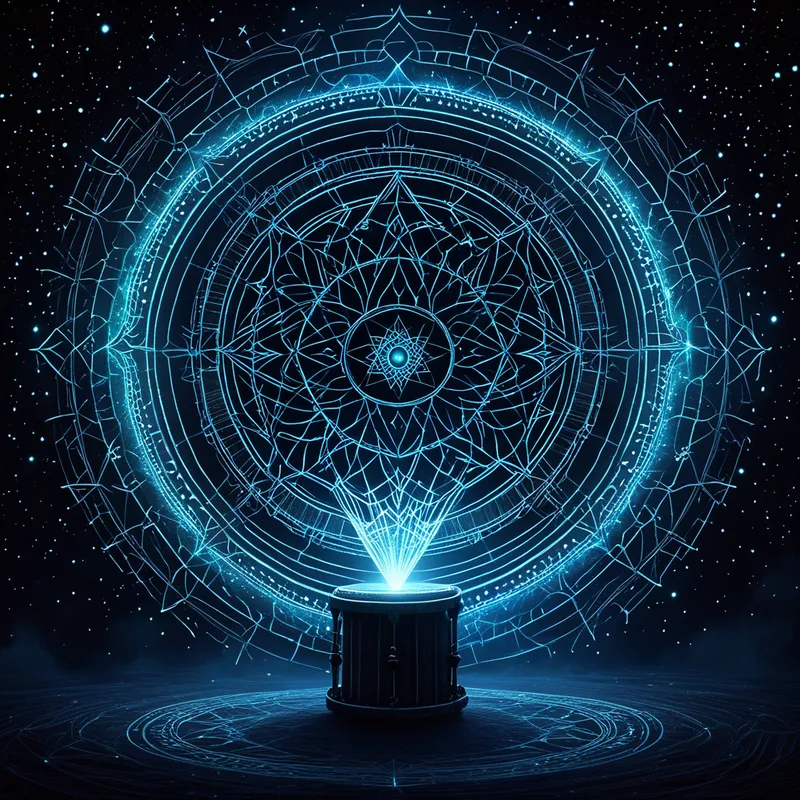
To dream of hearing a distant, compelling drum may indicate the dreamer’s deep Self is calling fragmented parts of the personality to gather. A dream of standing outside a vibrant dance circle, feeling longing but unable to enter, often mirrors a waking-life sense of isolation, disconnection from one’s community or authentic self. The circle represents the integrated psyche, and the dreamer’s position reveals their perceived relationship to wholeness.
Dreams of dancing in the circle, especially if the dreamer feels the synchronization of their movements with the drum, suggest an active, somatic process of integration is underway. The body itself is working to heal a mind-body split. Conversely, dreaming of a drum falling silent or a circle breaking apart can be a powerful warning from the unconscious of impending burnout, communal breakdown, or a loss of vital life-rhythm. The somatic sensation is key: the vibrational feeling of the drum in the dream body points directly to the need to reconnect with one’s core vitality and instinctual ground.
Alchemical Translation
The myth of the Powwow provides a timeless alchemical recipe for psychic transmutation. Its stages map directly onto the Jungian process of individuation.
First, The Recognition of Scattering (Nigredo). The myth begins with “a great forgetting,” a state of depression, alienation, and loss of meaning. This is the necessary dark night, the massa confusa, where one admits the psyche is fractured.
Second, The Call to the Center (The Coniunctio). The pull to the gathering is the ego’s acquiescence to the Self’s guidance. The chosen clearing is the temenos, the sacred space of the therapeutic container or the intentional inner work, where transformation is safe to occur.
Healing is not a solitary act of will, but a communal rhythm remembered by the soul.
Third, The Activation of the Pulse (The Heartbeat). The drumming represents the re-establishment of connection to the primal, instinctual layer of the psyche—the animating force. In modern terms, this is reconnecting with the body through breath, rhythm, or somatic practice, creating the stable ground for change.
Fourth, The Embodied Expression (The Dance). This is the core of the alchemical work. Each dance style represents a different complex or archetype being brought into the light of consciousness and given respectful expression. The “Fancy Dancer” might be the repressed joy or creativity; the “Traditional” dancer, the connection to heritage and personal history; the “Grass Dancer,” the need for grounding and humility.
Finally, The Restoration of the Hoop (The Lapis). The dawn wholeness is the achieved state of integration. The individual has not become perfect, but they have become connected. The inner community of the psyche is in communication, dancing to the same rhythm. The modern individual’s “powwow” is any sustained practice that regularly gathers their scattered parts—through therapy, artistic creation, ritual, or deep community engagement—and, through a shared, respectful rhythm, weaves them back into a living, breathing whole.
Associated Symbols
Explore related symbols from the CaleaDream lexicon: