The Porcelain Pagoda Myth Meaning & Symbolism
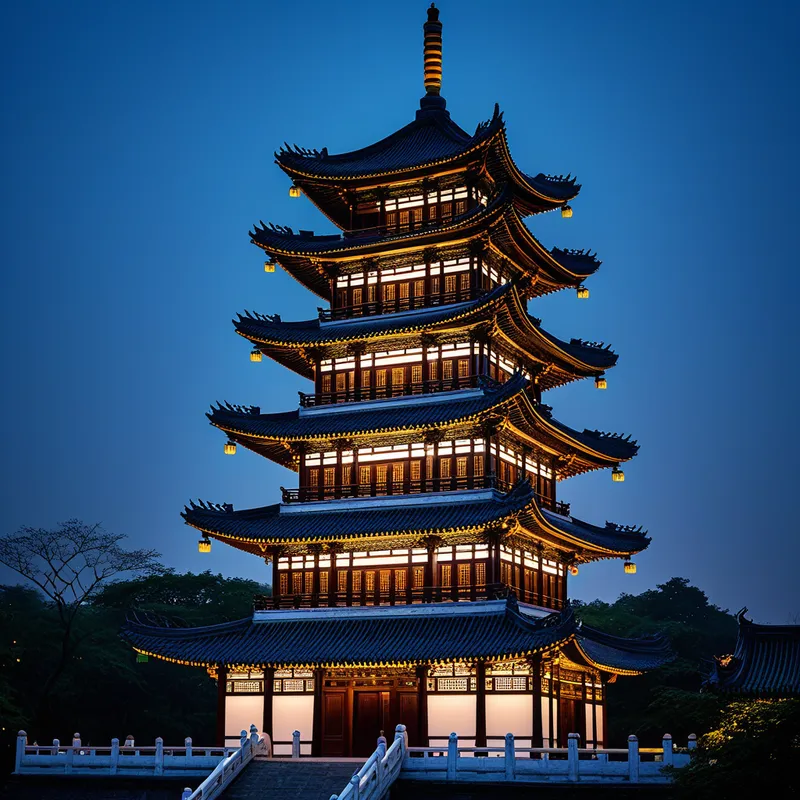
A celestial artisan descends to build a pagoda of luminous porcelain, a perfect vessel for the human spirit, testing the resolve of a mortal guardian.
The Tale of The Porcelain Pagoda
Listen, and let the mists of time part. In the days when dragons still traced [the river](/myths/the-river “Myth from Buddhist culture.”/)’s path and the emperor’s virtue was the measure of heaven’s favor, there arose a longing in the heart of a great city. Nanjing, the southern capital, thrived with commerce and scholarship, yet its skyline was earthbound, its spirit yearning for a bridge to the celestial realms.
The answer came not with fanfare, but with a whisper on [the wind](/myths/the-wind “Myth from Various culture.”/). A figure appeared at the city’s edge, a man of serene countenance yet eyes that held the depth of star-filled nights. He carried no tools, only a small, unadorned sack. To the city magistrates, he offered a vision: a pagoda unlike any other. Not of wood, which burns, nor of stone, which crumbles, but of [porcelain](/myths/porcelain “Myth from Chinese culture.”/), fired in the kiln of divine intention. It would be a beacon, he said, a vessel to catch the prayers of the people and reflect them, purified, back to heaven.
Skepticism turned to awe as the work began. The artisan, whom some called [Lu Ban](/myths/lu-ban “Myth from Chinese culture.”/) returned, and others a wandering xian, did not quarry or hew. From his sack, he drew clay of impossible purity, white as the first snow on Jade Mountain. He mixed it not with [water](/myths/water “Myth from Chinese culture.”/), but with the last light of the setting sun and the first dew of dawn. His kiln was a trench dug into [the earth](/myths/the-earth “Myth from Hindu culture.”/), but its fire was said to be borrowed from the forge of the [Jade Emperor](/myths/jade-emperor “Myth from Chinese culture.”/) himself.
Tile by luminous tile, the structure rose. Each piece was a masterpiece, glazed in colors stolen from peacock feathers and twilight skies. By day, it stood serene and majestic. But by night… by night, the Porcelain Pagoda came alive. One hundred and forty-four porcelain lanterns, hung from every eave, would be lit, and the entire tower would become a luminous spine of light, a radiant needle stitching the earthly city to the embroidered cloak of heaven. The sound was its soul—bells of the finest ceramic, tuned to the harmonies of the seasons, chimed with every breeze, weaving a music that settled the heart and clarified the mind.
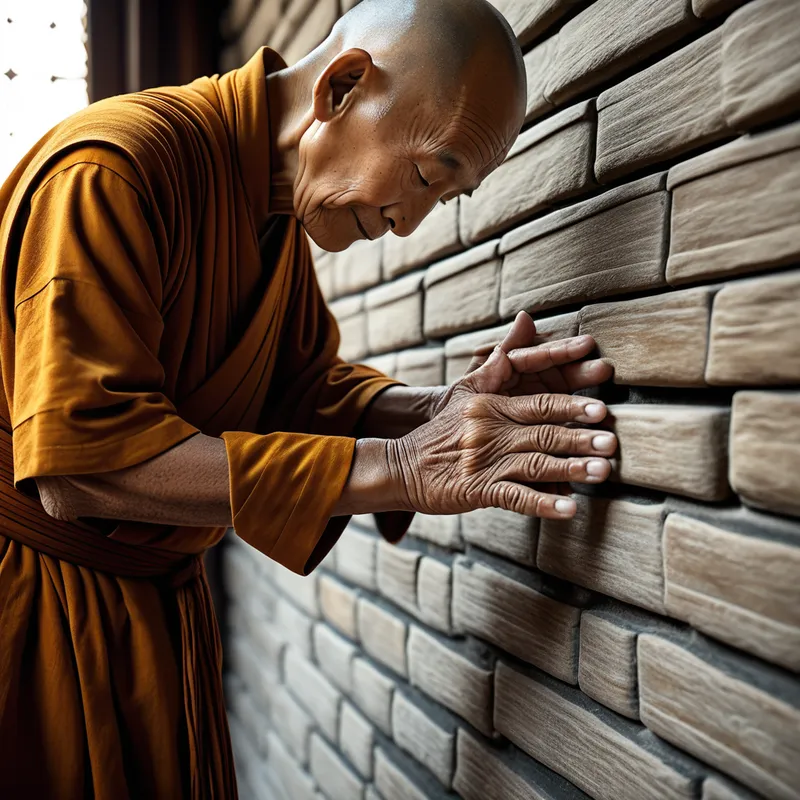
Yet, perfection born of heaven is a fragile guest in the realm of men. The artisan, his work complete, entrusted the pagoda’s care to a humble monk named Zhi Guang. “Its strength,” the artisan whispered, “is not in its resistance, but in its resonance. Guard its silence, tend its light, and it will guard the soul of this place.” With that, he was gone, as quietly as he had come.
For generations, the pagoda stood. It witnessed dynasties rise and fall, surviving wars and upheavals, a testament to the covenant between divine inspiration and human stewardship. Its light was a constant, a promise that beauty and spirit could, indeed, be made manifest and endure. The tale tells that so long as its chimes rang clear, the city’s heart remained uncorrupted, its people connected to something greater than themselves. It was not a fortress, but a vessel—the most beautiful, most fragile, and most resilient [thing](/myths/thing “Myth from Norse culture.”/) ever built.
Cultural Origins & Context
The legend of the Porcelain Pagoda, often associated with the real-life Dabao’en Temple pagoda, is a fascinating blend of historical marvel and mythic aspiration. While an actual magnificent porcelain-clad pagoda was built in Nanjing during the Ming Dynasty, the myth elevates this architectural wonder into the realm of sacred narrative. It was a story told by scholars to illustrate the heights of human culture, by monks to symbolize the enlightened mind (a vessel of pure consciousness), and by common folk as a source of local pride and cosmic comfort.
Its societal function was multifaceted. It served as an etiological myth, explaining the existence of a seemingly impossible building. More profoundly, it modeled the ideal relationship between the transcendent and the mundane. The celestial artisan represents inspired genius or divine favor, while the mortal guardians represent the duty of culture—the careful, continuous preservation of beauty, tradition, and spiritual values. The pagoda itself became a axis mundi for the community, a physical and symbolic center that oriented their collective identity toward harmony, resilience, and celestial connection.
Symbolic Architecture
The [Porcelain](/symbols/porcelain “Symbol: A delicate, refined ceramic material symbolizing fragility, purity, and transformation through fire. Often represents beauty that requires careful handling.”/) [Pagoda](/symbols/pagoda “Symbol: A Pagoda symbolizes spiritual enlightenment, cultural heritage, and the reaching of higher consciousness, often serving as a meditation or worship space.”/) is not merely a building; it is a profound [symbol](/symbols/symbol “Symbol: A symbol can represent an idea, concept, or belief, serving as a powerful tool for communication and understanding.”/) of the individuated [psyche](/myths/psyche “Myth from Greek culture.”/). Porcelain itself is the key: a substance born of common [earth](/symbols/earth “Symbol: The symbol of Earth often represents grounding, stability, and the physical realm, embodying a connection to nature and the innate support it provides.”/), subjected to transformative fire, and emerging as something translucent, resonant, and of refined [beauty](/symbols/beauty “Symbol: This symbol embodies aesthetics, harmony, and the appreciation of life’s finer qualities.”/). It is strong yet famously fragile. This is the essence of the cultivated self.
The soul is not forged like iron, to be hard and unyielding. It is fired like porcelain, becoming a vessel that is fragile, beautiful, and resonant precisely because it has embraced its own potential for breakage.
The pagoda’s [structure](/symbols/structure “Symbol: Structure in dreams often symbolizes stability, organization, and the framework of one’s life, reflecting how one perceives their environment and personal life.”/)—tiered, ascending, housing light—maps the [journey](/symbols/journey “Symbol: A journey in dreams typically signifies adventure, growth, or a significant life transition.”/) of [consciousness](/symbols/consciousness “Symbol: Consciousness represents the state of awareness and perception, encompassing thoughts, feelings, and experiences.”/). Each [story](/symbols/story “Symbol: The symbol of ‘Story’ represents the narrative woven through our lives, embodying experiences, lessons, and emotions that shape our identities.”/) represents a stage of understanding, integrating the earthly with the spiritual. The lanterns are the individual facets of [awareness](/symbols/awareness “Symbol: Conscious perception of self, surroundings, or internal states. Often signifies awakening, insight, or heightened sensitivity.”/), and their collective glow is the illuminated Self. The [chimes](/symbols/chimes “Symbol: Chimes symbolize clarity, harmony, and the passage of time, often invoking reflection and contemplation.”/) represent the [authentic voice](/symbols/authentic-voice “Symbol: The ‘Authentic Voice’ symbolizes the true expression of self, encompassing personal beliefs, emotions, and individuality.”/) of this Self, which sounds only when moved by the winds of [life](/symbols/life “Symbol: The symbol of ‘Life’ represents a journey of growth, interconnectedness, and existential meaning, encompassing both the joys and challenges that define human experience.”/) and [spirit](/symbols/spirit “Symbol: Spirit symbolizes the essence of life, vitality, and the spiritual journey of the individual.”/), not by forced [effort](/symbols/effort “Symbol: Effort signifies the physical, mental, and emotional energy invested toward achieving goals and personal growth.”/). The myth warns that this achieved state is not a permanent [fortress](/symbols/fortress “Symbol: A fortress symbolizes security and protection, representing both physical and psychological safety from external threats.”/). It is a dynamic, living [achievement](/symbols/achievement “Symbol: Symbolizes success, mastery, or reaching a goal, often reflecting personal validation, social recognition, or overcoming challenges.”/) that requires vigilant guardianship (the conscious ego) against the inner and outer forces of [entropy](/symbols/entropy “Symbol: In arts and music, entropy represents the inevitable decay of order into chaos, often symbolizing creative destruction, impermanence, and the natural progression toward disorder.”/) and corruption.
The Dreamer’s Resonance
When the image of the Porcelain Pagoda arises in modern dreams, it signals a profound process of psychic construction and integration. The dreamer is likely in a phase of synthesizing their experiences, values, and insights into a coherent inner structure—a sense of self that feels authentic and luminous.
To dream of building the pagoda suggests active individuation: carefully crafting one’s identity with conscious intention. Dreaming of seeing it glow from afar indicates aspiration and the recognition of one’s own highest potential. More poignant are dreams where the pagoda is cracked, darkened, or silent. This is not necessarily nightmare material, but shadow-work. It points to a perceived flaw in one’s self-concept, a period where [inner light](/myths/inner-light “Myth from Buddhist culture.”/) feels inaccessible, or a loss of one’s authentic voice. The somatic sensation here is often one of delicate vulnerability, a fear that one’s hard-won wholeness is perilously thin. The dream asks: what part of your inner guardian—your attention, your self-care, your values—have you neglected?

Alchemical Translation
The myth’s alchemical process is a masterclass in psychic transmutation. The base material (common clay, the unconscious, raw potential) is gathered. The [prima materia](/myths/prima-materia “Myth from Alchemical culture.”/) is then mixed with transcendent elements (sunset light, dawn dew)—the infusion of meaning, insight, and spirit into one’s life experiences. This mixture is subjected to the ignis divinus, the divine fire of ordeal, passion, and profound engagement with life. This is the kiln. Without this fire, the clay remains mud. With it, the substance is transmuted into porcelain—the conscious personality.
Individuation is the art of becoming a vessel. The goal is not to become a solid, impenetrable statue, but a container that can hold both shadow and light, and through its very fragility, resonate with the music of the world.
The final, crucial stage is the guardianship. The alchemical work is never truly “finished.” The gleaming [lapis philosophorum](/myths/lapis-philosophorum “Myth from Alchemical culture.”/) ([the Philosopher’s Stone](/myths/the-philosophers-stone “Myth from Alchemical culture.”/)), represented by the completed pagoda, must be integrated into the flow of daily life. It must be polished (self-reflection), its lights maintained (consciousness kept alive), and its chimes allowed to sound (authentic expression). For the modern individual, this translates to the ongoing practice of tending to one’s psychological and spiritual health, protecting one’s values in a corrosive world, and having the courage to let one’s true nature be seen and heard, in all its resonant, fragile beauty. The myth assures us that such a creation, though it may seem impossibly delicate, can withstand the ages—not because it is hard, but because it is true.
Associated Symbols
Explore related symbols from the CaleaDream lexicon: