The Pit Myth Meaning & Symbolism
A myth of a soul's harrowing descent into a chasm of despair, confronting its own shadow before a glimmer of grace offers a path back to the light.
The Tale of The Pit
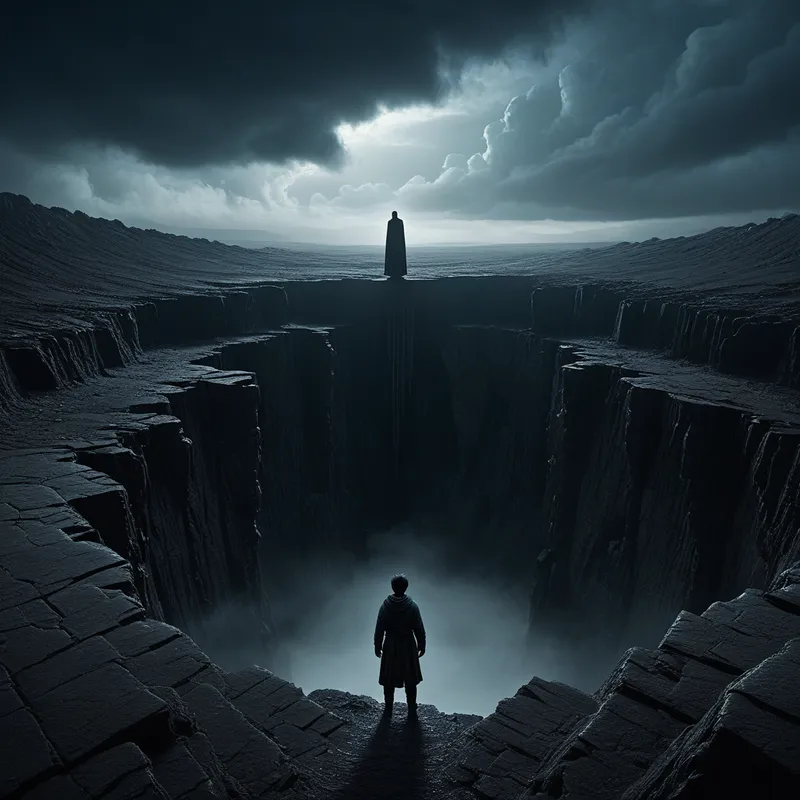
Listen, and hear a tale not of light, but of the dark that gives light its name. It begins not in a garden, but in a wasteland of the soul. The sun is a memory, [the sky](/myths/the-sky “Myth from Persian culture.”/) a lid of lead. Here walks a figure—call him the Wayfarer. His feet are heavy with the dust of failures, his heart a cold stone of regret. He has wandered far from [the hearth](/myths/the-hearth “Myth from Norse culture.”/)-fires of community and the clear streams of grace.
He comes to a place where [the earth](/myths/the-earth “Myth from Hindu culture.”/) itself has given up. Before him yawns The Pit. It is not a mere hole, but a throat of [the world](/myths/the-world “Myth from Tarot culture.”/), a silence so deep it swallows sound. Its edges crumble like stale bread. There is no beast to guard it, only the sheer, inviting terror of [the fall](/myths/the-fall “Myth from Biblical culture.”/). This is the destination he has been seeking without knowing it—the end of all horizontal wandering.
A wind, cold and scentless, rises from the depths. It is not a push, but a pull. A call. In that moment, the last thread of his own will snaps. He does not leap; he yields. And he falls.
The fall is forever and an instant. There is no sky, no walls, only the rushing void. Then, impact—a shock that is less physical and more of the spirit, a crushing realization of finality. He is in the belly of the earth, in the absolute dark. The air is thick, tasting of damp stone and forgotten things. This is the Abandonment.
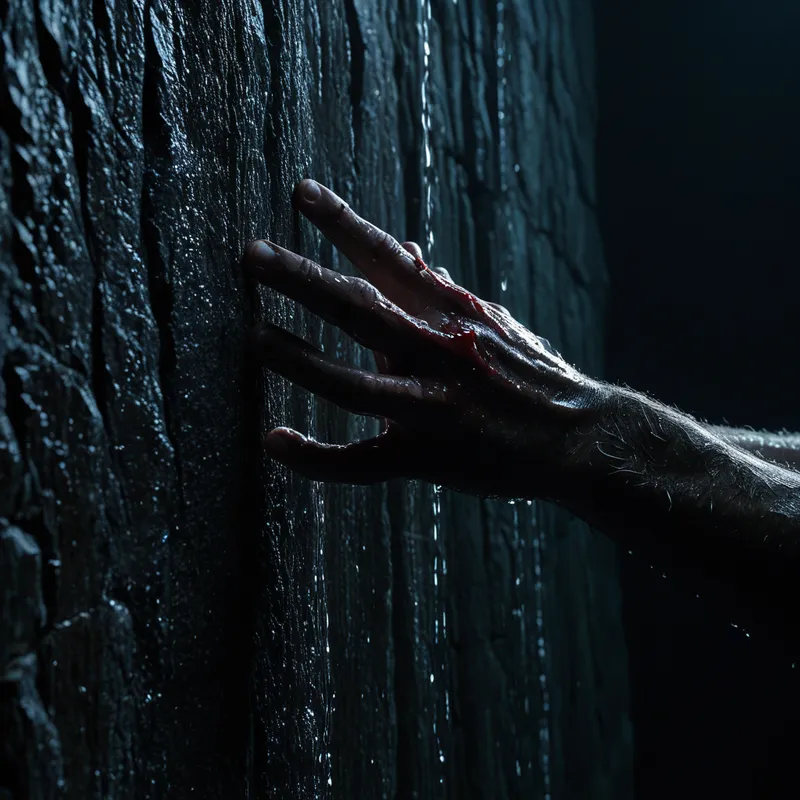
Time unravels. He screams, but the darkness drinks the sound. He claws at the unseen walls, and his fingers find only smooth, unyielding stone, carved by no human hand, curving in on itself in a perfect, terrible geometry. This is his cell. This is his self. Here, in the absolute absence of God, of hope, of other, he meets the only presence left: the accumulated shadow of his own life. Every spiteful word, every cowardice, every broken promise takes form in the dark, not as monsters, but as truths. They whisper, not accusations, but simple, devastating facts. This is the Mirror of Black [Water](/myths/water “Myth from Chinese culture.”/).
He shatters. The [persona](/myths/persona “Myth from Greek culture.”/), the story he told himself of who he was, breaks like pottery on the stone floor. What remains is not a hero, but raw, terrified awareness—a naked soul sitting in its own filth.
And there, in the core of the ruin, at the hour when even despair grows tired, a change occurs. It is not a light. It is a subtle shift in the quality of the darkness itself. From a crushing weight, it becomes a presence. A silence that listens. In that listening, a memory surfaces—not of rescue, but of a voice, long ignored, speaking of a love that seeks the lost. A single, dry sob cracks from his chest. It is not a prayer of demand, but the first, authentic sound of [the self](/myths/the-self “Myth from Jungian culture.”/): a confession of utter poverty. “I am here.”
Then, the miracle. Not a ladder descending, not an angelic rescue. But a single, minute grain of phosphorescent stone in the wall before him, glowing with a soft, silver-blue light. It was always there. He had to be in the total dark to see it. By that faint glow, he sees another. And another. A trail, not leading up, but leading inward, following the curve of the Pit. He has no strength, but he begins to crawl. The path is the purpose. The light is not the end of the dark, but its meaning.
Cultural Origins & Context
The myth of The Pit is woven deeply into the fabric of Christian narrative and ascetic tradition. It finds its most potent scriptural echoes in the Psalms of Descent (“Out of the depths I cry to you, O Lord…”) and the harrowing imagery of [the Prophets](/myths/the-prophets “Myth from Biblical culture.”/). It is not a single story but a pervasive motif—the dungeon, the cistern, the belly of the whale, [the desert](/myths/the-desert “Myth from Biblical culture.”/), the tomb.
This myth was carried and crystallized not primarily by theologians in bright halls, but by [the Desert Fathers](/myths/the-desert-fathers “Myth from Christian culture.”/) and Mothers of the 4th century, the mystics of the Dark Night, and in the folk traditions of pilgrimage. It was told to novices as a map of the spiritual journey. Its societal function was dual: for the community, it explained the transformative trials of its [saints](/myths/saints “Myth from Christian culture.”/) and prophets; for the individual, it provided a sacred container for experiences of profound depression, doubt, and existential crisis. It framed the soul’s darkest hour not as a failure of faith or a punishment, but as a necessary, if terrifying, stage of divine pedagogy—the via negativa, [the way](/myths/the-way “Myth from Taoist culture.”/) of negation.
Symbolic Architecture
The Pit is the ultimate [symbol](/symbols/symbol “Symbol: A symbol can represent an idea, concept, or belief, serving as a powerful tool for communication and understanding.”/) of [the ego](/myths/the-ego “Myth from Jungian culture.”/)‘s catastrophe. It represents the point where all our constructed identities, achievements, and spiritual pretensions collapse under their own [weight](/symbols/weight “Symbol: Weight symbolizes burdens, responsibilities, and emotional loads one carries in life.”/). It is not hell, which implies eternal [stasis](/symbols/stasis “Symbol: A state of inactivity, equilibrium, or suspension where no change or progress occurs, often representing psychological or existential paralysis.”/) and [punishment](/symbols/punishment “Symbol: A dream symbol representing consequences for actions, often tied to guilt, societal rules, or internal moral conflicts.”/), but a [purgatory](/myths/purgatory “Myth from Various culture.”/)—a place of active, agonizing purification.
The Pit is the womb of the true self, but to enter it feels like being swallowed by the grave.
The Wayfarer symbolizes the conscious [personality](/symbols/personality “Symbol: Personality in dreams often symbolizes the traits and characteristics of the dreamer, reflecting how they perceive themselves and how they believe they are perceived by others.”/) that has become estranged from the Self. His fall is not a moral failure, but an involuntary descent of [consciousness](/symbols/consciousness “Symbol: Consciousness represents the state of awareness and perception, encompassing thoughts, feelings, and experiences.”/) into the unconscious. The smooth, unyielding walls represent the inescapability of one’s own psychic [reality](/symbols/reality “Symbol: Reality signifies the state of existence and perception, often reflecting one’s understanding of truth and life experiences.”/). You cannot reason or fight your way out of the Pit; you must undergo it.
The faint, self-illuminating stones are the crucial symbol. They represent the first, fragile intimations of the Self—the inner guiding principle—appearing precisely when the ego has relinquished control. They do not offer escape, but a [path](/symbols/path “Symbol: The ‘path’ symbolizes a journey, choices, and the direction one’s life is taking, often representing individual growth and exploration.”/) through. The [direction](/symbols/direction “Symbol: Direction in dreams often relates to life choices, guidance, and the path one is following, emphasizing the importance of navigation in personal journeys.”/) [inward](/symbols/inward “Symbol: A journey toward self-awareness, introspection, and the exploration of one’s inner world, thoughts, and unconscious mind.”/), following the curve, suggests that [redemption](/symbols/redemption “Symbol: A theme in arts and music representing transformation from failure or sin to salvation, often through creative expression or cathartic performance.”/) is found not by fleeing the [depths](/symbols/depths “Symbol: Represents the subconscious, hidden emotions, or foundational aspects of the self, often linked to primal fears or profound truths.”/), but by circling ever closer to the center of one’s own wound.
The Dreamer’s Resonance
When this myth stirs in the modern dreamer, it announces a profound psychological initiation. Dreams of falling into abysses, being trapped in basements, elevators plunging, or being buried alive are its signature.
Somatically, this often correlates with periods of depression, burnout, or a life crisis that renders previous goals meaningless. Psychologically, the dreamer is experiencing an enantiodromia—a swing of the psychic pendulum into the opposite of their conscious attitude. The successful achiever dreams of bottomless pits; the caring caregiver dreams of being alone in a dark cell. The [psyche](/myths/psyche “Myth from Greek culture.”/) is forcing a confrontation with all that has been excluded, neglected, or repressed to maintain the conscious persona.
The process is one of ego dissolution. The dreamer is not having a nightmare about an external threat, but participating in a sacred drama of disintegration. The terror is real, but it is the terror of the seed casing breaking open. The dream is the psyche’s way of building a vessel strong enough to hold this potentially shattering, yet ultimately transformative, experience.
Alchemical Translation
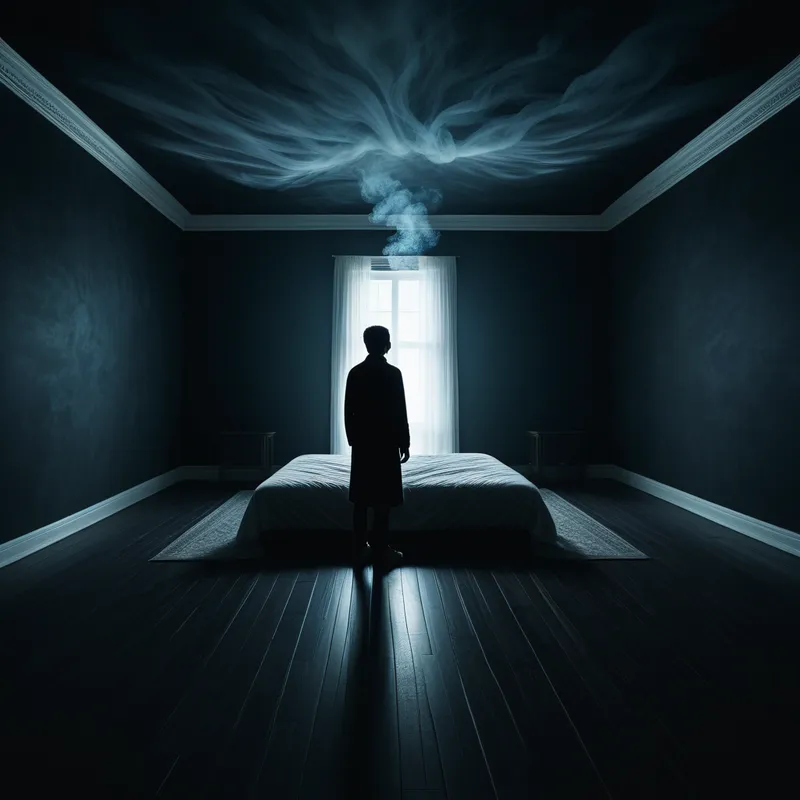
In the alchemy of the soul, The Pit corresponds to the stage of [nigredo](/myths/nigredo “Myth from Alchemical culture.”/). It is the necessary first matter, the chaos, the putrefaction. The conscious ego (the lead) must be broken down into its black, [prima materia](/myths/prima-materia “Myth from Alchemical culture.”/) before the work of transmutation into gold can begin.
The triumph of the myth is not in escaping the dark, but in discovering that the dark itself is a form of knowing.
The modern individual’s “Pit” might be a devastating loss, a failure of identity (divorce, career collapse), or a sudden, unbearable confrontation with mortality or meaninglessness. The alchemical instruction of the myth is clear: Do not spiritualize the pain away. Do not seek immediate rescue. The task is to consent to the fall, to sit in the solitude of the Pit, and to allow the false self to be deconstructed by the truths that live there.
The crawling, not the climbing, is the model for psychic transmutation. It is a movement of humble, bodily attention—feeling your way forward by the faint, [inner light](/myths/inner-light “Myth from Buddhist culture.”/) of genuine feeling, intuition, or memory that surfaces when striving ceases. This slow, circumferential journey inward is the path of individuation. You integrate your shadow not by analyzing it from above, but by living with it in the dark, until you realize it is not a monster to be slain, but a lost part of your own soul, waiting to be acknowledged. The Pit, in the end, is not your prison, but the sacred ground where your wholeness is forged. You descend not to be punished, but to be made real.
Associated Symbols
Explore related symbols from the CaleaDream lexicon: