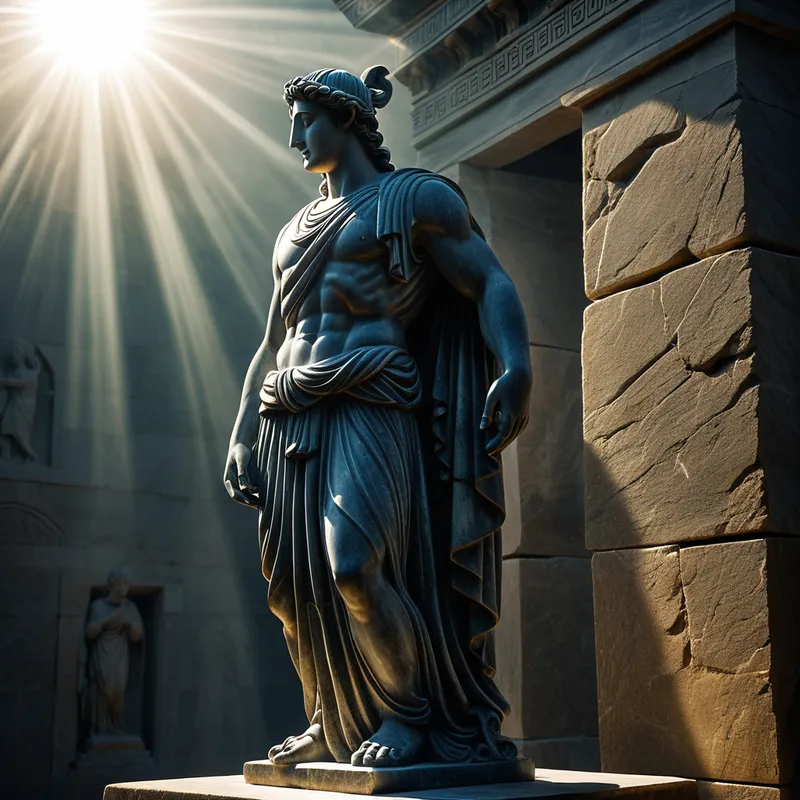
The Persona and Shadow Myth Meaning & Symbolism
A myth of the conscious mask and the repressed self, locked in a dance of denial and integration within the psyche's hidden theater.
The Tale of The Persona and Shadow
Listen, and I will tell you of the two who dwell in the house of [the self](/myths/the-self “Myth from Jungian culture.”/). This is not a tale of distant lands, but of the inner kingdom, a realm as vast and uncharted as any ocean.
In the bright, upper chambers of this kingdom lived the [Persona](/myths/persona “Myth from Greek culture.”/). Crafted from the polished silver of social expectation and the fine linen of duty, it was a being of impeccable form. Each morning, it would stand before [the mirror](/myths/the-mirror “Myth from Various culture.”/) of consciousness, selecting a face for the day—the face of the competent worker, the devoted partner, the agreeable friend. Its movements were a dance of perfect grace, its words a melody tuned to the ears of [the world](/myths/the-world “Myth from Tarot culture.”/). The [Persona](/myths/persona “Myth from Greek culture.”/) lived in the sunlight, adored by the crowds in the marketplace of society, believing its polished masks to be its true skin. It thought itself the sole ruler of the house.
But deep below, in the forgotten cellars and locked rooms where the light never reached, dwelled its twin, the Shadow. [The Shadow](/myths/the-shadow “Myth from Jungian culture.”/) was everything the Persona was not. It was formless, a shifting mass of raw impulse, forgotten anger, shameful desire, and untamed creativity. It spoke in growls and whispers, not in polite conversation. It remembered every slight the Persona had smiled through, every passion it had denied, every tear it had swallowed. The Shadow was not evil, but it was whole in its chaos, a reservoir of un-lived life.
For a long age, the Persona pretended the cellar did not exist. It placed heavy stones of willpower over the trapdoor and played its music louder to drown out the thumping from below. But a house divided cannot stand. The ignored Shadow grew restless. It began to seep through the cracks—as a sudden, inexplicable rage at a minor inconvenience, a shocking dream of wild freedom, a bitter remark that slipped out unbidden. The Persona would hastily plaster over these breaches, its smile tightening.
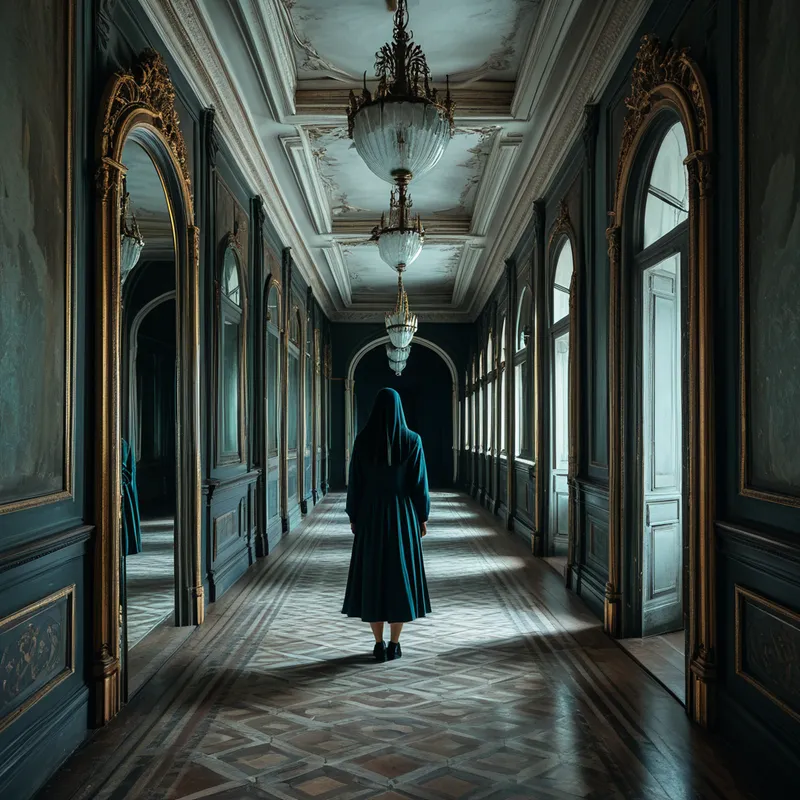
The crisis came on a night of silent thunder. The Persona, weary from a day of endless agreement, stood in its hall of mirrors. For the first time, it saw not its chosen mask, but a flicker of the emptiness behind it. In that moment of doubt, the trapdoor shattered.
The Shadow erupted into the light. It was not a monster of claws and fangs, but something far more terrifying: a distorted mirror. It showed the Persona its own repressed envy, its hidden laziness, its secret arrogance—all the traits the Persona had cast down into the dark. “You are not whole!” the Shadow roared, its voice the sound of crumbling plaster. “You are a fragment, a lie! I am what you refuse to be!”
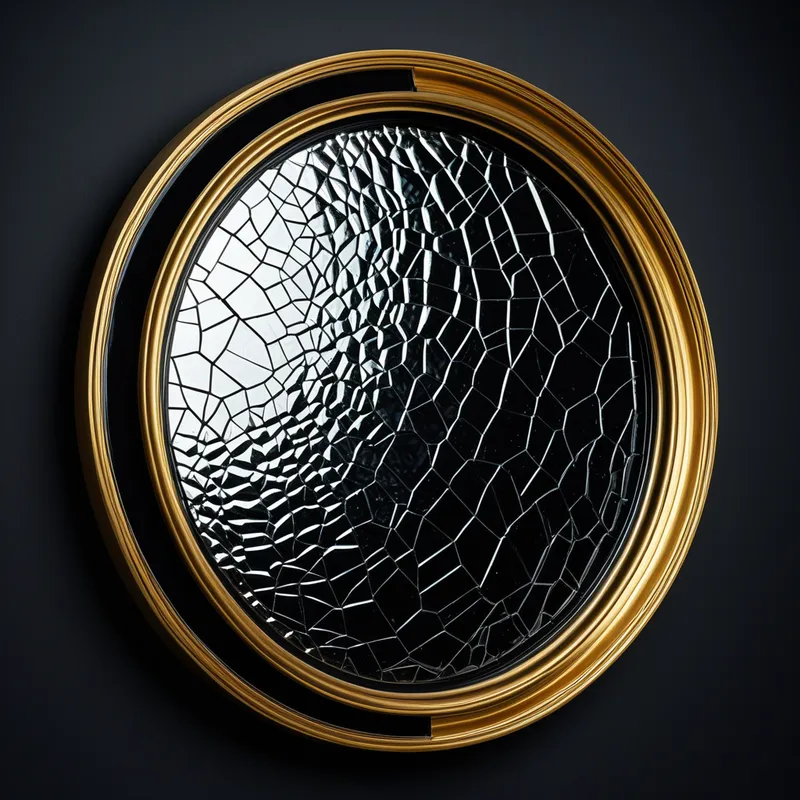
A battle ensued, but not of swords. It was a battle of recognition. The Persona fought with denial, with rationalization, shining the harsh light of judgment upon the Shadow. But the Shadow could not be dispelled by light; it was born of it, as its necessary counterpart. The struggle shook the very foundations of the house. Mirrors cracked, revealing not two, but a hundred fragmented selves.
Exhausted, the Persona fell. Its perfect mask cracked down the center. In the silence that followed, it did something it had never done: it looked, truly looked, at its twin. Not with judgment, but with a weary curiosity. It saw that the Shadow’s fury was also a form of grief—the grief of exile. And the Shadow, seen at last, ceased its raging. The confrontation ended not with a victor, but with a standstill, a breath held between two halves of a single breath.
The tale does not end with the Shadow’s destruction or the Persona’s [triumph](/myths/triumph “Myth from Roman culture.”/). It ends with the slow, painful, miraculous process of the two figures regarding one another in the rubble of the old house. The first word has been spoken in a conversation that will last a lifetime.
Cultural Origins & Context
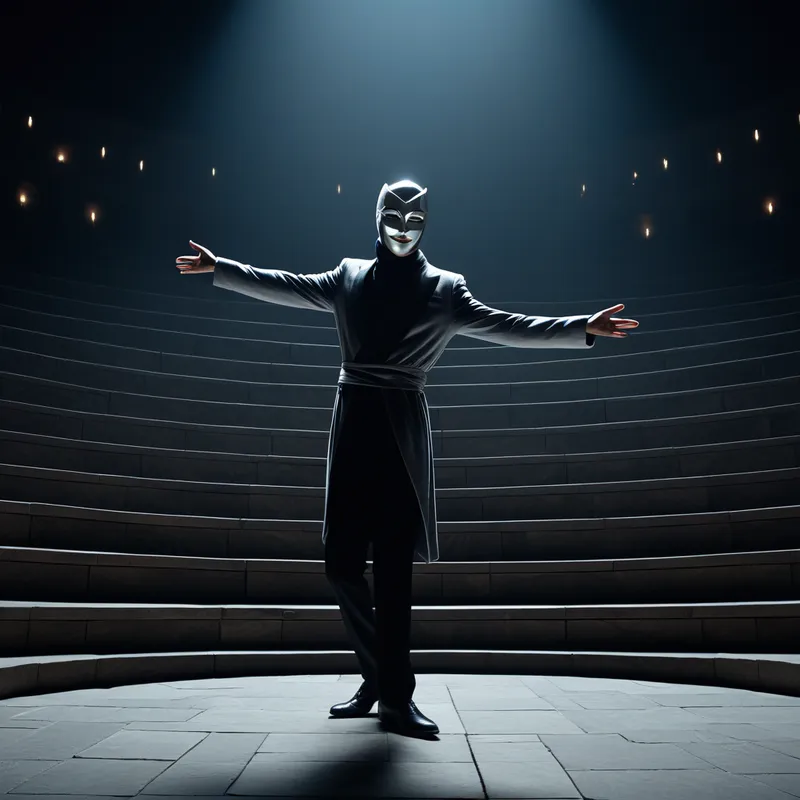
This is a “myth” of a different order. It does not hail from an ancient, polytheistic past but was midwifed into being in the consulting rooms and scholarly texts of the 20th century by the Swiss psychiatrist Carl Gustav Jung. The culture is “Jungian”—a culture of the [psyche](/myths/psyche “Myth from Greek culture.”/), passed down not through bardic song but through clinical case studies, the Amplification of dreams, and the lived experience of analysis.
Its primary storytellers were, and are, the analysts and their analysands. The myth is recounted in the vulnerable space of therapy, where a patient brings a dream of a frightening pursuer or an embarrassing social blunder. The analyst, acting as a modern-day shaman of the interior, helps to “tell the tale” by connecting these personal fragments to the universal drama of the Persona and Shadow. Its societal function is profoundly subversive: in a world increasingly obsessed with curated external images (a trend Jung foresaw), the myth serves as a crucial counter-narrative. It argues that psychological health and genuine individuality are found not in perfecting [the mask](/myths/the-mask “Myth from Various culture.”/), but in daring to acknowledge what the mask conceals.
Symbolic Architecture
The myth maps the fundamental [structure](/symbols/structure “Symbol: Structure in dreams often symbolizes stability, organization, and the framework of one’s life, reflecting how one perceives their environment and personal life.”/) of the conscious ego’s [relationship](/symbols/relationship “Symbol: A representation of connections we have with others in our lives, often reflecting our emotional state.”/) with [the personal unconscious](/myths/the-personal-unconscious “Myth from Jungian Psychology culture.”/). The [Persona](/symbols/persona “Symbol: The social mask or outward identity one presents to the world, often concealing the true self.”/) (from the Latin for “mask”) symbolizes the adaptive, necessary interface between the individual and the collective. It is not inherently false; it is the “[cloak](/symbols/cloak “Symbol: A garment that conceals identity, protects from elements, or signifies authority and transformation in dreams.”/) of compromise” we must wear to function socially. However, when over-identified with, it becomes a [prison](/symbols/prison “Symbol: Prison in dreams typically represents feelings of restriction, confinement, or a lack of freedom in one’s life or mind.”/) of [conformity](/symbols/conformity “Symbol: The act of adjusting one’s behavior, beliefs, or appearance to match those of a group or societal norms, often involving pressure to fit in.”/), severing us from our vital [depths](/symbols/depths “Symbol: Represents the subconscious, hidden emotions, or foundational aspects of the self, often linked to primal fears or profound truths.”/).
The Persona is the ship’s figurehead, carved and gilded for all to see, but it is not the engine room, the hold, or the dark, guiding compass below decks.
The [Shadow](/symbols/shadow “Symbol: The ‘shadow’ embodies the unconscious, repressed aspects of the self and often represents fears or hidden emotions.”/) is its symbolic counterpart. It represents everything in ourselves we deem incompatible with our conscious self-[image](/symbols/image “Symbol: An image represents perception, memories, and the visual narratives we create in our minds.”/)—not only “negative” traits like aggression or greed, but also positive, suppressed potentials like authentic power, artistic talent, or spontaneous joy. It is psychological refuse, but also a storehouse of unlived [life](/symbols/life “Symbol: The symbol of ‘Life’ represents a journey of growth, interconnectedness, and existential meaning, encompassing both the joys and challenges that define human experience.”/) and raw vitality.
To encounter the Shadow is to meet your own rejected biography. It holds the pages of your story you tried to tear out and burn.
Their conflict symbolizes [the ego](/myths/the-ego “Myth from Jungian culture.”/)‘s inevitable [crisis](/symbols/crisis “Symbol: A crisis symbolizes turmoil, urgent challenges, and the need for immediate resolution or change.”/) of [inflation](/symbols/inflation “Symbol: A dream symbol representing feelings of diminishing value, loss of control, or expansion beyond sustainable limits in one’s life or psyche.”/) (believing it is only the Persona) and the subsequent, painful correction. The [resolution](/symbols/resolution “Symbol: In arts and music, resolution refers to the movement from dissonance to consonance, creating a sense of completion, release, or finality in a composition.”/) is not annihilation, but the beginning of Individuation. The “[conversation](/symbols/conversation “Symbol: A conversation in a dream often symbolizes the need for communication and understanding, both with oneself and others.”/)” is the work of [integration](/symbols/integration “Symbol: The process of unifying disparate parts of the self or experience into a cohesive whole, often representing psychological wholeness or resolution of internal conflict.”/), where conscious [awareness](/symbols/awareness “Symbol: Conscious perception of self, surroundings, or internal states. Often signifies awakening, insight, or heightened sensitivity.”/) reclaims these disowned parts, not to act them out blindly, but to harness their [energy](/symbols/energy “Symbol: Energy symbolizes vitality, motivation, and the drive that fuels actions and ambitions.”/) and complete the self.
The Dreamer’s Resonance
When this myth stirs in the modern dreamer, it signals a critical moment of psychic rebalancing. The somatic experience is often one of pursuit, tension, or exposure. You may dream of being chased by a dark, faceless figure—the Shadow projected as an external threat. You may dream your teeth are falling out—a symbol of the Persona’s (your social presentation) crumbling integrity. You may find yourself naked in a public place, the ultimate exposure of what lies beneath the mask.
Psychologically, these dreams indicate that the ego’s current configuration is too narrow, too rigid. The unconscious is applying pressure, forcing a confrontation with material that demands acknowledgment. The dream is not an attack, but an attempt at communication from the exiled self. It is the psyche’s innate drive toward wholeness manifesting in the theater of the night, staging the ancient drama so the waking self might finally understand its lines.
Alchemical Translation
The myth of the Persona and Shadow is the foundational [prima materia](/myths/prima-materia “Myth from Alchemical culture.”/) of the alchemical opus of the soul, which Jung called Individuation. The initial state is one of naive identification with the Persona (identification). The confrontation is the [nigredo](/myths/nigredo “Myth from Alchemical culture.”/), the blackening—a descent into the darkness of self-doubt, confusion, and the painful realization of one’s own hypocrisy and fragmentation.
The first stage of the Work is not to build, but to dissolve. The gilded mask must tarnish before the true metal beneath can be felt.
The standoff between the two figures represents the crucial stage of confrontation and recognition. This is not intellectual understanding, but a visceral, often humiliating, experience of one’s own contradiction. The ego must surrender its claim to totality. This surrender is the alchemical mortificatio, a death of the old, inflated identity.
From this fertile decay emerges the possibility of integration. The Shadow’s contents are brought into the light of consciousness, not to be adopted wholesale, but to be examined, understood, and their energy assimilated. The aggressive impulse becomes the capacity for healthy boundaries. The hidden creativity finds disciplined expression. This is the albedo, the whitening, and the beginning of the coniunctio oppositorum—[the sacred marriage](/myths/the-sacred-marriage “Myth from Various culture.”/) of opposites within the psyche. The result is not a perfect, conflict-free self, but a more capacious, authentic, and resilient one. The Persona remains, but now as a flexible tool of relatedness, not a brittle shell of identity. The Shadow remains, but as a familiar, inner companion whose whispers are heard and considered, not feared and banished. The individual becomes, at last, the humble steward of their own complete and contradictory house.
Associated Symbols
Explore related symbols from the CaleaDream lexicon: