The Púca Myth Meaning & Symbolism
A Celtic shapeshifter of twilight and prophecy, the Púca embodies the wild, untamed psyche that offers both terror and profound transformation.
The Tale of The Púca
Listen, and let the fire grow low. The hour is neither day nor night, but the liminal breath between them. This is the hour of the Púca. It walks the borders: where the tended field meets the wild wood, where the cobbled lane dissolves into the trackless bog, where the last light of reason bleeds into the first ink of dream.
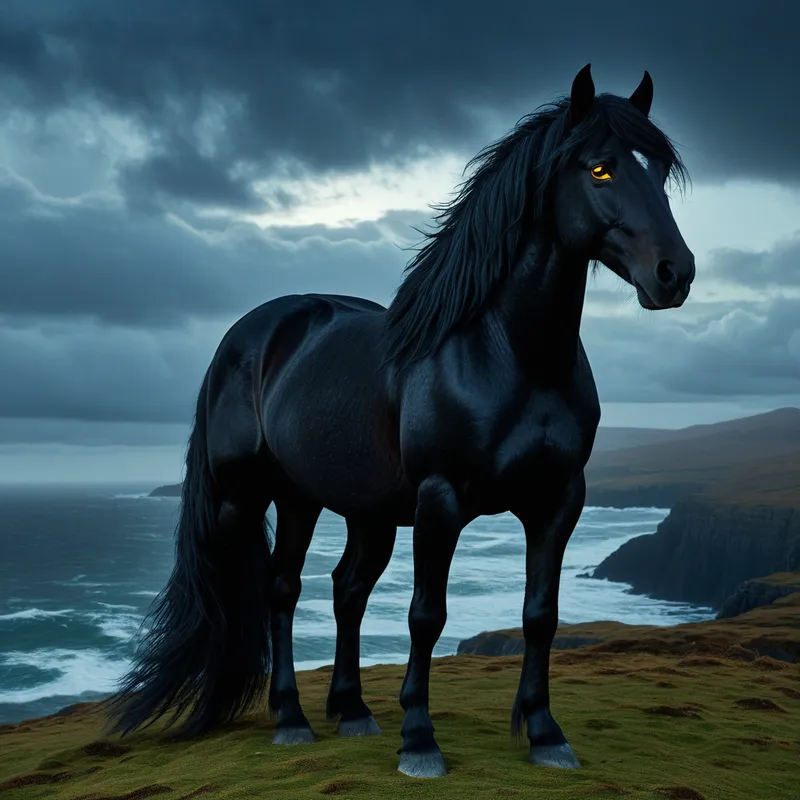
It is a creature of a thousand faces, yet it has but one soul. You may see it as a sleek black stallion, its coat like polished obsidian, eyes burning with a knowledge older than stone. It may stand silent on a hillock, daring you to mount. If you are brave or foolish enough to climb upon its back, it will not throw you. No, it will give you the ride of your life—a gallop that tears the veil from the world, showing you hidden springs and forgotten paths, before depositing you, breathless and changed, in a thorny ditch at dawn. It is a ride not of the body, but of the spirit, a shaking loose of all you thought was fixed.
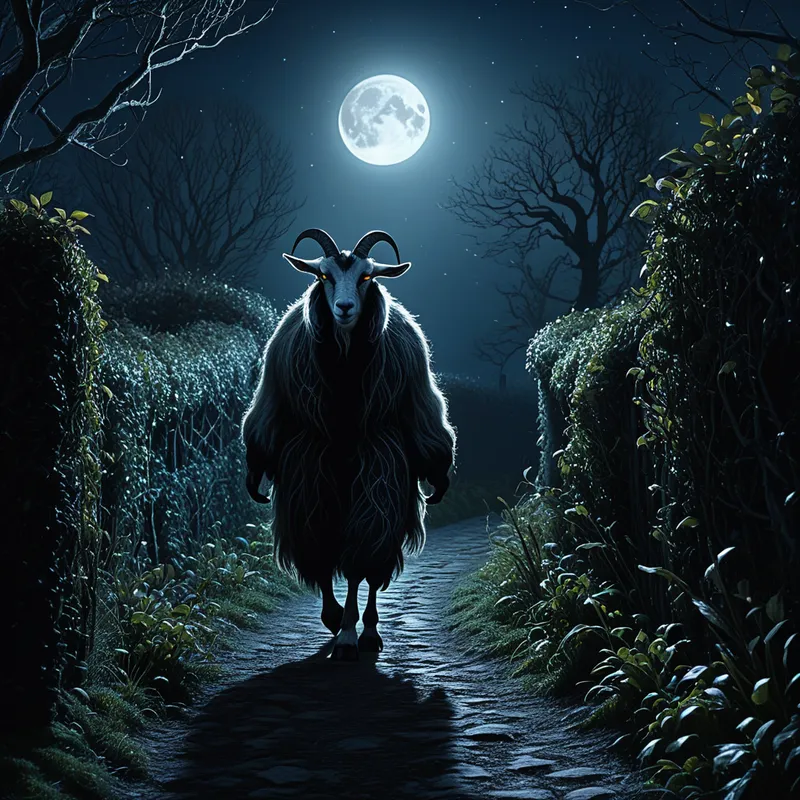
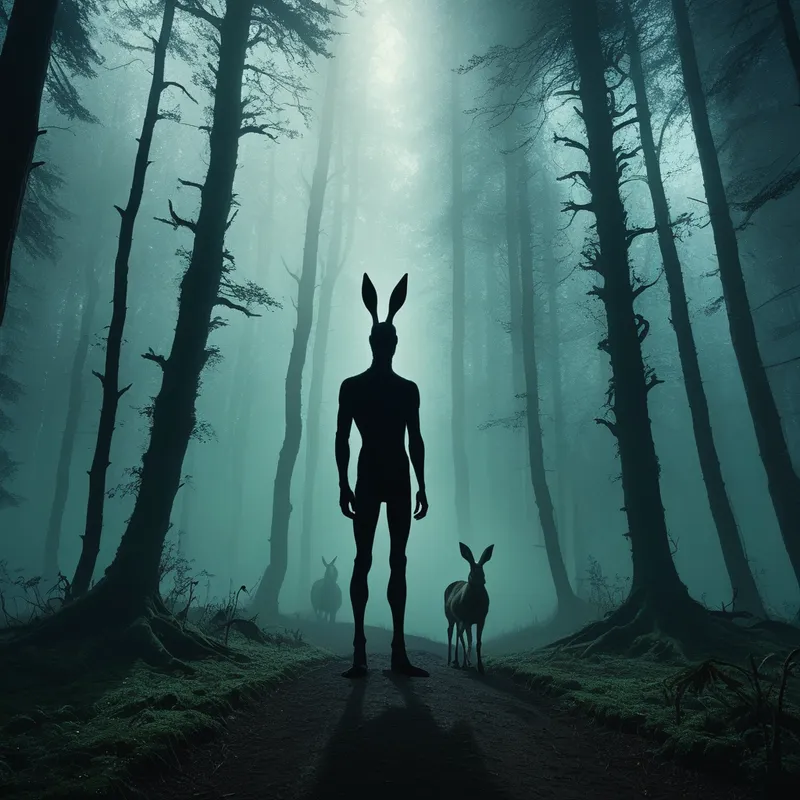
Or you may glimpse it as a great, shaggy goat with curling horns of jet, watching from a crag, its gaze weighing the worth of your soul. It might appear as a sleek hare with eyes like molten amber, darting across your path as the mists rise. Sometimes it is a lean, twisted figure, part-man, part-beast, draped in rags of moss and shadow, sitting atop a boundary wall and speaking in a voice that is the echo of the wind in a hollow tree.
It speaks, yes. In riddles and prophecies. It can curse a field with blight or bless it with abundance. It is a truth-teller, but its truths are sharp and unwelcome. To meet the Púca is to have your neat world cracked open. It offers no comfort, only a raw, unblinking encounter with the untamed reality that hums beneath the surface of things. It is the guardian of the threshold, and to cross it, you must acknowledge the keeper. Some say it can be appeased with a share of the harvest, a crust left on a fence post. But it is never tame. It is the wildness that remains when the last fire goes out, the shape in the corner of your eye that is gone when you turn your head. It is the ancient pact between the human heart and the heart of the world, written in the language of storm and silence.
Cultural Origins & Context
The Púca (or Pooka, Pwca) is a root-stock creature of the Celtic world, its essence flowing from the misty hills of Ireland, across the waters to Wales and Scotland, and into the lore of the Anglo-Saxon puca. It is a being of the folk, not of the grand mythological cycles. Its stories were not carved in stone by bards for kings, but whispered by the hearth, told by farmers, fishermen, and shepherds—those whose lives were intimately, sometimes terrifyingly, entwined with the capricious land and weather.
Its societal function was multifaceted. On a practical level, it was a narrative container for the very real dangers and inexplicable fortunes of agrarian life. A spoiled crop, a lost sheep, a sudden, fortunate find—all could be attributed to the Púca’s whim. It personified the absolute unpredictability of nature, which could be both nurturing and viciously indifferent. On a deeper level, it served as a psychological and cultural boundary-marker. The Púca inhabited the physical and psychic spaces between: between settlements and wilderness, between the human community and the alien, animate world. Its stories reinforced where “our” order ended and the “other” began, teaching respect, caution, and a necessary humility in the face of forces beyond human control. It was a reminder that not everything could be fenced, plowed, or understood.
Symbolic Architecture
The Púca is pure symbolic dynamism, an archetypal embodiment of the shadow in its most elemental, non-human form. It is not the shadow of personal repression, but the collective, psychic shadow of a culture negotiating its relationship with wildness.
The Púca is the psyche’s own untamed land, the internal wilderness that refuses cultivation.
Its shapeshifting is its primary symbol. It refuses a single identity, representing the fluid, protean nature of the unconscious itself, which can appear as a helpful guide (the horse offering a visionary ride), a trickster (depositing one in a ditch), or a monstrous terror (the goat-like demon). It is all these potentials at once. The Púca is the spirit of transformation that is not guided by human intention; it is change itself, chaotic and ambivalent.
The creature’s association with prophecy and truth-telling points to its role as a messenger from the deeper self. Its words are rarely sweet, for the truths of the shadow are often uncomfortable, disrupting our comfortable illusions. The Púca does not lie; it reveals the raw, unvarnished state of things, forcing a confrontation with reality as it is, not as we wish it to be. Its liminality—dwelling at crossroads, twilight, and boundaries—symbolizes the critical psychic moments of transition, decision, and threshold-crossing, where old structures dissolve and new potentials, terrifying and exhilarating, emerge.
The Dreamer’s Resonance
To dream of the Púca is to dream of a profound encounter with the autonomous, transforming psyche. It signals a period where the dreamer’s conscious identity is being challenged or called to expand.
Somatically, such a dream may be accompanied by sensations of thrilling speed (the wild ride), sudden paralysis (being frozen before its gaze), or the eerie feeling of being watched by an intelligent, non-human presence. Psychologically, the dreamer is likely navigating a liminal phase in waking life: a career change, the end of a relationship, a spiritual crisis, or a creative upheaval. The stable “field” of their known self is being encroached upon by the “wild wood” of unlived potentials, repressed energies, or ignored callings.
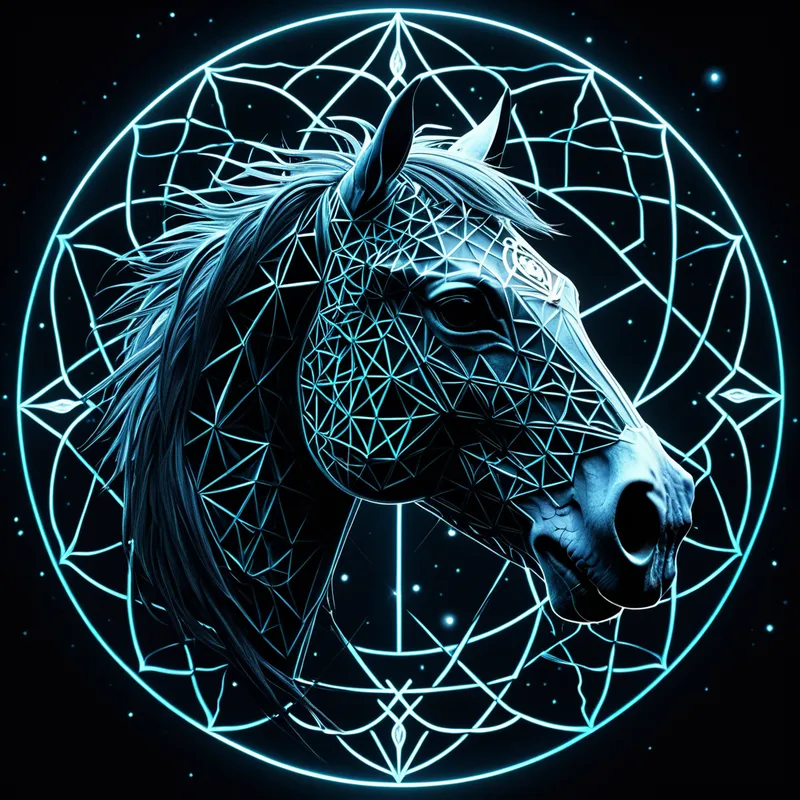
The form the Púca takes in the dream is crucial. A horse might suggest a call to a journey of power or intuition that feels beyond control. A goat or grotesque figure may point to a confrontation with a rejected, “ugly,” or instinctual part of the self. A speaking Púca demands attention to its message—what uncomfortable truth is trying to surface? The dream is an intra-psychic drama where the ego is meeting the shape-shifting, sovereign force of its own deeper nature, which operates by its own wild logic.
Alchemical Translation
The myth of the Púca models the alchemical stage of nigredo and the beginning of albedo—the dissolution of the old, rigid personality and the first glimpses of a more fluid, authentic self. The conscious ego’s project is to build stability, order, and a coherent identity. The Púca is the antithesis of this project; it is the agent of solutio—dissolution.
The ride on the Púca’s back is the involuntary, terrifying, and necessary dissolution of the ego’s fixed perspective.
The process begins with an encounter at the boundary. The individual, like the farmer on the moonlit path, is confronted by something that does not fit their worldview. To engage with it—whether in terror, fascination, or forced alliance (like taking the ride)—is to submit to a process of psychic transmutation. The old self is “taken for a ride,” its certainties shattered, its familiar landscape left behind. The eventual dumping in the “thorny ditch” is not a failure, but the crucial end of the inflation. It is a humbling return to earth, to a new, raw, and more complex reality.
The individuation journey here is not about slaying or integrating the Púca, for it is not a content to be integrated but a function—the function of transformative wildness. The goal is to develop a relationship with it. To leave it an offering is to acknowledge its power and sovereignty within the psyche. To heed its riddles is to learn the language of the deeper self. The triumph is not mastery over the wild, but the capacity to stand at the threshold, recognize the shapeshifter, and, with respect and courage, allow it to alter you. One becomes, in a sense, a little more Púca-like: less rigid, more adaptable, more capable of holding the terrifying and wonderful multiplicity of one’s own being.
Associated Symbols
Explore related symbols from the CaleaDream lexicon: