The Path to the Underworld Myth Meaning & Symbolism
A hero's perilous descent into the land of the dead, a journey of love, loss, and the ultimate confrontation with the finality of death and the self.
The Tale of The Path to the Underworld
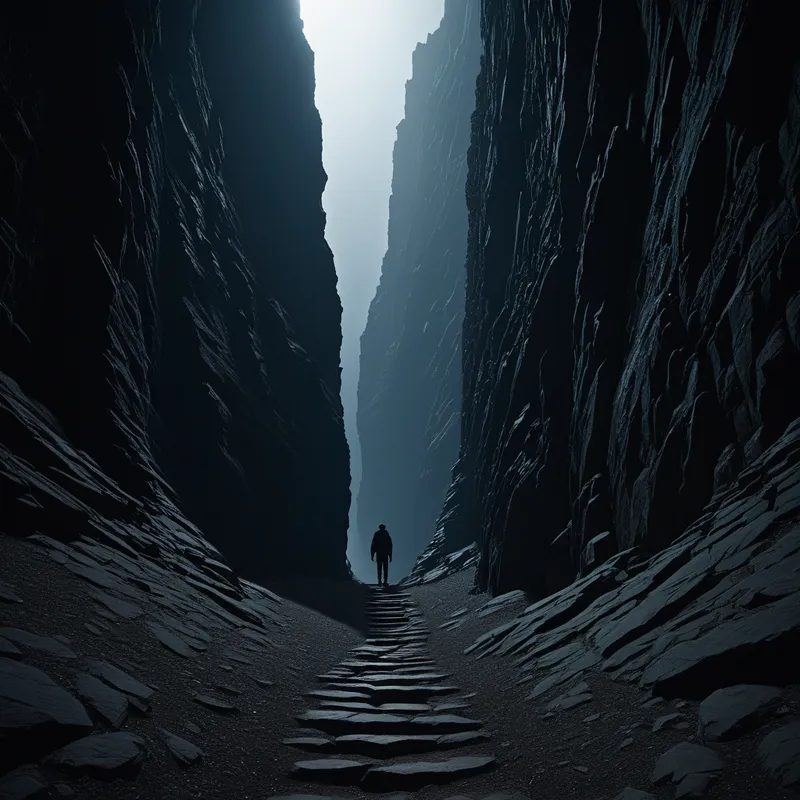
Listen, and hear of the road no living soul should walk. It begins not in the sunlit world, but in the hollow places of [the earth](/myths/the-earth “Myth from Hindu culture.”/), where the light of [Helios](/myths/helios “Myth from Greek culture.”/) fears to tread. The air grows cold and still. The very birds fall silent. This is [the threshold](/myths/the-threshold “Myth from Folklore culture.”/), marked by the whispering of the black poplars and the willows of mourning.
Here, at the chasm, the hero must find their resolve. For one, it was the mighty [Heracles](/myths/heracles “Myth from Greek culture.”/), driven by a king’s command to fetch the three-headed hound, Cerberus. For another, it was the musician [Orpheus](/myths/orpheus “Myth from Global/Universal culture.”/), whose grief was a sharper goad than any sword, his lyre his only shield. And for the radiant [Persephone](/myths/persephone “Myth from Greek culture.”/), it was a path taken not by choice, but by the earth yawning open beneath her feet as the dark chariot of [Hades](/myths/hades “Myth from Greek culture.”/) erupted into [the world](/myths/the-world “Myth from Tarot culture.”/) of light.
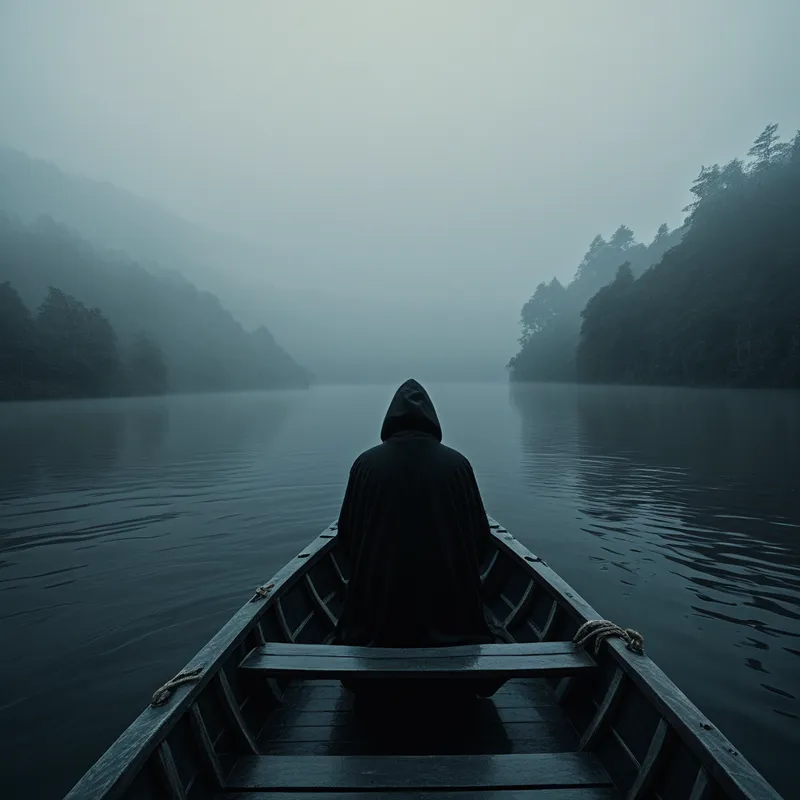
The journey is a stripping away. First, one must find the forgotten entrance, often a cave by a still, dark shore. Then comes [the river](/myths/the-river “Myth from Buddhist culture.”/), the wide Acheron, or the Styx. Its waters are black and fathomless, and on its bank waits the silent ferryman, Charon. His eyes are hollow stars. He demands his coin, the obol, and without it, the soul must wander the shores for a hundred years. The hero must persuade, or pay, or force passage.
Across the [water](/myths/water “Myth from Chinese culture.”/), [the mist](/myths/the-mist “Myth from Celtic culture.”/) thickens into form. The three-headed shape of Cerberus looms, a beast of shadow and saliva, guardian of the gate. Some soothe it with song, some subdue it with strength, some slip past with the food of the dead—a honey-sop of drowsiness. Beyond the gate lies the Asphodel Meadows, a grey plain of whispering shades. Here, the heroes seek their goal: a loved one, a monster, a audience with the pale king upon his ebony throne.
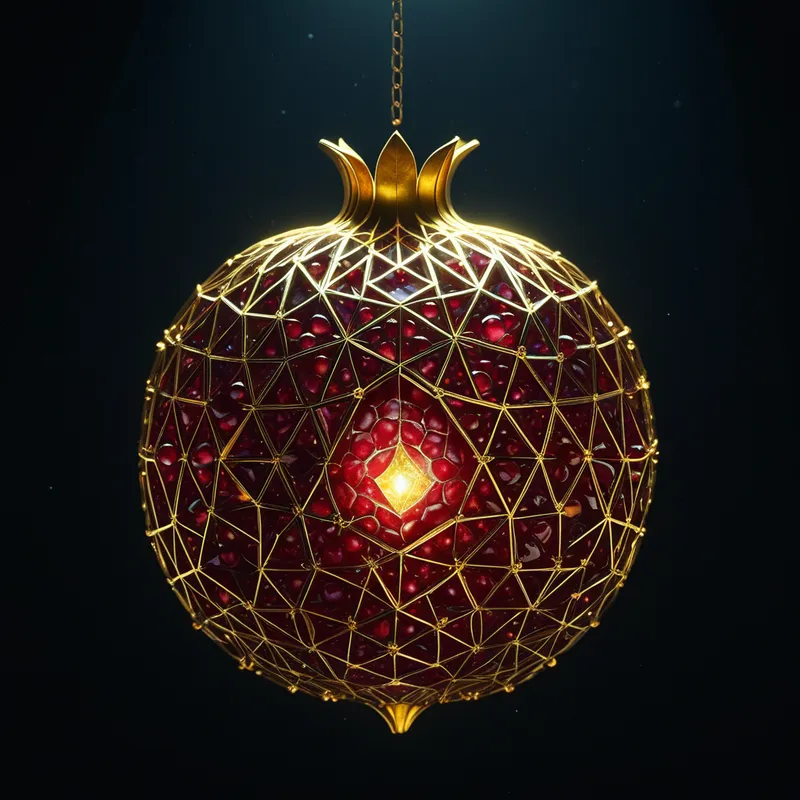
But the path has rules, laid down by [the Fates](/myths/the-fates “Myth from Greek culture.”/) themselves. Do not eat the food of the dead. Do not look back once you have begun your return. The price for breaking this divine law is absolute. Orpheus, leading his beloved Eurydice back to life, turned too soon, and saw only her fading shade, her whispered farewell lost to the gloom. Persephone, in her loneliness, ate six seeds from a pomegranate, and so was bound to return to the darkness for six months of every year.
The return, if there is one, is never the same as the departure. The hero emerges into the light, but they carry the chill of [the abyss](/myths/the-abyss “Myth from Kabbalistic culture.”/) in their bones, the silence of the shades in their ears. They have walked the path to the house of Hades, and no one who does that returns unchanged.
Cultural Origins & Context
This was not a single story, but a deep pattern woven into the fabric of Greek thought, from the epic verses of [Homer](/myths/homer “Myth from Greek culture.”/)’s Odyssey to the hymns dedicated to Demeter and the tragic plays of the Athenian stage. It was a collective narrative about the ultimate boundary. The path was described by poets and kept alive by mystery cults, like the famed Eleusinian Mysteries, which ritually re-enacted Persephone’s descent and return to provide initiates with hope concerning the afterlife.
Its societal function was multifaceted. On one level, it was a cosmology, mapping the geography of the afterlife. On another, it was a moral and existential guide. The need for the funeral coin stressed the importance of proper burial rites. The tales of failed returns, like that of Orpheus, served as potent warnings about the finality of death and the limits of human endeavor against divine law. Yet, the very existence of the path—a route that could, however perilously, be traversed—offered a sliver of hope, a mythic precedent that the deepest separation (life from death, the conscious from the unconscious) might not be absolute.
Symbolic Architecture
The [Path](/symbols/path “Symbol: The ‘path’ symbolizes a journey, choices, and the direction one’s life is taking, often representing individual growth and exploration.”/) to the [Underworld](/symbols/underworld “Symbol: A symbolic journey into the unconscious, representing exploration of hidden aspects of self, transformation, or confronting repressed material.”/) is the ultimate map of the [psyche](/myths/psyche “Myth from Greek culture.”/)’s descent into its own [depths](/symbols/depths “Symbol: Represents the subconscious, hidden emotions, or foundational aspects of the self, often linked to primal fears or profound truths.”/). It is not a myth about physical [death](/symbols/death “Symbol: Symbolizes transformation, endings, and new beginnings; often associated with fear of the unknown.”/) alone, but about the necessary psychological death of outworn identities, unresolved [grief](/symbols/grief “Symbol: A profound emotional response to loss, often manifesting as deep sorrow, yearning, and a sense of emptiness.”/), and repressed [shadow](/symbols/shadow “Symbol: The ‘shadow’ embodies the unconscious, repressed aspects of the self and often represents fears or hidden emotions.”/) [material](/symbols/material “Symbol: Material signifies the tangible aspects of life, often representing physical resources, desires, and the physical world’s influence on our existence.”/).
The descent into the underworld is the soul’s imperative to confront what it has buried, for only in the kingdom of the forgotten can the seeds of renewal be found.
The [River](/symbols/river “Symbol: A river often symbolizes the flow of emotions, the passage of time, and life’s journey, reflecting transitions and movement in one’s life.”/) represents the threshold of [consciousness](/symbols/consciousness “Symbol: Consciousness represents the state of awareness and perception, encompassing thoughts, feelings, and experiences.”/) itself, the [boundary](/symbols/boundary “Symbol: A conceptual or physical limit defining separation, protection, or identity between entities, spaces, or states of being.”/) between the known ego and the vast, unknown unconscious. Charon is the gatekeeper function of the psyche, the [resistance](/symbols/resistance “Symbol: An object or tool representing opposition, struggle, or the act of pushing back against external forces or internal changes.”/) that demands [payment](/symbols/payment “Symbol: Symbolizes exchange, obligation, and value. Represents what one gives to receive something in return, often tied to fairness, debt, or spiritual balance.”/)—often in the form of conscious [attention](/symbols/attention “Symbol: Attention in dreams signifies focus, awareness, and the priorities in one’s life, often indicating where the dreamer’s energy is invested.”/) or courage—before allowing deep introspection. [Cerberus](/symbols/cerberus “Symbol: The three-headed hound guarding the underworld’s entrance, symbolizing boundaries, protection, and the unconscious mind’s threshold.”/) symbolizes the primal, chaotic defenses of the unconscious that must be integrated or calmed, the snarling anxieties and fears that guard the [entrance](/symbols/entrance “Symbol: An entrance symbolizes new beginnings, opportunities, or transitions, reflecting the dreamer’s readiness to face changes.”/) to our deepest wounds. The [Pomegranate Seeds](/myths/pomegranate-seeds “Myth from Greek culture.”/) are the symbols of unconscious commitment; once we truly partake of the depths—once we engage with our core complexes—we are forever changed, bound to return to that inner work cyclically.
The central, tragic Injunction (“Do not look back”) speaks to the necessity of forward [momentum](/symbols/momentum “Symbol: The force of forward motion or progress, often representing life’s flow, inertia, or the buildup of energy toward change.”/) in transformation. To look back is to retreat into the old self, to doubt the nascent, fragile new consciousness emerging from the depths. It is the failure of trust in the transformative process.
The Dreamer’s Resonance
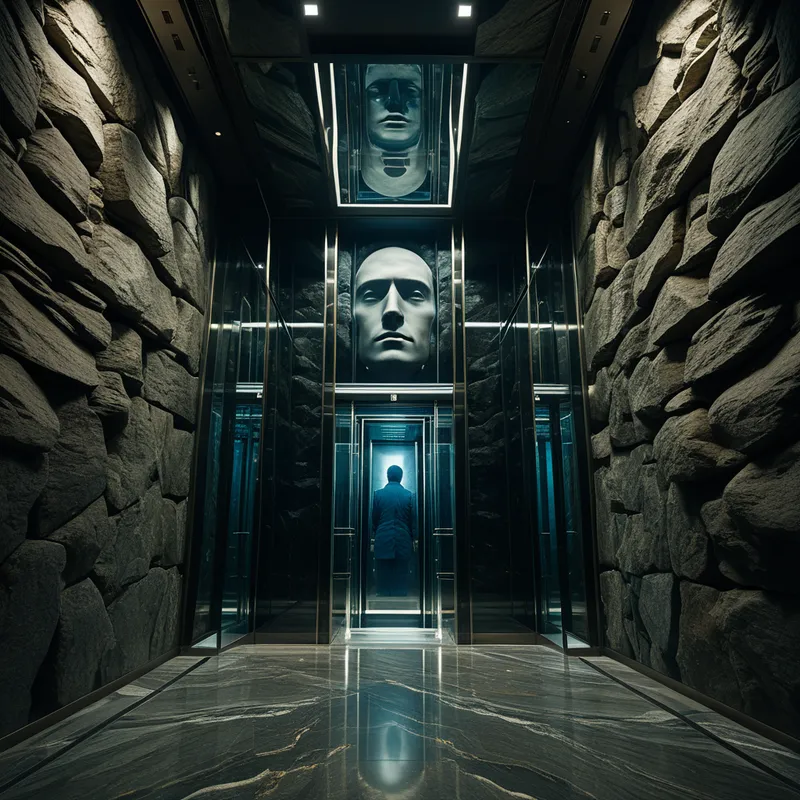
When this mythic pattern stirs in modern dreams, the dreamer is often at a critical juncture of loss, ending, or profound inner change. The “[underworld](/myths/underworld “Myth from Greek culture.”/)” may appear as a descending elevator, a basement flooding with black water, a forgotten subway tunnel, or simply a overwhelming sense of being pulled downward into a dark, interior landscape.
Somatically, this can feel like a heavy depression, a literal “low” feeling, a loss of energy or libido. Psychologically, it is the process of nigdredo—the blackening, the descent into the [prima materia](/myths/prima-materia “Myth from Alchemical culture.”/) of the soul. The dreamer is not necessarily dying, but something within them is: a relationship, a career, a long-held self-image, a unresolved grief. The dream is the psyche’s way of narrating this necessary dissolution. The figures encountered—the silent boatman, the many-headed beast, the lost love—are personifications of the psychic contents that must be faced in this liminal state. To dream of this path is to be in the midst of a profound, non-negotiable psychological process where the old must be fully acknowledged and released before any new growth can begin.
Alchemical Translation
In the alchemy of individuation, the Path to [the Underworld](/myths/the-underworld “Myth from Greek culture.”/) models the essential first stage: the descent into [the shadow](/myths/the-shadow “Myth from Jungian culture.”/). The conscious ego, the “hero,” must voluntarily undertake a journey into the very aspects of [the self](/myths/the-self “Myth from Jungian culture.”/) it has disowned, rejected, or forgotten (the land of the dead).
The gold of the mature self is not found on the sunlit heights, but forged in the silent negotiations at the throne of the inner king of shadows.
The journey is one of confrontation and negotiation. One does not slay Hades; one must meet him, speak with him, and acknowledge his sovereignty over a vast portion of the total psyche. This is the integration of the shadow. Retrieving Eurydice is the attempt to reclaim lost vitality (anima/animus) that has been trapped in unconscious complexes. The failed return of Orpheus illustrates the peril: if the emerging consciousness, terrified by the raw reality of what it has retrieved, reverts to old patterns of control or doubt (“looking back”), the connection is severed. The gain is lost.
The successful alchemical outcome is not necessarily a permanent escape from the underworld. Persephone’s cycle is the truer model: cyclic integration. She becomes Queen, a ruler in both realms. This is the transmutation. The individual who has walked the path learns to dwell in both worlds—the conscious and the unconscious, the light and the dark—no longer torn between them, but finding their wholeness in the rhythmic movement between. The path becomes not a one-time ordeal, but an inner road known to the soul, a sacred circuit of death and renewal that is the very engine of a life fully lived.
Associated Symbols
Explore related symbols from the CaleaDream lexicon: