The Parables of Jesus Myth Meaning & Symbolism
A collection of enigmatic stories told by Jesus, using everyday scenes to reveal the radical, hidden nature of the Kingdom of Heaven.
The Tale of The Parables of Jesus
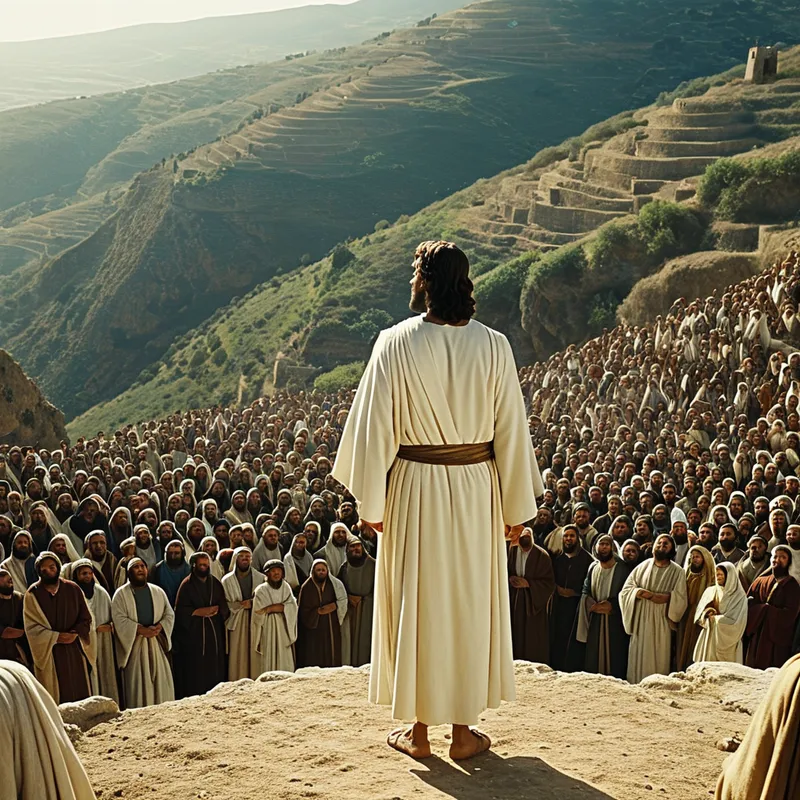
The air on the shore of Lake Gennesaret was thick with the smell of fish and damp earth. The crowd pressed in, a living tapestry of worn sandals, patched cloaks, and hungry eyes—fishermen mending nets, farmers with soil under their nails, mothers with children clinging to their skirts, and the sharp, watching gazes of scholars from [Jerusalem](/myths/jerusalem “Myth from Biblical culture.”/). They had come for the man from Nazareth. He did not stand on a platform but sat in a fisherman’s boat pushed just offshore, the gentle lap of [water](/myths/water “Myth from Chinese culture.”/) against the hull his only pulpit.
He began to speak, not with the complex rulings of the scribes, but with a story. “Listen!” he said, his voice carrying over the water. “A sower went out to sow his seed…” And suddenly, they were not on a shore but in a field, feeling the dry, packed earth of the path beneath their feet, the searing heat of the sun on rock, the choking grip of thorns. They saw the seed—the precious, living word—cast with generous, reckless abandon. They felt its fate: stolen, scorched, strangled, or, in the good soil, erupting in a silent, miraculous yield thirty, sixty, a hundredfold.
He spoke of a kingdom not of palaces and armies, but of a single, insignificant [mustard seed](/myths/mustard-seed “Myth from Buddhist culture.”/) that a man took and buried. In the telling, they could feel the dark, patient work of [the earth](/myths/the-earth “Myth from Hindu culture.”/), and then the shocking, green surge breaking the surface, growing, stretching, becoming a great tree where birds nested in its branches. He spoke of a merchant searching for one perfect [pearl](/myths/pearl “Myth from Chinese culture.”/), selling all he had—the security, the comfort, the entire known world—to hold that single, luminous treasure in his hand. He spoke of a father, his heart a raw wound, watching the road every day for a son who had wished him dead, and when a speck appeared on [the horizon](/myths/the-horizon “Myth from Various culture.”/), the old man gathering his robes and running, running to meet him with tears and a feast, while a dutiful, bitter older brother stood cold in the shadows of the house.
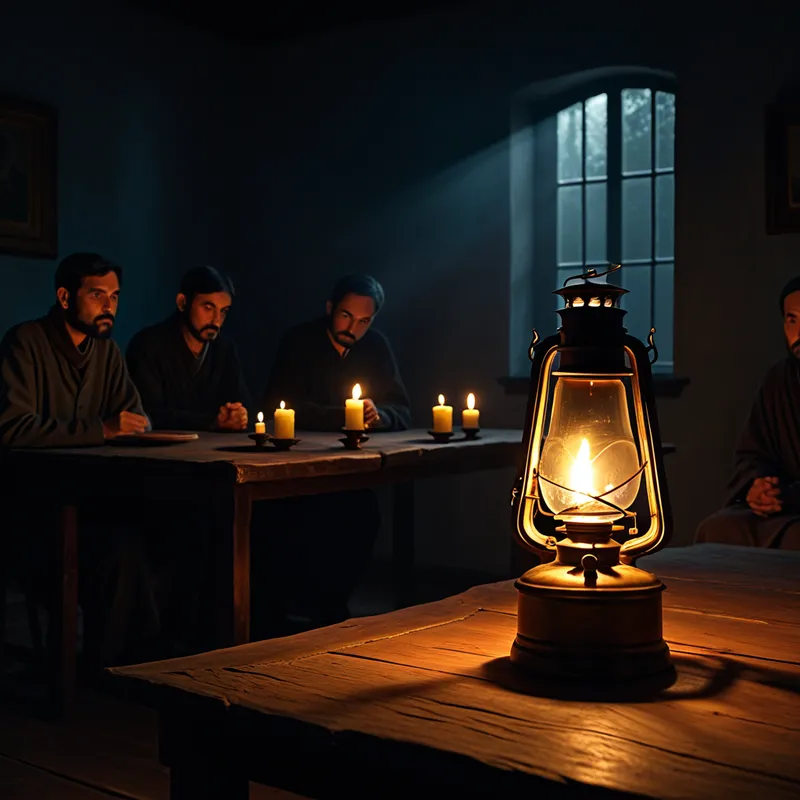
He told of a shepherd who left ninety-nine in the fold to climb dangerous cliffs for one lost sheep, and of a woman who swept her entire house, searching by lamplight for one small, lost coin. He spoke of a wise man who built his house on rock, and a foolish man who built on sand, and in his words they heard the coming storm, felt the shuddering foundation, knew the catastrophic collapse.
The stories were simple—of yeast in dough, of lamps under baskets, of wedding feasts and delayed bridegrooms, of vineyard workers paid the same whether they came at dawn or dusk. But as they listened, a strange alchemy occurred. The familiar world of seeds and bread, sheep and coins, fathers and sons, became transparent. Behind it, shimmering like a heat haze, they glimpsed another reality entirely—a realm of radical grace, impossible generosity, urgent choice, and hidden, explosive growth. It was a revelation that did not command from on high, but whispered from within the very stuff of their daily lives. It was an invitation, and a warning, woven into the fabric of [the world](/myths/the-world “Myth from Tarot culture.”/) itself.
Cultural Origins & Context
These stories emerged from a specific and volatile crossroads. First-century Judea was a land layered with tension: Roman occupation pressed down from above, while internal Jewish society was fragmented among Pharisees, Sadducees, Essenes, and revolutionary zealots. Literacy was limited; wisdom was primarily transmitted orally, through vivid, memorable narrative.
[Jesus](/myths/jesus “Myth from Christian culture.”/), a rabbi from the rural Galilee, operated squarely within the Jewish tradition of using mashal (plural meshalim)—a broad term encompassing proverbs, riddles, and allegories. [The prophets](/myths/the-prophets “Myth from Biblical culture.”/) had used them; the rabbis would later fill the Talmud with them. His genius was in his application. He took the common mashal and charged it with a revolutionary theological core: the immediate, pressing, and subversive presence of the Kingdom of God.
[The parables](/myths/the-parables “Myth from Biblical culture.”/) were not mere illustrations for simple minds. They were the primary vehicle of his teaching, designed to engage, confront, and divide. As recorded in the gospels, he explained to his disciples that he spoke in parables so that those “outside” might “see but not perceive, hear but not understand.” This reflects the function of the parable as a revelatory cipher. To the listener whose heart was open or seeking, the story became a door. To the listener who was rigidly certain in their own understanding, it remained a confusing folktale about farming. They were societal mirrors and divine diagnostics, passed down orally by his followers before being codified in the narrative frameworks of the Gospel texts.
Symbolic Architecture
The parables are not a [system](/symbols/system “Symbol: A system represents structure, organization, and interrelated components functioning together, often reflecting personal or social order.”/) of doctrine but an ecosystem of symbols operating on multiple levels simultaneously. At their [heart](/symbols/heart “Symbol: The heart symbolizes love, emotion, and the core of one’s existence, representing deep connections with others and self.”/) is the [symbol](/symbols/symbol “Symbol: A symbol can represent an idea, concept, or belief, serving as a powerful tool for communication and understanding.”/) of the [Kingdom](/symbols/kingdom “Symbol: A kingdom symbolizes authority, belonging, and a sense of identity within a larger context or community.”/) itself—not a geographical place but a state of being, a divine [activity](/symbols/activity “Symbol: Activity in dreams often represents the dynamic aspects of life and can indicate movement, progress, and engagement with personal or societal responsibilities.”/) that is simultaneously already here (like [yeast](/symbols/yeast “Symbol: A leavening agent representing growth, transformation, and potential. It symbolizes hidden processes that cause expansion and change.”/) in dough) and not yet fully realized (like a harvest at the end of the age).
The Kingdom is a hidden treasure that revalues everything you own, demanding a total transaction of the self.
The recurring actors are archetypal: the Sower (divine generosity), the [Father](/symbols/father “Symbol: The father figure in dreams often symbolizes authority, protection, guidance, and the quest for approval or validation.”/) (unconditional grace), the Judge (inescapable accountability). The objects are elemental: Seed (the potential of [spirit](/symbols/spirit “Symbol: Spirit symbolizes the essence of life, vitality, and the spiritual journey of the individual.”/) or [word](/symbols/word “Symbol: Words in dreams often represent communication, expression, and the power of language in shaping our realities.”/)), [Soil](/symbols/soil “Symbol: Soil symbolizes fertility, nourishment, and the foundation of life, serving as a metaphor for growth and stability.”/) (the conditioned [human](/symbols/human “Symbol: The symbol of a human represents individuality, complexity of emotions, and social relationships.”/) heart), Leaven (the transformative, often hidden, influence), [Pearl](/symbols/pearl “Symbol: The pearl symbolizes purity, wisdom, and the beauty derived from overcoming adversity.”/) (the ultimate value), [Lamp](/symbols/lamp “Symbol: A lamp symbolizes guidance, enlightenment, and the illumination of truth, often representing knowledge or clarity in dark times.”/) ([consciousness](/symbols/consciousness “Symbol: Consciousness represents the state of awareness and perception, encompassing thoughts, feelings, and experiences.”/) or witness). The narratives pit wisdom against [folly](/symbols/folly “Symbol: Folly represents whimsical, often impractical architecture that challenges traditional norms, symbolizing human folly and pride.”/), vigilance against complacency, mercy against judgment, extravagant grace against transactional fairness.
Psychologically, the parables map the dynamics of the [psyche](/myths/psyche “Myth from Greek culture.”/). The “good soil” represents the conscious ego prepared through introspection (the plowed [earth](/symbols/earth “Symbol: The symbol of Earth often represents grounding, stability, and the physical realm, embodying a connection to nature and the innate support it provides.”/)) to receive contents from the unconscious (the seed) and integrate them into a fruitful [life](/symbols/life “Symbol: The symbol of ‘Life’ represents a journey of growth, interconnectedness, and existential meaning, encompassing both the joys and challenges that define human experience.”/). The “rocky ground” is the [psyche](/myths/psyche “Myth from Greek culture.”/) that receives an [insight](/symbols/insight “Symbol: A sudden, deep understanding of a complex situation or truth, often arriving unexpectedly and illuminating hidden connections.”/) with initial enthusiasm but lacks the [depth](/symbols/depth “Symbol: Represents profound layers of consciousness, hidden truths, or the unknown aspects of existence, often symbolizing introspection and existential exploration.”/) of [character](/symbols/character “Symbol: Characters in dreams often signify different aspects of the dreamer’s personality or influences in their life.”/) (soil) to sustain it when difficulties (the sun of tribulation) arise. The parables of [loss](/symbols/loss “Symbol: Loss often symbolizes change, grief, and transformation in dreams, representing the emotional or psychological detachment from something or someone significant.”/) and [recovery](/symbols/recovery “Symbol: The process of returning to health, strength, or normalcy after illness, injury, or loss; a journey of healing and restoration.”/)—the [sheep](/symbols/sheep “Symbol: Sheep often symbolize innocence, vulnerability, and the idea of conforming to societal norms.”/), the coin, the son—are profound dramas of the [Shadow](/symbols/shadow “Symbol: The ‘shadow’ embodies the unconscious, repressed aspects of the self and often represents fears or hidden emotions.”/), where [the ego](/myths/the-ego “Myth from Jungian culture.”/) (the [shepherd](/symbols/shepherd “Symbol: A shepherd symbolizes guidance, protection, and the nurturing aspects of leadership, often reflecting the dreamer’s desire for direction or support.”/), the woman, the father) must actively engage with what is missing, devalued, or exiled to achieve wholeness.

The Dreamer’s Resonance
When the symbolic patterns of the parables surface in modern dreams, they often signal a critical moment of inner valuation and choice. To dream of sowing seeds on various grounds reflects an active process of testing new ideas, potentials, or aspects of [the self](/myths/the-self “Myth from Jungian culture.”/) in the terrain of one’s life. The dreamer is the sower, assessing where their life-energy will take root or be wasted.
A dream of searching desperately for a lost item—a specific key, a child, a document—in the clutter of a vast, familiar house mirrors the parables of the lost sheep and coin. This is somatic shadow-work. The “house” is the dreamer’s own psyche. The lost element is a vital but neglected part of the self—a talent, a memory, an emotion—that must be found for completeness. The sweeping and searching is the labor of introspection.
Dreams of being at a wedding feast but unprepared (lacking oil for one’s lamp, wearing the wrong clothes) or of building a house that is suddenly tested by a flood speak directly to the parables of vigilance and foundation. These are dreams of existential accountability, where the dreamer confronts the consequences of their life’s structure and preparedness. The ensuing collapse or exclusion is not a prophecy but a profound somatic warning from the unconscious: the current psychic foundation cannot withstand the coming pressures of life.

Alchemical Translation
The alchemical journey modeled by the parables is the quintessential process of individuation. It begins with the [nigredo](/myths/nigredo “Myth from Alchemical culture.”/), the blackening: the recognition of loss, poverty, or foolishness. This is [the prodigal son](/myths/the-prodigal-son “Myth from Biblical culture.”/) in the pigsty, the foolish virgins locked out, the house built on sand collapsing. It is the necessary crisis that shatters naive innocence.
The first operation is not acquisition, but surrender; not building up, but breaking down.
Then comes the albedo, the whitening: the cleansing and clarifying search. This is the woman sweeping, the shepherd climbing, the merchant evaluating all he has. It is a conscious, diligent sorting of the psyche, separating the valuable (the pearl) from the dross (all other possessions). It requires the light of [the lamp](/myths/the-lamp “Myth from Alchemical culture.”/)—the light of consciousness—to be brought into the darkest corners of the house.
The citrinitas, the yellowing, is the germination and patient growth. This is the seed secretly working in the good soil, the yeast permeating the flour, [the mustard seed](/myths/the-mustard-seed “Myth from Folk culture.”/) becoming a tree. It is the often-invisible inner work where insights integrate, complexes dissolve, and new psychic structures form organically. It cannot be rushed; it follows its own law.
Finally, the [rubedo](/myths/rubedo “Myth from Alchemical culture.”/), the reddening, is the achievement of [the great work](/myths/the-great-work “Myth from Alchemical culture.”/): the feast of reunion, the harvest of a hundredfold, the treasure possessed. This is the fully realized Self, where the once-lost is found, the once-small has become great, and the individual dwells in the “kingdom” within—a psyche ordered, valued, and radiant with the gold of integrated consciousness. The parable does not promise ease, but it maps the arduous, glorious transformation from scattered seed to golden harvest.
Associated Symbols
Explore related symbols from the CaleaDream lexicon: