The Palace of the Dragon King Myth Meaning & Symbolism
A fisherman journeys to a magnificent undersea palace to retrieve a stolen heirloom, encountering wonders and perils in the realm of the Dragon King.
The Tale of The Palace of the Dragon King
Listen, and let the salt air fill your lungs. Let the rhythm of the waves become the drumbeat of this tale. In a time when the world was closer to the gods, there lived a fisherman named Urashima Tarō. He was a kind soul, his hands calloused from nets, his eyes ever scanning the horizon. One day, he saw a group of children tormenting a small sea turtle on the shore. Moved by compassion, he shooed them away and gently returned the creature to the embracing sea.
The next day, as his boat rocked on the deep blue, a great head broke the surface. It was the same turtle, grown to a colossal size. Its voice was like the rumble of a distant tide. “Honorable one,” it said, “you showed me mercy. Now, let me show you gratitude. Climb upon my shell. I will take you to a place no mortal eye has seen.”
With a heart full of wonder and trepidation, Urashima stepped onto the broad, ancient shell. The turtle dove, and the world of sun and sky vanished, replaced by the silent, deepening blue. Strange fish, like living jewels, darted past. Forests of kelp swayed in unseen currents. Down, down they went, until a light began to glow in the abyss.
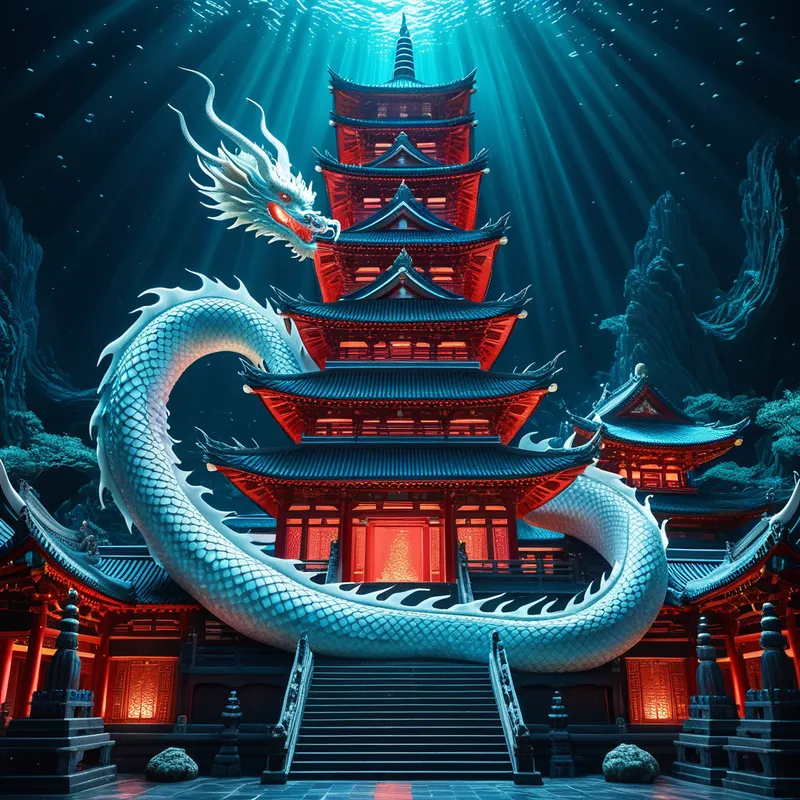
It was Ryūgū-jō, the Palace of the Dragon King. Its gates were pearl, its walls were red lacquer and white coral that gleamed with their own inner light. Beautiful ningyo swam in the courtyards. He was welcomed not by a monster, but by Ryūjin himself, a being of immense, serene power, who appeared as a wise, bearded man with dragon scales glinting at his temples. And there was the king’s daughter, Otohime, whose beauty was like moonlight on water.
For three days—or so it seemed—Urashima lived in bliss. He feasted on food that tasted of dreams, listened to music that held the echo of whale song, and walked in gardens where seasons changed at a whim. But a shadow grew in his heart. He thought of his aging parents, his quiet village, the solid earth. He grew homesick.
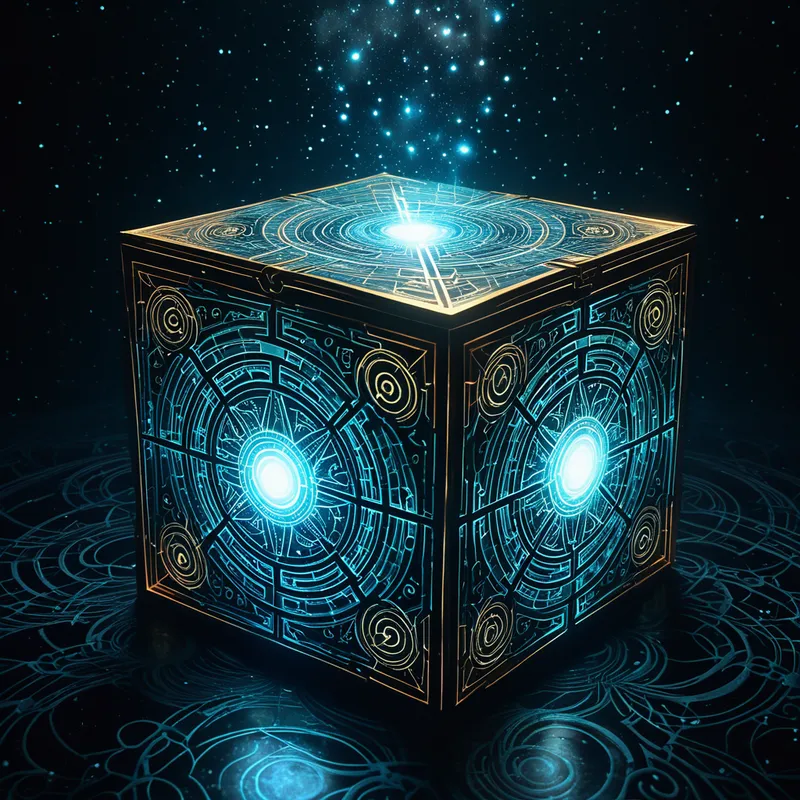
Seeing his sorrow, Otohime’s eyes filled with understanding. “You must return,” she said, her voice heavy with a sadness he did not yet comprehend. As a parting gift, she placed in his hands a beautiful, layered box, the tamatebako. “This contains something precious,” she whispered. “But you must never, ever open it. Keep it sealed, and remember us.”
The great turtle carried him back to the sunlit world. But the shore he recognized was gone. The faces in the village were strange. He asked for his parents, for his home. People stared at him as if he were a ghost. An old man, squinting at him, said, “Urashima? That’s a legend. A fisherman who vanished at sea… three hundred years ago.”
A cold horror seized him. The three days in the palace were three centuries on land. In his despair and confusion, his fingers fumbled with the ornate clasps of the tamatebako. He broke his vow. The lid flew open.
Not jewels, not gold, but a wisp of white smoke escaped. It coiled around him, and he felt a terrible rushing sensation. His strong hands withered to bone. His back bent. His vision blurred. The smoke was his stored time, his mortal years, released all at once. In moments, where a young man stood, only a pile of ancient robes and dust remained, scattered by the indifferent sea wind.

Cultural Origins & Context
This poignant tale, most famously known as “Urashima Tarō,” is a cornerstone of Japanese folklore. Its earliest written versions appear in the 8th-century Kojiki and Nihon Shoki, though the narrative evolved over centuries through oral tradition, mukashibanashi. It was told by village elders and traveling storytellers, serving as more than mere entertainment. It functioned as a profound meditation on the nature of time, the cost of otherworldly gifts, and the immutable pull of human bonds and responsibilities.
The myth is deeply embedded in the Shinto and animistic worldview, where every element of nature—mountains, trees, seas—houses a spirit, a kami. Ryūjin is one of the most powerful of these kami, ruling the seas, controlling storms and tides. The journey to Ryūgū-jō is not merely a fantastical voyage; it is a journey into the sacred, numinous heart of nature itself, a realm that operates under laws fundamentally alien to the human world. The story warns of the peril of confusing these realms and the tragic consequence of violating a sacred taboo, a theme resonant in many foundational myths worldwide.
Symbolic Architecture
The Palace of the Dragon King is not a physical location but a psychic one. It is the realm of the deep unconscious, the collective waters from which all life and mystery emerge. Urashima’s descent is a classic hero’s journey into the unknown depths of the self.
The hero does not journey to conquer, but to remember what he has forgotten, only to discover that remembrance itself carries the weight of time.
The compassionate act that begins the journey represents an alignment with the Self, a moment of integrity that opens a channel to the profound. The palace, with its impossible beauty and timelessness, symbolizes the allure of the unconscious—a place of endless potential, creativity, and numinous experience where the ego’s ordinary concerns are suspended. Otohime represents the anima, the soul-guide who facilitates the connection to this deep realm.
The true conflict is not with a dragon, but with the human condition itself. The homesickness is the ego’s necessary pull back to consciousness, to duty, relationship, and linear time. The tragedy is not his journey, but his failure to integrate the experience. The unopened tamatebako represents the sealed mystery, the transformed psychic energy gained in the depths. To open it prematurely is to literalize the numinous, to try to force the timeless wisdom of the unconscious into the frail container of conscious understanding. The result is disintegration.
The Dreamer’s Resonance
When this myth pattern stirs in the modern dreamer, it signals a profound encounter with the deep unconscious. Dreaming of a magnificent, submerged palace speaks to a discovery of vast, hidden inner resources, perhaps a creative wellspring or a nascent spiritual awareness that feels both awe-inspiring and isolating. The journey down often accompanies a life transition—a descent into depression, a period of intense introspection, or a creative “fallow” period.
The somatic feeling is one of weightlessness yet pressure, of being surrounded by immense, quiet power. Dreaming of receiving a beautiful, forbidden box points to a hard-won insight or a piece of self-knowledge that feels too potent to “open” or integrate into daily life. The anxiety surrounding the box mirrors the dreamer’s fear of what transformation this new awareness might demand. The climax—opening the box and aging instantly—manifests as a sudden, shocking realization of time lost to avoidance, or the terrifying, rapid maturation that comes with a psychological breakthrough. It is the psyche’s dramatic portrayal of the cost of confronting a repressed truth.
Alchemical Translation
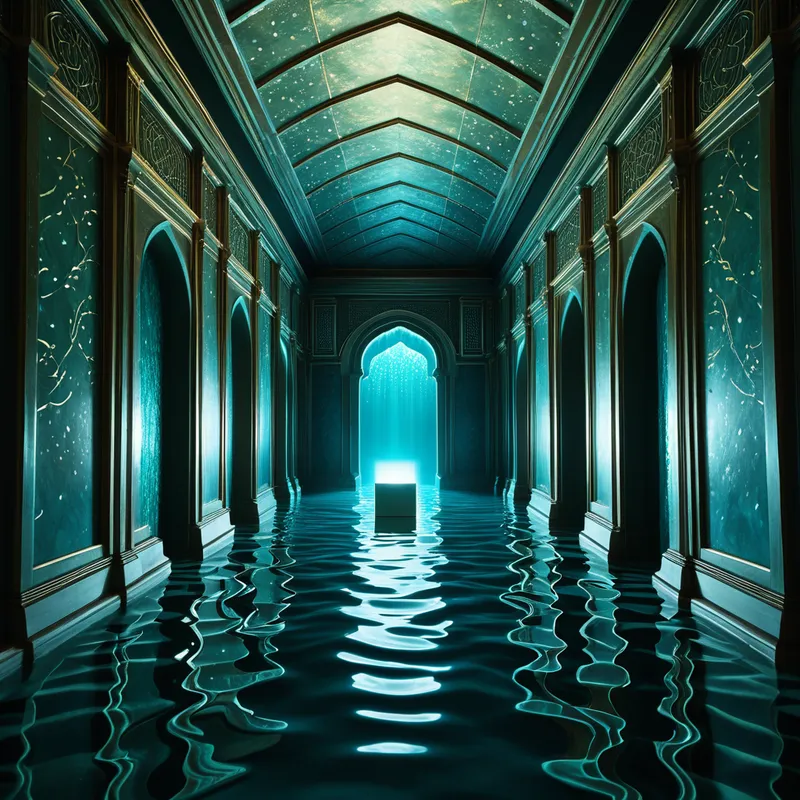
The myth models the perilous but essential process of psychic alchemy: the descent into the prima materia of the unconscious (the sea), a period of incubation and revelation in the transformative vessel (the Palace), and the attempted return with the lapis philosophorum, the philosopher’s stone (symbolized by the sealed tamatebako).
Individuation is not about staying in the palace of the unconscious, but about learning to breathe its air while standing on the solid earth of reality.
Urashima’s fatal error is one of consciousness. He undergoes the transformation but fails the final, crucial step of integration. He does not become the vessel that can hold both realities—the timeless wisdom of the depths and the mortal flow of time on the surface. The alchemical process is aborted.
For the modern individual, the myth instructs us that journeys into the inner depths—through therapy, meditation, creative work, or crisis—are necessary for wholeness. We will be tempted to stay in the blissful, timeless state of new insight. But the work is to return. The treasure we bring back (the unopened box) is not for display or immediate use; it is a sacred trust. It is the transformed perspective, the hard-won peace, the deeper connection to the Self. To “keep it sealed” means to let this transformation work on us slowly, organically, allowing it to subtly reshape our actions and relationships over real, lived time, rather than trying to force a sudden, catastrophic enlightenment. The true triumph would have been for an aged Urashima to return to a new village, his eyes holding the quiet depth of the ocean, his heart carrying the palace within, forever a bridge between two worlds.
Associated Symbols
Explore related symbols from the CaleaDream lexicon: