
The Otherworld Meadows Myth Meaning & Symbolism
A hero's journey to a timeless, paradisiacal realm, where a single forbidden act shatters perfection and demands a profound return to the mortal world.
The Tale of The Otherworld Meadows
Listen, and let the fire’s crackle become the whisper of long grass. Let the smoke carry you across the ninth wave, beyond the sunset’s rim, to where the world grows thin. This is not a place you find on any map drawn by mortal hand. It is a knowing, a turning of the soul, a journey taken when the heart is most weary of the world’s grey weight.
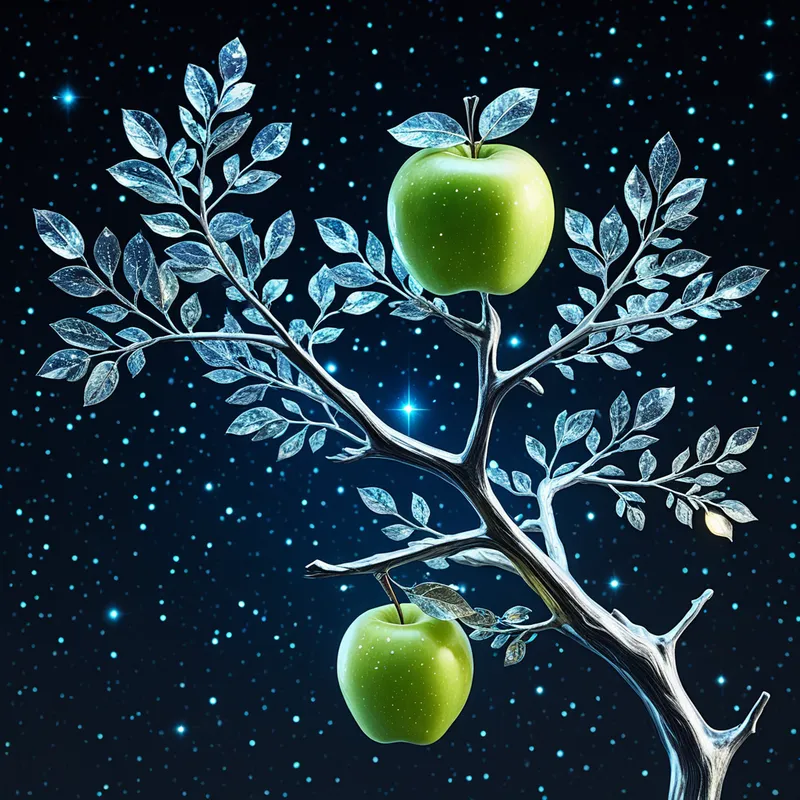
It begins with a hero—not always a king, but one burdened by a king’s sorrow. Perhaps it is Cormac mac Airt, grieving a stolen family. Or a warrior, lost in a mist not of this earth, his spear heavy with pointless blood. The path opens in despair: a sudden bank of silver fog that drinks all sound, a boat that appears with no oarsman, or a figure emerging from the haze—a woman of the Tuatha Dé Danann, her cloak the colour of a starless midnight, her eyes holding the calm of deep lakes. She offers an apple, or holds aloft a branch of silver from which hang nine apples of pale gold. Their chime is not a sound, but a scent of eternal orchards.
“Come,” she says, and her voice is the promise of rest. “Come to Tír na nÓg, the Land of the Young.”
The crossing is a forgetting. The ache of years, the chill of mortality, the nagging hunger—all dissolve like salt in sweet water. He steps onto a shore where the air itself is a balm. Here are the Meadows. The grass is a lush, emerald sea that yields without bending, dotted with flowers of colours that have no name in the tongues of men. The light has no single source; it emanates from the very air, a gentle, golden perpetual afternoon. A river of silver cleaves the plain, its waters singing a low, soothing hymn. There is no conflict here, no decay, no shadow of time’s wing. People move with a grace that speaks of unburdened hearts, their laughter light as dandelion seeds. He is feasted, his sorrow soothed by mead that tastes of sunlight and honey. For what feels like a blissful eternity, he wanders in a state of perfect, undemanding joy.
But the soul, even in paradise, remembers its shape. A longing stirs—not for this perfection, but for what is flawed, what is his. A memory surfaces: the rough texture of his own hall’s timber, the sharp cry of a familiar gull, the smell of peat smoke on a wet wind. He speaks of returning. His hosts’ smiles grow sad. “To look back,” they warn, their voices now holding an echo of the mortal world’s fragility, “is to break the spell of this place.”
The journey home is granted, but the condition is absolute: he must not set foot upon the soil of his homeland until the moment is precisely right. He is sent in a boat of glass, or upon a white horse that moves like flowing mist. The shores of Ireland appear, beloved and rugged. In his overwhelming joy, or in a moment of tragic distraction, the rule is fractured. Perhaps he leaps too soon to embrace a waiting wife. Perhaps he reaches down to touch the soil, to feel its reality. The instant his mortal weight touches the earth of time, the curse of that time crashes upon him.
The vision of the Meadows shatters like ice. The glorious youth he wore in that land sloughs away in moments. Years, centuries he never lived there accumulate upon him in a breath. His body withers, his strength deserts him, and as he crumbles to dust, the last thing he sees is the fading glimmer of the silver branch, now just a dead twig in his disintegrating hand. The paradise is lost, not by malice, but by the irresistible pull of the mortal coil and the tragic flaw of an unguarded heart.

Cultural Origins & Context
The motif of the Otherworld Meadows is not a single, codified myth, but a pervasive narrative pattern woven through the tapestry of Insular Celtic literature, primarily from early medieval Ireland. These stories were the province of the filid, the poet-seers who acted as custodians of history, genealogy, and sacred lore. They were not mere entertainers but mediators between the human community and the <abbr title=“The “Otherworld” in Irish myth, a parallel realm of deities, spirits, and eternal youth”>Sídhe.
The tales, such as The Voyage of Bran, The Adventure of Connla, and episodes in the Cycle of the Kings, served a profound societal function. In a world where life was often harsh, short, and politically tumultuous, the Tír na nÓg provided a cosmological counterbalance—a realm of immutable justice, abundance, and peace that validated the spiritual worldview of the culture. It was a narrative anchor for concepts of sovereignty, the cyclical nature of time, and the fate of the soul. The Meadows were not a reward for a moral life in a Christian sense, but a realm accessible through destiny, favour, or geis (a sacred taboo or injunction), often highlighting the poignant tension between the divine and the human condition.
Symbolic Architecture
The Otherworld Meadows represent the psyche’s deepest longing for a state of undifferentiated wholeness—the unconscious paradise before the dawn of ego-consciousness. It is the uroboric state, perfect, self-contained, and timeless.
The Meadows are the soul’s memory of the womb of being, where all needs are met without asking, and where the self exists in harmonious fusion with its environment.
The hero’s journey there symbolizes a necessary regression, a retreat from the unbearable pressures of conscious life (the “king’s sorrow”) into the healing depths of the unconscious. The silver branch or the guiding woman are manifestations of the anima, the psychopomp who guides the ego into the non-ordinary realms of the psyche. The blissful sojourn is a period of psychic recuperation and nourishment from the archetypal wellsprings.
The fatal return and transformation into dust is the myth’s most critical psychological truth. One cannot remain in the unconscious paradise. The ego must re-emerge, and in doing so, it must bear the weight of temporal reality.
The tragedy is not the loss of paradise, but the failure to integrate its essence. The dust is the unassimilated gold of the Meadows, the transformative experience that turns to dead memory when not brought back into the fabric of the living self.
The Dreamer’s Resonance
When this myth pattern stirs in the modern dreamer, it often manifests not as a literal Celtic landscape, but through its core sensations: dreams of impossibly beautiful, serene places—a forgotten room in a childhood home that is suddenly vast and sun-drenched, a forest glade where time stands still, or an island of perfect peace. The somatic feeling is one of profound relief, weightlessness, and oceanic calm.
This dream signals a psyche under extreme duress, seeking sanctuary. The conscious mind may be overwhelmed by responsibility, grief, or burnout—the “king’s sorrow.” The dream-Meadows offer a compensatory vision of wholeness. The critical moment in the dream—the equivalent of touching the soil—might be a sudden intrusion: a phone ringing in the meadow, a door slamming, or the dreamer realizing they are late for a mundane appointment. The ensuing collapse or frantic return to a bleak “reality” upon waking leaves a residue of deep melancholy and loss.
This process is the psyche’s autonomous attempt at self-regulation. It is not a pathology, but a natural movement toward healing, indicating that the dreamer’s conscious attitude has become too one-sided, too identified with the burdens of the external world, and must temporarily dissolve back into the nourishing unconscious.
Alchemical Translation
The alchemical journey mirrored in this myth is the process of solutio followed by coagulatio. The hero’s voyage to the Meadows is the solutio—the dissolving of the hardened, weary ego in the waters of the unconscious. He becomes fluid, impressionable, and renewed.
The true alchemical work, however, is the return. The failed return in the myth shows the danger: if the experience remains a dissociated fantasy, it turns to dust. The successful alchemical translation for the modern individual is the coagulatio: the conscious, deliberate solidification of that numinous experience into a new attitude toward life.
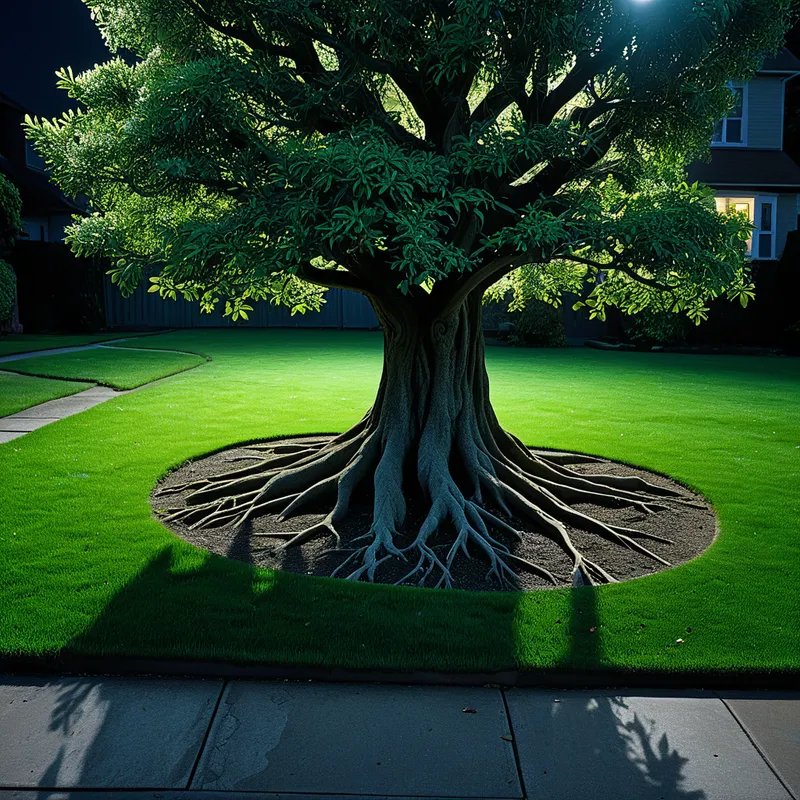
Individuation does not mean staying in the meadow; it means learning the song of the silver river and singing it in the marketplace.
This means integrating the “feeling” of the Meadows—the peace, the connection, the sense of timeless value—into one’s daily, time-bound existence. It might translate as setting boundaries that protect inner peace (the taboo against premature return), finding moments of timelessness in creative flow (the taste of the Otherworld apple), or carrying the memory of wholeness as an inner compass through life’s conflicts. The myth teaches that the goal is not to escape mortality, but to let the touch of the eternal transform how we live within it. The dust of the failed hero becomes the fertile soil for the one who learns to walk in both worlds, whose feet are on the earth, but whose heart remembers the song of the silver branches.
Associated Symbols
Explore related symbols from the CaleaDream lexicon: