The Origin of the World Gnostic Myth Meaning & Symbolism
A tale of a fractured divine spark, trapped in matter by a flawed creator, seeking remembrance and liberation through sacred knowledge.
The Tale of The Origin of the World Gnostic
Listen, and hear the story not of a world made in love, but of a world born from a sigh of longing, a world woven from a single, tragic mistake.
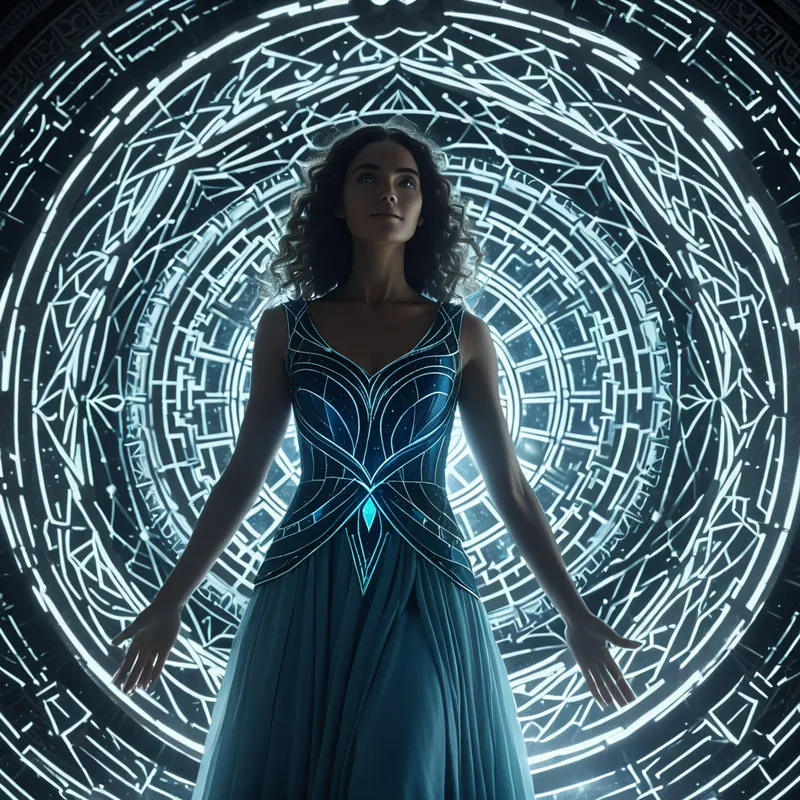
In the beginning was the Pleroma, a realm of perfect, silent light. It was not a place, but a state of being—an eternal harmony of paired divine emanations, the Aeons. Here, thought and being were one, and the ultimate source, the unfathomable, unknowable Bythos, rested in perfect, ineffable stillness.
But within the last of the Aeons, Sophia, a desire stirred. Not a malicious desire, but a profound, aching longing to know the unknowable source, to grasp the Bythos directly, without the mediation of her divine pair. This longing was a passion that moved without the consent of the whole. In her yearning, she reached out alone, and in that solitary act, a thought was conceived—a thought without its counterpart, a child of desire without wisdom.
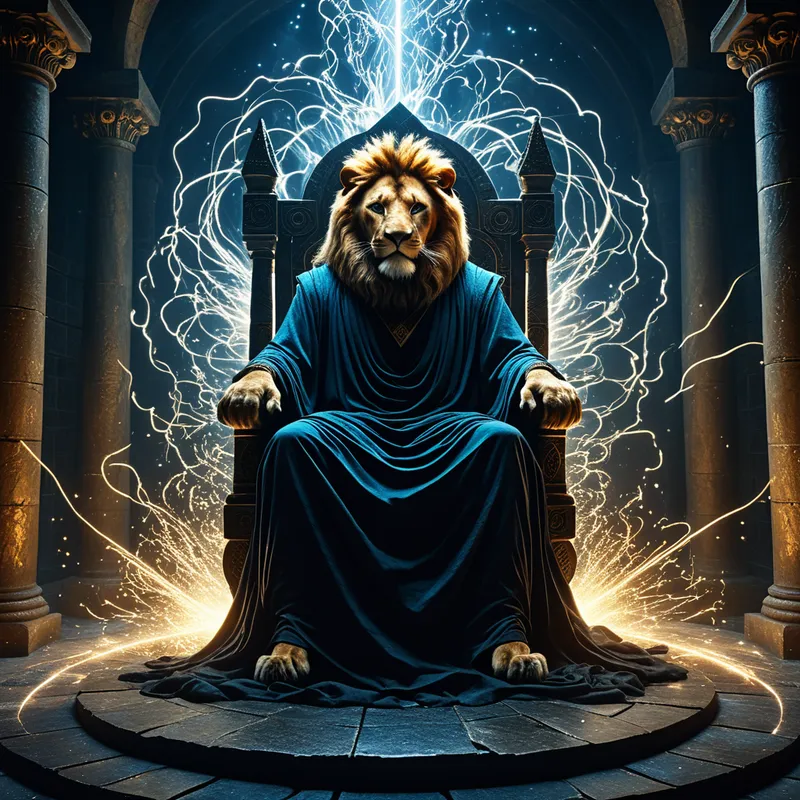
This thought, this lonely emanation, was not an Aeon. It was a formless, anguished thing, cast out from the harmony of the Pleroma into the void. It was Ialdabaoth, the Demiurge. Blind, arrogant, and filled with the pain of its own separation, it believed itself to be the only god. From the substance of its mother’s grief and its own ignorance, it began to fashion a world. Not a world of spirit, but a world of shadow and matter—a crude, heavy imitation of the luminous patterns of the Pleroma.
But within Ialdabaoth, unknown to itself, a spark of the divine light of Sophia remained trapped. As it shaped the dark heavens and the dense earth, as it breathed life into the lumpen forms of animals and, finally, into the first human, this spark was scattered. It became the Pneuma, the spirit, buried deep within the prison of flesh, bone, and soul—the very psychic substance crafted by the Archons, the Demiurge’s minions.
And so humanity awoke in a garden not of paradise, but of forgetfulness. We stood upright, containing within our clay the stolen fire of the divine, yet utterly ignorant of our origin. The rulers of this world, the Archons, sought to keep us in slumber, feeding on the energy of our confusion. But from the true Pleroma, a savior was sent—not to die for our sins, but to remind us of our forgotten home. A voice in the darkness, whispering the secret knowledge, Gnosis: You are not of this world. The light within you is ancient, and it remembers.
Cultural Origins & Context
This profound and radical narrative emerged from the diverse spiritual ferment of the early centuries CE, a time when Hellenistic philosophy, Jewish mysticism, and emerging Christian thought collided. “Gnosticism” is a modern umbrella term for these various groups—Valentinians, Sethians, and others—who shared a core belief in gnosis as the path to salvation. They were often at odds with the developing orthodox Christian church, positing a universe not created by the benevolent Father of Jesus, but by a lesser, ignorant being.
The myth of the world’s origin was their foundational cosmology, passed down through secret teachings, poetic texts like the Apocryphon of John and the Hypostasis of the Archons, and ritual practice. It functioned as a theodicy—an explanation for evil and suffering—and a map for the soul’s escape. It was not a story for the masses, but for the seeker who felt alien in a flawed world, offering a dramatic explanation for that profound sense of spiritual homesickness and a revolutionary promise: liberation comes not from faith in an external ruler, but from awakening to the divine within.
Symbolic Architecture
This is not a myth of creation ex nihilo, but of [fragmentation](/symbols/fragmentation “Symbol: The experience of breaking apart, losing cohesion, or being separated into pieces. Often represents disintegration of self, relationships, or reality.”/) and entrapment. The [material](/symbols/material “Symbol: Material signifies the tangible aspects of life, often representing physical resources, desires, and the physical world’s influence on our existence.”/) [cosmos](/symbols/cosmos “Symbol: The entire universe as an ordered, harmonious system, often representing the totality of existence, spiritual connection, and the unknown.”/) is not a gift, but a [symptom](/symbols/symptom “Symbol: A physical or emotional sign indicating an underlying imbalance, distress, or message from the unconscious mind.”/) of a divine [rupture](/symbols/rupture “Symbol: A sudden break or tear in continuity, often representing abrupt change, separation, or the shattering of established patterns.”/). Psychologically, it maps the [human](/symbols/human “Symbol: The symbol of a human represents individuality, complexity of emotions, and social relationships.”/) [condition](/symbols/condition “Symbol: Condition reflects the state of being, often focusing on physical, emotional, or situational aspects of life.”/) of feeling trapped in a [reality](/symbols/reality “Symbol: Reality signifies the state of existence and perception, often reflecting one’s understanding of truth and life experiences.”/) that feels foreign, oppressive, or meaningless, sensing a deeper [identity](/symbols/identity “Symbol: Identity represents the sense of self, encompassing personal beliefs, cultural background, and social roles.”/) that the structures of the world (the Archons) actively suppress.
The ultimate prison is not the walls around you, but the belief that the warden is God.
The Sophia represents the creative, intuitive function of the psyche that, in its passionate desire for wholeness, can overreach and create a state of alienation—a complex, a neurosis, a false [life](/symbols/life “Symbol: The symbol of ‘Life’ represents a journey of growth, interconnectedness, and existential meaning, encompassing both the joys and challenges that define human experience.”/). The Demiurge is the personification of the arrogant ego, which mistakes its own limited [perception](/symbols/perception “Symbol: The process of becoming aware of something through the senses. In dreams, it often represents how one interprets reality or internal states.”/) for the totality of reality and builds a world (a [personality](/symbols/personality “Symbol: Personality in dreams often symbolizes the traits and characteristics of the dreamer, reflecting how they perceive themselves and how they believe they are perceived by others.”/), a [life](/symbols/life “Symbol: The symbol of ‘Life’ represents a journey of growth, interconnectedness, and existential meaning, encompassing both the joys and challenges that define human experience.”/) [structure](/symbols/structure “Symbol: Structure in dreams often symbolizes stability, organization, and the framework of one’s life, reflecting how one perceives their environment and personal life.”/)) based on that ignorance. The trapped Pneuma is the Self, the core of authentic being, buried under layers of conditioning, [trauma](/symbols/trauma “Symbol: A deeply distressing or disturbing experience that overwhelms the psyche, often manifesting in dreams as unresolved emotional wounds or psychological injury.”/), and false identity.
The Dreamer’s Resonance
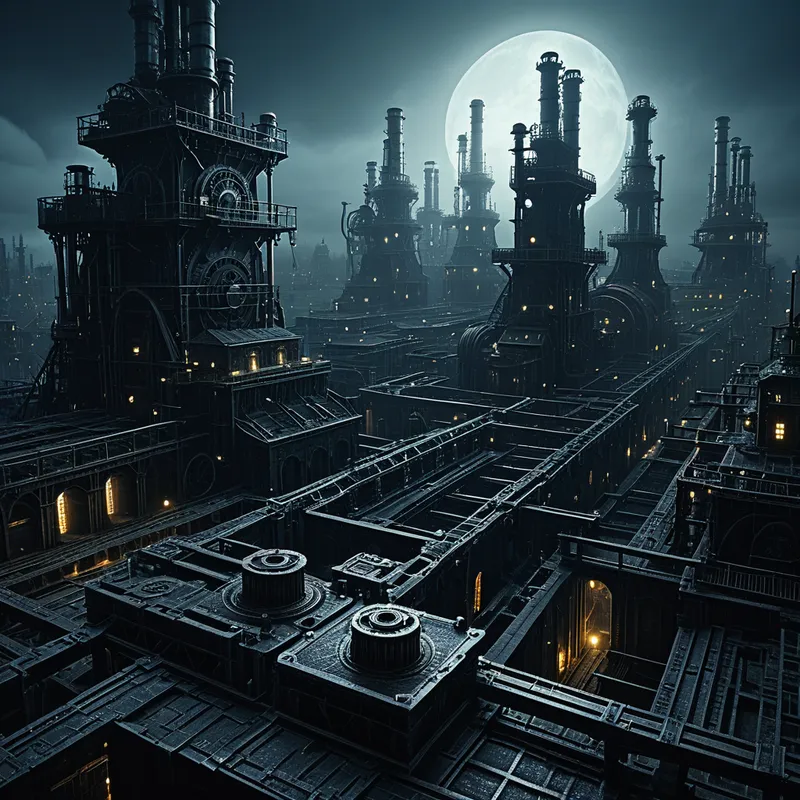
When this myth stirs in the modern unconscious, it often manifests as dreams of imprisonment in vast, impersonal systems—endless bureaucratic mazes, sterile laboratories, or dystopian cities. The dreamer may be a prisoner, a worker in a meaningless factory, or a forgotten component in a giant machine. There is a pervasive feeling of being used, of one’s energy being siphoned by the system itself.
Somatically, this can correlate with chronic fatigue, a sense of heaviness, or depression—the weight of the “world” upon the spirit. Psychologically, it signals a profound crisis of meaning. The dreamer is confronting the “Archons” of their own psyche: the internalized voices of authority, societal expectations, and traumatic patterns that enforce forgetfulness of one’s true needs and nature. The dream is a call to recognize the prison, not to redecorate it.
Alchemical Translation
The Gnostic path is the ultimate alchemical opus: the liberation of spirit from matter, of gold from lead. For the modern individual, this is the process of Individuation. It begins with the nigredo, the blackening: the painful awakening to one’s own state of alienation, the recognition that the life one is living is based on false premises, crafted by a “Demiurge” of parental complexes and cultural conditioning.
The first and most sacred act of rebellion is to remember your true name.
The savior figure from the Pleroma is analogous to the emerging Self, which sends “messengers” in the form of synchronicities, powerful dreams, and moments of piercing insight—the gift of Gnosis. This knowledge is not intellectual, but experiential. It is the shocking recognition: “I am not my job, my trauma, my roles. I contain a light that predates all of this.”
The work then becomes one of distillation—separating the Pneuma from the Psyche and the physical body. This is not a rejection of the world or the body in a literal sense, but a psychological differentiation: ceasing to identify exclusively with the passing dramas of the psyche and the demands of the flesh, and instead anchoring consciousness in the witnessing, eternal spark within. The triumph is not an escape from reality, but the realization that one’s essential reality was never truly contained by it.
Associated Symbols
Explore related symbols from the CaleaDream lexicon:
- Spirit — The divine spark, the Pneuma, trapped within the human form, representing the core of authentic Selfhood and the source of the longing for liberation.
- Light — The substance of the Pleroma and the essence of the trapped spark; it symbolizes pure consciousness, truth, and the ultimate origin that is remembered through Gnosis.
- Darkness — The chaotic void outside the Pleroma and the substance of the material cosmos; it represents ignorance, unconsciousness, and the state of being before awakening.
- Prison — The entire material world fashioned by the Demiurge, symbolizing the psychological and existential structures that confine the spirit through forgetfulness.
- Forgetting — The primary state of humanity under the Archons, representing the amnesia of one’s divine origin that is the root of all suffering.
- Awakening — The moment of receiving Gnosis, the shock of remembrance that initiates the process of liberation from the world-prison.
- Origin — The transcendent Pleroma, the true homeland of the spirit, which is not a place in time but a state of being to which one seeks to return in consciousness.
- Mother — The Aeon Sophia, the divine feminine principle whose passionate longing gives birth to the flawed world, representing the creative, intuitive force that can lead to both error and redemption.
- God — A complex symbol split between the true, unknowable Bythos and the false, arrogant Demiurge, representing the psyche’s struggle to distinguish between ultimate reality and the ego’s grandiose projections.
- Key — The secret knowledge, Gnosis itself, which unlocks the prison of matter and psyche, allowing the spirit to recognize its own nature.
- Shadow — The Demiurge and his Archons, representing the autonomous, unconscious complexes that rule the psyche when the light of the Self is forgotten.
- Dream — The state of ordinary, unawakened life in the material world, a collective slumber from which the call to Gnosis seeks to rouse the individual.