The Opus Myth Meaning & Symbolism
A sacred, perilous process of transmuting base matter into perfected gold, mirroring the soul's journey from fragmentation to wholeness.
The Tale of The Opus
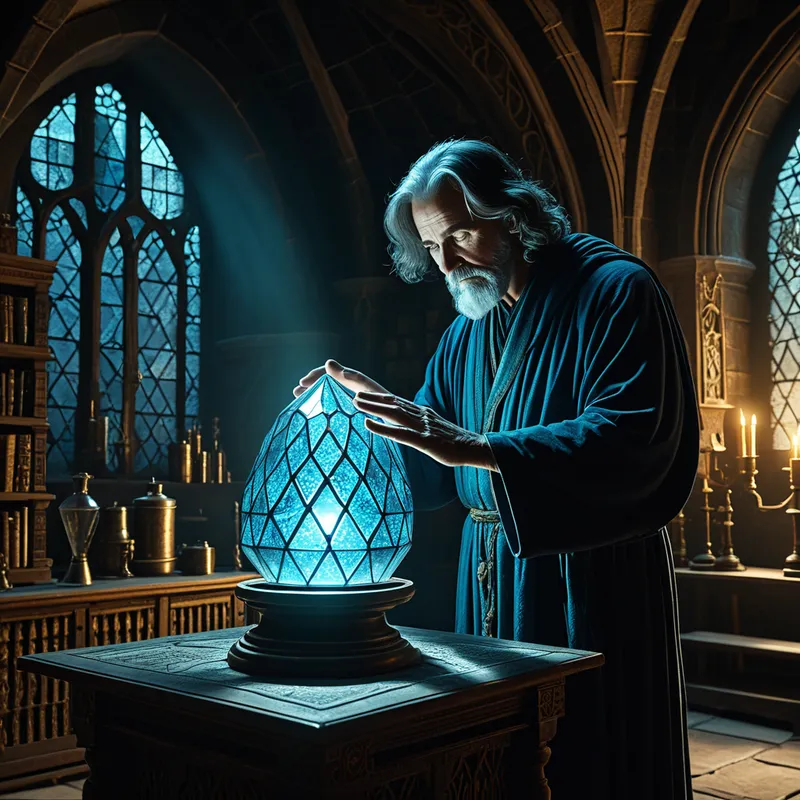
Listen, and I will tell you of [the Great Work](/myths/the-great-work “Myth from Alchemical culture.”/), the labor that is not a labor, the birth that is a death. It begins not with a hero, but with a substance: the Materia Prima. It lies in the mud of [the world](/myths/the-world “Myth from Tarot culture.”/), in the dross of the soul, heavy, dark, and despised. It is the lead of existence.
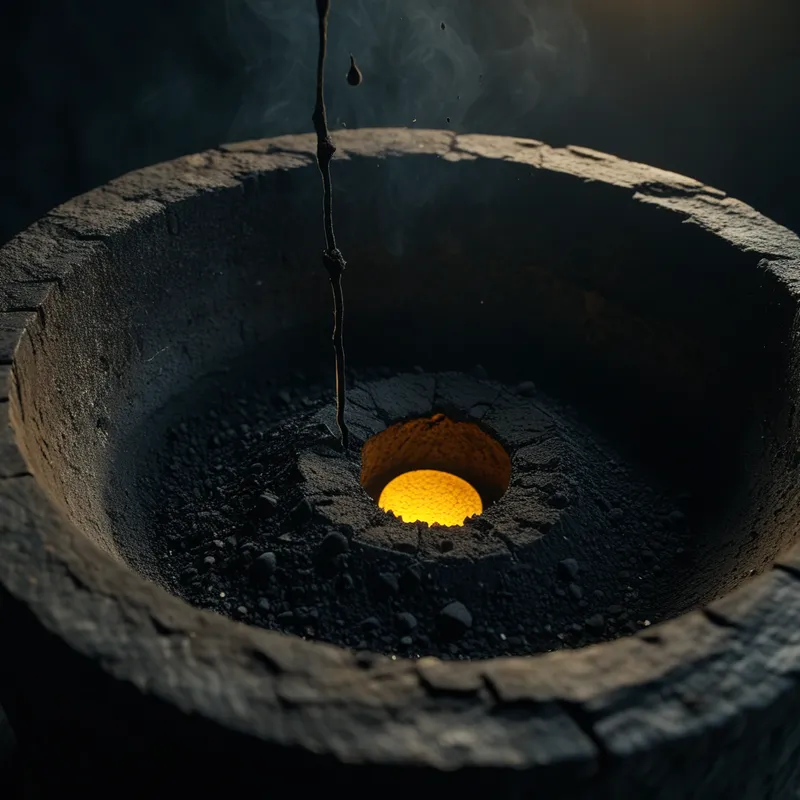
The Artifex does not seek this substance in far lands, but in the very center of their own workshop, which is a mirror of the cosmos. They gather the black earth, this [Nigredo](/myths/nigredo “Myth from Alchemical culture.”/), and place it within the sealed womb of the [Vas Hermeticum](/myths/vas-hermeticum “Myth from Alchemical culture.”/). The furnace is lit—not merely of coal and flame, but of intention and anguish. Here, in the profound dark, the matter rots. It sweats a black dew. It screams in silence as its forms break down. This is the death, the necessary putrefaction. All that was solid must become fluid; all identity must dissolve.
From this blackness, a miracle ascends. A spirit rises, a white vapor. It is the Anima, freed from its corpse. [The Artifex](/myths/the-artifex “Myth from Alchemical culture.”/), with infinite care, captures this essence. It condenses, it falls as a rain of light within [the vessel](/myths/the-vessel “Myth from Alchemical culture.”/). The blackness pales. A pure, blinding white emerges: the Albedo. It is [the moon](/myths/the-moon “Myth from Tarot culture.”/) captured in matter, a silvered dawn after a long night. It is clarity, but it is cold and solitary.
But the Work is not half done. The white must be married to the yellow, the moon to the sun. A gentle, sustained fire is applied. The white substance begins to blush with a golden hue. This is the Citrinitas, the awakening of a solar intelligence within the purified matter. It is knowledge, illumination, the dawning of a kingly consciousness from the virgin white.
Now comes the final trial, the conflagration. The fire is raised to its utmost intensity. This is the [Rubedo](/myths/rubedo “Myth from Alchemical culture.”/). In this crimson inferno, a final death threatens. The gold may shatter, may evaporate, may return to ash. The Artifex holds their breath, their will the only shield. And then, in the heart of the red, a new sun is born. It does not melt; it fixes. It becomes heavier than the world, yet radiant with an [inner light](/myths/inner-light “Myth from Buddhist culture.”/). It is the [Lapis Philosophorum](/myths/lapis-philosophorum “Myth from Alchemical culture.”/), [the Philosopher’s Stone](/myths/the-philosophers-stone “Myth from Alchemical culture.”/). A single grain of it, cast upon a mass of molten lead, transmutes the whole into purest gold. The Work is complete. The base has become noble. The One has been made from the Many.
Cultural Origins & Context
The myth of the Opus is not a story told around fires, but one encoded in cryptic manuscripts, emblematic woodcuts, and the sealed laboratories of early modern Europe. Its roots tap into Hellenistic Egyptian Hermeticism, Gnostic cosmology, and Aristotelian physics, synthesized by Arab scholars like Jabir ibn Hayyan before flowing into the Latin West. It was the central narrative of the alchemical tradition, a “secret history of the world” passed from master to apprentice, or discovered by the solitary seeker in the veiled language of symbols like the [Ouroboros](/myths/ouroboros “Myth from Global/Universal culture.”/) or the Chemical Wedding.
Its societal function was dual. Exoterically, it was a proto-scientific framework for understanding material transformation. Esoterically, and more profoundly, it was a spiritual psychology—a map for the redemption of the soul from the “lead” of sin and ignorance to the “gold” of enlightenment and unity with the divine. It was a myth for intellectuals, artists, and mystics operating at the fraught boundary between medieval dogma and the dawning empirical age.
Symbolic Architecture
The [Opus](/symbols/opus “Symbol: A spiritual or alchemical term for a great work of creation, often representing the culmination of a life’s purpose or a transformative process.”/) is the ultimate [symbol](/symbols/symbol “Symbol: A symbol can represent an idea, concept, or belief, serving as a powerful tool for communication and understanding.”/) of directed, conscious evolution. The Materia Prima represents the unrefined contents of the personal and [collective unconscious](/symbols/collective-unconscious “Symbol: The Collective Unconscious refers to the part of the unconscious mind shared among beings of the same species, embodying universal experiences and archetypes.”/)—our raw passions, traumas, and potential. It is the “[shadow](/symbols/shadow “Symbol: The ‘shadow’ embodies the unconscious, repressed aspects of the self and often represents fears or hidden emotions.”/)” [material](/symbols/material “Symbol: Material signifies the tangible aspects of life, often representing physical resources, desires, and the physical world’s influence on our existence.”/) we spend our lives avoiding.
The crucible is the ego. It must be strong enough to contain the heat of confrontation, yet porous enough to be transformed by it.
The stages are not chemical recipes, but phases of profound psychological ordeal. Nigredo is the dark [night](/symbols/night “Symbol: Night often symbolizes the unconscious, mystery, and the unknown, representing the realm of dreams and intuition.”/) of the [soul](/symbols/soul “Symbol: The soul represents the essence of a person, encompassing their spirit, identity, and connection to the universe.”/), depression, and the painful deconstruction of outworn identities. [Albedo](/symbols/albedo “Symbol: In alchemy, the whitening stage representing purification, spiritual ascension, and the emergence of consciousness from darkness.”/) is the washing clean, the [emergence](/symbols/emergence “Symbol: A process of coming into being, rising from obscurity, or breaking through a barrier, often representing birth, transformation, or revelation.”/) of [insight](/symbols/insight “Symbol: A sudden, deep understanding of a complex situation or truth, often arriving unexpectedly and illuminating hidden connections.”/) and a purified, but often too-disembodied, spiritual [awareness](/symbols/awareness “Symbol: Conscious perception of self, surroundings, or internal states. Often signifies awakening, insight, or heightened sensitivity.”/). Citrinitas is the [integration](/symbols/integration “Symbol: The process of unifying disparate parts of the self or experience into a cohesive whole, often representing psychological wholeness or resolution of internal conflict.”/) of this [spirit](/symbols/spirit “Symbol: Spirit symbolizes the essence of life, vitality, and the spiritual journey of the individual.”/) into a functioning wisdom, a “philosophical gold.” Finally, Rubedo is the full embodiment of this transformation, where [spirit](/symbols/spirit “Symbol: Spirit symbolizes the essence of life, vitality, and the spiritual journey of the individual.”/) and matter, conscious and unconscious, are irrevocably married in a new, steadfast state of being—the realized Self.
The Dreamer’s Resonance
When the Opus stirs in modern dreams, it announces a period of deep, often involuntary, psychic reorganization. You may dream of decaying buildings (Nigredo), of washing in pristine, cold waterfalls (Albedo), of finding a single golden coin in mud (Citrinitas), or of a heart or stone glowing with a steady red light (Rubedo).
Somatically, this can feel like a heavy, leaden fatigue giving way to a period of illness or purging (the putrefaction), followed by a strange, detached clarity, and eventually a surge of integrated vitality. Psychologically, it is the process of the conscious mind (the Artifex) finally turning to engage with the most rejected, “base” parts of the [psyche](/myths/psyche “Myth from Greek culture.”/) (the lead). The dream imagery confirms that the process, though felt as chaotic, follows an ancient, intelligent pattern. The sealed Vas Hermeticum is the total psychic environment of the dreamer—a safe but pressurized container where this dangerous work can proceed.
Alchemical Translation
For the modern individual, the Opus models the journey of Individuation. Our culture prizes the Albedo—the purified, positive, spiritual self—and fears [the Nigredo](/myths/the-nigredo “Myth from Alchemical culture.”/). We seek the gold of success without the death of the lead. The alchemical myth insists otherwise: wholeness is born only through the furnace.
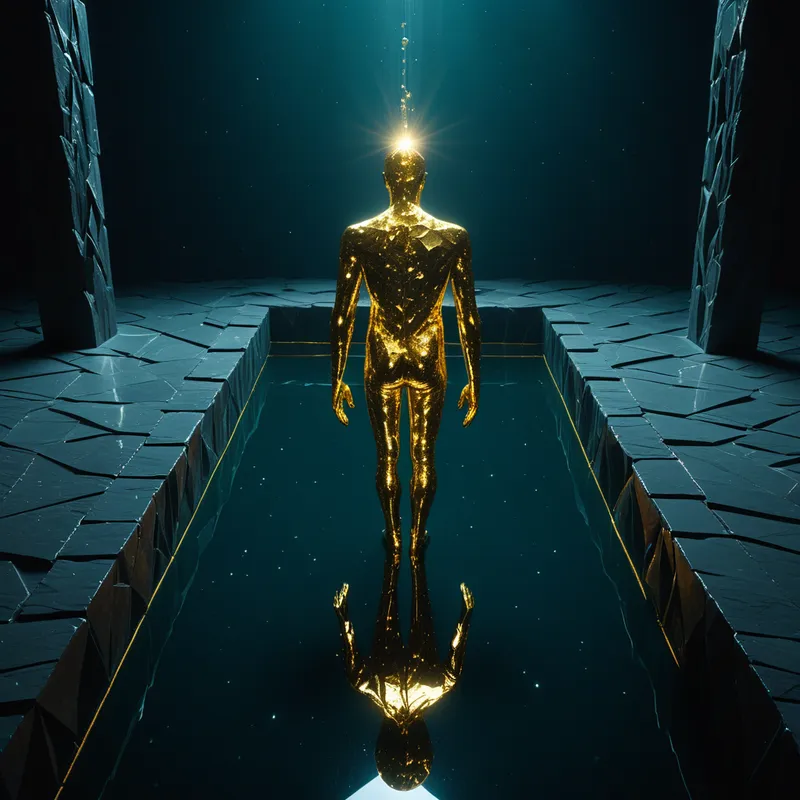
You do not find the Philosopher’s Stone; you become it. The transmutation of the world begins with the acceptance of your own base matter.
The practice is one of sacred attention. It is to take a recurring neurosis, a deep-seated fear, a chronic resentment—that is your lead. Instead of projecting it or fleeing from it, you place it in the inner vessel. You apply the fire of conscious, non-judgmental observation (the meditatio of the alchemists). You endure its blackening, its foul emissions. You wait for the release of its trapped spirit (the insight hidden within the wound). You purify that spirit through understanding, and finally, you integrate it, giving it a new, useful form in your life. That transformed complex is now gold—a source of resilience, empathy, or creativity that was previously inaccessible. The Opus teaches that the goal is not to be rid of our darkness, but to redeem it, thereby discovering that the seed of the divine stone was hidden within the lead all along.
Associated Symbols
Explore related symbols from the CaleaDream lexicon: