
The Ogham Myth Meaning & Symbolism
The myth of Ogma, who carved the first Ogham script from the world's memory, encoding the soul of the forest into a language of power and wisdom.
The Tale of The Ogham
Listen, and let the fire’s crackle become the rustle of leaves in a forgotten wood. In the time before memory hardened into history, when [the world](/myths/the-world “Myth from Tarot culture.”/) was a conversation between root and river, stone and star, there lived the Tuatha Dé Danann. Among them was Ogma, whose face shone with the light of crafted thought, a champion whose true weapon was [the word](/myths/the-word “Myth from Biblical culture.”/).
Yet, a silence threatened the land. Knowledge lived in the fleeting breath of bards, in the ephemeral patterns of clouds and birdflight. The deep wisdom of the fid, the trees, whispered only to those who could stand still for a lifetime. The gods themselves feared this wisdom might be lost, scattered like autumn leaves. The Dagda, the good god, saw this. He went to Ogma on the eve of a great council and spoke not with a command, but with a sigh that carried the weight of all unspoken things.
Ogma took himself away from the bright halls of the gods. He walked into the heart of the primordial forest, where the oak was king, the hazel a seer, and the yew a keeper of secrets. For three days and three nights, he did not eat, drink, or sleep. He simply listened. He pressed his ear to the damp bark of the ash and heard the world’s axis creak. He felt the vibrant, stubborn pulse of the [hawthorn](/myths/hawthorn “Myth from Celtic culture.”/)’s thorns. He traced the silver-barked birch, a ghost in the gloom, and understood beginnings.
On the fourth dawn, as first light speared through the canopy, inspiration struck like a lightning bolt that did not burn but illuminated. He took his knife, its blade forged from the ore of a fallen star. Before him stood a great pillar-stone, slick with morning dew. But he did not carve into the stone. Instead, he saw the stone as the world’s spine, and upon its edge, he would inscribe the world’s soul.
His hand moved. Not in random scratches, but in a language born of direct perception. A single straight line for the world-tree’s trunk. From it, at precise angles and numbers, he scored shorter lines—branches, roots, twigs. This was not a picture of a tree, but its essence captured in geometry. He carved the first character for Beith, the birch, a single stroke to the right of the stem-line: a clean start. Then Dair, the oak, with strokes like sturdy branches. Coll for the hazel of wisdom, Fearn for the alder that bridges worlds.
Each mark was a pact, a naming. He did not invent; he revealed. He listened to the alder’s whisper of battle and protection and gave it form. He felt the apple tree’s promise of [the otherworld](/myths/the-otherworld “Myth from Celtic culture.”/) and love, and let it flow through his blade. Twenty characters he carved, then twenty more for the later scholars, each a key to a kingdom of meaning—to a tree, a bird, a color, a virtue, a flaw. As the final stroke for the Iodha, the yew, was made, a great shudder went through the forest. Every tree of every kind, from the tallest pine to the lowliest fern, resonated. The knowledge was no longer loose in [the wind](/myths/the-wind “Myth from Various culture.”/). It was caught, crystallized, given a body. Ogma had given the land a tongue, and in doing so, had given his people a way to remember the soul of the world itself.

Cultural Origins & Context
[The Ogham script](/myths/the-ogham-script “Myth from Celtic culture.”/), as a historical artifact, is found carved on [standing stones](/myths/standing-stones “Myth from Celtic culture.”/) and artifacts primarily in Ireland, Wales, and Scotland, dating from roughly the 4th to 7th centuries CE. Its mythic origin, however, belongs to the later medieval Irish tradition, recorded by Christian scribes who preserved the native lore in manuscripts like the Book of Ballymote and the Book of Leinster. These scribes, often monks, were the inheritors of the bardic and filid (poet-seer) tradition.
The myth of Ogma’s creation served multiple societal functions. For the learned class, it provided a divine pedigree for their art of writing and cryptography, elevating their craft to a sacred mystery. In a culture where oral tradition was paramount, the myth sanctified the act of recording knowledge without diminishing the power of the spoken word—the [Ogham](/myths/ogham “Myth from Celtic culture.”/) was seen as a solidified echo of that speech. It also functioned as a mnemonic and pedagogical framework. Each letter (fid, meaning “wood”) was linked not just to a tree, but to a vast network of associations—a “tree-alphabet” that encoded the entire Celtic worldview, from law and medicine to calendar lore and magic. To learn the Ogham was to learn the interconnectedness of all nature.
Symbolic Architecture
At its core, the Ogham myth is about the [birth](/symbols/birth “Symbol: Birth symbolizes new beginnings, transformation, and the potential for growth and development.”/) of conscious articulation from the [womb](/symbols/womb “Symbol: A symbol of origin, potential, and profound transformation, representing the beginning of life’s journey and the unconscious source of creation.”/) of unconscious, natural wisdom. Ogma does not impose an arbitrary [system](/symbols/system “Symbol: A system represents structure, organization, and interrelated components functioning together, often reflecting personal or social order.”/); he midwifes a latent [language](/symbols/language “Symbol: Language symbolizes communication, understanding, and the complexities of expressing thoughts and emotions.”/) already present in the fabric of the world.
The forest does not speak in words, but in being. The Ogham is the human act of listening so deeply that the silence itself begins to form letters.
Ogma represents the archetypal union of [strength](/symbols/strength “Symbol: ‘Strength’ symbolizes resilience, courage, and the ability to overcome challenges.”/) and eloquence, the [warrior](/symbols/warrior “Symbol: A spiritual archetype representing inner strength, discipline, and the struggle for higher purpose or self-mastery.”/)-poet. His act of creation is not one of brute force, but of receptive strength. The central conflict—the potential [loss](/symbols/loss “Symbol: Loss often symbolizes change, grief, and transformation in dreams, representing the emotional or psychological detachment from something or someone significant.”/) of primal wisdom—is resolved not by hoarding or guarding, but by translating. The vertical stem-line against which the characters are scored is the [axis](/symbols/axis “Symbol: A central line or principle around which things revolve, representing stability, orientation, and the fundamental structure of reality or consciousness.”/) mundi, the spinal [column](/symbols/column “Symbol: A vertical architectural support representing strength, stability, and connection between earth and sky. It symbolizes structure, tradition, and spiritual ascent.”/) of [reality](/symbols/reality “Symbol: Reality signifies the state of existence and perception, often reflecting one’s understanding of truth and life experiences.”/). Each Ogham [letter](/symbols/letter “Symbol: A letter symbolizes communication, messages, and the sharing of thoughts and feelings.”/) is then a nerve branching from that [spine](/symbols/spine “Symbol: The spine symbolizes strength, support, and the foundational structure of one’s life and identity.”/), a specific channel of the world-[soul](/symbols/soul “Symbol: The soul represents the essence of a person, encompassing their spirit, identity, and connection to the universe.”/)’s [energy](/symbols/energy “Symbol: Energy symbolizes vitality, motivation, and the drive that fuels actions and ambitions.”/) made intelligible.
Psychologically, the myth maps the process of making the unconscious conscious. The boundless, whispering [forest](/symbols/forest “Symbol: The forest symbolizes a complex domain of the unconscious mind, representing both mystery and potential for personal growth.”/) is the [psyche](/myths/psyche “Myth from Greek culture.”/) in its raw, undifferentiated state. Ogma’s focused listening is [the ego](/myths/the-ego “Myth from Jungian culture.”/)’s disciplined [attention](/symbols/attention “Symbol: Attention in dreams signifies focus, awareness, and the priorities in one’s life, often indicating where the dreamer’s energy is invested.”/) turned [inward](/symbols/inward “Symbol: A journey toward self-awareness, introspection, and the exploration of one’s inner world, thoughts, and unconscious mind.”/). The carved stave is the nascent [structure](/symbols/structure “Symbol: Structure in dreams often symbolizes stability, organization, and the framework of one’s life, reflecting how one perceives their environment and personal life.”/) of the conscious mind—[the ego](/myths/the-ego “Myth from Jungian culture.”/)-complex—that provides a [framework](/symbols/framework “Symbol: Represents the underlying structure of one’s identity, emotions, or life. It signifies the mental or emotional scaffolding that supports or confines the self.”/) to organize, name, and ultimately communicate the contents of the inner world. It is the foundational act of [psyche](/myths/psyche “Myth from Greek culture.”/) giving form to itself.
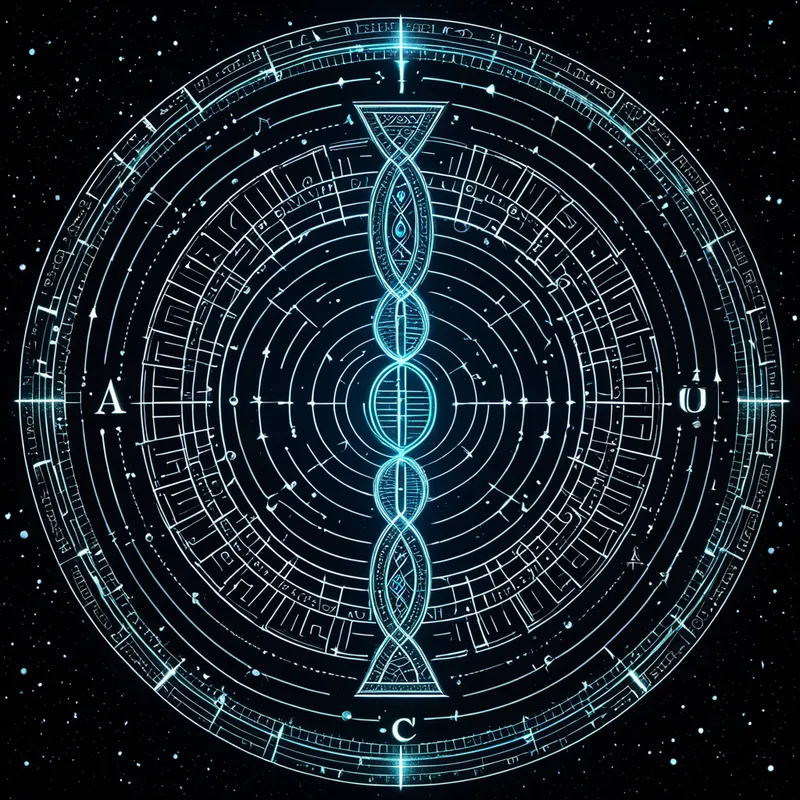
The Dreamer’s Resonance
When the Ogham appears in modern dreams, it rarely manifests as a scholarly chart. More often, it is experienced somatically and symbolically. A dreamer may find themselves running their fingers over strange, grooved markings on a stone or tree in a deep wood, feeling a surge of intuitive knowing. They may see glyphs of light floating in [water](/myths/water “Myth from Chinese culture.”/) or etched into their own skin. They might dream of trying to speak, but only producing rustling leaves or the sound of wind through branches.
These dreams signal a critical psychological process: the emergence of a personal, organic language of the soul. The dreamer is at a point where deep, instinctual, or emotional knowledge—previously inarticulate, like the forest’s whisper—is seeking formulation. It is the psyche’s attempt to create its own “Ogham,” a unique symbolic system to express what words alone cannot. The somatic feeling of touching the grooves is key; it represents the need to engage physically with this inner knowledge, to carve it into the substance of one’s life. The struggle to speak in tree-sounds indicates a transition phase where old modes of expression fail, and a new, more authentic vocabulary is being born from the depths.
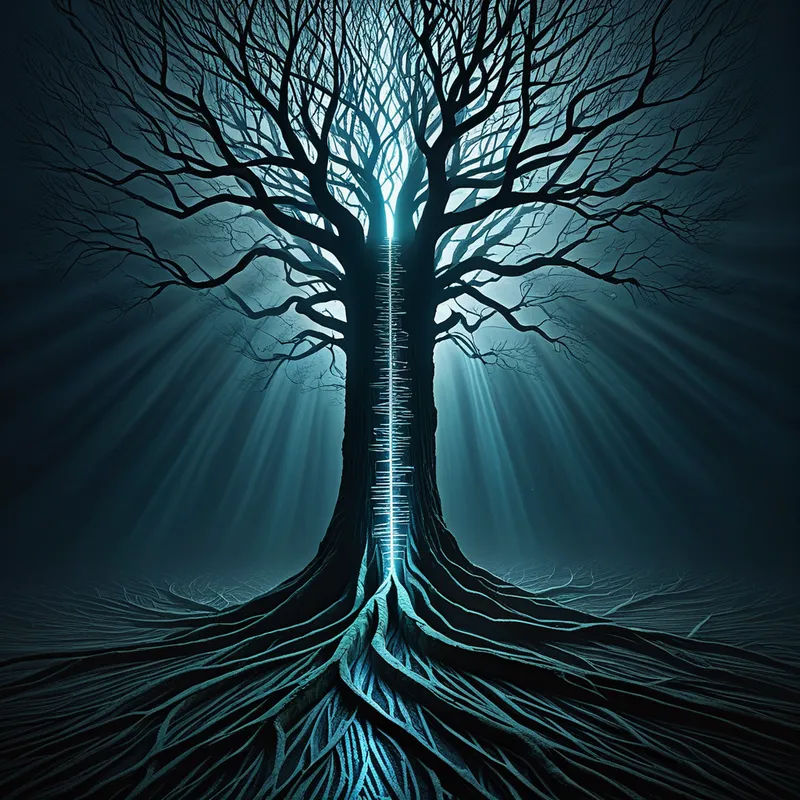
Alchemical Translation
The alchemical journey modeled by the Ogham myth is that of psychic crystallization. The [prima materia](/myths/prima-materia “Myth from Alchemical culture.”/) is the chaotic, fertile, and overwhelming richness of the unconscious (the primordial forest). [The first stage](/myths/the-first-stage “Myth from Alchemical culture.”/), [nigredo](/myths/nigredo “Myth from Alchemical culture.”/), is Ogma’s silent vigil—the withdrawal from the collective “bright halls” into the dark wood of [the self](/myths/the-self “Myth from Jungian culture.”/), a period of confusion and listening.
The knife is not a weapon, but a tool of distinction. It separates the essential pattern from the noise of mere growth.
The albedo, the whitening, is the moment of dawn illumination, where a pattern is perceived in the chaos. Ogma’s act of carving is the [rubedo](/myths/rubedo “Myth from Alchemical culture.”/), the reddening or embodiment—the application of focused will ([the star](/myths/the-star “Myth from Tarot culture.”/)-iron blade) to fix the perceived pattern into a durable, transmissible form. The final shudder of the forest is the citrinitas, the yellowing or spiritualization, where the entire system is integrated and activated; the personal insight resonates through the whole of the personality.
For the modern individual, this translates to the work of individuation. We are all surrounded by the internal “forest” of our complexes, instincts, and archetypal potentials. The myth instructs us to first listen in receptive silence, to let the inner figures speak in their own pre-verbal ways. Then, we must find our own “stem-line”—a core value, a central wound, a life theme—that will serve as our personal axis. Upon this, we consciously “carve” our insights through journaling, art, therapy, or ritual, creating a structured, personal mythology that makes sense of our experience. We move from being lost in the woods to becoming the cartographer of our own soul. The Ogham is not just an alphabet to be learned, but a process to be lived: the eternal human act of giving sacred form to the formless within.
Associated Symbols
Explore related symbols from the CaleaDream lexicon: