The Ocean of the Soul Myth Meaning & Symbolism
A mystical tale of a drop's journey from the ocean, its forgetting, and its longing to return to the boundless source of all being.
The Tale of The Ocean of the Soul
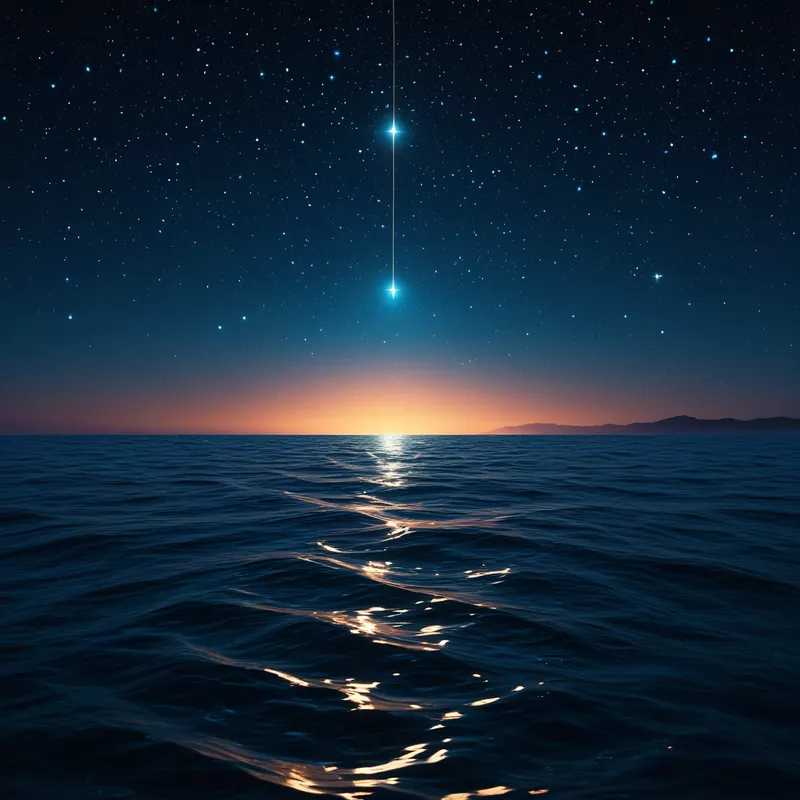
Listen, and let the story be told. In the time before time, there was only the Ocean. Not an ocean of salt and wave, but an Ocean of Being, a boundless, silent, luminous expanse of pure consciousness. It was the Soul of all that is, was, and ever could be. Within its depths, there was no otherness, no separation, only the profound, knowing stillness of the One.
From this Ocean, in a moment of divine mystery, a single, perfect Drop was drawn forth. It sparkled with the full light of its source, knowing itself as both distinct and utterly one with the vastness. A gentle, loving wind—the breath of longing—carried the Drop away. It traveled across the plains of manifestation, through the veils of creation, until it found itself in a strange, dry land. This was the world of form, of names, of separation.
Here, the Drop forgot. The dust of the earth settled upon it. It took on a shape—a human shape—and with that shape came a name, a story, a history. It looked into the still pools of this world and saw only a reflection, believing that fragile image to be its whole and true self. It felt alone. A deep, wordless ache took root in its center, a homesickness for a home it could not name. It built shelters of identity, gathered possessions like dry twigs, and sought solace in other forgotten drops, yet the hollow echo within never ceased.
Then, one night, under a sky pierced by a cold, clear star, the wind returned. It was not the gentle wind of exile, but a fierce, cleansing gale from the east. It scoured the dust from the Drop’s surface. In that moment of raw exposure, a memory stirred—not a memory of thought, but of being. A scent on the wind, a certain quality of light at dawn, the sound of rain on stone, all became secret messengers whispering of the Ocean.
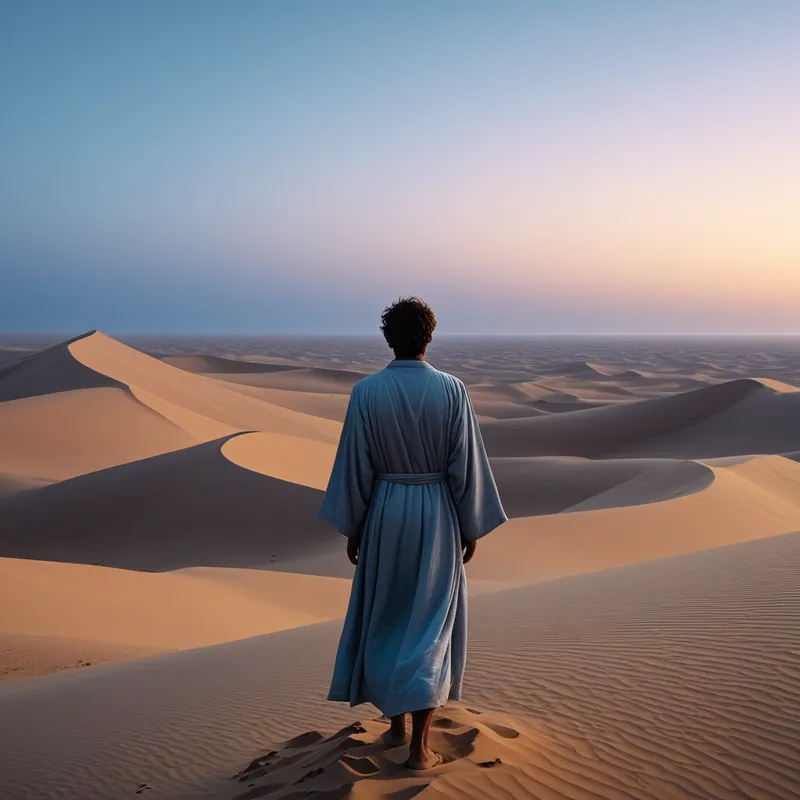
Thus began the great turning, the Journey of return. The Drop, now a seeker, began to walk. It left the crowded markets of the self and entered the desert of annihilation. Thirst became its constant companion, a thirst that no well in the world could quench. It followed the hidden streams that flowed beneath the sand, the subtle pull in the heart that always, always pointed toward the unseen sea.
Many times it despaired, believing itself lost. Many times it mistook a mirage for the shore. But the memory, now a quiet song, would not let it rest. Finally, after lifetimes of wandering, it crested a final dune. And there, stretching to the edge of eternity, was the Ocean—not as a distant dream, but as a living, breathing presence. With a cry that was both grief and ecstasy, the Drop rushed forward. In the moment it touched the surface, its individual form dissolved. There was no more drop, no more ocean. There was only the glorious, silent, knowing All. The journey was over. The seeker had found itself, and it was Home.
Cultural Origins & Context
This is not a myth with a single author or text, but the crystalline essence of a worldview. It is the heart-song of Sufism, distilled into narrative. It finds its voice in the ecstatic poetry of Rumi, who wrote, “You are not a drop in the ocean. You are the entire ocean in a drop.” It whispers in the treatises of Ibn Arabi and his doctrine of the “Oneness of Being.” It is sung in the qawwali music of the Indian subcontinent and recited in the dhikr (remembrance) circles where the name of God is chanted to dissolve the ego.
Passed down from master (shaykh) to disciple (murid), its function was never mere entertainment. It was a map of the soul and a mirror for the aspirant. It served to diagnose the human condition—the profound amnesia of separation—and to prescribe the cure: the path of love, remembrance, and annihilation of the ego (fana). In a society often focused on external law, this myth upheld the primacy of the inner, direct experience of the Divine.
Symbolic Architecture
The myth’s power lies in its stark, universal [symbolism](/symbols/symbolism “Symbol: The use of symbols to represent ideas or qualities, often conveying deeper meanings beyond literal interpretation. In dreams, it’s the language of the unconscious.”/). The [Ocean](/symbols/ocean “Symbol: The ocean symbolizes the vastness of the unconscious mind, representing deeper emotions, intuition, and the mysteries of life.”/) represents the unmanifest ground of all [reality](/symbols/reality “Symbol: Reality signifies the state of existence and perception, often reflecting one’s understanding of truth and life experiences.”/), the divine essence or Haqq. It is the unconscious, not as a personal repository of memories, but as the transpersonal, collective ground of being from which [consciousness](/symbols/consciousness “Symbol: Consciousness represents the state of awareness and perception, encompassing thoughts, feelings, and experiences.”/) itself emerges.
The Ocean does not yearn for the drop; it is the drop that dreams it is separate.
The Drop is the individuated [soul](/symbols/soul “Symbol: The soul represents the essence of a person, encompassing their spirit, identity, and connection to the universe.”/), the ego-consciousness born into the world of duality. Its [journey](/symbols/journey “Symbol: A journey in dreams typically signifies adventure, growth, or a significant life transition.”/) is the archetypal [human](/symbols/human “Symbol: The symbol of a human represents individuality, complexity of emotions, and social relationships.”/) experience: the fall into identification with the [persona](/symbols/persona “Symbol: The social mask or outward identity one presents to the world, often concealing the true self.”/), the resulting existential alienation, and the spark of divine [nostalgia](/symbols/nostalgia “Symbol: A bittersweet longing for past experiences, places, or relationships, blending memory with emotional resonance.”/) that initiates the search for meaning. The dry land of forms is the [material](/symbols/material “Symbol: Material signifies the tangible aspects of life, often representing physical resources, desires, and the physical world’s influence on our existence.”/) world of illusion (maya), where we mistake the transient for the real.
The wind is the activating principle—sometimes grace, sometimes suffering—that disrupts our complacency and forces the [movement](/symbols/movement “Symbol: Movement symbolizes change, progress, and the dynamics of personal growth, reflecting an individual’s desire or need to transform their circumstances.”/) toward wholeness. The final [dissolution](/symbols/dissolution “Symbol: The process of breaking down, dispersing, or losing form, often representing transformation, release, or the end of a state of being.”/) is not [death](/symbols/death “Symbol: Symbolizes transformation, endings, and new beginnings; often associated with fear of the unknown.”/), but the psychological and spiritual [achievement](/symbols/achievement “Symbol: Symbolizes success, mastery, or reaching a goal, often reflecting personal validation, social recognition, or overcoming challenges.”/) of fana, the ego’s surrender to a larger reality, leading to baqa, living in the world while rooted in the divine.
The Dreamer’s Resonance
When this myth stirs in the modern psyche, it often manifests as dreams of vast, awe-inspiring, or terrifying bodies of Water. To dream of standing on a shore, longing to swim but fearing the depths, speaks to the soul’s call toward a deeper, more authentic life, met by the ego’s resistance. Dreams of being a small boat on a boundless sea mirror feelings of existential loneliness and the search for direction.
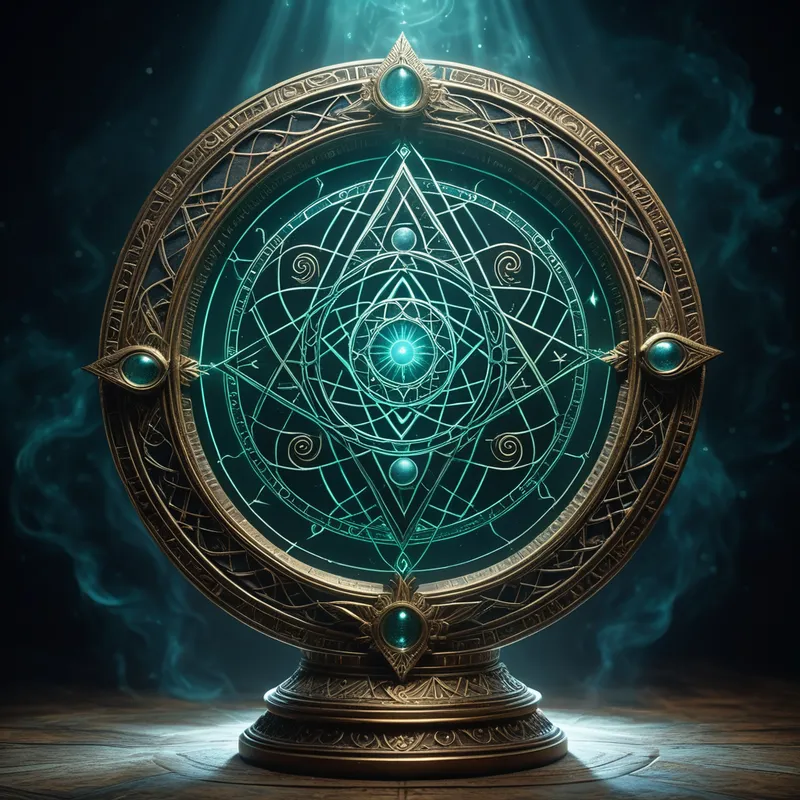
A potent modern motif is the Mirror. Dreaming of a mirror that reflects not your face, but a swirling ocean or starry sky, signals a breakthrough—the intellectual self-concept is beginning to transparently reveal the vast, impersonal psyche behind it. This can be both liberating and deeply unsettling, a somatic experience often felt as a vertigo of identity, a literal “loss of footing” in the familiar world of the ego.

Alchemical Translation
For the individual, this myth charts the path of individuation. The first stage is the painful, honest recognition of our orphanhood—the Orphan archetype. We must feel the truth of our separation, our “drop-ness,” our identification with our wounds, roles, and history. This is the nigredo, the dark night of the soul.
The alchemy begins not with seeking gold, but with admitting one is lead.
The journey through the desert is the arduous work of analysis, of confronting the Shadow, and dismantling the complexes that bind us to the dry land. Each insight, each moment of self-honesty, is a step toward the sea. The final approach and dissolution represent the coniunctio, the sacred marriage. Here, the conscious ego does not battle the unconscious Ocean but surrenders to it, realizing it is made of the same substance. The individual personality is not destroyed but is paradoxically fulfilled by recognizing its fundamental non-separateness from the whole. The person returns to life, but now as a conscious vessel of the Ocean—grounded, compassionate, and free, carrying the water of life into the world’s deserts.
Associated Symbols
Explore related symbols from the CaleaDream lexicon:
- Ocean — The boundless, undifferentiated divine reality, the collective unconscious, and the source from which all individual souls originate and to which they ultimately return.
- Soul — The divine essence within the individual, the spark of the Ocean that experiences separation and longs for reunification.
- Water — The element of the unconscious, emotion, spiritual sustenance, and the fluid medium of transformation on the soul’s journey.
- Mirror — The reflective surface of self-examination, which can either show the ego’s illusion or, when polished clean, reveal the Oceanic reality behind the image.
- Journey — The archetypal path of the soul from forgetfulness to remembrance, from exile to homecoming, encompassing both external seeking and internal awakening.
- Door — The threshold between the known world of the ego and the unknown vastness of the Ocean, representing the moment of choice to begin the return.
- Heart — The inner seat of true knowing and longing in Sufism, the organ of perception that remembers the Ocean when the intellect has forgotten.
- Light — The illuminating grace or awareness that dispels the dust of forgetfulness and guides the soul back toward its luminous source.
- Rebirth — The psychological and spiritual transformation achieved not through physical birth, but through the ego’s dissolution and rediscovery of its Oceanic nature.
- Dream — The liminal space where the memory of the Ocean can surface, offering guidance, solace, and reminders of the soul’s true origin and destiny.
- Bridge — The practices of prayer, meditation, love, and remembrance that span the perceived chasm between the individual soul and the divine Ocean.
- Endless Ocean — A specific depiction of the divine source emphasizing its infinite, timeless, and all-encompassing nature, beyond all conceptual boundaries.