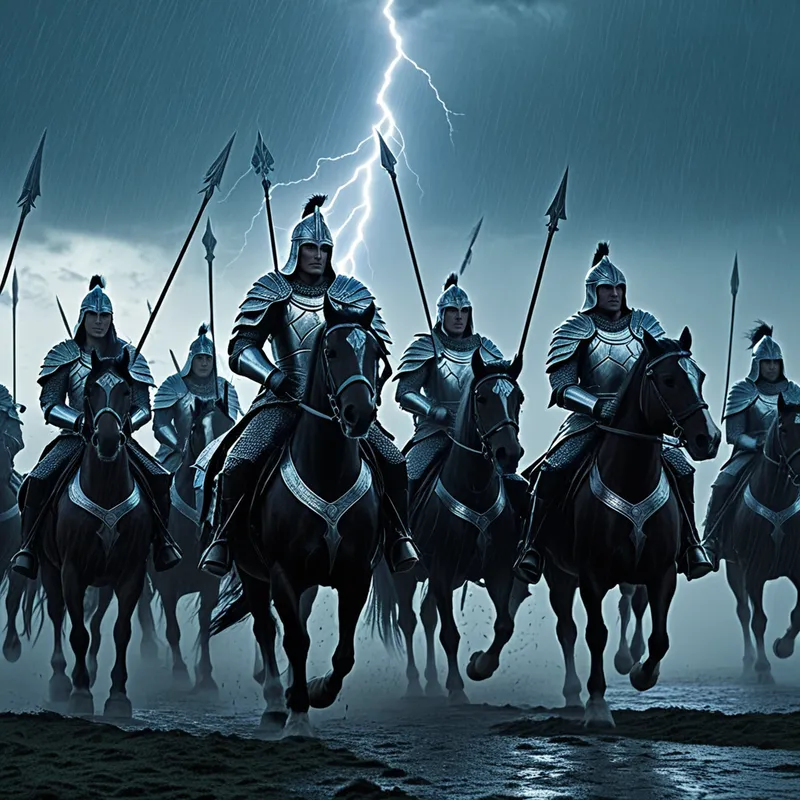
The Norse Valkyries riding thr Myth Meaning & Symbolism
Maidens of Odin who ride through storms to choose the slain, weaving fate from the loom of battle and guiding souls to the hall of heroes.
The Tale of The Norse Valkyries riding thr
Hear now the song of the storm-riders, the whisper in the gale that is not wind. The sky is not empty. When the thunder god growls and the clouds bruise the heavens purple and black, they are coming. They are the Valkyries, and their horses tread the tempest as if it were solid ground.
Listen. Below, on the field of Fólkvangr, men clash. Iron rings on iron, a terrible music. The air is thick with the scent of wet earth, blood, and fear. A warrior, his shield splintered, stands back-to-back with his brother. He knows his death is near. He does not beg. He roars, a challenge to the darkening sky.
And the sky answers.
A crack of lightning splits the world, and in its after-image, you see them. Nine—or maybe countless—shapes descending. Not falling, but riding. Their mounts are steeds of cloud and shadow, yet their hooves strike sparks from the very air. They wear byrnies that gleam like frozen moonlight, and their cloaks are the grey of impending rain. Their faces are terrible in their beauty, impassive as mountains, eyes holding the chill of distant stars.
They do not join the fray. They are its weavers. One, perhaps Göndul, points her spear, and its tip seems to draw the thread of a man’s fate. Another, maybe Skögul, catches the final breath of a dying jarl on the flat of her shield. They move through the carnage untouched, a serene and dreadful procession. To the warrior who fought with courage, whose heart did not fail, a Valkyrie approaches. She does not speak, but her presence is a cool balm. She reaches out a hand not to take, but to receive.
From his fallen body, a shimmering form rises—his hugr, his essence. It is not dragged, but guided. He looks upon the maiden of the storm, and in her gaze, he sees not an end, but a gateway. She lifts him onto her steed, behind her, and with a cry that is half battle-shout, half song, she spurs her horse upward. They ascend, leaving the mud and grief below, piercing the cloud-veil, riding the thunder’s path toward the golden lights of Valhalla, where the mead is endless and the heroes prepare for the final dawn.
The storm abates. The field is silent, save for the rain washing the blood. The Valkyries are gone. But in the hall of the gods, a new bench is filled, and the loom of fate has been threaded with another golden strand.
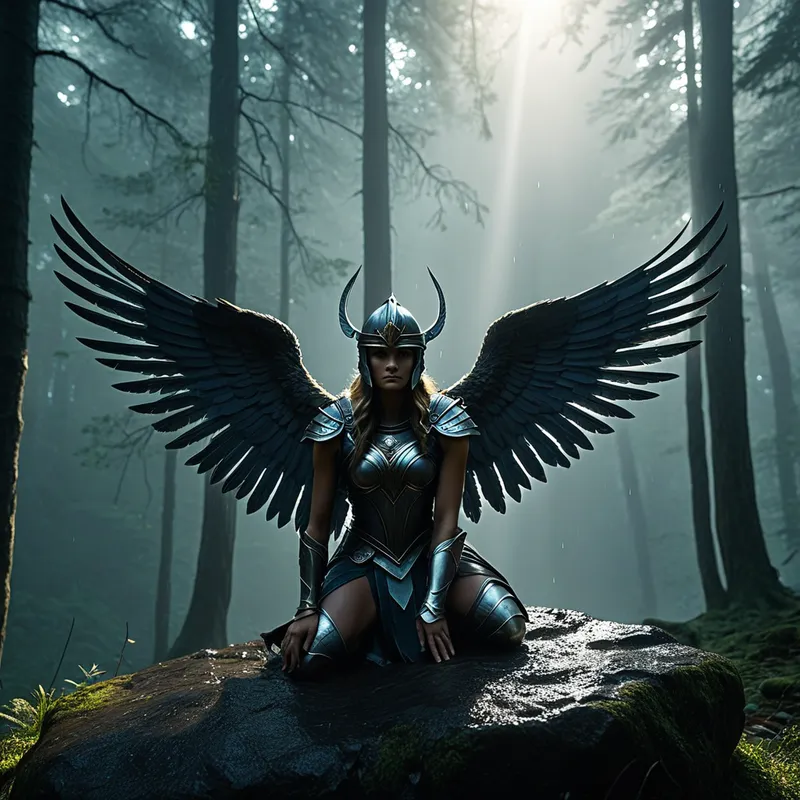
Cultural Origins & Context
The myth of the Valkyries rides from the heart of the Norse world, a culture forged in the harsh beauty of Scandinavia. These stories were not mere fantasy but a vital cosmology, passed down through skalds (poets) in mead-halls, woven into eddic poetry like the Helgakviða Hundingsbana and the Hávamál. They functioned on multiple levels. Societally, they reinforced the warrior ethos, providing a glorious, purposeful afterlife for those who died with honor, thus encouraging bravery and sacrifice in battle. Psychologically, they offered a framework for understanding the arbitrariness and majesty of death in combat—fate was not random, but chosen by semi-divine beings serving a higher purpose. The Valkyries were intermediaries, bridging the human and divine, making the terrifying transition from life to death a guided journey overseen by powerful, feminine figures. They were Odin’s agents, executing his will in gathering the Einherjar for the coming of Ragnarök, embedding individual death within a grand, cosmic narrative.
Symbolic Architecture
The Valkyrie is a supreme symbol of active fate. She is not a passive spinner like the Norns, but an executor who descends into the chaos of human struggle to enact a divine selection.
The Valkyrie represents the moment when impersonal destiny takes a personal form, looking you in the eye and recognizing your essence.
Her ride through the storm symbolizes the psyche navigating the tumult of extreme experience—crisis, passion, or life-or-death struggle. The battlefield is the arena of our most consequential choices, where character is forged. The armor signifies discrimination—the ability to be amidst chaos without being dissolved by it. Most profoundly, her function is dual: she is a bringer of death, yet also a psychopomp, a caregiver for the soul. She does not kill; she chooses and then escorts. This transforms death from a mere end into a rite of passage, presided over by a feminine authority. The horse, a symbol of instinctual power and journey, becomes the vehicle for transcendence, carrying the spirit from the earthly plane (Miðgarðr) to the mythic plane (Valhalla).
The Dreamer’s Resonance
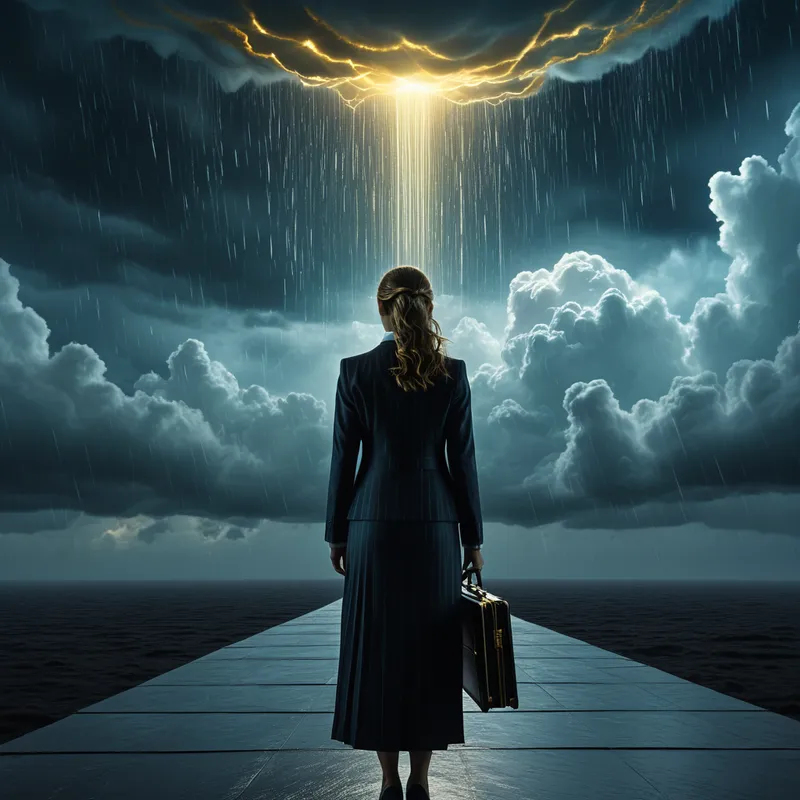
To dream of the Valkyries riding is to feel the psyche organizing itself around a moment of profound internal selection or crisis. It seldom appears as a literal medieval scene. More often, it manifests somatically as a feeling of being watched or chosen during a life storm—a career upheaval, the end of a relationship, a health diagnosis. The dreamer may see authoritative, imposing feminine figures in modern settings (a decisive CEO in a boardroom storm, a calm nurse in an ER) who make a fateful decision.
This dream pattern signals a psychological process of discernment under pressure. The unconscious is mobilizing its valkyric function: assessing which parts of the old self (outmoded identities, dependencies, cowardices) must be “slain” and which qualities of courage, integrity, or skill are worthy of being “chosen” and elevated to a new level of consciousness. The anxiety in the dream is the battlefield; the Valkyrie figure is the psyche’s own capacity to make a ruthless, necessary choice for the sake of a greater integration. You are both the warrior on the field and the chooser from above.
Alchemical Translation
The alchemical journey mirrored in this myth is the transmutation of the leaden ego into the golden self through the ordeal of choice. The base metal is the unexamined life, clinging to safety. The battlefield is the nigredo, the dark night of the soul, where everything is in conflict and dissolution.
The Valkyrie’s spear is the penetrating insight that separates the essential from the ephemeral in the heat of your personal struggle.
The “riding through the storm” is the active, courageous engagement with this darkness, not fleeing from it. The critical alchemical stage is the separatio, and the Valkyrie is the archetypal force that performs it. She discerns the “gold”—the core of authentic character, the brave deed, the moment of truth—from the “dross” of fear, pretense, and cowardice. By “choosing the slain,” she facilitates a sacred death of the outgrown self. The guided ascent to Valhalla represents the elevatio, the lifting of this purified essence (the golden quality) into the hall of the conscious personality, where it is integrated and honored. Thus, the individual does not just endure their battles; they are selected by their own higher nature for an enlarged existence. The myth teaches that our most difficult trials are not punishments, but arenas where the valkyrie within chooses what parts of us are destined for the eternal feast of a more complete being.
Associated Symbols
Explore related symbols from the CaleaDream lexicon: