The Norns of Norse mythology Myth Meaning & Symbolism
Three sisters dwell at the root of the World Tree, weaving the threads of destiny for all beings from the past, present, and future.
The Tale of The Norns of Norse mythology
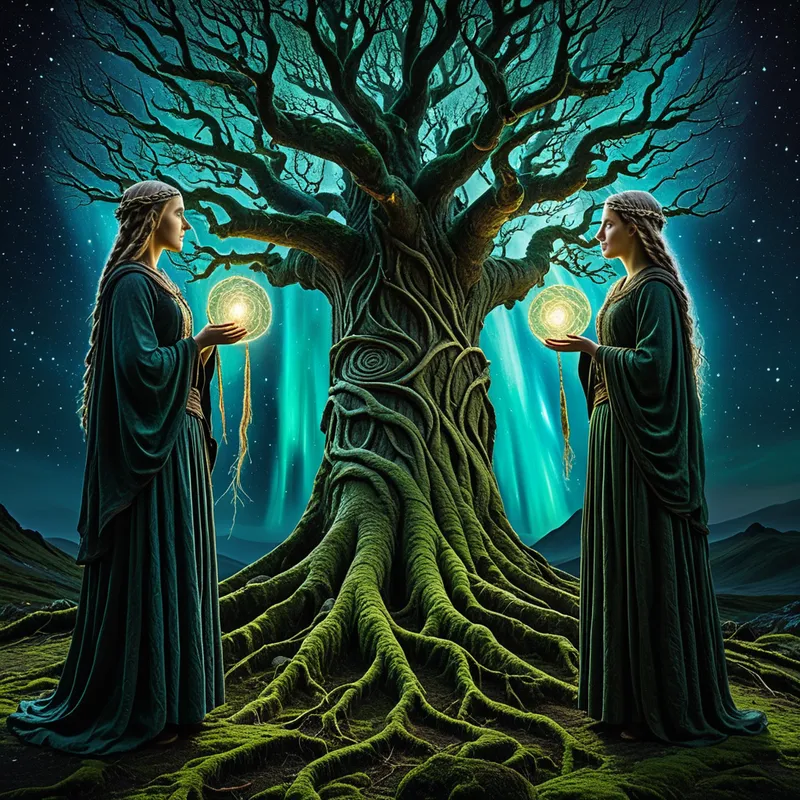
Listen, and hear the whisper from the root of all things. Beneath the groaning, sky-spanning branches of Yggdrasil, where the air is thick with the scent of damp earth and ancient moss, there is a place where time pools. It is a well, dark and still as a forgotten memory, named Urd. Here, no sun pierces the canopy of the World Tree. Light comes only from the faint, fateful glow of threads and the silent radiance of the three who tend them.
They are the Norns. They do not dwell in the golden halls of the Aesir or the smithies of the dwarves. Their home is here, at the axis of the worlds, where the serpent Nidhogg gnaws in the darkness and the eagle screams from the highest bough.
The first is Urd. Her face is a map of all that has ever been, etched with the lines of fallen kings, forgotten battles, and first loves. Her eyes hold the deep, patient darkness of the well itself. The second is Verdandi. Her gaze is sharp, fixed on the now, her posture that of one caught in the act of decisive creation. Her hands are never still. The third is Skuld. She is often veiled, a figure of “shall” and “must,” holding a scroll that is both blank and densely written. She is the debt not yet paid, the consequence yet to unfold.
Each day, they draw water from the Well of Urd, water that is memory and time made liquid, and mix it with the sacred white clay that gathers at the root. This mud they spread upon the great tree, staunching its wounds, slowing the decay that even the World Tree cannot escape. This is their first duty: to sustain all existence.
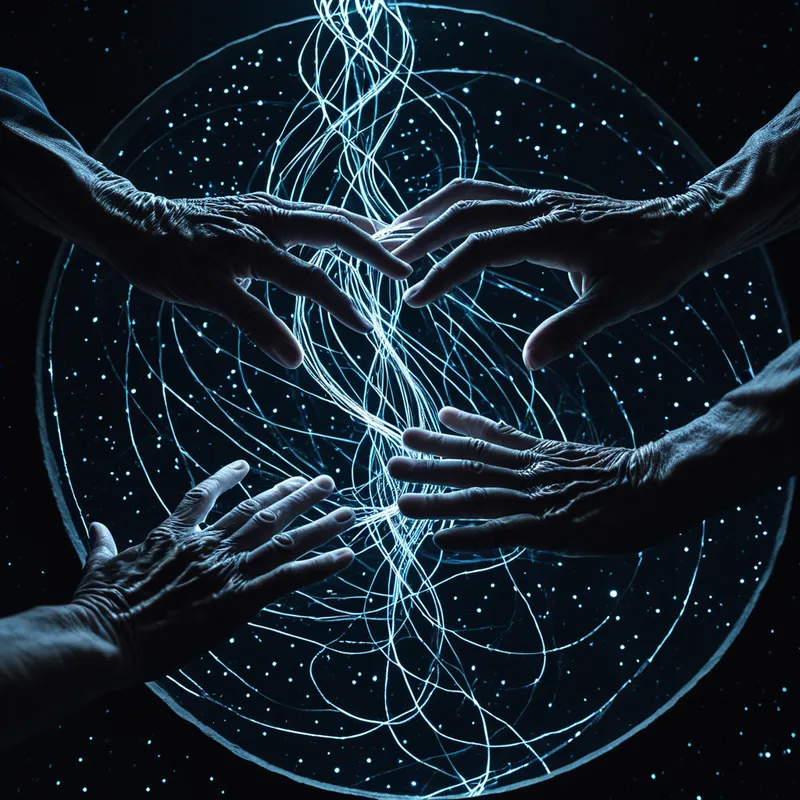
But their deeper work is the weaving. From nothing seen by mortal eyes, they draw forth threads. Urd’s thread comes from the well’s depths, spun from what has already happened. Verdandi takes it, her fingers flying, giving it form and tension in the present moment. Skuld’s hand rests upon the weave, not to cut, but to measure its necessary length, to impose the inescapable shape of what is owed.
They weave the örlög of all beings. The thread of a newborn god in Asgard glitters beside the coarse, short strand of a mortal farmer. The golden cord of Odin is complex and knotted with secrets, while the sinewy thread of the mighty Thor thrums with raw power. Even the gods, in their splendor, must come to this quiet place. Odin himself rides down on Sleipnir to seek counsel, to peer into the water and see the grim pattern of Ragnarok taking shape in the Norns’ tapestry. They speak no comfort, only truth. For they do not command fate; they attend it. They are its scribes and its gardeners, watering the Tree with the past to keep the present alive, while the future waits, veiled and inevitable, in the silent sister’s hands.
Cultural Origins & Context
The myth of the Norns springs from the rich, stark soil of pre-Christian Norse and Germanic belief, recorded primarily in the 13th-century Icelandic Poetic Edda and Prose Edda. Unlike the centralized myths of Mediterranean cultures, these stories were lived in a world perceived as fundamentally hostile and impermanent, a cosmology where even the gods were doomed. The Norns embody this worldview.
They were not the subjects of widespread cult worship but were pervasive figures of awe and existential understanding. Their myth was likely carried by skalds (poets) and elders, woven into the fabric of everyday fatalism. In a culture where harsh climate, voyage, and battle made life precarious, the concept of örlög—the layer of fate laid down at one’s birth—was a psychological anchor. The Norns gave this force a face and a process. They answered the profound human question of “why” not with divine whim, but with an impersonal, weaving logic. Their presence at the root of Yggdrasil placed them at the absolute center of the Norse cosmic model, indicating that fate, not the gods, was the ultimate operating principle of the universe. They served to humble the mighty and contextualize the struggles of the lowly, framing all life within a grand, inscrutable, but orderly tapestry.
Symbolic Architecture
The Norns represent the human psyche’s encounter with the fundamental parameters of existence: Time, Cause, and Consequence. They are not a single deity but a trinity, reflecting a profound understanding that these forces are interdependent and process-oriented.
Urd (Past) symbolizes the given, the unalterable foundation. She is the weight of personal and collective history, the trauma, the heritage, the sunk cost. Verdandi (Present) is the act of becoming, the point of agency where the thread of the past is engaged and given current form. Skuld (Future) embodies necessity and debt—the psychological and karmic consequences of present actions that shape what “shall be.”
They are the three faces of causality: the source, the action, and the inevitable result. To stand before them is to see the self not as a static being, but as a living event stretched across time.
Their setting is equally symbolic. The Well of Urd is the unconscious, the dark pool where all memories and past experiences are stored. The water and mud they use to heal Yggdrasil signify that engaging with and integrating the past (“watering the tree with memory”) is essential for the health of the entire psychic system. They do not dwell in a hall but at a root, at the foundational, often hidden level of reality where primary patterns are set.
The Dreamer’s Resonance
When the pattern of the Norns emerges in modern dreams, it signals a profound somatic and psychological engagement with one’s own life narrative. Dreaming of three women (often of different ages) by a tree, a well, or engaged in weaving, points to the dreamer’s psyche processing fate, choice, and time.
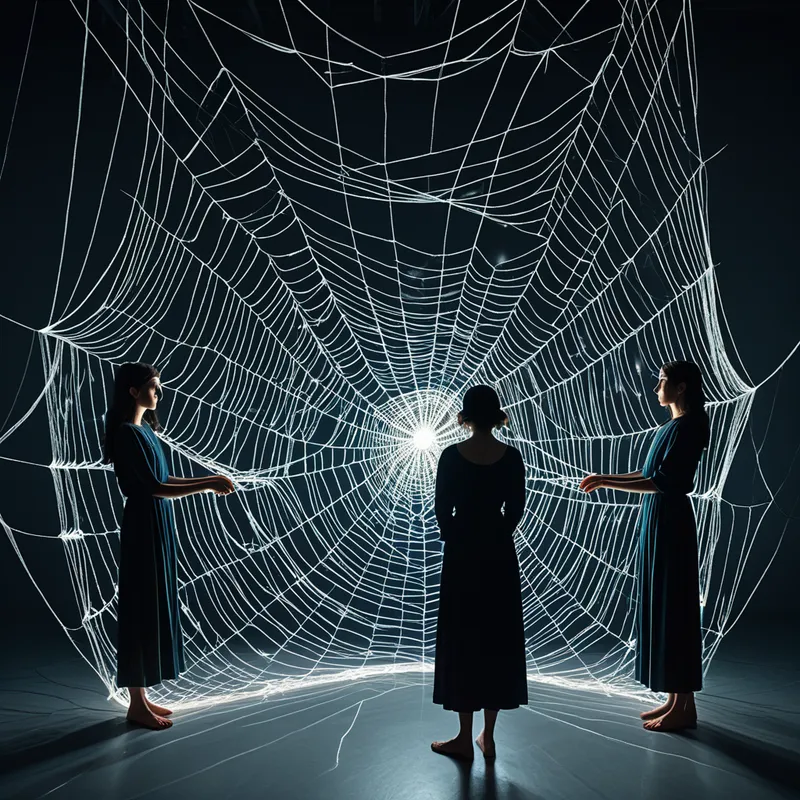
This dream motif often surfaces during life transitions—career changes, the end of a relationship, a health diagnosis, or a midlife reckoning. The somatic feeling can be one of awe mixed with dread, a sense of being “woven into” a larger pattern. The dreamer might feel their own hands trying to grasp or change the threads, representing a struggle with agency versus destiny. Alternatively, they may be a passive observer, which can reflect feelings of powerlessness or a need to surrender to a process larger than the ego. The Norns in dreams compel the dreamer to ask: “What threads from my past am I currently working with? What debt (Skuld) am I creating with my present choices? What part of my destiny feels woven, and what part feels like my own hands are on the loom?”
Alchemical Translation
The alchemical process modeled by the Norns is the transmutation of blind fate into conscious destiny. It is the work of individuation—not by escaping one’s thread, but by taking up the shuttle.
The first stage (Urd) is Nigredo: confronting the black waters of the personal and ancestral past. One must look into the Well of Urd, acknowledging the wounds, patterns, and gifts that form the base material of one’s life. This is the unalterable ore.
The second stage (Verdandi) is Albedo and Citrinitas: the purification and working of the material in the present. Here, in the “now,” the ego (the conscious self) engages with the thread it has been given. Through reflection, choice, and action, it begins to weave its unique pattern. This is where free will operates—not in choosing the thread, but in deciding how to weave it.
The alchemical gold is not freedom from the tapestry, but the conscious, creative participation in its weaving. One becomes, for a moment, a fourth Norn—the aware weaver of a self.
The third stage (Skuld) is Rubedo: the realization and integration of consequence. Skuld’s veil represents the unknown future, but her presence insists that every choice carries a weight that will shape what is to come. To integrate Skuld is to live with responsibility, to accept that one’s present actions are incurring a future that must be met. The triumph is not in avoiding the debt, but in understanding its nature and meeting it with eyes open, thus completing the cycle where future consequence becomes integrated into the wisdom of the past. The psyche heals its own world-tree by continually drawing up, working with, and honoring the full timeline of its existence.
Associated Symbols
Explore related symbols from the CaleaDream lexicon: