The Norns at the Well of Urd Myth Meaning & Symbolism
Three ancient beings weave destiny at the roots of the World Tree, where past, present, and future flow from a sacred, fateful well.
The Tale of The Norns at the Well of Urd
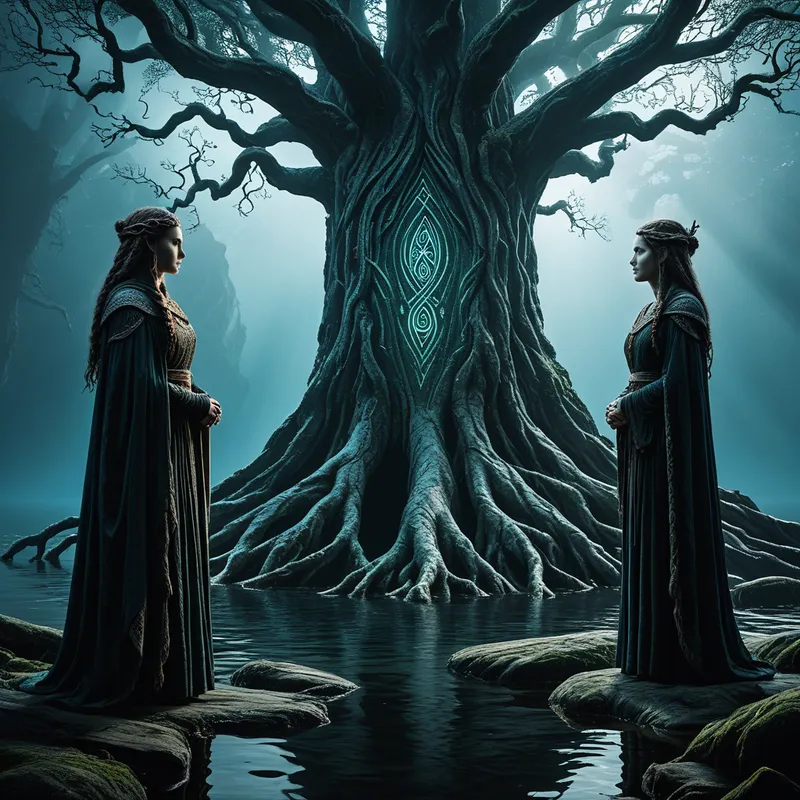
Beneath the groaning weight of the worlds, in the deep, silent dark where even the eagle’s cry cannot reach, the roots of the [Yggdrasil](/myths/yggdrasil “Myth from Global/Universal culture.”/) drink. Here, where the soil is not soil but the memory of creation, lies a well of [water](/myths/water “Myth from Chinese culture.”/) so still it is a mirror of black glass. This is [Urðarbrunnr](/myths/urarbrunnr “Myth from Norse culture.”/), [the Well of Urd](/myths/the-well-of-urd “Myth from Norse culture.”/). And here, they dwell.
They arrive not with fanfare, but with the inevitability of frost forming on stone. [Three sisters](/myths/three-sisters “Myth from Native American culture.”/), ancient beyond the counting of years. Their names are a whisper on the root-wind: Urd, whose face is a map of all that has ever been, etched with the lines of every choice, every fallen leaf, every spoken word now dust. Verdandi, whose eyes hold the sharp, clear light of the present moment, a flame that dances on the well’s surface. [Skuld](/myths/skuld “Myth from Norse culture.”/), who is veiled, her form shifting like mist, holding a scroll yet unopened, a sheathed blade, a promise and a debt.
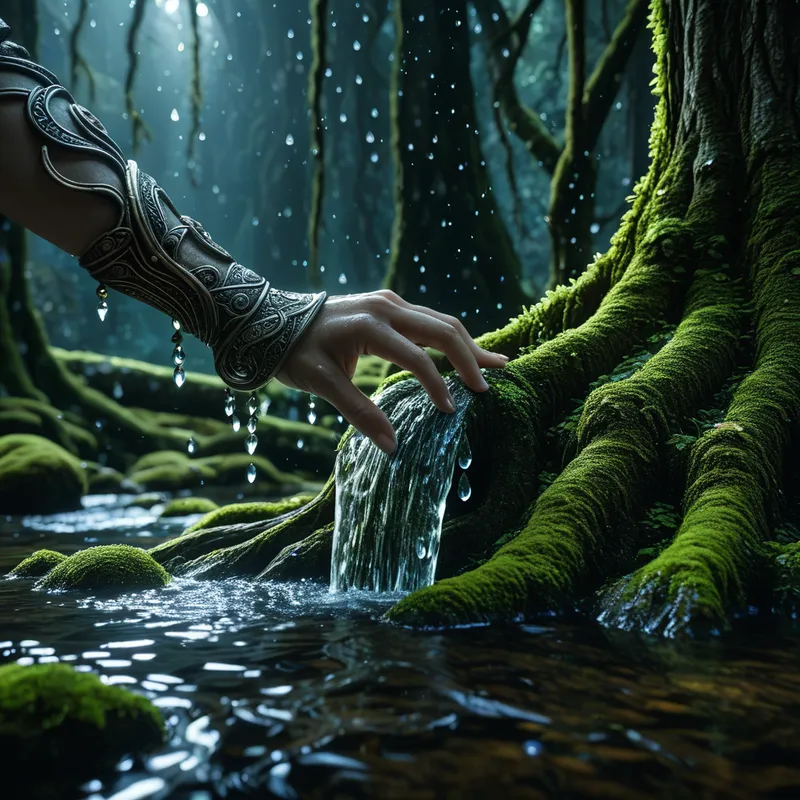
Each day is an eternity. Urd, her back bent with the weight of yesterdays, dips a great horn into the black water. It comes forth not with simple water, but with a liquid so dense with time it is like molten clay. With this, she anoints the root of the Yggdrasil, lest it rot and all [the Nine Worlds](/myths/the-nine-worlds “Myth from Norse culture.”/) crumble into [the void](/myths/the-void “Myth from Buddhist culture.”/). The tree shudders, a continent shifting, and the water soaks into its fibers, becoming sap, becoming life, becoming history.
Verdandi tends the moment. She takes from the well water that is clear and cold, and with it, she washes the root, cleansing it of the clinging mud of decay and regret. In her hands, the present is a act of pure, focused attention. She sees [the worm](/myths/the-worm “Myth from Biblical culture.”/) [Nidhogg](/myths/nidhogg “Myth from Norse culture.”/) gnawing below, hears the chatter of the eagle above, feels the tremor of a god’s footstep in Asgard. She does not stop them; she witnesses. This is what is.
And Skuld… Skuld weaves. From a pouch at her side, she draws threads. Some are spun from the very mist of the well, glistening and new. Others are coarse and strong, pulled from the fabric of Urd’s memories. Yet others are thin, almost invisible, plucked from the air around Verdandi’s working hands. She does not weave a tapestry, for that implies an end. She weaves a net, an ever-expanding, ever-changing web of cause and consequence, of debt and possibility. She cuts threads with a small, sharp knife, and new ones instantly form. This is what must be, the necessity born of what was and what is.
The gods themselves, the mighty Aesir, ride down the Bifrost to this silent place. They come not to command, but to consult. They sit by the well, their divine light dimmed in this primordial dark, and ask for a glimpse into the water. [The Norns](/myths/the-norns “Myth from Norse culture.”/) do not speak prophecies. They show reflections. Urd shows the root of the question, the old grievance or oath that led to this moment. Verdandi shows the precise alignment of forces, the position of every piece on the board. Skuld shows the threads pulling tight from the action they contemplate, the snarled knot or the sudden, sweeping path it may create. The gods leave with knowledge, but never with certainty, for the well shows what is written in the water of time, and even the written word can blur with a new drop.
This is the endless work at the foot of the tree. No grand battles are fought here, yet every battle is decided here. No lives are lived here, yet every life is measured here. It is the quiet, ceaseless hum of existence itself—the carving of the past, the tending of the now, the weaving of the next—at the Well of Urd.
Cultural Origins & Context
This myth comes to us primarily from the Poetic Edda, specifically the Völuspá (The Prophecy of the Seeress) and detailed in the later Prose Edda of Snorri Sturluson. It was not a story for the feasting hall’s entertainment, but a foundational cosmological concept passed down by skalds and wise women. Its societal function was profound: it established a worldview where fate (ørlög) was not a random force but a woven fabric, influenced by past actions (ørlög) and present choices. The [Norns](/myths/norns “Myth from Nordic culture.”/) represented the impersonal, inescapable structure of reality itself. Unlike the Greek Fates, who were often seen as merciless cutters of life-threads, the Norns’ roles included sustenance (watering Yggdrasil) and maintenance. They were integral to the cosmos’s health, making them objects of reverence and awe, not just fear. Their presence at the birth of every child, where they laid down that individual’s ørlög, shows how this myth personalized destiny, connecting the vast cosmic order to the life of every farmstead and family.
Symbolic Architecture
The myth presents a profound symbolic [system](/symbols/system “Symbol: A system represents structure, organization, and interrelated components functioning together, often reflecting personal or social order.”/) for understanding time, causality, and [consciousness](/symbols/consciousness “Symbol: Consciousness represents the state of awareness and perception, encompassing thoughts, feelings, and experiences.”/). The Yggdrasil is the [axis](/symbols/axis “Symbol: A central line or principle around which things revolve, representing stability, orientation, and the fundamental structure of reality or consciousness.”/) of [reality](/symbols/reality “Symbol: Reality signifies the state of existence and perception, often reflecting one’s understanding of truth and life experiences.”/), the [structure](/symbols/structure “Symbol: Structure in dreams often symbolizes stability, organization, and the framework of one’s life, reflecting how one perceives their environment and personal life.”/) of the [psyche](/myths/psyche “Myth from Greek culture.”/) and [the world](/myths/the-world “Myth from Tarot culture.”/). The Well of Urd is the unconscious, the deep, dark [reservoir](/symbols/reservoir “Symbol: A contained body of water representing stored resources, emotions, or potential, often signifying controlled or suppressed aspects of the self.”/) of all [memory](/symbols/memory “Symbol: Memory symbolizes the past, lessons learned, and the narratives we construct about our identities.”/), experience, and latent potential—the waters of time itself.
The three Norns are not three separate fates, but the three inseparable faces of time’s single action: its sedimentation into memory, its manifestation as the present moment, and its propulsion into consequence.
Urd symbolizes the psychic past—not just historical events, but the accumulated [weight](/symbols/weight “Symbol: Weight symbolizes burdens, responsibilities, and emotional loads one carries in life.”/) of our personal and ancestral [history](/symbols/history “Symbol: History in dreams often represents the dreamer’s past experiences, lessons learned, or unresolved issues that continue to influence their present.”/), our complexes, and our ingrained patterns. She is the part of us that is shaped, even defined, by what has happened. Verdandi is conscious [attention](/symbols/attention “Symbol: Attention in dreams signifies focus, awareness, and the priorities in one’s life, often indicating where the dreamer’s energy is invested.”/)—[the ego](/myths/the-ego “Myth from Jungian culture.”/)’s [capacity](/symbols/capacity “Symbol: A measure of one’s potential, limits, or ability to contain, process, or achieve something, often reflecting self-assessment or external demands.”/) to perceive and engage with the present. She is the function that cleanses, that focuses, that holds the now. Skuld is the emergent future, the necessary [outcome](/symbols/outcome “Symbol: Outcome symbolizes the results of actions or decisions, often reflecting hopes, fears, and the consequences of choices.”/) shaped by the interplay of the past (Urd) and present [action](/symbols/action “Symbol: Action in dreams represents the drive for agency, motivation, and the ability to take control of situations in waking life.”/) (Verdandi). She is not a predetermined [script](/symbols/script “Symbol: The symbol of ‘script’ indicates a narrative or roadmap for one’s life, representing the conscious and unconscious stories we tell ourselves.”/), but the logical, often unavoidable, result of cause and effect within the psyche. Her [veil](/symbols/veil “Symbol: A veil typically symbolizes concealment, protection, and transformation, representing both mystery and femininity across cultures.”/) signifies that the future is obscured not by [mystery](/symbols/mystery “Symbol: An enigmatic, unresolved element that invites curiosity and exploration, often representing the unknown or hidden aspects of existence.”/) alone, but by the complexity of the weaving still in progress.
The Dreamer’s Resonance
When this myth stirs in modern dreams, it signals a profound engagement with the deep structures of one’s life. Dreaming of three women at a well, a great tree with roots in water, or a sense of being weighed and measured points to a somatic and psychological process of confronting one’s ørlög.
The dreamer may be at a crossroads where past patterns (Urd) are heavily influencing present choices (Verdandi), creating a palpable sense of an impending, fated outcome (Skuld). Somatic sensations might include a feeling of deep roots, heaviness, or being “watered” by an unknown source. Psychologically, it is the process of making the unconscious conscious—drawing water from the well of the past to understand the root of a current crisis. A dream where the well is dry speaks to a disconnection from one’s history or instincts; a dream where the waters are turbulent suggests unresolved past trauma bubbling up. The Norns in dreams are rarely comforting; they are factual, forcing the dreamer to look at the unvarnished weave of their own life.
Alchemical Translation
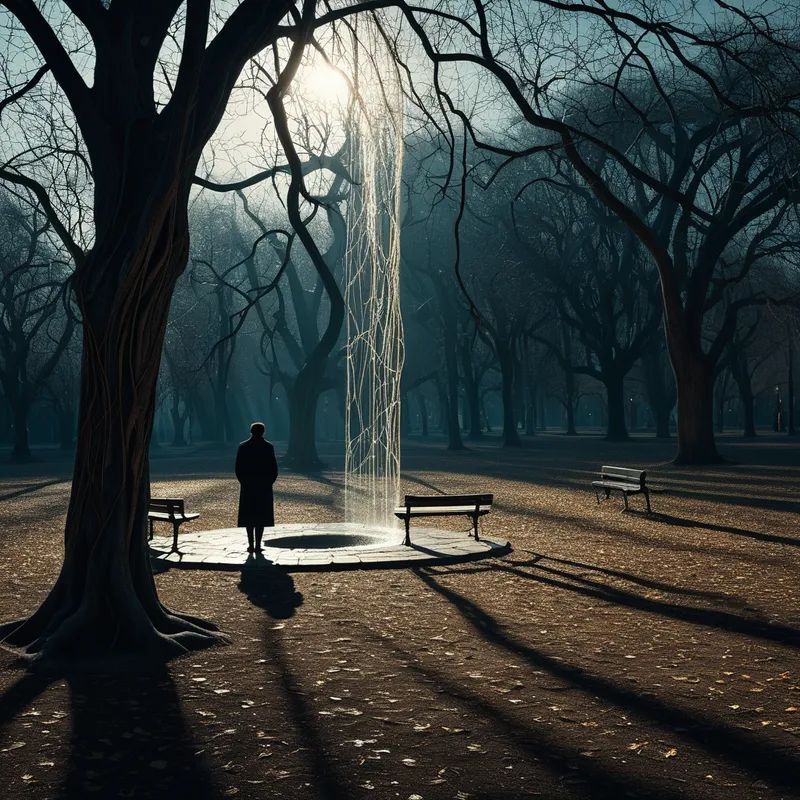
For the modern individual, the journey to the Well of Urd models the alchemical process of individuation—the integration of the unconscious into consciousness to become a whole self. The “hero’s journey” here is not to slay a beast, but to sit at the foot of one’s own world-tree and witness the work of the Norns within.
[The first stage](/myths/the-first-stage “Myth from Alchemical culture.”/) is [Nigredo](/myths/nigredo “Myth from Alchemical culture.”/), the descent into darkness. This is the ride down to the roots, confronting the black waters of Urd—our personal and collective shadow, our stored pain and forgotten memories. We must anoint ourselves with this difficult truth to nourish our psychic structure, lest it rot from ignored wounds.
The alchemical work is to become, in turn, each of the Norns: to honor the past without being bound by it, to fully inhabit the present, and to consciously take up the shears to shape the necessary future.
The second stage is Albedo, the washing clean. This is Verdandi’s work. With the clarity of the present moment, we wash the root of our identity. This is mindfulness, therapy, honest reflection—cleansing the distortions and regrets of the past to see what is right now, in its pure, unadorned state.
The final, ongoing stage is [Rubedo](/myths/rubedo “Myth from Alchemical culture.”/), the weaving of the red gold. This is Skuld’s domain, translated into conscious living. Having integrated the past (Urd) and clarified the present (Verdandi), we now actively participate in weaving our future. We recognize that our choices today are the threads Skuld uses. The “fate” we live into is no longer a sentence passed down by external gods, but the necessary consequence of an integrated psyche working with its full history and present awareness. We become co-weavers at the well, responsible for the pattern emerging from the loom of our own soul.
Associated Symbols
Explore related symbols from the CaleaDream lexicon: