The Night Walker Myth Meaning & Symbolism
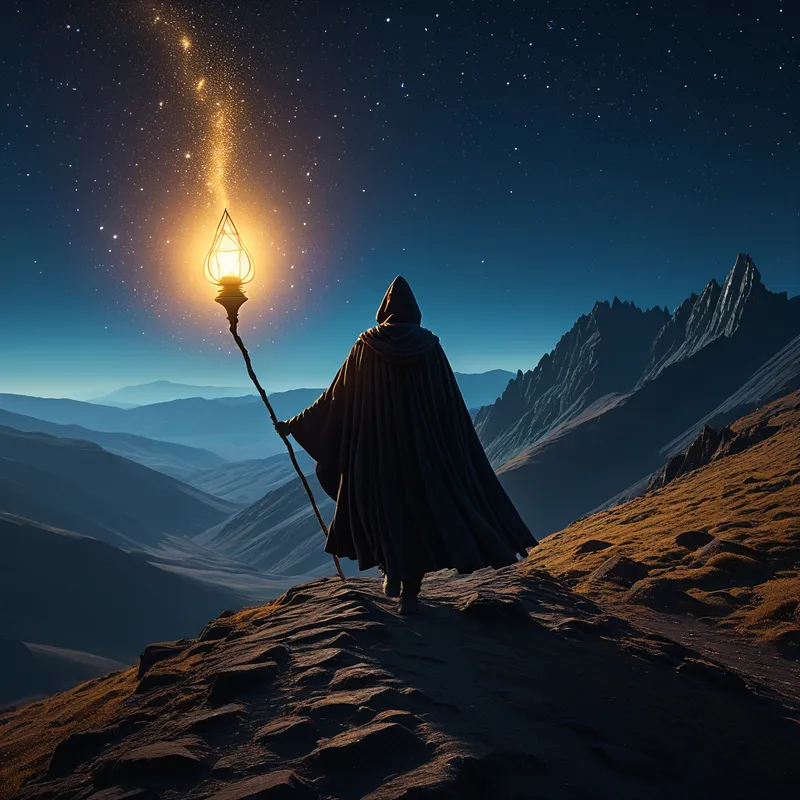
A solitary figure walks the boundary between worlds, carrying the light of consciousness into the heart of the primordial dark to retrieve what was lost.
The Tale of The Night Walker
Listen. When the last bird-song has faded and the sun’s chariot has plunged into the western sea, [the world](/myths/the-world “Myth from Tarot culture.”/) holds its breath. This is the hour of in-between, when the solid things of day soften and the unseen things stir. It is in this hour that the Night Walker begins their journey.
They do not come from a city of spires or a village of hearth-smoke. Their origin is [the threshold](/myths/the-threshold “Myth from Folklore culture.”/) itself—the forgotten path at the wood’s edge, the silent arch of a broken bridge, the shore where [the river](/myths/the-river “Myth from Buddhist culture.”/) mist bleeds into forest shadow. Cloaked not in wool, but in the very fabric of dusk, they carry a single possession: a lantern. Its flame is not of common oil, but is a captured fragment of the first hesitant star of evening.
The world of day, the Sun-Kingdom, is bright and full of names. Every tree, every tool, every feeling has a word. But the Starless Country is different. It is the realm of what has been forgotten, what has been feared into silence, what was born but never named. The people of the Sun-Kingdom tell tales of monsters there, of formless terrors. They build their walls high and their fires bright, and they whisper that to enter that dark is to be unmade.
But the Night Walker knows a secret. In the heart of the Starless Country lies the Well of Unfinished Things. There, resting on the silt, are the lost fragments: the unspoken apology, the forsaken talent, the love that turned to shame, the grief that was too sharp to hold. These are not monsters. They are the orphaned parts of the soul, waiting in the cool, silent dark.
So the Walker walks. The path is not paved. It is felt in the shift of the air, the subtle chill that speaks of depth. Shadows coil like roots. Whispers that are not voices, but echoes of old choices, brush against them. The lantern’s light does not blaze; it reveals. It shows that the looming shape is not a clawed beast, but the gnarled, beautiful sculpture of a petrified tree. The skittering sound is not a swarm of teeth, but [the fall](/myths/the-fall “Myth from Biblical culture.”/) of ancient leaves into a hidden stream.
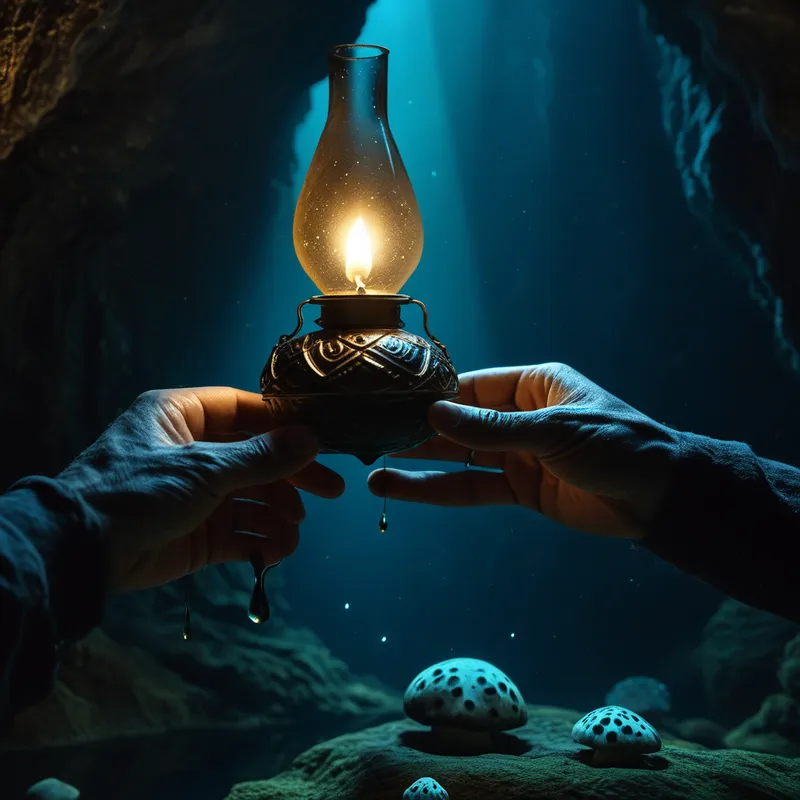
The journey is a descent, a gentle leaning into [the underworld](/myths/the-underworld “Myth from Greek culture.”/) of [the self](/myths/the-self “Myth from Jungian culture.”/). The air grows thick with the scent of damp earth and ozone, the smell before remembering. Finally, they reach the Well—a still, black pool in a cavern where the ceiling is a firmament of glowing moss. The [water](/myths/water “Myth from Chinese culture.”/) is a perfect mirror, showing nothing but the reflection of their own lantern, a single star in a private sky.
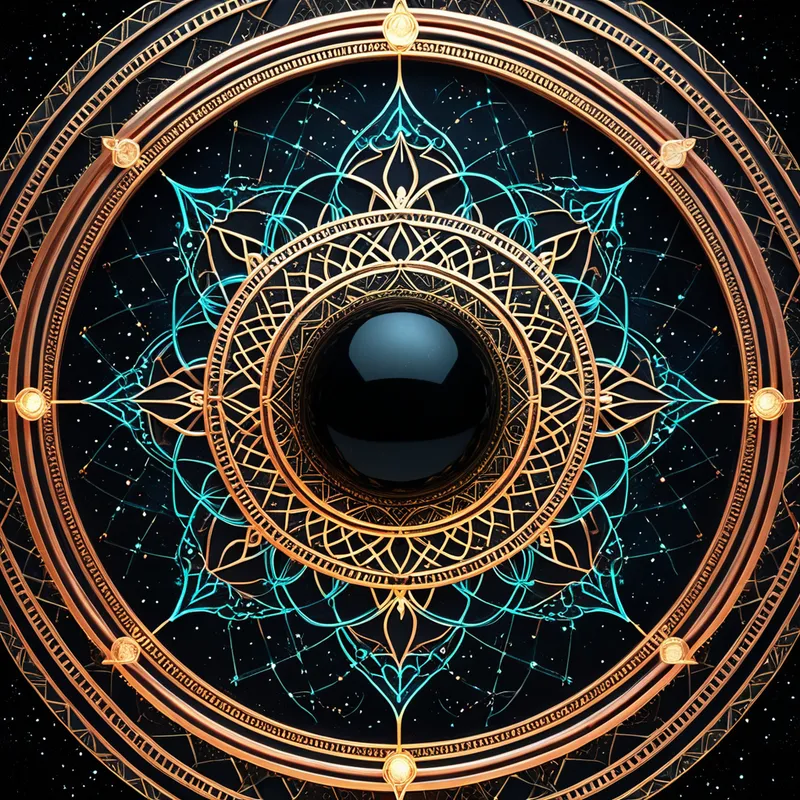
They kneel. They set the lantern aside. In the near-darkness, they reach into the cold water. Their fingers do not grasp for treasure, but wait, open. And from the soft silt, something rises to meet their touch. It is always a stone—smooth, heavy, and darker than the water itself. It might be obsidian, or jet, or simply a piece of the night given weight. This is the Soul-Stone.
With the stone cradled in one hand and the lantern reclaimed in the other, the Walker turns. The return journey is the same path, but the world is not the same. The shadows now have familiar contours. The whispers have cadences one almost recognizes. They do not run. They walk, steadily, until the air thins and sweetens, and the first grey hint of dawn bleeds into [the sky](/myths/the-sky “Myth from Persian culture.”/) behind them. They emerge not at the place they left, but at a new threshold, the stone warm now against their palm, the lantern flame guttering softly as it merges with the rising sun. They do not speak of what they found. They simply re-enter the world, carrying the dark, quiet weight of wholeness.
Cultural Origins & Context
The myth of the Night Walker is not bound to a single tribe, epoch, or scroll. It is a Global Archetype, emerging independently in the folklore of mountain hermits, the initiation rites of coastal shamans, and the whispered lullabies of desert nomads. Its tellers were those who lived at the margins: the gatekeeper who watched the last traveler depart, the spinner working by moonlight, the shepherd guiding the flock home in the purple twilight. It was a story told not in grand halls, but in the intimate space where the communal fire began to die down, when the day’s labor was done and the mind turned inward.
Its societal function was profound yet subtle. It served as a cultural permission slip for the necessary descent. In societies demanding constant solar consciousness—productivity, clarity, order—the myth sanctified the journey into confusion, grief, and the unknown. It taught that the hero’s task is not always to slay the external dragon, but to befriend the internal shadow. It provided a map, not for conquest, but for sacred retrieval, assuring the community that those who walked into the dark were not lost, but on a crucial errand for the soul of the whole.
Symbolic Architecture
The myth’s power lies in its stark, elegant [symbolism](/symbols/symbolism “Symbol: The use of symbols to represent ideas or qualities, often conveying deeper meanings beyond literal interpretation. In dreams, it’s the language of the unconscious.”/). The Sun-[Kingdom](/symbols/kingdom “Symbol: A kingdom symbolizes authority, belonging, and a sense of identity within a larger context or community.”/) represents the conscious ego—the [identity](/symbols/identity “Symbol: Identity represents the sense of self, encompassing personal beliefs, cultural background, and social roles.”/) we construct, full of light, names, and [social order](/symbols/social-order “Symbol: Dreams of social order reflect subconscious processing of hierarchy, belonging, and one’s place within collective structures.”/). Its opposite, the Starless [Country](/symbols/country “Symbol: Dreaming of a country often symbolizes a quest for belonging, identity, or exploration of one’s inner landscape through the metaphor of physical space.”/), is the personal and [collective unconscious](/symbols/collective-unconscious “Symbol: The Collective Unconscious refers to the part of the unconscious mind shared among beings of the same species, embodying universal experiences and archetypes.”/), not as a frightening void, but as a potential [space](/symbols/space “Symbol: Dreaming of ‘Space’ often symbolizes the vastness of potential, personal freedom, or feelings of isolation and exploration in one’s life.”/), the [womb](/symbols/womb “Symbol: A symbol of origin, potential, and profound transformation, representing the beginning of life’s journey and the unconscious source of creation.”/) of the [psyche](/myths/psyche “Myth from Greek culture.”/).
The lantern is not a weapon to banish the dark, but a tool of conscious attention. It is the light of the observing ego, fragile but sufficient, allowing one to navigate the inner landscape without being consumed by it.
The [Night](/symbols/night “Symbol: Night often symbolizes the unconscious, mystery, and the unknown, representing the realm of dreams and intuition.”/) Walker is [the ego](/myths/the-ego “Myth from Jungian culture.”/) that has matured enough to undertake the [journey](/symbols/journey “Symbol: A journey in dreams typically signifies adventure, growth, or a significant life transition.”/) of individuation. They are the part of us that can say, “I do not know what is in me, but I must go and look.” The [path](/symbols/path “Symbol: The ‘path’ symbolizes a journey, choices, and the direction one’s life is taking, often representing individual growth and exploration.”/), felt but not seen, is the thread of [intuition](/symbols/intuition “Symbol: The immediate, non-rational understanding of truth or insight, often described as a ‘gut feeling’ or inner knowing that bypasses conscious reasoning.”/) and somatic [awareness](/symbols/awareness “Symbol: Conscious perception of self, surroundings, or internal states. Often signifies awakening, insight, or heightened sensitivity.”/) that guides us into our own [depths](/symbols/depths “Symbol: Represents the subconscious, hidden emotions, or foundational aspects of the self, often linked to primal fears or profound truths.”/).
The Well of Unfinished Things is the core of the complex—the stored [memory](/symbols/memory “Symbol: Memory symbolizes the past, lessons learned, and the narratives we construct about our identities.”/), the repressed [emotion](/symbols/emotion “Symbol: Emotion symbolizes our inner feelings and responses to experiences, often guiding our actions and choices.”/), the unlived [life](/symbols/life “Symbol: The symbol of ‘Life’ represents a journey of growth, interconnectedness, and existential meaning, encompassing both the joys and challenges that define human experience.”/). The act of reaching in is not an aggressive extraction, but a receptive allowing. The [Soul](/symbols/soul “Symbol: The soul represents the essence of a person, encompassing their spirit, identity, and connection to the universe.”/)-[Stone](/symbols/stone “Symbol: In dreams, a stone often symbolizes strength, stability, and permanence, but it may also represent emotional burdens or obstacles that need to be acknowledged and processed.”/) that is retrieved is the symbolic essence of that lost content. It is dense, cold, and obscure at first—a raw, unintegrated [piece](/symbols/piece “Symbol: A ‘piece’ in dreams often symbolizes a fragment of the self or a situation that requires integration, reflection, or understanding.”/) of the self. Its transformation begins only when it is brought back into the light of day.
The Dreamer’s Resonance
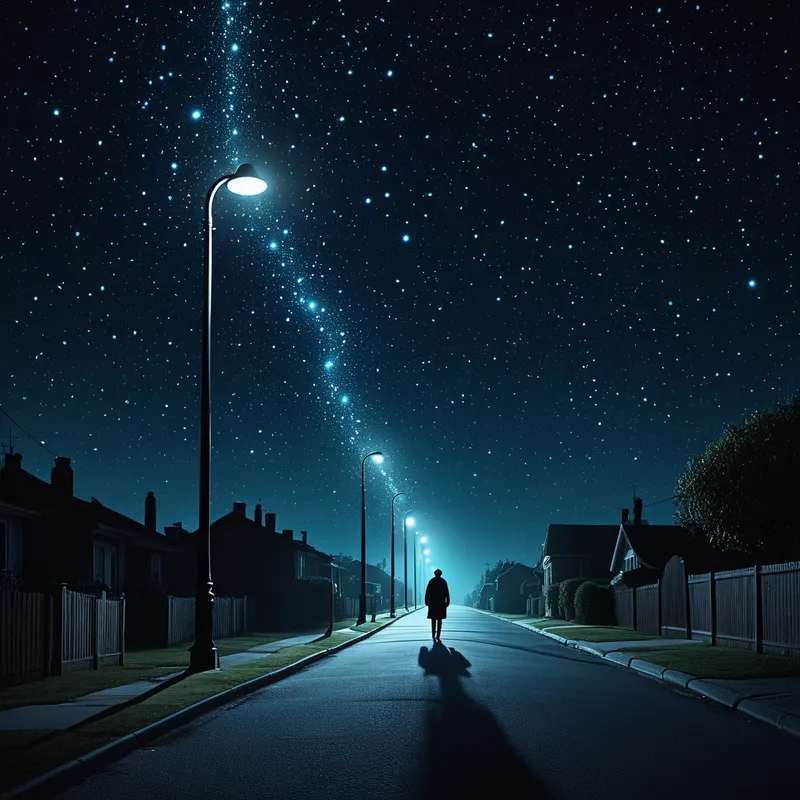
When this myth stirs in the modern dreamer, it often manifests as dreams of solitary night journeys. You may dream of walking empty city streets, exploring the basement of a childhood home that extends into endless caverns, or following a faint light through a dense, unfamiliar forest. The somatic feeling is key: it is not typically panic, but a profound, resonant aloneness charged with purpose. There is a chill in the air, a heightened awareness of sound and shadow.
Psychologically, this dream pattern signals that the psyche is ready to engage in a process of deep retrieval. The conscious mind has become too one-sided, too identified with its “sunlit” [persona](/myths/persona “Myth from Greek culture.”/). The Self, the total psyche, initiates a compensatory movement. The dream-ego becomes the Night Walker, tasked with going into the ignored or rejected aspects of the personality. The anxiety in the dream is not about external monsters, but about the dissolution of the known self. The dream is an enactment of courage—the courage to become unfamiliar to oneself, in service of becoming more complete.
Alchemical Translation
The myth of the Night Walker is a perfect allegory for the alchemical process of Individuation, the psychic transmutation Jung identified as the goal of human development. The journey maps the stages of this inner work.
The departure from the Sun-Kingdom is the [nigredo](/myths/nigredo “Myth from Alchemical culture.”/), the blackening. It is the conscious acknowledgment of one’s own shadow, depression, or sense of meaninglessness—the beginning of the work. Walking the path is the arduous confrontation with the contents of the unconscious, where one learns to discern between neurotic fear and sacred mystery.
The retrieval of the stone from the well is the albedo, the whitening. It is the moment of insight, the extraction of a core truth from the chaotic prima materia of the unconscious. The stone is the lapis, the philosopher’s stone in its crude, unrefined state.
But the work is not done upon retrieval. The crucial, often overlooked, final stage is the return. This is the [rubedo](/myths/rubedo “Myth from Alchemical culture.”/), the reddening. The cold, dark stone must be integrated into the sunlit world. This is the daily, often difficult, work of living with the retrieved truth. It means allowing the reclaimed grief to soften your heart, letting the acknowledged anger fuel healthy boundaries, or shaping the forsaken creativity into a tangible form. The stone warms in your hand through use, through the friction of being brought into relationship with the world.
The Night Walker does not become a king or a conqueror. They become a Threshold-Dweller, one who can move with grace between the inner and outer worlds. Their [triumph](/myths/triumph “Myth from Roman culture.”/) is not a trophy, but a capacity—the capacity to hold the tension of opposites, to carry the dark stone of the soul without being burdened by it, and to let its silent, polished surface reflect a deeper, more complete light.
Associated Symbols
Explore related symbols from the CaleaDream lexicon: