The Morrígan Myth Meaning & Symbolism
A goddess of fate, war, and prophecy appears as a crow, a wolf, and a washer at the ford, foretelling and shaping the destiny of kings and heroes.
The Tale of The Morrígan
Listen. The wind does not just blow across the plains of Ériu; it carries whispers from the hollow hills. And in the time before the cross, when the world was woven tighter with the Otherworld, the greatest whisper was a name spoken in dread and awe: The Morrígan.
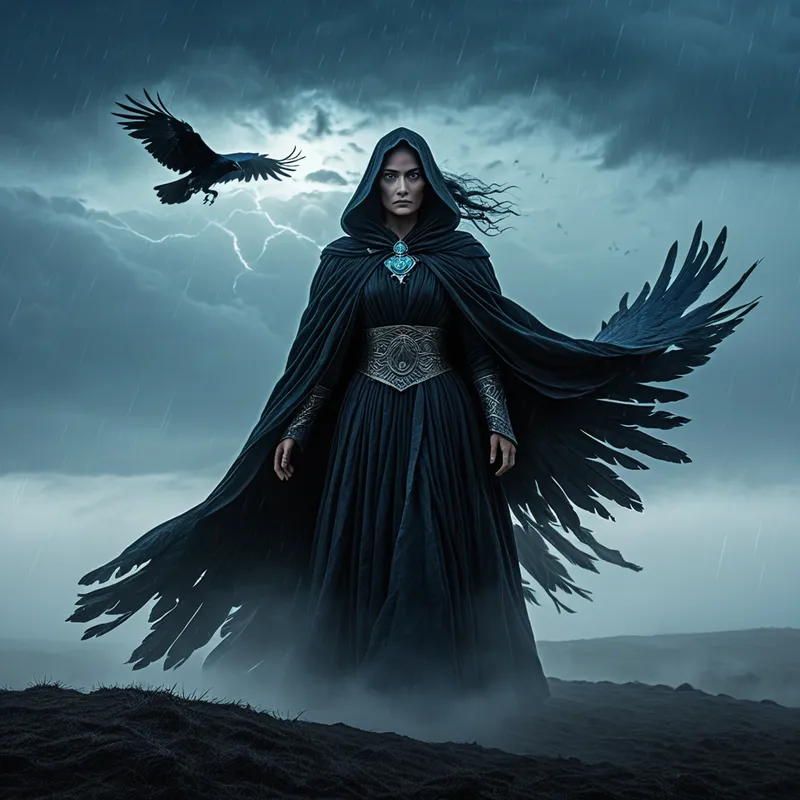
She is not one, but three. She is not a woman, but a force. You might see her first as a crow, larger than any natural bird, perched on a standing stone, her eye a bead of polished jet seeing all that was and will be. Or as a she-wolf, loping through the forest at the edge of the battlefield, her coat the grey of gathering storm clouds. But if you are fated, you will see her as the Washer at the Ford.
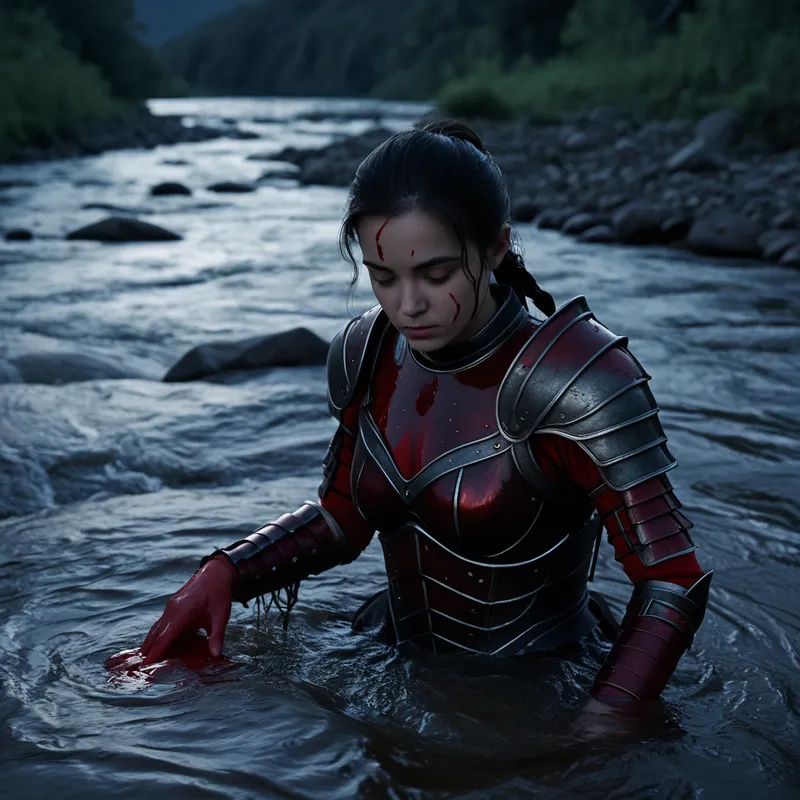
It was on the eve of a great battle, the clash that would echo through all the ages—the Táin Bó Cúailnge. The hero, Cú Chulainn, rode along the banks of a river, his spirit fierce, his spear thirsty. The light was the strange, liquid gold of late afternoon, and the only sound was the chuckle of water over stone. Then he saw her: a woman, tall and terrible in her beauty, kneeling in the shallows. She was washing a heap of armor and clothing, and the water that swirled from her hands ran not clear, but crimson. He saw his own armor in her grasp. He saw his own tunic, rent and soaked with gore.
“What do you here, woman?” he called, his voice tight with a dread he would not name. She lifted her head, and her eyes were pools of dark prophecy. “I wash the harness of a king who will die tomorrow,” she intoned, her voice the sound of stones grinding in a deep riverbed. She named him. She foretold his doom.
Cú Chulainn, in his pride and terror, rejected her. He called her a harbinger of ill-omen and spurned the fate she wove. But the Morrígan does not merely foretell; she enacts. In the heat of the battle, she came against him, not as a prophetess, but as a shapeshifting adversary. She became an eel to trip him in the ford, a she-wolf to drive cattle upon him, a hornless red heifer to lead the stampede. Each time, the hero wounded her, fighting the very current of destiny she represented.
Yet, in his moment of triumph, wounded and leaning on his spear, he saw her again. She appeared as an old woman, milking a cow with three teats, her own wounds mirroring those he had given her forms. She asked for a drink. And Cú Chulainn, in an act of unconscious compassion, blessed the milk and gave it to her. With each sip, she healed. She looked at him then, not with malice, but with the implacable gaze of fate acknowledged. She offered a final prophecy, not of his death that day, but of the tangled web of geis and honor that would ultimately ensnare him. She faded into the mist of the battlefield, leaving the hero alone with the cost of his power and the shadow of his end.
Cultural Origins & Context
The figure of the Morrígan emerges from the rich, oral tapestry of early Irish literature, primarily preserved in medieval manuscripts like the Lebor na hUidre and the Lebor Laignech. These texts codify an older, pre-Christian tradition where sovereignty, war, and the land were deeply intertwined. She is less a “character” in a modern sense and more a narrative force—a personification of the land’s terrifying, fecund power to make and unmake kings.
Her stories were the province of the filid, the poet-seers who acted as custodians of history, law, and prophecy. To tell of the Morrígan was to invoke the fundamental rules of the cosmos: that true sovereignty is granted by the land (often symbolized by a goddess), that fate is a current to be navigated, not a wall to be broken, and that battle is a sacred, chaotic ritual with its own spirits. She functioned as a societal reminder of the price of power and the inevitability of cycles—of life, death, and regeneration.
Symbolic Architecture
The Morrígan is the archetypal shape of the Unavoidable Truth. She is the psychological intersection of prophecy, fate, and consequence.
She is the moment the internal narrative cracks and the raw, un-storied truth of a situation stares back.
Her triplicity—often linked with her sisters, Badb and Macha—manifests her domains: the crow (prophecy and the aftermath), the wolf (the savage, strategic hunt), and the washer (the intimate, personal confrontation with fate). The river ford where she appears is the ultimate symbol of the liminal, a threshold between life and death, courage and terror, the conscious ego and the unconscious shadow.
Her conflict with Cú Chulainn is not a simple battle of good versus evil. It is the ego’s heroic consciousness, with its linear goals and prideful identity, clashing with the non-linear, amoral, and transformative intelligence of the deeper Self. He represents the will to defy destiny; she represents destiny itself, which includes within it the potential for healing, but only after the confrontation is fully endured.
The Dreamer’s Resonance
When the Morrígan pattern stirs in the modern psyche, she announces a profound somatic and psychological crossroads. To dream of a singular, commanding bird of prey, of a wolf that feels both threatening and familiar, or of a mysterious figure cleansing or preparing something deeply personal by water, is to dream of an impending psychic shift.
The somatic experience is often one of a “chill of truth”—a visceral knowing in the body that a current life path is unsustainable, that a role or identity has reached its expiration. There is a gathering tension, a sense of being tested or watched by an impersonal force. Psychologically, this is the Self organizing a crisis necessary for growth. The dreamer is being forced to “wash their own harness” at the ford—to confront the bloody, unavoidable consequences of their past actions and current trajectory. It is the psyche’s preparation for a necessary death, not of the body, but of an outworn way of being.
Alchemical Translation
The alchemical journey modeled by the Morrígan is the nigredo made sovereign. It is the conscious, willing descent into the very fate one initially resisted.
Individuation here is not about transcending one’s fate, but about marrying it—claiming the terrible beauty and power inherent in one’s own unique pattern of struggle and transformation.
The modern individual’s “battle” is internal: the clash between the persona (the heroic self-image) and the shadow (the rejected, fated aspects of the self). The Morrígan appears when this battle can no longer be avoided. The first step, like Cú Chulainn’s, is often rejection and wounding—fighting the truth, which only deepens our injuries. The alchemical turn is the blessing of the milk. It is the moment of exhausted compassion, directed not outward, but inward toward the very parts of ourselves we have been warring against (the wounded healer, the old woman).
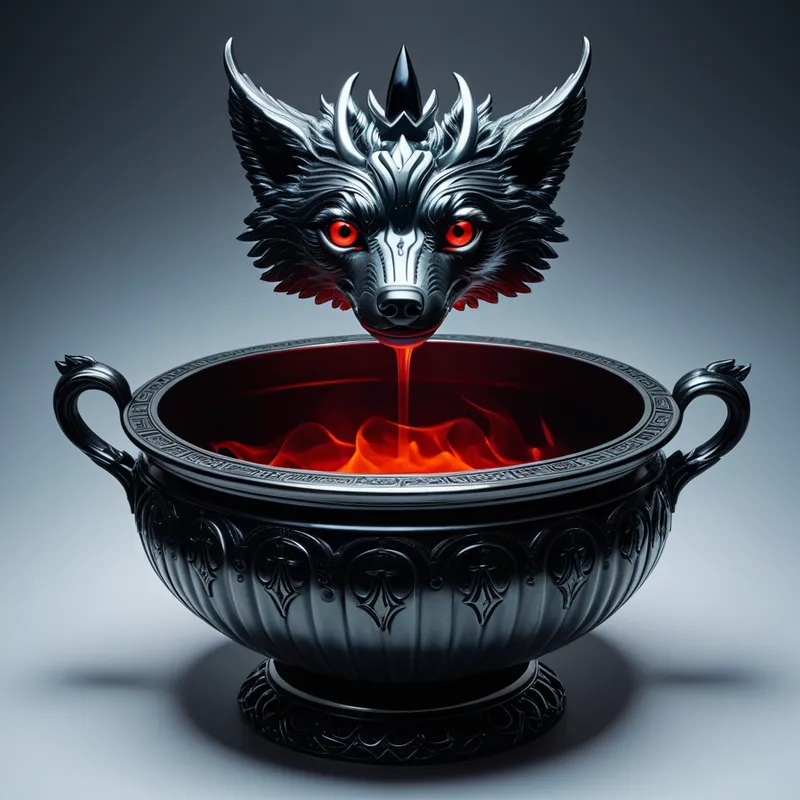
By tending to the wounds we inflicted in our resistance, we heal the split. We acknowledge the sovereignty of the Self over the ego. We drink from the cauldron of our own deepest, often darkest, nature and find it is the source of true regeneration and authority. To integrate the Morrígan is to stop being a hero fighting fate and to become a sovereign conversing with it, learning its language of crows, rivers, and inevitable change. You do not defeat the goddess of fate; you earn the right to meet her gaze, and in doing so, claim your own crowning.
Associated Symbols
Explore related symbols from the CaleaDream lexicon: