The Monomyth Myth Meaning & Symbolism
The timeless story of a hero who leaves the ordinary world, faces trials in a strange realm, and returns transformed, bearing a gift for their people.
The Tale of The Monomyth
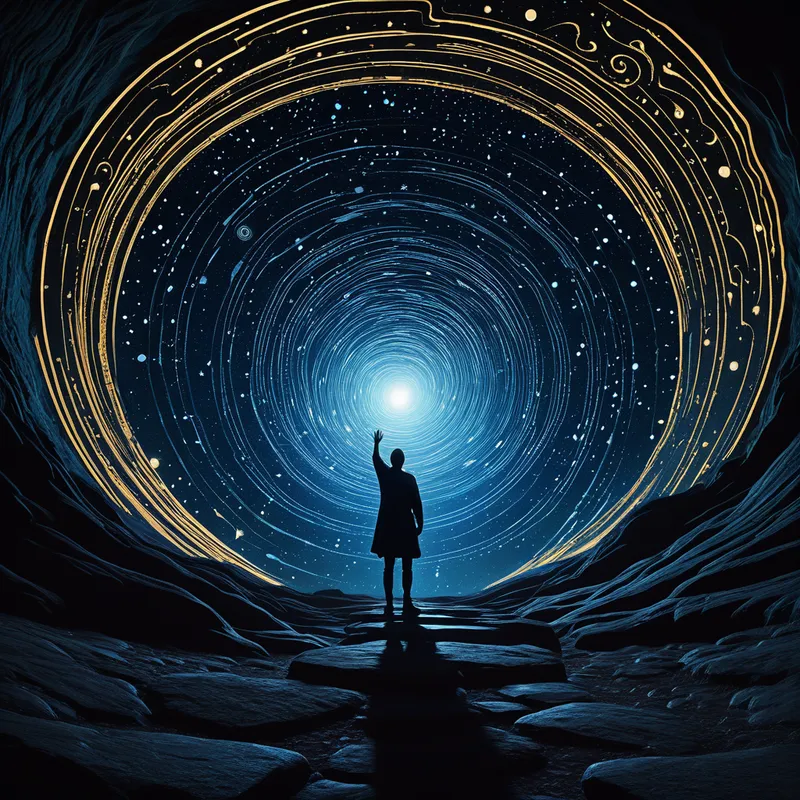
Listen. Before cities, before the written word, in the deep time when [the world](/myths/the-world “Myth from Tarot culture.”/) was woven from story and starlight, there lived a soul who was not one, but all. They dwelled in the Ordinary World, a place of known paths and settled dust. Yet, in their chest beat a rhythm out of sync with the village drums—a call from a horizon they had never seen.
It began with a refusal. A [herald](/myths/herald “Myth from Greek culture.”/), perhaps a ragged wanderer with eyes like cracked obsidian, or a storm that spoke in thunder-words, brought a Call to Adventure. “Go,” it whispered on [the wind](/myths/the-wind “Myth from Various culture.”/). “Beyond the last fencepost, where the maps turn blank.” Fear, thick as clay, gripped the heart. The soul hesitated, clinging to [the hearth](/myths/the-hearth “Myth from Norse culture.”/)‘s warmth. This was the Refusal of the Call.
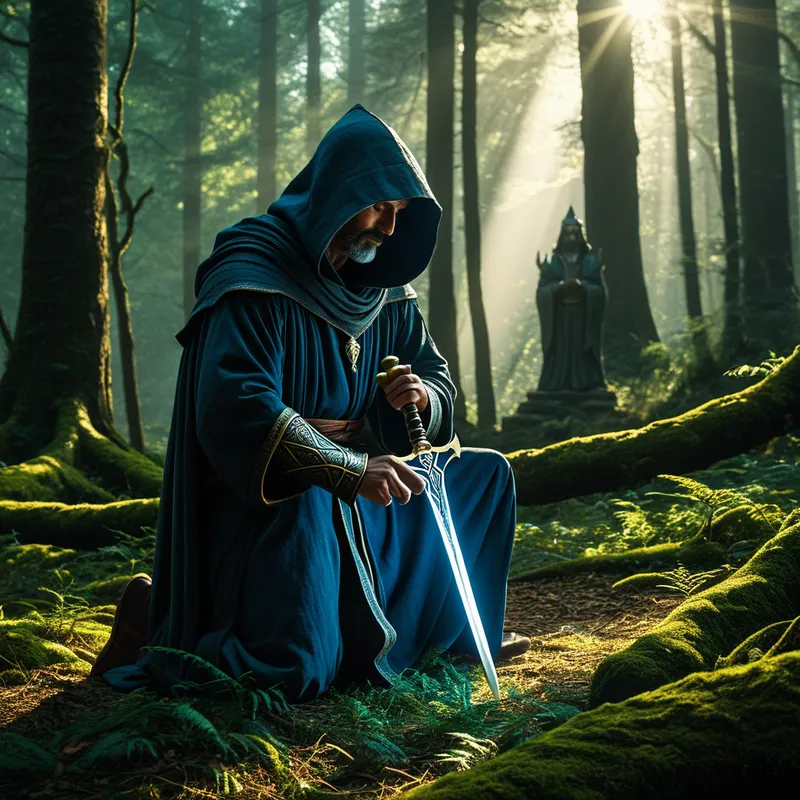
But the call does not cease; it amplifies. The world itself grew ill-fitting. Crops failed, a loved one fell sick, a shadow lengthened across [the threshold](/myths/the-threshold “Myth from Folklore culture.”/). Then came the Mentor, an old one with hands like roots and a voice that held the patience of mountains. They gave not a map, but a key—a word of power, a worn blade, a forgotten name. With this, the soul crossed the first threshold. They stepped from the village green into the whispering woods, from the known shore into the churning sea. The Special World swallowed them whole.
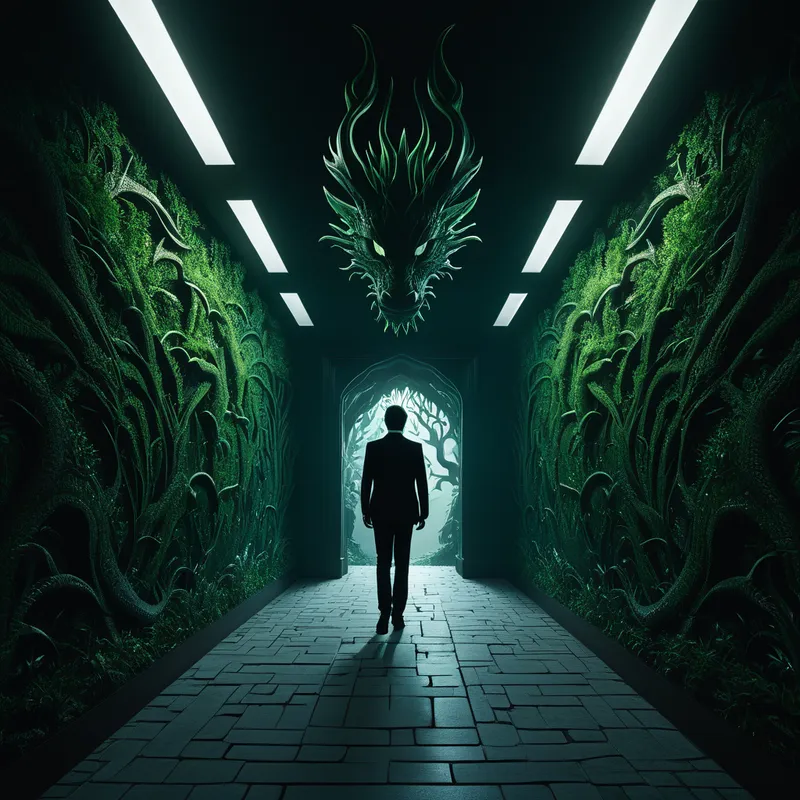
Here, the air tasted of metal and magic. They faced Tests, Allies, and Enemies. They learned to read the language of stones and distrust the smiles of shimmering spirits. The path led them inward, to the very heart of the unknown—the Innermost Cave. There, in a silence so deep it hummed, awaited the Ordeal. A dragon of doubt, a tyrant of despair, a [labyrinth](/myths/labyrinth “Myth from Various culture.”/) of their own making. It was a battle fought not just with sword, but with spirit. In [the crucible](/myths/the-crucible “Myth from Alchemical culture.”/) of that struggle, the old self died. They were stripped bare.
From that symbolic death came a Reward. Not merely gold, but a truth—a shimmering Elixir of understanding, a fragment of the world’s hidden song. Yet, the journey was not done. The Special World, jealous of its secrets, pursued them. A frantic The Road Back ensued, a final test of their hard-won power.
Then, the last threshold. They emerged, changed, bearing the marks of [the otherworld](/myths/the-otherworld “Myth from Celtic culture.”/). The Resurrection had sealed them. They returned to the Ordinary World, but it could no longer be ordinary to them. They carried the Return with the Elixir, sharing the wisdom, the healing, the song. And the people, seeing the starlight still caught in their eyes, knew a new story had been born.
Cultural Origins & Context
This is not a myth from a single scroll or a particular temple. It is the myth beneath all myths, the skeletal structure upon which the flesh of ten thousand stories has been hung. Anthropologists and folklorists, most notably [Joseph](/myths/joseph “Myth from Biblical culture.”/) Campbell, observed this pattern echoing across epochs and continents—in the epics of [Gilgamesh](/myths/gilgamesh “Myth from Mesopotamian culture.”/), the trials of [Heracles](/myths/heracles “Myth from Greek culture.”/), the quests of Arthurian knights, and the visions of Indigenous shamans.
Its origin is the human nervous system itself, encoded in the drama of consciousness confronting the unknown. It was passed down not by a single priesthood, but by every elder by the fire, every bard plucking a lyre, every mother singing a child to sleep with tales of bravery. Its societal function was profound: it was a psychic map for crisis, a ritual narrative for rites of passage, and a collective reassurance that the terrifying journey into [the wilderness](/myths/the-wilderness “Myth from Biblical culture.”/)—whether literal, spiritual, or psychological—could yield not just survival, but sovereignty.
Symbolic Architecture
The [Monomyth](/myths/monomyth “Myth from Universal culture.”/) is not a literal [story](/symbols/story “Symbol: The symbol of ‘Story’ represents the narrative woven through our lives, embodying experiences, lessons, and emotions that shape our identities.”/) but a symbolic [blueprint](/symbols/blueprint “Symbol: A blueprint represents the foundational plan or design for something, often symbolizing potential, structure, and the mapping of one’s inner self or future.”/) for the development of the individual [psyche](/myths/psyche “Myth from Greek culture.”/). The Ordinary World represents the conscious ego, its comforts, and its limitations. The Special World is the vast, uncharted territory of the unconscious.
The hero is the ego-consciousness that dares to descend into the underworld of the psyche to negotiate with its own depths.
The Ordeal is the inevitable confrontation with the [Shadow](/symbols/shadow “Symbol: The ‘shadow’ embodies the unconscious, repressed aspects of the self and often represents fears or hidden emotions.”/), the totality of what we refuse to acknowledge in ourselves. The [dragon](/symbols/dragon “Symbol: Dragons are potent symbols of power, wisdom, and transformation, often embodying the duality of creation and destruction.”/) guards the gold because our greatest fear protects our greatest potential. The Mentor symbolizes the emergent wisdom of [the Self](/myths/the-self “Myth from Jungian culture.”/), the guiding [archetype](/symbols/archetype “Symbol: A universal, primordial pattern or prototype in the collective unconscious that shapes human experience, behavior, and creative expression.”/) of wholeness that begins to coordinate the [personality](/symbols/personality “Symbol: Personality in dreams often symbolizes the traits and characteristics of the dreamer, reflecting how they perceive themselves and how they believe they are perceived by others.”/) from within. The [Elixir](/symbols/elixir “Symbol: A mythical substance representing ultimate healing, immortality, or spiritual transformation, often sought as the pinnacle of alchemical or mystical achievement.”/) is the integrated [insight](/symbols/insight “Symbol: A sudden, deep understanding of a complex situation or truth, often arriving unexpectedly and illuminating hidden connections.”/), the reclaimed [energy](/symbols/energy “Symbol: Energy symbolizes vitality, motivation, and the drive that fuels actions and ambitions.”/) and creativity that was previously bound up in internal conflict.
The Dreamer’s Resonance
When this myth stirs in modern dreams, it rarely appears as a knight and dragon. Instead, we dream of being thrust into a new, confusing job (the Special World), of facing a daunting exam for which we are unprepared (the Ordeal), or of receiving crucial advice from a mysterious stranger (the Mentor). The somatic experience is one of anxiety giving way to focused determination—the heart-pounding before a presentation that transforms into a flow state.
These dreams signal a psychological process of adaptation and growth. The psyche is rehearsing for a looming challenge, integrating new aspects of the personality, or attempting to resolve an inner conflict by projecting it into the symbolic theater of the dream. To dream of crossing a bridge or entering a cave is to feel the Self urging [the ego](/myths/the-ego “Myth from Jungian culture.”/) beyond its current boundaries.
Alchemical Translation
The alchemy of the Monomyth is [the opus](/myths/the-opus “Myth from Alchemical culture.”/) of individuation—the process of becoming an integrated, undivided individual. The journey outwards is a metaphor for the journey inwards.
The first threshold crossed is the threshold of self-awareness, where one moves from being lived by unconscious complexes to investigating them.
The Ordinary World is the [prima materia](/myths/prima-materia “Myth from Alchemical culture.”/), the leaden state of unconscious identification. The Special World is the dissolution ([solutio](/myths/solutio “Myth from Alchemical culture.”/)) in the waters of the unconscious, where old structures melt. The Ordeal is the fiery confrontation (calcinatio) with one’s own shadow, burning away the dross of [persona](/myths/persona “Myth from Greek culture.”/) and illusion. The meeting with the Mentor is [the conjunction](/myths/the-conjunction “Myth from Alchemical culture.”/) (coniunctio), where conscious and unconscious insights marry.
The Elixir is [the philosopher’s stone](/myths/the-philosophers-stone “Myth from Alchemical culture.”/)—not a physical object, but the achieved state of psychological fluidity and wisdom. The return is the crucial final stage: the redeemed individual must bring this wholeness back into relationship with the community. The myth teaches that transformation is not for oneself alone; it is completed in service. The modern individual’s “elixir” may be a creative work, a healed relationship, or simply a more compassionate and grounded presence in the world—the gift of a transformed spirit to a waiting world.
Associated Symbols
Explore related symbols from the CaleaDream lexicon: