The Moirai—Clotho Myth Meaning & Symbolism
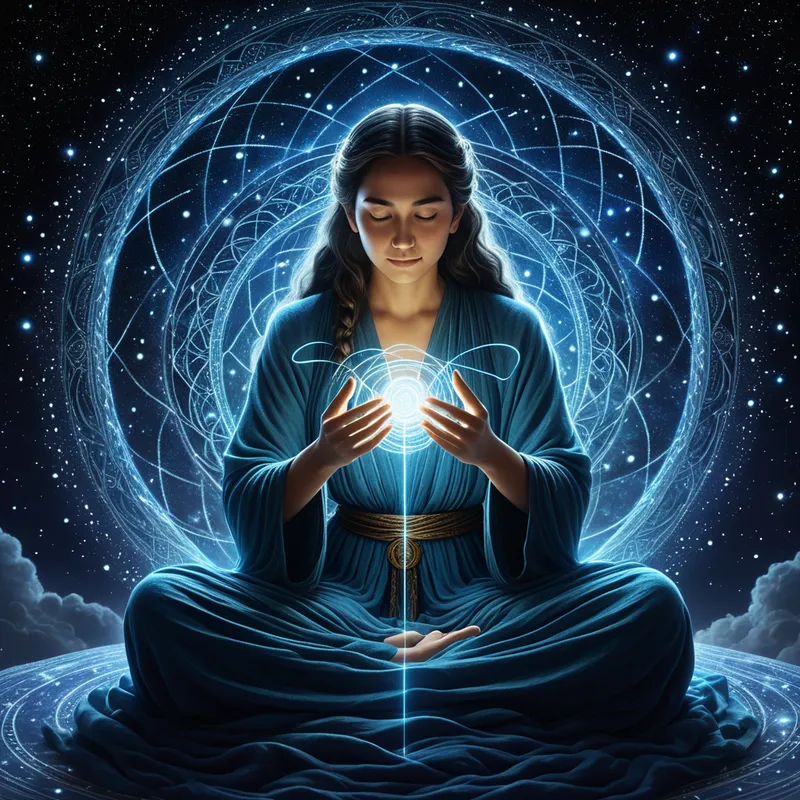
Clotho, the youngest Fate, spins the raw thread of destiny from the void, initiating the irreversible journey of a life from its first, fragile breath.
The Tale of The Moirai—Clotho
Before memory, in the deep that is not a place but a condition, there is a sound. It is not a song, not yet. It is the hum of potential, the whisper of what-could-be straining against the silence of what-is-not. Here, in the chamber that exists before chambers, where time is raw material, they sit. The Three. The Moirai.
But listen now to the one on the right, the youngest. Her name is Clotho, “The Spinner.” Do not mistake youth for inexperience. Her youth is the youth of the universe itself, the perpetual freshness of the beginning that is always happening. Her lap is empty, her hands are still. She waits. She does not wait for a command, for no one commands the Fates. She waits for the moment of necessity, for the subtle pressure in the fabric of being that signals a life is required.
It begins as a disturbance in the void, a subtle gathering. Clotho’s eyes, deep as wells holding the light of unborn stars, focus. Her left hand reaches into the not-space before her. The air—if it is air—thickens, coiling like smoke. Her fingers do not grasp; they invite, they coax. From the formless potential, from the chaos of pure possibility, she draws forth the first, faint gleam. It is a filament of gossamer and moonlight, of breath and first cry. It is the raw material.
Now her right hand moves, bearing the spindle. It is a simple, profound tool: a rod of ancient wood, a whorl of polished stone. It is the axis of a world yet unmade. With a motion that is both tender and absolute, she brings the nascent filament to the spindle’s tip. She gives it the first twist.
This is the act. This is the sacred, terrifying moment. The hum becomes a vibration, the vibration becomes a thread. As she draws her hand back, the thread follows, spinning out from the void, solidifying from dream into substance. It is vibrant, this new thread, thrumming with every latent joy, every destined sorrow, every laugh and every tear that will ever be. It is the totality of a life, compressed into its first, fragile inch. Clotho’s face is serene, utterly absorbed. There is no hesitation, no doubt. In the turning of the spindle, the universe acknowledges a new existence. The thread is born. It is now a thing in the world, a line cast into the river of time. Her sisters, Lachesis and Atropos, watch, their own tools ready. But for this eternal moment, there is only Clotho, the Spinner, and the singular, irrevocable act of beginning.
Cultural Origins & Context
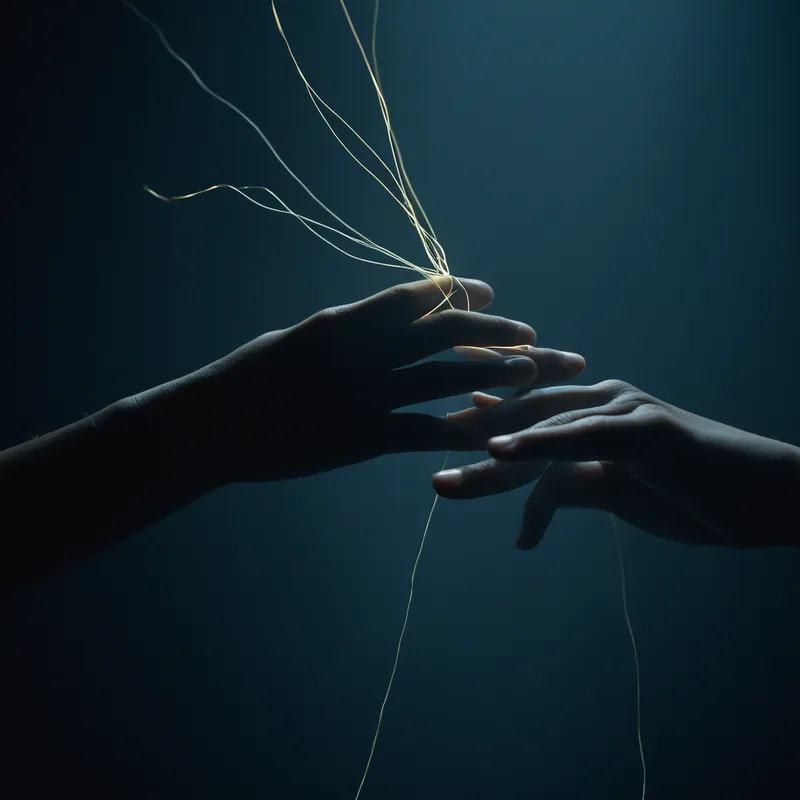
The myth of the Moirai is a cornerstone of ancient Greek cosmology, a poetic and philosophical system for understanding the most terrifying and fundamental human questions: necessity, chance, and free will. They were not Olympian deities in the familiar sense; they were older, more primal, daughters of the primordial goddess Nyx (Night). This lineage places them beyond the whims of even Zeus, who, according to some sources, could only watch and abide by their decrees.
Their myth was not contained in a single epic but woven through the works of Hesiod, Homer, and the tragic playwrights. It was passed down as a cultural certainty, a framework recited by bards and explored in tragedies. Its societal function was profound: it provided a language for fate. In a world of plagues, wars, and sudden death, the idea of a measured thread—spun, allotted, and cut—offered a grim but coherent order. It transformed blind accident into a narrative, however inexorable. To speak of “the thread of life” was to engage with this myth, to place an individual’s struggle within the vast, impersonal tapestry of the Moirai’s design.
Symbolic Architecture
Clotho, the Spinner, represents the absolute origin point. She is the archetype of pure inception. Her symbol, the spindle, is the tool of creation from unformed matter, the point where the infinite field of possibilities collapses into a single, definite line.
To spin the thread is to enact the first law of being: that for existence to occur, potential must be limited. The boundless must accept a boundary.
Psychologically, Clotho symbolizes the moment of conception in its broadest sense—not merely biological, but the conception of a thought, a project, a relationship, a phase of life. She is the spark of “I will,” the commitment that draws an idea from the nebulous realm of fantasy into the world of action. She represents the initial creative impulse that carries within it the entire genetic code of what is to come, for good or ill. There is no past in her action, only future. Yet, her work is fateful because this first twist, this initial direction, sets a trajectory. In her serene focus, we see the awesome, unconscious power of beginnings, which are always acts of faith and violence—faith in the future, violence against the peace of non-being.
The Dreamer’s Resonance
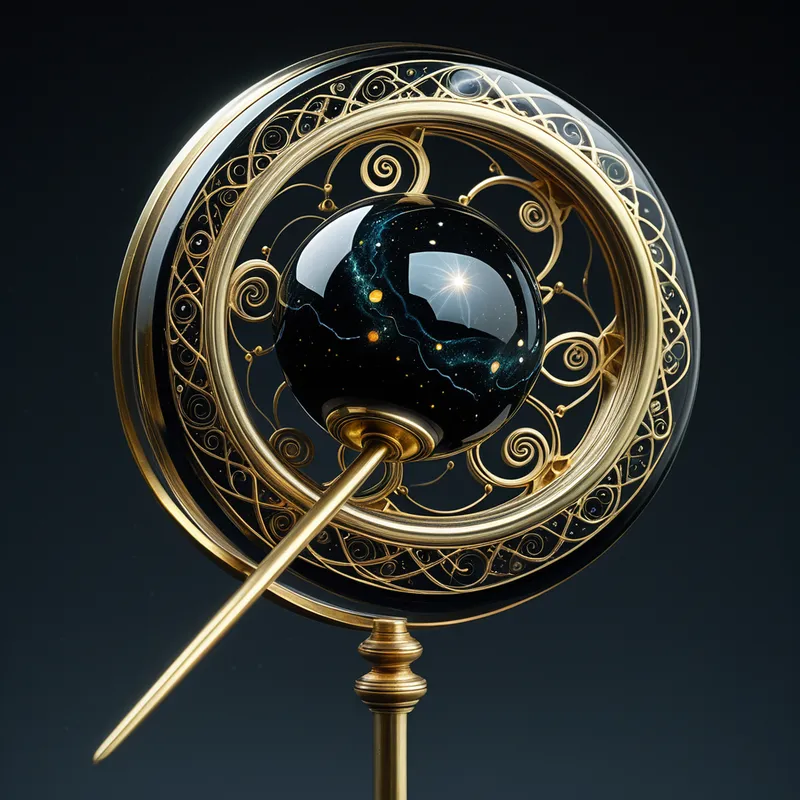
When Clotho appears in the modern dreamscape, she rarely comes as a literal goddess. Her presence is felt in the imagery and somatic experience of genesis. A dreamer may find themselves in a blank, grey space, holding a spool of thread that seems to generate itself. They may be standing before a vast, dark loom, terrified to make the first weave. The core somatic sensation is one of pregnant tension—the deep breath before the plunge, the finger hovering over the “send” button on a life-changing email.
This dream pattern signals that the psyche is at a profound threshold. The dreamer is psychologically “spinning the thread” of a new chapter. This could be the start of a career, the conscious decision to heal, the acknowledgment of a calling, or even the first admission of a painful truth to oneself. The anxiety present is the sacred terror of Clotho’s chamber: the understanding that this initial act is irreversible. Once the thread is spun, it enters the world. The dream is the psyche’s ritual space for honoring and navigating this terrifying creative power that resides within the self.
Alchemical Translation
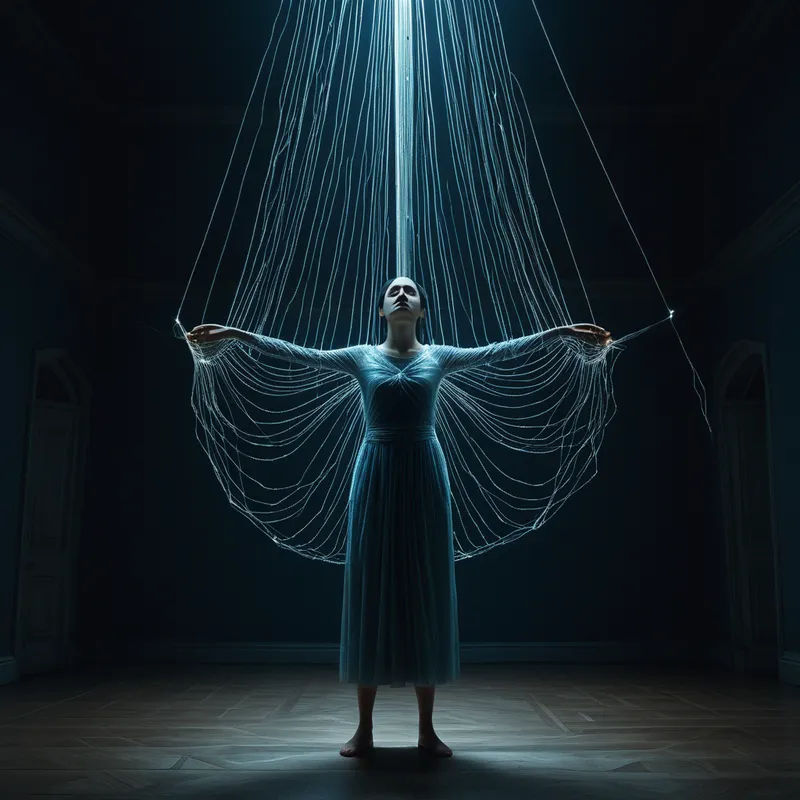
The alchemical process mirrored in Clotho’s myth is Nigredo, not as putrefaction, but as the primal blackness from which the first light emerges. It is the stage of prima materia. For the modern individual seeking individuation, Clotho’s lesson is about claiming the authority to begin.
The “spinning” is the act of conscious formulation. It is the decision to articulate the vague discontent, the nameless longing, the unshaped talent. It is writing the first sentence of your story in your own hand, knowing it will bind you. The psychic transmutation occurs in the courage to define. We are all surrounded by the swirling nebula of our potential—endless versions of ourselves we could become. Individuation demands we reach into that chaos, as Clotho does, and choose. We must spin a thread, even if it is flawed, even if we do not know where it leads.
The alchemical gold is not found in the finished product, but in the act of commitment that creates the vessel—the thread—capable of containing the journey.
To integrate Clotho is to stop waiting for permission or perfect conditions. It is to accept the mantle of the creator of your own fate, starting with the humble, mighty spindle of a single, deliberate choice. It is to understand that our destiny is not written in stone by distant gods, but is continually being respun from the raw material of our every conscious beginning. We are, each of us, forever in Clotho’s posture, our hands forever drawing new threads from the void of tomorrow.
Associated Symbols
Explore related symbols from the CaleaDream lexicon: