The Moirai Myth Meaning & Symbolism
The three primordial goddesses of destiny who spin, measure, and cut the thread of life for every mortal and god, embodying the inescapable architecture of fate.
The Tale of The Moirai
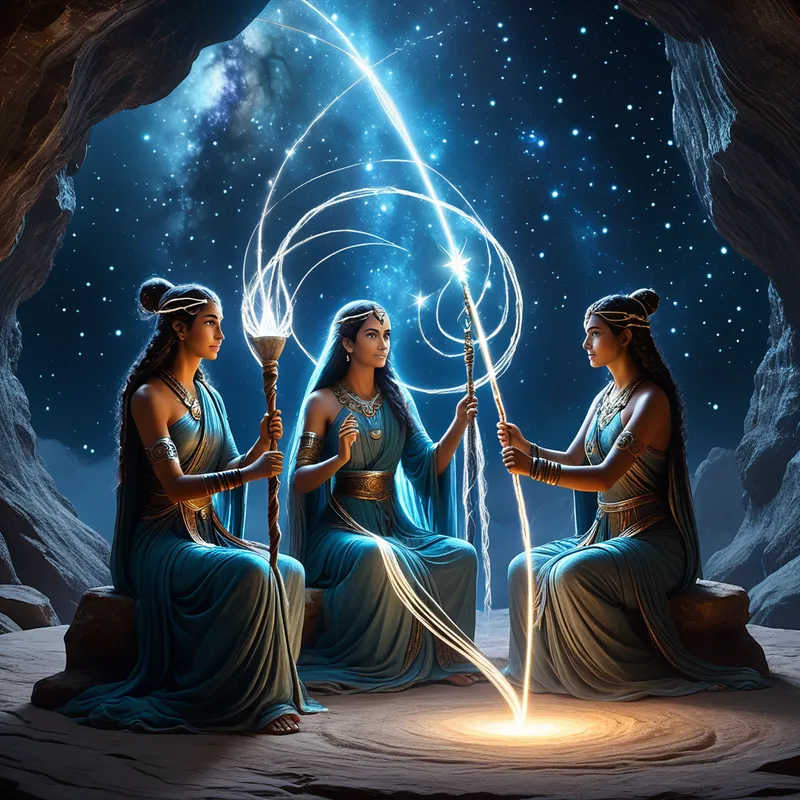
Listen. In the deep, before the first name was spoken, there was a turning. Not in the sun-warmed world above, but in a chamber of roots and stone, where the only light was the cold gleam of what is, what was, and what must be. Here, in the marrow of the world, they sat.
Three sisters, born of the primeval dark, daughters of Nyx herself. They were not young, nor were they old; they were time itself given form. The first, Clotho, sat with a distaff of polished ivory. In her hands, raw, nebulous potential—the cloud of a soul not yet born—coalesced. With a touch both tender and indifferent, she drew forth the thread. It shimmered, a filament of moonlight and breath, issuing from the void. This was the beginning.
The thread passed to the second sister, Lachesis. Her eyes, like pools of still water, saw not the present moment, but the path. She received the delicate strand and, with a rod carved from the bone of the earth, she measured it. Her fingers traced its length, and as she measured, she sang—a low, humming tone that was not a melody but a decree. With each vibration, the thread gained its character: stretches of gold for joy, twists of somber grey for sorrow, knots of challenge, and smooth filaments of peace. She allotted the portion, the destiny, the unique pattern of a life.
Then, to the third. Atropos. She who cannot be turned. In her lap lay shears, their blades forged from a metal no mortal fire could melt. She watched the thread approach, her gaze unwavering. There was no malice in her, only a final, absolute truth. When the measured length reached her, when the song of Lachesis fell silent, she would lift the shears. A single, clean snip. The sound was not loud, but it echoed in the chamber with the weight of eternity. The luminous thread went dark, its light returning to the cloud from whence it came. And then… Clotho would begin again.
Even the Zeus, who hurled thunderbolts and shook the heavens, bowed his head before their silent work. It is said he held the Pithos of hope, but the Fates held the spindle. A hero might rage, a lover might plead, a king might offer mountains of gold, but the thread was spun, measured, and cut according to a law older than Olympus. Their chamber was the loom of reality, and every breath drawn above was a vibration in the web they wove.
Cultural Origins & Context
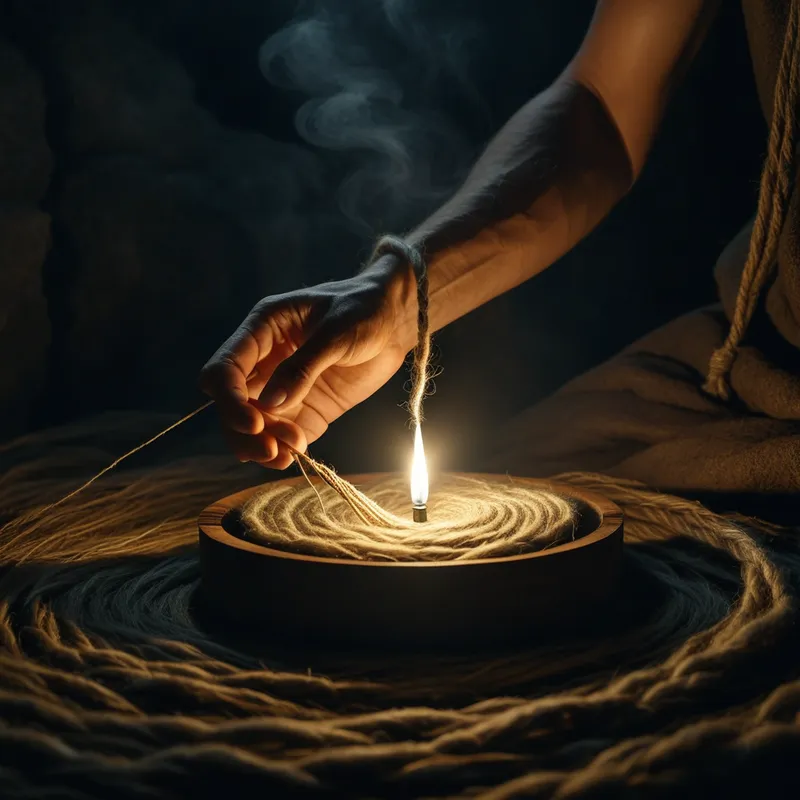
The Moirai, often translated as “The Apportioners” or “The Fates,” are among the most ancient figures in the Greek religious imagination. Their roots likely stretch back into pre-Olympian, chthonic (earth-based) traditions, where power was seen as an impersonal, distributive force rather than a personality. They appear in the works of Hesiod’s Theogony, where they are born of Nyx, placing them in the very first generations of cosmic beings, predating even the Titans.
They were not worshipped in grand temples with festive games, as were the Olympians. Their cult was quieter, more solemn, woven into the fabric of daily and existential life. They represented the Greek understanding of Moira—one’s allotted portion or share. This was not merely “fate” as a blind force, but as a fundamental principle of cosmic order and limit. Every entity, from a god to a blade of grass, had its moira, its defined sphere, its measure.
Their societal function was profound: they provided a narrative container for the human experience of limitation, inevitability, and the puzzling interplay of chance and destiny. In a world of capricious gods and unpredictable fortunes, the Moirai represented an underlying, unshakeable structure. They answered the terrifying question of “why?” with a deeper, more ancient truth: because it is measured. They transformed chaos into a tapestry, however inscrutable its pattern might be to the living.
Symbolic Architecture
The Moirai are not a story of conflict, but of process. They are the symbolic architecture of existence itself, a tripartite model of creation, organization, and dissolution that mirrors countless natural and psychological cycles.
The spindle, the rod, and the shears are the tools of cosmos, not chaos. They do not ask for consent; they enact the law of form.
Clotho, the Spinner, symbolizes pure potential, the moment of inception. She is the spark of life, the initial conditions, the genetic code, the first thought. Psychologically, she represents the birth of an impulse, a feeling, or a possibility into consciousness. Lachesis, the Measurer, is the embodiment of development and destiny. She is the unfolding of that potential through time and circumstance—the lived life, the choices (seemingly free) that navigate the allotted length. She is the narrative arc, the character forged by experience. Atropos, the Cutter, is the principle of necessary ending, of limit. She is death, certainly, but also the conclusion of any cycle: the end of a relationship, a career, an identity, a psychological complex. She is the moment of severance that allows for new spinning to begin.
Together, they form a complete psychic equation. They move the individual from the numinous potential of the unconscious (Clotho), through the conscious engagement and formation of a life in the world (Lachesis), to the inevitable integration of that experience back into the whole through ending (Atropos). They represent the ego’s confrontation with the Self—the larger, total psyche whose patterns and purposes extend beyond individual desire.
The Dreamer’s Resonance
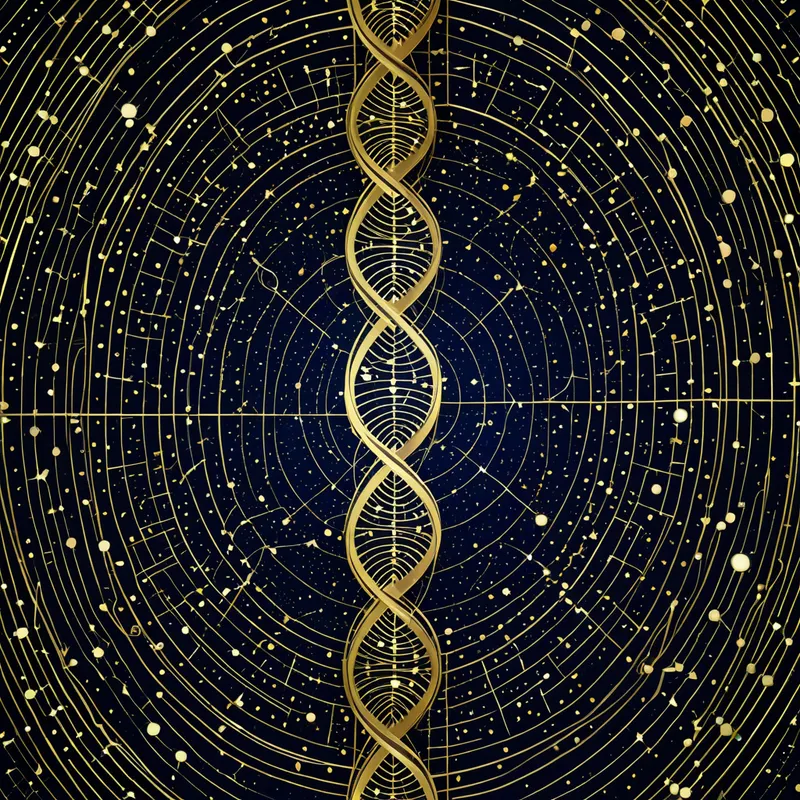
When the pattern of the Moirai weaves itself into modern dreams, it signals a profound encounter with the archetype of destiny and personal limits. This is not a dream of action, but of witnessing.
You may dream of tangled threads, of trying to spin wool into gold and failing, or of a pair of enormous, impersonal scissors looming. You might see three shadowy figures in the corner of a room, engaged in a silent, compelling task. The somatic feeling is often one of awe mixed with dread—a chilling recognition of a process larger than the self.
Psychologically, this dream motif emerges when the dreamer is grappling with a sense of predetermination or a crushing lack of agency. It can appear during major life transitions (births, deaths, career changes), illnesses, or when facing immutable consequences. The dream is not necessarily fatalistic; it is the psyche’s way of presenting the framework of fate. The emotional charge comes from the ego’s rebellion against Lachesis’s measure or Atropos’s shears. The dream asks: Can you behold the tapestry of your life, with its knots and golden stretches, without fleeing into grandiosity or despair? The process underway is one of surrender to the real—not passive resignation, but a conscious, often painful, alignment with the limits and the pattern of one’s own existence.
Alchemical Translation
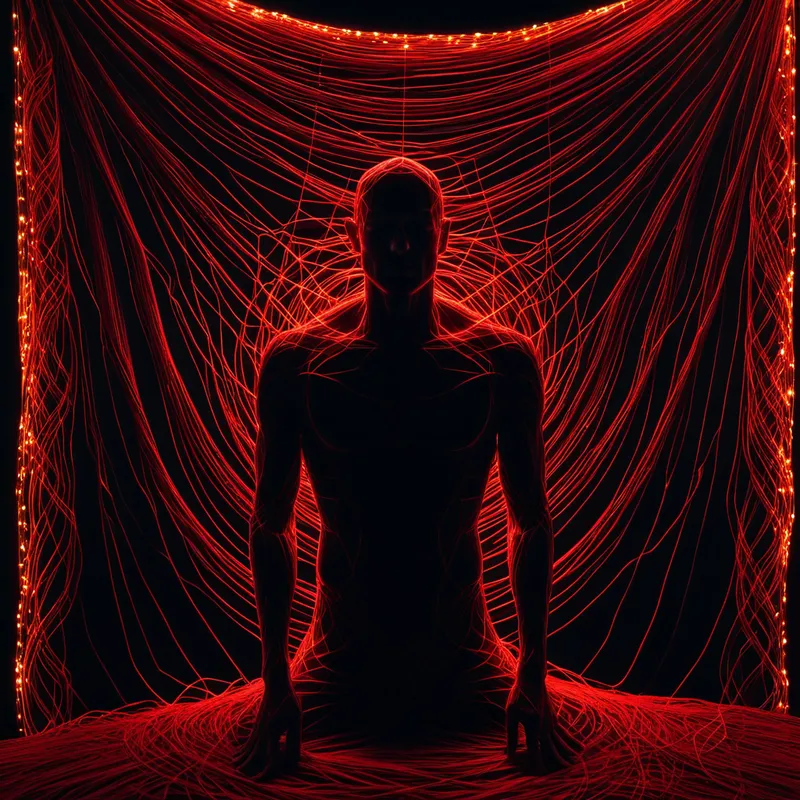
The alchemical work modeled by the Moirai is the ultimate transmutation: turning the leaden weight of fate into the gold of meaning. This is the core of the individuation process—becoming who you are meant to be, which is inseparable from accepting who you are and the unchangeable threads of your history.
Individuation is not the cutting of your own thread, but the conscious weaving of the pattern allotted to you.
The modern individual, champion of free will, often identifies solely with Clotho—the spinner of new beginnings, possibilities, and reinventions. We resist Lachesis, the measurer who implies a defined shape and limit to our potential. We are terrified of Atropos, denying endings, decay, and death in a cult of perpetual youth and progress. The alchemical process requires reintegrating all three sisters.
First, one must acknowledge the spin (Clotho): recognize the innate gifts, the deep impulses, the “raw wool” of your nature. Second, one must submit to the measure (Lachesis): consciously engage with the life you have actually lived—the traumas, joys, failures, and relationships—and see them not as random accidents, but as the unique, measuring rod of your soul’s development. This is the hard work of making meaning from circumstance. Finally, one must wield the shears (Atropos) within oneself. This is the most profound alchemy: to voluntarily cut away the outgrown identities, the toxic narratives, the clinging attachments that the ego mistakes for life itself. It is the active acceptance of necessary endings as the prerequisite for renewal.
In this translation, the Moirai cease to be external persecutors and become internalized as a sacred, internal process. You become the chamber. You hold the spindle, the rod, and the shears. To spin with intention, to measure with honesty, and to cut with courage—this is the psychic transmutation from a victim of fate to a participant in destiny. The thread is still finite, but how you behold its weaving becomes the substance of your freedom.
Associated Symbols
Explore related symbols from the CaleaDream lexicon:
- Tapestry of Fate
- Connection
- Never
- Meant
- Arrangement
- Sequence
- Chapter
- Well of Urðr (Fate Well)
- Weaving Loom
- Algorithm Patterns
- Beaded Bracelet
- Invisible Threads
- Silken Thread
- Intertwined Destinies
- Astrological Chart
- Orbiting Planet
- Pulsating Pulsar
- Agate Marbles
- Timeless Tree Rings
- Hourglass of Destiny
- Marbles
- Jump Rope
- Dominoes
- Sewing Machine
- Timeless Collage
- Turned Page
- Unwritten Pages
- Endless Novel
- Dream Weaver’s Loom
- Pastel Hair Tie
- Bangles with Charms
- Silhouette of Destiny
- Patterns of Existence
- Spindle
- Fibrous Web
- Fabric Ribbons
- Tapestry of Dreams
- Loom of Time
- Weaving Plant Fibers
- Sinew Thread
- Cloud Gathering
- Fate’s Loom
- Algorithmic Dream
- Probability Cloud
- The Witness
- Cutscene
- Timeline
- Gene
- Waveform
- Futures
- Prognosis
- Finite
- Overlapping
- Elderly Woman
- Dreamweaver’s Loom
- Veil of Time
- Weaving Shuttle
- Orbit
- Continuum